
Delta and Air Canada Taxiway Collision at LAX Triggers FAA Investigation: Flight Safety Guide 2026

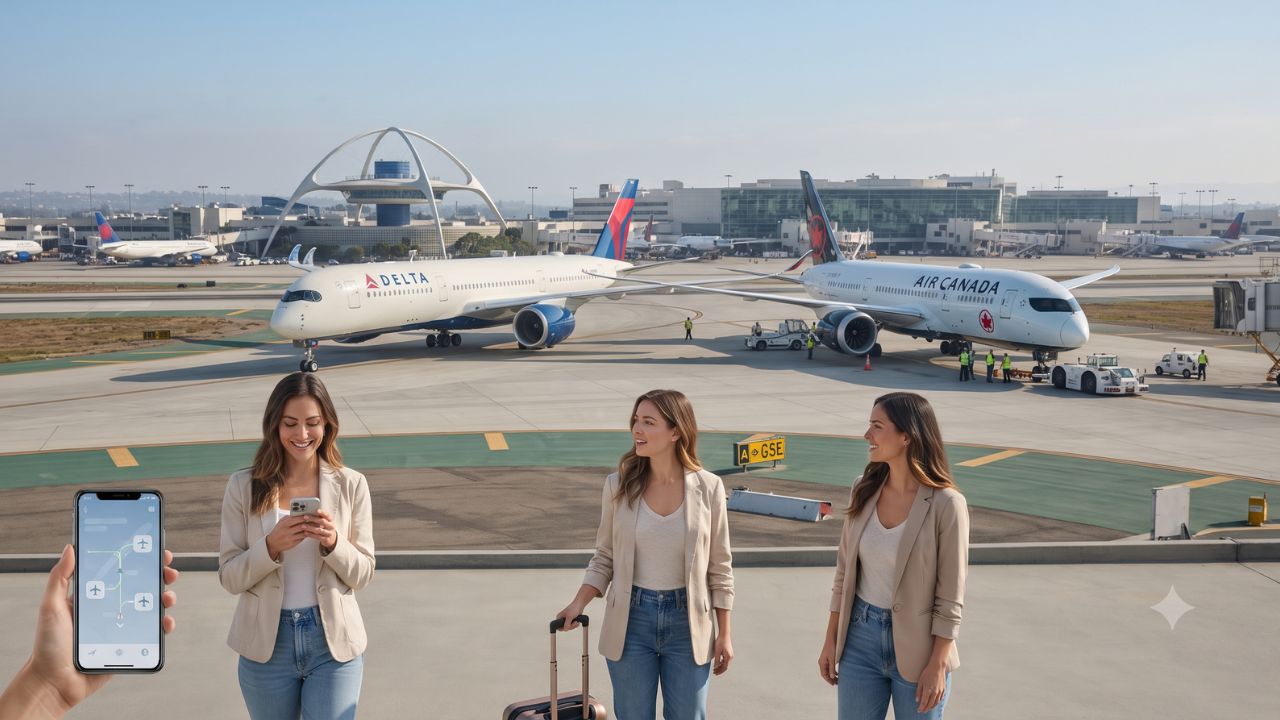
More than 80% of pilot-attributed runway incursions across American aviation occur during taxiing toward departure runways, but a rare ground collision between two widebody jets at Los Angeles International Airport occurred while one aircraft was actively under ground-tug tow. At approximately 10:30 a.m. local time on 6 October 2026, the left wingtip of Delta Air Lines Flight 7 (preparing for departure to Tokyo Haneda) clipped the horizontal stabilizer of Air Canada Flight 785 (arrived from Toronto) on an active taxiway at Los Angeles International Airport (LAX).
No injuries were reported among passengers or crew members on either aircraft. While the damaged Air Canada aircraft was immediately removed from service for structural inspection and repairs, overall runway and terminal operations across LAX continued without widespread airfield closures. The Federal Aviation Administration (FAA) and the National Transportation Safety Board (NTSB) launched an active federal investigation to determine ground-movement clearances, visual blind spots, and apron communication protocols.
The Incident Sequence: Widebody Maneuvers in Confined Airfield Space
The collision highlights the tight physical constraints of maneuvering intercontinental widebody jets across high-density airfield aprons. Delta Flight 7 was taxiing outbound under its own jet power along the designated taxiway route toward the southern departure runways. Concurrently, Air Canada Flight 785 had completed its transcontinental flight from Toronto Pearson and was being towed by a ground tug vehicle toward its arrival gate at Terminal 6 when the aircraft stopped short of the gate line.
As Delta's widebody jet maneuvered past, its extended left wingtip made physical contact with the upper trailing edge of Air Canada's tail empennage. Flight crews halted movement immediately, and emergency ground services inspected both fuselages before passengers were safely disembarked back into terminal gates.
| Ground Incident Factor | 6 October LAX Taxiway Collision | Typical Runway Collision / Major Incursion | Operational & Passenger Impact |
|---|---|---|---|
| Physical Airfield Location | Active taxiway / apron transition lane | Active runway / runway safety area (RSA) | Taxiway allows adjacent runway operations to proceed |
| Aircraft Movement Phase | Outbound taxi vs. ground-tug tow | High-speed take-off or landing roll | Low-speed contact prevents structural catastrophic impact |
| Passenger & Crew Injuries | Zero injuries reported | Varies significantly; potential severe risk | Rapid medical evaluation confirmed all clear |
| Overall Airport Operation | Continued normal runway departures | Frequently requires immediate runway closure | Airfield remained open with minor localized taxi re-routes |
| Investigation Authority | Active FAA & NTSB federal inquiry | Multi-agency federal accident board | Focuses on ground controller clearances & wingtip clearance |
| Aircraft Service Status | Air Canada jet grounded for repairs | Extended structural rebuild or airframe loss | Delta rotated replacement aircraft for Tokyo passengers |
What Makes LAX Ground Taxiways and Aprons Operationally Complex
Los Angeles International Airport is one of the most heavily congested aviation gateways on Earth. According to official data from Los Angeles World Airports (LAWA), LAX processed 73,709,594 passengers in 2025, comprising 36.95 million departing passengers and 36.76 million arriving travelers.
Delta Air Lines represents the airport's single largest passenger carrier, holding approximately 18.9% of LAX's total passenger market share and operating hundreds of daily domestic and long-haul international flights from Terminals 2 and 3. Air Canada accounts for roughly 1.6% of LAX traffic, funneling transpacific and Canadian connections through Terminal 6.
Managing over 73 million passengers across four parallel runways and nine passenger terminals requires thousands of ground movements each day. Large twin-aisle widebody airframes feature wingspans exceeding 60 to 65 meters, leaving narrow clearance margins when maneuvering through central taxiway alleyways while ground-tugs reposition arriving aircraft between active gates.
Visitor Insider Tips: Navigating LAX During Aircraft Schedule Resets
While contained ground incidents do not close the airport, individual flight cancellations and aircraft swaps require proactive passenger management:
- Monitor Aircraft Rotations on Airline Apps: When a widebody jet is pulled from service for structural inspection, airlines must reposition spare aircraft from maintenance hangars. Check the Delta Fly app or Air Canada app every 30 minutes for updated gate assignments, tail swaps, and revised departure estimates.
- Inter-Terminal Transfer Logistics: If connecting between Delta (Terminals 2/3) and Air Canada (Terminal 6) or partner carriers, use the airside pedestrian walkway connector network rather than exiting through landside security, saving 45 minutes of re-screening time.
- Minimum International Connection Buffers: When transiting through LAX to transpacific destinations (such as Tokyo, Seoul, or Sydney), maintain a layover window of at least two to three hours. Ground towing delays or taxiway holding patterns can compress tight one-hour domestic-to-international transfers.
- Flight Disruption Rebooking Rights: If an aircraft maintenance delay or taxiway incident causes a missed international connection, request same-day rebooking onto alliance partner airlines at dedicated customer service counters before leaving the secure terminal area.
- Ground Transit at LAX-it: When leaving the airport, walk or take the free dedicated shuttle to the LAX-it lot adjacent to Terminal 1 to board Uber, Lyft, or local taxis, avoiding lower-level arrivals traffic congestion.
Cultural and Environmental Context: Modernizing Apron Safety
As global travel rebounds toward 80 million annual passengers through Southern California, Discover Los Angeles and LAWA are implementing massive capital modernization programs to enhance airfield safety and environmental efficiency.
The airport's multi-billion-dollar Landside Access Modernization Program (LAMP)—anchored by the Automated People Mover (APM) train—reduces roadway vehicular traffic. Concurrently, airside safety upgrades include advanced Surface Movement Guidance and Control Systems (ASDE-X), modernized LED taxiway centerline lighting, and digitized ramp control coordination to provide ground vehicle drivers and flight crews with real-time positional awareness during low-visibility marine fog episodes common along the Pacific coast.
FAQ: LAX Taxiway Incident and Flight Operations 2026
Did the Delta and Air Canada ground collision cause LAX airport closures?
No. The incident occurred on an active taxiway at low speed. Runway operations and overall airport departures continued normally without broader facility shutdowns.
Were any passengers injured in the LAX collision?
No injuries were reported among passengers or crew members on either Delta Flight 7 or Air Canada Flight 785.
What caused the wingtip contact between the two aircraft?
The FAA and NTSB are investigating ground movement clearances, air traffic control communications, and towing protocols to determine how the wingtip and tail stabilizer made contact.
What should I do if my flight experiences an aircraft substitution at LAX?
Check your airline's mobile app for real-time gate changes, seat reassignments, and updated departure boarding times. Contact customer service immediately if an aircraft delay threatens onward connections.
Rigorous ground movement discipline and multi-agency safety investigations ensure that even at world-scale megahubs like LAX, aviation safety protocols remain uncompromised.
Related Travel Guides
Disclaimer
This article is for informational and educational purposes only. It does not constitute legal, financial, or professional advice. While we strive to provide accurate and up-to-date information, travel policies, regulations, and conditions change rapidly. Always verify information with official sources before making travel decisions. Nomad Lawyer makes no representations about the accuracy, reliability, completeness, or suitability of the information provided. Readers should consult qualified professionals for advice specific to their circumstances. The views expressed in this article are those of the author and do not necessarily reflect the views of Nomad Lawyer.
Preeti Gunjan
Contributor & Community Manager
A passionate traveller and community builder. Preeti helps grow the Nomad Lawyer community, fostering engagement and bringing the reader experience to life.
Learn more about our team →