
Dandong Sees Passenger Trains to North Korea Return After Six Years
Dandong restores passenger rail service to Pyongyang in 2026 after six years of Covid suspension. The historic Dandong–Pyongyang route reopens, signaling renewed China–North Korea connectivity and potential economic revival for the border city.

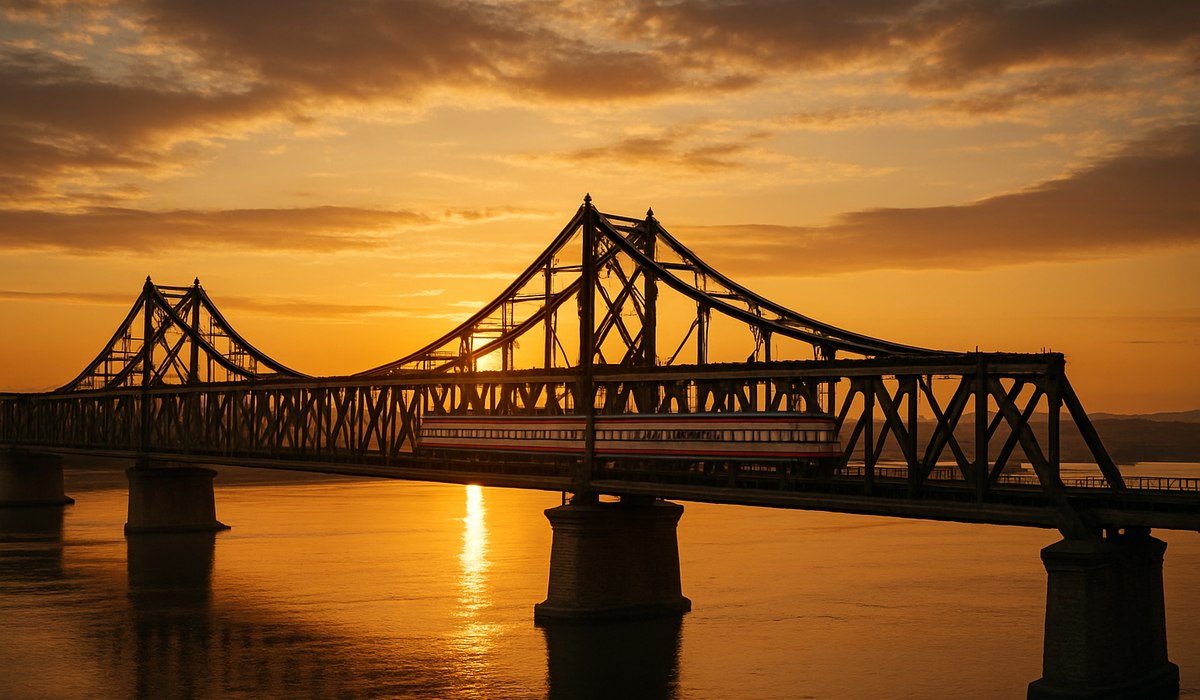
Image generated by AI
Lede
Dandong, the northeastern Chinese border hub, has reopened passenger trains to North Korea after a six-year suspension tied to pandemic border closures. Service resumed on March 12, 2026, marking the first scheduled Dandong–Pyongyang passenger trains since January 2020. This restoration of the historic Sino-Korean Friendship Bridge corridor signals deepening cross-border connectivity and offers potential economic relief to a city whose identity centers on its position opposite North Korea's Sinuiju.
Trains Roll Again Across the Yalu River
The Dandong–Pyongyang passenger route returned to operation under China State Railway Group, integrating with the broader Beijing–Pyongyang timetable. The iconic journey crosses the Yalu River via the 1950s-era Sino-Korean Friendship Bridge, one of the world's most politically significant rail corridors.
According to railway notices and regional media coverage, daily services now connect these cities after a 78-month hiatus. Freight trains had resumed sporadically since 2020, but the restart of scheduled passenger service represents a qualitative leap in normalization. Rail specialists note that the through-train, which first entered service in the 1950s, had rarely faced suspension prior to the pandemic.
The reopening coincides with broader diplomatic thaw between Beijing and Pyongyang, reflecting both governments' interest in restoring routine people-to-people connections. For travelers and businesses, the restored link offers the most direct access to North Korea from mainland China. Journey times remain consistent with pre-2020 schedules, typically spanning 24–28 hours for the Dandong–Pyongyang segment depending on border procedures.
From Freight to Passenger Services
Before 2020, cargo movements dominated the Dandong corridor, but passenger services formed a visible thread connecting the two nations. The pandemic severed all scheduled people movement while freight continued intermittently under strict protocols.
The restart follows a carefully calibrated reopening strategy. Postal routes resumed first, followed by selective freight operations, with passenger trains now marking the final frontier. This phased approach reflects both governments' confidence in border stability while maintaining tight security oversight.
Chinese travel agencies have already begun advertising itineraries pairing Beijing or Shenyang with Dandong onward journeys to Pyongyang. Tour operators report growing demand, particularly among business delegations and cultural exchange groups. However, access to North Korea remains governed by entry permits issued by Pyongyang authorities, and policies remain subject to rapid change.
Rail booking platforms like Trainline typically do not feature North Korean routes, so travelers must book through authorized Chinese travel agencies or directly with China State Railway Group. Direct contact with regional offices in Dandong or Beijing provides the most reliable reservation pathway.
Dandong's Border Economy Hopes for Revival
The city of Dandong, home to approximately 2.4 million residents, has built its modern identity around cross-border commerce and tourism. From 2000 to 2019, riverfront hotels, restaurants, and tour operators thrived on steady flows of traders, tourists, and day visitors seeking views toward North Korea's Sinuiju.
The six-year closure decimated this ecosystem. Hotel occupancy plummeted, restaurants closed, and the city's logistics sector contracted sharply. Shipping firms that once facilitated regular border movements shifted focus or relocated operations.
Now, Dandong sees passenger trains as a lifeline for economic recovery. Local authorities project that renewed rail connectivity could restore 30–40% of pre-pandemic visitor volumes within three years. Hotels have already begun renovation programs, and tourism boards are updating promotional campaigns to target travelers interested in North Korea and cross-border rail experiences.
Logistics firms report renewed interest from clients seeking to establish regular import–export pipelines. Although freight movement operates under separate regulatory frameworks, the normalization of passenger services signals to businesses that the corridor has stabilized. Regional trade associations expect gradual growth in containerized cargo, automotive parts, and light manufacturing goods moving through Dandong.
The symbolic importance extends to Dandong's role as a window on China–North Korea relations. For decades, the city's economic health reflected the broader bilateral relationship. The renewed trains underscore Beijing's commitment to positioning itself as North Korea's primary economic partner, a message reinforced by simultaneous efforts to restore Beijing–Pyongyang flights.
What This Means for Cross-Border Travel
Travelers interested in North Korea now have a restored railway corridor that offers advantages over air travel: lower cost, scenic Yalu River views, and deeper engagement with the Dandong border experience.
Key implications for visitors:
-
Route accessibility: The Beijing–Dandong–Pyongyang itinerary creates a seamless overland connection from China's capital into North Korea without aviation constraints or higher ticket costs.
-
Economic benefits: Reduced airfare dependency makes North Korea tourism more accessible to budget-conscious travelers and educational groups.
-
Border experience: The 24–28 hour journey showcases the Sino-Korean frontier landscape and allows travelers to explore Dandong's riverfront district and museums during layovers.
-
Booking complexity: Tickets require advance purchase through authorized travel agencies; independent booking remains restricted due to North Korean entry permit requirements.
-
Schedule stability: Daily departures from Dandong reduce travel planning uncertainty compared to the sporadic freight-only operations of recent years.
-
Regional tourism growth: Nearby cities like Shenyang and Jilin province are positioned to benefit from increased traveler transit volumes.
Tour operators across northeast China are launching specialized packages bundling Dandong accommodation, riverfront sightseeing, and rail transfers to Pyongyang. Prices typically range from $800–$1,500 USD per person for the full China–North Korea journey, depending on group size and onboard amenities.
How to Book the Best Fare
Booking rail tickets on the Dandong–Pyongyang route differs significantly from standard Chinese railway reservations. Here's the recommended process:
Step 1: Identify authorized travel agencies. Major agencies in Beijing, Shenyang, and Dandong hold specific licenses for North Korea tourism and rail bookings. Look for operators certified by China's Tourism Bureau with documented North Korea experience. Avoid unofficial brokers or unverified platforms.
Step 2: Gather required documents. North Korea entry requires a valid passport (valid for at least six months), completed visa application, and often a letter of invitation from a Pyongyang sponsor or tour operator. Processing times range from 5–15 business days.
Step 3: Request fare quotes early. Rail fares fluctuate based on season and occupancy. Booking 4–8 weeks in advance typically secures better rates, though advance purchase sometimes attracts premium pricing due to limited inventory. Budget $120–$180 USD for Dandong–Pyongyang sleeper accommodations.
Step 4: Confirm travel dates with agency. Unlike standard Trainline bookings, Dandong–Pyongyang service operates on fixed weekly or bi-weekly schedules. Confirm departure dates match your visa approval timeline.
Step 5: Arrange payment. Most agencies accept bank transfers, credit cards, or WeChat Pay. Ensure you receive an official receipt and ticket itinerary via email before traveling.
Pro tip: Combine your rail fare with a package tour. Many agencies bundle ticket, accommodation, and guided tours at rates lower than separate bookings, reducing total costs by 15–25%.
Key Facts and Figures
| Metric | Details |
|---|---|
| Service restart date | March 12, 2026 |
| Hiatus duration | 78 months (January 2020–March 2026) |
| Route | Dandong, |
Disclaimer
This article is for informational and educational purposes only. It does not constitute legal, financial, or professional advice. While we strive to provide accurate and up-to-date information, travel policies, regulations, and conditions change rapidly. Always verify information with official sources before making travel decisions. Nomad Lawyer makes no representations about the accuracy, reliability, completeness, or suitability of the information provided. Readers should consult qualified professionals for advice specific to their circumstances. The views expressed in this article are those of the author and do not necessarily reflect the views of Nomad Lawyer.
Raushan Kumar
Founder & Lead Developer
Full-stack developer with 11+ years of experience and a passionate traveller. Raushan built Nomad Lawyer from the ground up with a vision to create the best travel and law experience on the web.
Learn more about our team →