
Dallas Love Field Flight Cancellations and Delays Ground Southwest Airlines Operations Across National Interconnected Networks
Dallas Love Field Airport records 100 delays and 12 cancellations, impacting Southwest Airlines' point-to-point network.

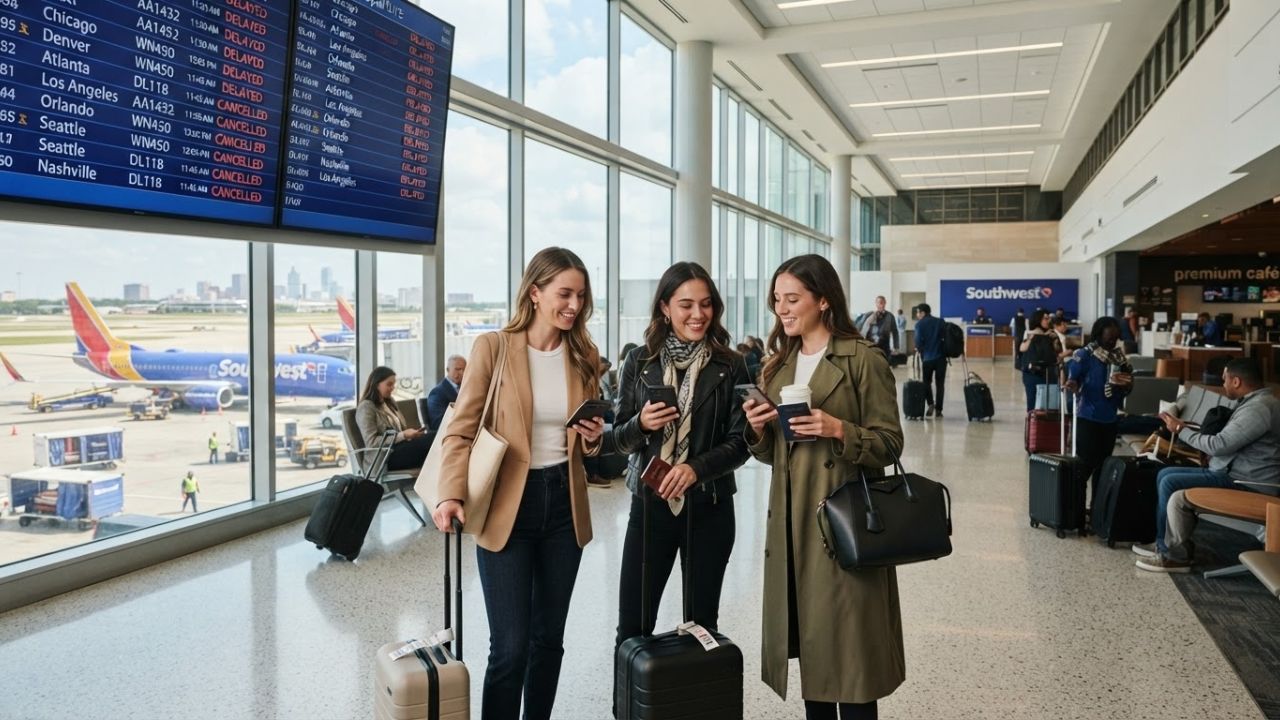
Image generated by AI
SEO Title: Dallas Love Field Flight Cancellations 2026
Meta Description: Dallas Love Field (DAL) faces 100 delays and 12 cancellations, affecting Southwest Airlines' point-to-point operations.
Slug: dallas-love-field-flight-cancellations-delays-southwest-airlines-2026
Standfirst: A wave of Dallas Love Field flight cancellations and delays disrupted regional travel networks on July 6, 2026, forcing 100 delays and 12 cancellations across Southwest operations.
Article
[Dallas, July 6, 2026] — A wave of Dallas Love Field flight cancellations and delays disrupted regional travel networks on July 6, 2026. Airlines recorded 100 delays and 12 cancellations, impacting Southwest operations.
Dallas Love Field (DAL) is the primary base of operations for Southwest Airlines, which utilizes a high-frequency point-to-point routing model. Unlike traditional hub-and-spoke airlines that park aircraft for extended layovers, point-to-point carriers keep aircraft moving through multiple cities each day. When airspace restrictions or terminal backlogs delay an aircraft at an outstation like Chicago Midway or Baltimore, the delay accumulates on subsequent legs, leading to late arrivals in Dallas. The current data illustrates how Southwest's tight aircraft turnaround schedules are highly sensitive to upstream network congestion.
Point-to-Point Network Stress at Dallas Love Field
A total of 12 departures were cancelled and 100 flights were delayed at Dallas Love Field. The cancellations blocked routes linking north Texas to the Midwest and East Coast corridors.
Southwest Airlines accounted for all 12 flight cancellations. Delayed incoming aircraft caused rolling gate congestion and baggage handling holds, leading to passenger travel delays.
Carrier Operational Stress: Southwest Airlines Bearing the Burden
Carrier metrics show that scheduling stress was almost entirely concentrated within one airline:
- Southwest Airlines: Logged 12 cancellations and 96 delays, impacting 24% of its scheduled operations.
- Delta Air Lines: Recorded one delay and zero cancellations, indicating minimal network spillover.
- JSX: Reported three delays, reflecting isolated schedule adjustments on regional routes.
This concentration suggests that single-carrier operational models face higher volatility during airspace constraints.
Outstation Origin Vulnerabilities and Inbound Ripple Effects
Operational delays at diverse US outstations disrupted inbound arrivals into Dallas:
- Chicago Midway (MDW): Contributed two cancellations, blocking Midwest passenger flows.
- Jacksonville (JAX) & Fort Lauderdale (FLL): Each registered one departure cancellation.
- Denver (DEN) & Baltimore/Washington (BWI): Combined for seven delayed departures.
These outstations feed major business corridors, making schedule consistency difficult during peak periods.
Inbound Destination Gate Congestion and Return Backlogs
Inbound aircraft rotations experienced similar scheduling friction across major hubs:
- Chicago Midway (MDW): Registered two inbound cancellations.
- Memphis (MEM) & Los Angeles (LAX): Logged four delays combined, disrupting return sequences.
- LaGuardia (LGA) & Orlando (MCO): Contributed multiple delays, extending gate turnaround times.
These delays prevented airlines from restoring schedule integrity before evening departure banks.
Passenger Guidance and Alternative Routing Protocols
Stranded travelers at Dallas Love Field should implement these tracking steps:
- Monitor Inbound Rotations: Track the incoming aircraft tail number via airline apps to anticipate gate delays.
- Utilize Alternative Hubs: Consider rebooking departures through nearby Dallas/Fort Worth (DFW) to secure open slots.
- Request Early Rebooking: Access digital self-service tools immediately once an outstation cancellation is confirmed.
Travelers should confirm baggage tracking status if rebooked onto alternative flights.
Key Facts Breakdown
- 100 Flight Delays: Operational backlogs delayed dozens of departures across Texas and the Midwest.
- 12 Cancellations: Southwest Airlines grounded 12 flights, leading all carriers at DAL.
- Southwest Operations Hit: Scheduling pressure impacted 24% of Southwest's flight schedules.
- Midwest Blocked: Chicago Midway registered four total cancellations, disrupting connecting traffic.
Data Table
| Operating Carrier | Flight Cancellations | Flight Delays | Network Segment Impact | Operational Category |
|---|---|---|---|---|
| Southwest Airlines | 12 cancellations | 96 delays | 24% of operations impacted | Mainline point-to-point operator |
| JSX | 0 cancellations | 3 delays | Low-level isolated delays | Regional point-to-point charter |
| Delta Air Lines | 0 cancellations | 1 delay | Minimal isolated impact | Mainline hub-and-spoke carrier |
| TOTALS | 12 cancellations | 100 delays | High Point-to-Point Gridlock | Airport-Level Aggregation |
Why This Matters
Our analysis of the flight data indicates that the Dallas Love Field flight cancellations and delays highlight the operational vulnerability of Southwest Airlines' point-to-point network to cascading delays. Unlike Delta, which operates a hub-and-spoke model with regional buffers, Southwest routes its Boeing 737 aircraft through multiple consecutive outstations daily. When outstations like Chicago Midway and Jacksonville experience flight cancellations, it prevents the physical aircraft from reaching Dallas Love Field for subsequent departures. This indicates that point-to-point networks lack the operational elasticity to recover from regional disruptions, forcing carriers to cancel flights rather than run extended delays that displace crew rotations across multiple days.
Industry Outlook
Market trends suggest that point-to-point carriers will introduce longer layover buffers at major outstations by 2028 to isolate regional delay cascades. Long-term projections indicate that Dallas Love Field will expand gate allocations to allow airlines to store backup aircraft for peak departure windows. Expect carriers to deploy automated crew re-allocation systems to prevent crew duty limit violations during multi-city disruptions.
FAQ
Why were Southwest Airlines flights cancelled at Dallas Love Field?
Cancellations resulted from cascading aircraft displacement, outstation delays, and crew rotation constraints.
How did Chicago Midway delays affect Dallas Love Field?
Cancellations and delays at Chicago Midway prevented incoming aircraft from arriving at DAL, stalling subsequent flights.
Can passengers rebook flights through alternative Dallas airports?
Yes, passengers can request rebooking through nearby Dallas/Fort Worth International Airport (DFW) during major disruptions.
Related Travel Guides
- John F Kennedy International Airport Flight Cancellations and Delays Strand Hundreds of Transatlantic and Domestic Travelers
- Airbus A220 Airspace Cabin Upgrade and 160-Seat Expansion Set to Redefine Global Short-Haul Aviation Strategy
- Cleveland Hopkins International Airport Flight Delays and Cancellations Disrupted by Cascading US Hub Congestion
Disclaimer
This article is for informational and educational purposes only. It does not constitute legal, financial, or professional advice. While we strive to provide accurate and up-to-date information, travel policies, regulations, and conditions change rapidly. Always verify information with official sources before making travel decisions. Nomad Lawyer makes no representations about the accuracy, reliability, completeness, or suitability of the information provided. Readers should consult qualified professionals for advice specific to their circumstances. The views expressed in this article are those of the author and do not necessarily reflect the views of Nomad Lawyer.
Kunal K Choudhary
Co-Founder & Contributor
A passionate traveller and tech enthusiast. Kunal contributes to the vision and growth of Nomad Lawyer, bringing fresh perspectives and driving the community forward.
Learn more about our team →