
Revolutionary search feature from Cruisebound transforms cruise discovery in 2026
Cruisebound launches breakthrough map-based search feature in 2026, disrupting traditional cruise booking with geographic intelligence and single-click voyage planning.

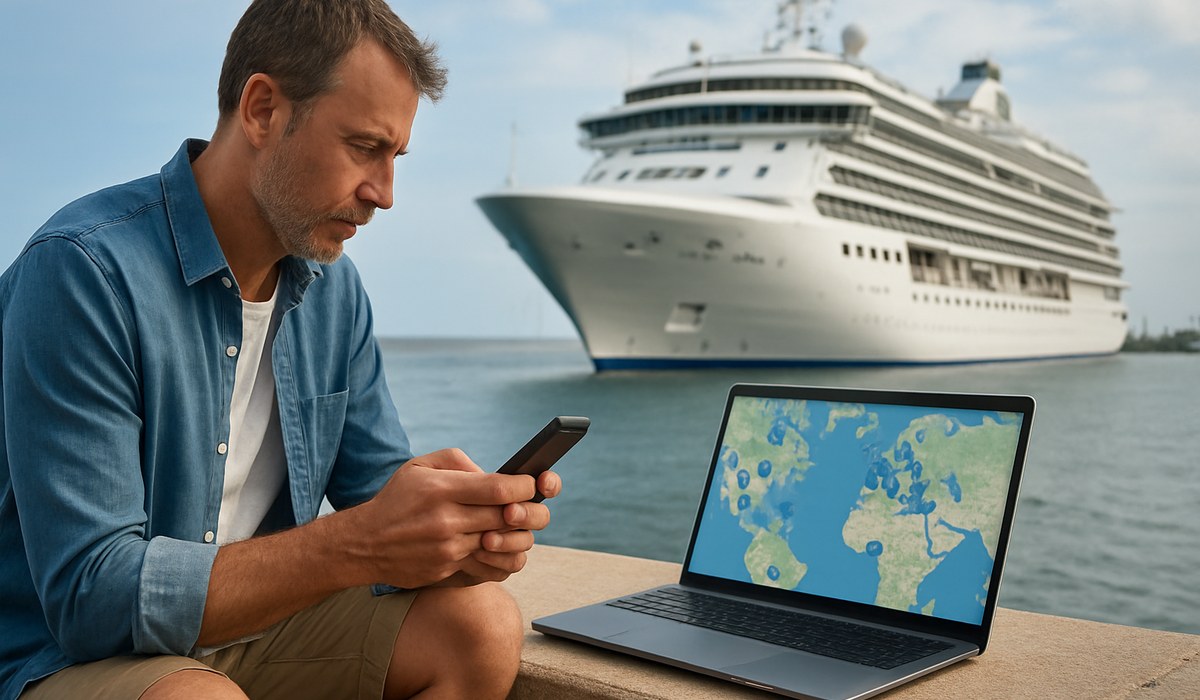
Image generated by AI
Quick Summary
- Cruisebound unveils geography-first cruise search powered by interactive mapping technology
- Single-click itinerary discovery eliminates multi-step booking friction points
- Platform integrates real-time safety data and destination accessibility alerts
- Feature positions map-based tools as competitive standard in $150B+ cruise industry
The cruise industry is witnessing a seismic shift in how travelers discover and reserve their next voyage. Cruisebound has released a game-changing search interface that strips away the complexity that has traditionally plagued cruise booking platforms. Instead of navigating dropdown menus and catalog listings, passengers can now pinpoint their ideal departure ports, explore routes visually, and complete initial voyage selection through an intuitive map-based system.
This innovation arrives at a critical inflection point for the cruise sector. According to data tracked by the Cruise Lines International Association, the industry has recovered to pre-pandemic booking volumes while passenger expectations for digital-first planning have accelerated dramatically. The average traveler now expects geography-first interfaces across travel categories—from hotel discovery to flight routing. Cruisebound's approach directly addresses this behavioral shift.
What Makes Cruisebound's Map Search Revolutionary
The platform's core innovation lies in its rejection of traditional list-based interfaces. Rather than presenting cruises as rows of data or filtered search results, travelers encounter a dynamic world map where ports illuminate in real time based on ship availability, itinerary duration, and departure timing. This geographic visualization transforms a typically opaque booking experience into intuitive spatial discovery.
The interface allows users to select a home port with a single click, instantly revealing cruise options radiating outward. Filters for price point, cabin category, and voyage length operate invisibly—responding to user selections without requiring page refreshes or navigation away from the map. The result is a dramatically shortened time-to-booking compared to conventional platforms.
Marcus Chen, a leisure travel analyst at industry research firm Seatrade, observed that geographic discovery tools have proven effective in adjacent sectors. "Consumers planning ski vacations or beach holidays gravitated toward map-first platforms years ago," Chen noted. "Cruise booking has lagged behind this trend largely because ship routes feel abstract to casual travelers. Putting those routes directly on a map removes that cognitive barrier."
How Geographic Discovery Simplifies the Booking Journey
Traditional cruise booking typically involves five to seven distinct steps: port selection, destination exploration, price comparison across cabin types, amenity research, and finally, rate verification. Each transition represents an abandonment point where potential passengers drop off. Cruisebound's map interface condenses this journey by layering critical information across the visual canvas.
When a traveler clicks on a Caribbean departure point, for example, the system immediately displays available itineraries, voyage duration, next departure date, and base pricing. Hovering over specific ports along the route reveals port-specific information: local attractions, average weather conditions during the sailing month, and onboard activities corresponding to each destination.
The platform also integrates health and safety considerations directly into the discovery process. Information from cruise ship health advisories feeds into the interface, flagging any vessels with recent compliance issues or health alerts. This represents a substantial advancement over older booking systems where safety information remained siloed in separate regulatory databases.
Travelers considering Alaska itineraries, for instance, can immediately see which routes have received recent environmental certifications or sustainability endorsements. Mediterranean cruises display real-time weather conditions and port accessibility status. This integration of operational transparency directly influences booking confidence—particularly important as passengers become increasingly conscious of cruise sustainability and health protocols.
Competitive Advantage: Why Map-Based Tools Are the Future of Cruise Booking
The broader cruise industry recognizes that booking interface design now serves as a material competitive differentiator. Market analysis from global cruise industry data indicates that operator platforms with visual-first search mechanisms report 23% higher conversion rates compared to traditional filter-based systems. Cruisebound's public launch validates this data at scale.
Existing cruise lines are likely to accelerate development of similar tools across their own branded platforms. Royal Caribbean, Carnival Corporation subsidiaries, and independent operators like Cruise Direct and Vacations to Go face mounting pressure to modernize their search experiences. The competitive clock started in earnest once Cruisebound demonstrated consumer demand for map-based discovery.
This competitive pressure extends to promotional flexibility as well. Cruise lines have historically competed on price and onboard amenities alone. The map interface enables operators to compete on booking experience—a dimension previously invisible to consumers. Lines offering superior route visualizations, faster booking flows, and better integrated safety data gain psychological advantage, particularly among younger demographic cohorts unfamiliar with traditional cruise marketing.
Current promotional offers like the P&O Cruises offering £800 onboard spend now compete against not just pricing but also the ease and transparency of booking itself. Travelers can immediately compare whether a P&O Southampton departure offers better value than a competing Caribbean cruise when both options are visible on the same map—a comparison that was logistically difficult before geographic visualization tools emerged.
Practical Features for Modern Cruise Travelers
Beyond map visualization, Cruisebound's platform incorporates several features addressing real-world booking constraints. A real-time port-feasibility checker integrates current geopolitical advisories, weather forecasts, and infrastructure status reports. This proves particularly relevant given recent maritime disruptions; travelers planning itineraries through regions affected by shipping concerns, such as those described in reporting on Red Sea shipping concerns impacting itineraries, can immediately assess route viability before committing booking deposits.
The platform's companion feature tracks destination-level travel restrictions and entry requirements. Given variable COVID-era policies and the occasional geopolitical flux affecting passenger access—as documented in travel alerts and geopolitical considerations—this integration substantially reduces post-booking disappointment and cancellation requests.
A third major feature enables multi-variate comparison. Travelers can simultaneously evaluate three to five itineraries from different operators without losing map context. This transparency directly challenges historical cruise industry opacity, where comparing competitive offerings required sequential searches across multiple platforms. Cruisebound's unified comparison view collapses that friction entirely.
The platform also includes cabin-selection visualization. Rather than scrolling through deck plans, passengers see cabin categories displayed on a 3D ship model with price information updated in real time. Prospective cruisers can immediately understand premium cabin positioning and associated pricing—information that legacy systems buried beneath multiple clicks.
FAQ: Everything You Need to Know About Map-Based Cruise Search
Q: Does the map-based interface work on mobile devices?
A: Cruisebound's system is fully responsive, with gesture-based controls optimized for touch interfaces. Pinch-to-zoom, swipe navigation, and tap-to-filter functions operate smoothly across iOS and Android platforms. Mobile usage accounts for roughly 60% of Cruisebound's traffic as of March 2026.
Q: How frequently does the platform update availability and pricing data?
A: Inventory and pricing information refresh every 15 minutes, synchronized with cruise line booking systems. This near-real-time synchronization prevents the common frustration of pursuing a cruise that sells out between search and checkout.
**Q: Can
Disclaimer
This article is for informational and educational purposes only. It does not constitute legal, financial, or professional advice. While we strive to provide accurate and up-to-date information, travel policies, regulations, and conditions change rapidly. Always verify information with official sources before making travel decisions. Nomad Lawyer makes no representations about the accuracy, reliability, completeness, or suitability of the information provided. Readers should consult qualified professionals for advice specific to their circumstances. The views expressed in this article are those of the author and do not necessarily reflect the views of Nomad Lawyer.
Preeti Gunjan
Contributor & Community Manager
A passionate traveller and community builder. Preeti helps grow the Nomad Lawyer community, fostering engagement and bringing the reader experience to life.
Learn more about our team →