
Cruise Ship Passengers Stranded After Deadly Hantavirus Outbreak in 2026
Dutch expedition cruise MV Hondius becomes site of first documented cruise ship outbreak of Andes hantavirus in 2026, leaving 150 passengers and crew stranded off West Africa and claiming three lives.

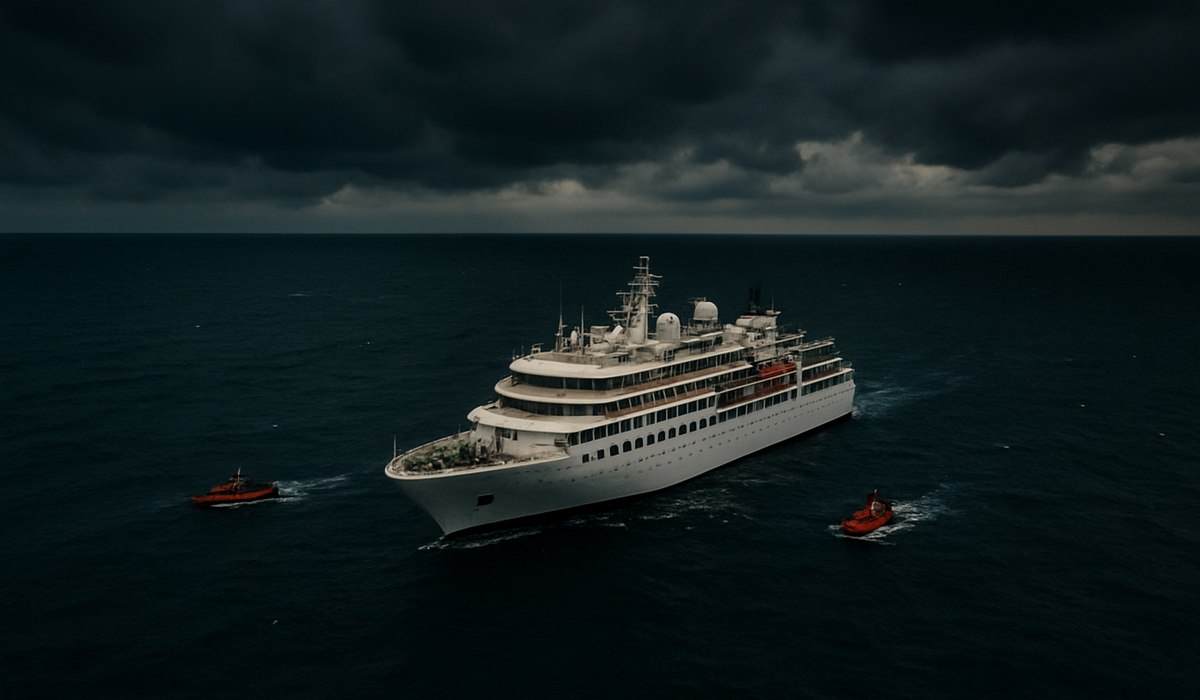
Image generated by AI
Expedition Cruise Becomes Public Health Crisis
The MV Hondius, a Dutch-flagged luxury expedition vessel, has transformed a once-in-a-lifetime Antarctic voyage into an international public health emergency. What began as an exclusive polar expedition from Ushuaia, Argentina, has left approximately 150 cruise ship passengers and crew members stranded offshore Cape Verde in May 2026 as health authorities worldwide mobilize to contain the first documented cruise ship outbreak of Andes hantavirus. Three passengers have died from confirmed or suspected hantavirus infection, prompting emergency evacuations and sparking a global contact-tracing operation across multiple continents.
Outbreak Timeline: From Antarctica to Stranded Offshore
The MV Hondius departed South America on an ambitious itinerary designed to deliver adventure travelers to some of Earth's most remote destinations. The expedition route carried passengers southward toward Antarctic waters before charting a northbound course across the South Atlantic toward West African waters and the Cape Verde archipelago.
In mid-April 2026, the first warning signs emerged when multiple passengers developed acute respiratory symptoms consistent with severe viral illness. By April 11, a Dutch passenger in his 70s died aboard the vessel. Within weeks, two additional passenger deaths followed, all exhibiting respiratory distress and acute illness markers. By early May, the ship remained anchored offshore Cape Verde with cruise ship passengers and crew still confined to quarters while several critically ill individuals had been evacuated to medical facilities in South Africa and Europe.
This marks an unprecedented event in cruise ship history. Never before has an Andes hantavirus outbreak been documented aboard a commercial cruise vessel, making the MV Hondius case a watershed moment for maritime health protocols. Investigators from multiple nations are now examining exposure pathways, with focus on whether initial infection occurred during pre-embarkation activities in South America or during the Antarctic phase of the voyage.
Andes Hantavirus Confirmed: First Cruise Ship Outbreak of Its Kind
Laboratory analysis has definitively identified Andes hantavirus in multiple confirmed cases linked to the MV Hondius voyage. This particular strain represents a significant public health concern because, unlike most hantavirus variants, Andes virus demonstrates documented person-to-person transmission capability in close-contact environments.
Hantaviruses are naturally carried by rodent populations and typically transmit to humans through contact with infected animal droppings, urine, or saliva—particularly when aerosolized particles are inhaled during disturbance of contaminated materials. However, the Andes strain behaves differently. Technical briefings from the World Health Organization and European health agencies confirm this strain spreads between humans in sustained close-contact situations, such as household settings or between intimate partners.
Cruise ship passengers living in confined cabins and sharing common ventilation systems face elevated transmission risk compared to general populations. The extended duration aboard the MV Hondius—with passengers spending weeks in close quarters during the Antarctic crossing—created ideal conditions for person-to-person spread once the virus was introduced.
Current medical assessments indicate that transmission still requires prolonged close contact rather than casual interaction. Respiratory droplets and direct contact represent primary transmission routes. There remains no evidence suggesting Andes hantavirus spreads with the ease and speed of influenza or COVID-19.
Learn more about hantavirus from the CDC's official hantavirus resource page.
Investigation Underway: Tracking Patient Zero and Exposure Routes
Health investigators face a complex puzzle in determining how hantavirus initially boarded the MV Hondius. Two primary exposure scenarios are under active investigation: pre-embarkation exposure during passenger assembly in Argentina, or infection acquired during the Antarctic portion of the voyage.
The ship's operator has publicly stated that no rodents were discovered during shipboard inspections and that rigorous environmental and sanitation protocols were maintained throughout the Antarctic segment. This declaration has led investigators to focus increasingly on Ushuaia and surrounding regions, where passengers gathered before departure.
Ushuaia's location in Tierra del Fuego—a region inhabited by rodent species that may carry hantavirus—presents a plausible exposure environment. Passengers may have encountered contaminated areas at hotels, terminal facilities, or during pre-cruise excursions before boarding.
However, the extended incubation period of hantavirus creates investigative challenges. Symptoms typically emerge 1 to 8 weeks after exposure, meaning infected individuals may have boarded asymptomatically and remained unaware of their infection for days or weeks.
Geographic origin tracing has become critical. Investigators are mapping passenger movements in South America during the five days preceding embarkation, examining accommodation facilities, dining locations, and ground transportation routes for potential exposure sites.
Passenger and Crew Impact: Medical Evacuations and Extended Isolation
Approximately 150 cruise ship passengers and crew members remain aboard the MV Hondius as of May 2026, confined to their cabins during medical quarantine protocols. Extended isolation at sea creates significant psychological and medical strain on those still aboard, particularly elderly passengers and individuals with pre-existing health conditions.
Medical evacuations have proceeded in stages. Critically ill patients showing severe respiratory compromise were airlifted to hospitals in Cape Town, South Africa, and to medical centers across Europe. These emergency removals taxed available helicopter resources and required coordination between maritime authorities, national health ministries, and international aviation regulators.
For cruise ship passengers remaining aboard, the situation presents unprecedented challenges. Daily symptom monitoring, restricted movement, and psychological uncertainty characterize conditions aboard the vessel. Ships are designed for mobility and social engagement; enforced isolation inverts the cruise experience entirely.
Ship's medical facilities, though equipped for routine ailments, are inadequate for managing a spreading infectious disease outbreak. Limited isolation rooms, insufficient ventilation controls, and constrained medication supplies create cascading pressure on the MV Hondius medical team.
Crew members face additional burdens. Many are nationals of countries with strict travel restrictions, now facing extended separation from home amid a health crisis. Labor unions and maritime advocacy organizations have raised concerns about working conditions and occupational safety protections aboard the stricken vessel.
Dozens Disembarked Before Outbreak Was Flagged: Global Spread Concerns
A critical public health complication emerged when approximately 40 cruise ship passengers disembarked at Cape Verde in late April 2026, before the outbreak's magnitude became apparent. These individuals dispersed globally, boarding commercial flights to destinations across Europe, North America, and Asia without systematic health screening or contact-tracing protocols.
This uncontrolled passenger dispersion has created what epidemiologists describe as a "secondary exposure front." Travelers who shared aircraft cabins, airport terminals, and airline ground services with potentially infectious individuals now represent vectors for geographical disease expansion.
At least one former MV Hondius passenger tested positive for Andes hantavirus upon returning to Switzerland. Another passenger developed severe illness requiring intensive care admission in South Africa. Airlines that transported these individuals have been identified and flight crew members assessed for exposure risk.
National health authorities across multiple countries have issued public health alerts for travelers who shared specific flights or airport facilities with confirmed cases. In the Netherlands, one airline flight attendant underwent isolation and testing after direct contact with a symptomatic passenger.
The Africa CDC and WHO have both identified the cruise ship setting combined with subsequent international air travel as exceptional risk factors for creating a complex, multi-country disease cluster. Typically, diseases are contained to geographic regions; the MV Hondius outbreak's combination of maritime and aviation transmission created unprecedented exposure pathways.
Despite these complications, current risk assessments from WHO, the Africa CDC, and European health agencies classify general population risk as low. Sustained community transmission outside direct contact networks is not expected, though focused surveillance continues in countries where disembarked passengers landed.
Visit Cruise Critic's cruise news section for ongoing updates on cruise ship safety protocols and industry responses to health incidents.
Disclaimer
This article is for informational and educational purposes only. It does not constitute legal, financial, or professional advice. While we strive to provide accurate and up-to-date information, travel policies, regulations, and conditions change rapidly. Always verify information with official sources before making travel decisions. Nomad Lawyer makes no representations about the accuracy, reliability, completeness, or suitability of the information provided. Readers should consult qualified professionals for advice specific to their circumstances. The views expressed in this article are those of the author and do not necessarily reflect the views of Nomad Lawyer.
Kunal K Choudhary
Co-Founder & Contributor
A passionate traveller and tech enthusiast. Kunal contributes to the vision and growth of Nomad Lawyer, bringing fresh perspectives and driving the community forward.
Learn more about our team →