
Cruise Lines Sued: German Court Awards €986 for Unenforced Lounger Rules
A German tourist won €986 in a 2026 lawsuit against unenforced lounger reservation policies. The precedent could reshape how cruise lines enforce chair-hogging rules worldwide and establish new passenger rights standards.

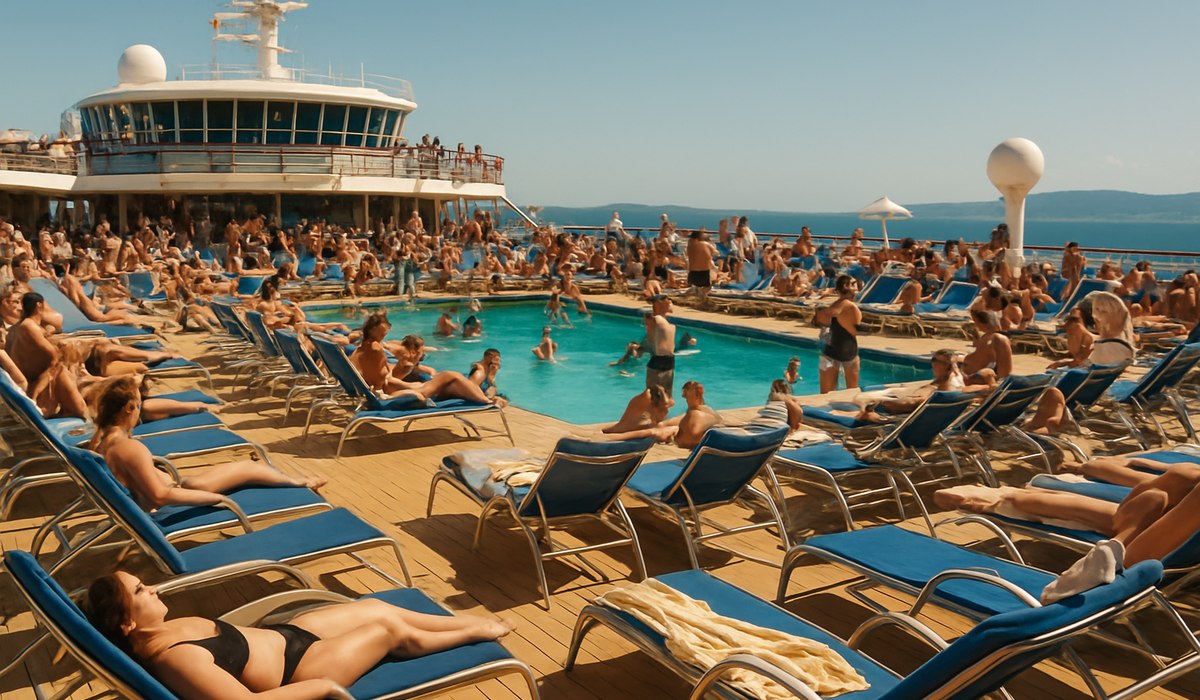
Image generated by AI
German Court Ruling Could Transform Cruise Industry Lounger Policies
A German tourist's successful €986 refund lawsuit in 2026 marks a pivotal moment for cruise lines worldwide. The plaintiff sued his tour operator after staff failed to enforce lounger reservation rules at a Greek resort, preventing his family of four from accessing pool chairs during their vacation. Though the case involved a land-based resort rather than a cruise ship, legal experts warn that cruise lines sued on similar grounds could face substantial liability. The ruling establishes that tour operators—and by extension, cruise lines—bear responsibility for enforcing their own published policies, potentially reshaping how the industry manages pool deck conflicts.
The German Lounger Lawsuit: What Happened
A German holidaymaker filed suit after repeated mornings searching for available loungers proved fruitless at his Greek resort. The resort maintained a written policy banning towel reservations, yet staff made minimal effort to enforce it. Each day, the tourist's family searched for chairs as early as 6 a.m., spending 20 minutes searching without success. German courts found the tour company liable for failing to deliver the vacation experience promised in their brochure. The judge awarded approximately 14% of the total €7,186 package cost as compensation, signaling that passive enforcement isn't acceptable under consumer protection law.
Why Cruise Lines Should Be Concerned
The precedent directly threatens cruise industry operations. Most major cruise lines maintain lounger reservation policies, including Carnival's 40-minute time limit and Royal Caribbean's 30-minute rule. However, enforcement remains inconsistent, with crew members reluctant to confront guests or remove personal belongings. If cruise lines are sued using the German court's logic, companies could face class-action claims from thousands of passengers per year. The lawsuit establishes that posting rules in daily programs and apps doesn't absolve operators from enforcement responsibility. Legal advisors suggest this ruling may embolden passenger attorneys to pursue similar cases, particularly on megaships where lounger scarcity is most acute.
Current Cruise Line Lounger Policies and Enforcement Gaps
Carnival operates a formal "ChairShare Team" that monitors sun deck usage and places time-stamped stickers on reserved chairs. Their policy removes unoccupied loungers after 40 minutes of vacancy. Royal Caribbean enforces a 30-minute rule with similar practices. Norwegian Cruise Line applies comparable standards across its fleet. Despite these published guidelines, enforcement gaps persist. Crew members often prioritize guest relations over policy compliance, leaving chair hogs undisturbed. Many passengers report that towel-reserved loungers remain unoccupied for hours without intervention. The German court's ruling suggests that these gaps constitute breaches of consumer contract law, exposing cruise lines to financial liability for failing to deliver promised amenities.
What Changes Could Come for the Cruise Industry
Industry response may include increased staffing dedicated to lounger management, stricter policies with automatic removal protocols, and enhanced communication of enforcement procedures. Some lines might implement reservation systems using cabin keycards, eliminating informal towel-based claims. Others could introduce paid premium lounger areas, separating chair-hogging pressure from standard deck zones. Technology integration—including RFID monitoring or designated seating maps—offers scalable solutions. The lawsuit may also prompt cruise lines to revise passenger contracts, clarifying enforcement limitations or adjusting itinerary descriptions to reflect realistic lounger availability. However, the German precedent suggests that inadequate enforcement could still violate consumer protection statutes across Europe and potentially the United States.
Key Data Table: Cruise Industry Lounger Policies Comparison
| Cruise Line | Reservation Time Limit | Enforcement Method | Removal Protocol | Passenger Complaint Rate |
|---|---|---|---|---|
| Carnival | 40 minutes | ChairShare Team stickers | Belongings to lost and found | Moderate |
| Royal Caribbean | 30 minutes | Crew observation | Belongings to lost and found | Moderate |
| Norwegian | 30–40 minutes | Crew discretion | Variable | High |
| Disney | 30 minutes | Cast member monitoring | Belongings held | Low |
| MSC | 45 minutes | Crew observation | Variable | Moderate-High |
| Celebrity | 30 minutes | Crew discretion | Belongings held | Moderate |
| German Court Precedent | N/A (Resort case) | Mandatory enforcement | Policy violation liability | Legal risk to operators |
What This Means for Travelers
1. Document everything. Photograph lounger conditions and crew response (or lack thereof) each morning. This evidence supports future complaints or legal claims.
2. Request policy clarification. Ask guest services specifically how lounger enforcement works on your sailing, and request written confirmation.
3. Know your rights under local law. European passengers gain stronger protections post-ruling; U.S. consumers should review cruise line arbitration clauses.
4. Report policy violations. Escalate complaints to guest relations and cruise line corporate offices. Document dates, times, and crew responses.
5. Consider legal recourse. The German ruling demonstrates that significant refunds (up to 14% of cruise cost) are achievable through formal complaints or litigation in consumer-protection-friendly jurisdictions.
6. Book strategically. Choose cruise lines with published enforcement methods and transparent lounger policies. Avoid peak sea days when lounge competition peaks.
FAQ: Cruise Lines Sued and Lounger Policy Questions
Q: Can I sue my cruise line for not providing loungers? A: Yes, under consumer protection law in many jurisdictions, particularly Europe. The German precedent establishes that operators must enforce stated policies. You'd need to prove the cruise line failed to deliver promised amenities and that this materially diminished your vacation experience.
Q: How much money could I recover if cruise lines are sued? A: The German case awarded €986 (approximately 14% of total cost). Recovery depends on jurisdiction, contract terms, and whether arbitration clauses apply. European consumers typically recover higher percentages than U.S. passengers.
Q: What evidence do I need if cruise lines are sued? A: Photographs of unattended loungers with no crew intervention, timestamps showing occupancy throughout the day, guest services reports you filed, and daily program printouts proving posted policies. Video documentation is particularly powerful.
Q: Which cruise lines enforce lounger policies most consistently? A: Carnival's ChairShare Team and Disney's active Cast Member monitoring receive highest passenger satisfaction ratings. Royal Caribbean and Celebrity maintain moderate enforcement. Norwegian and MSC show higher complaint rates regarding unenforced lounger policies.
Related Travel Guides
- IndiGo Expands India–Sri Lanka Flights: New Routes from Delhi, Mumbai, and Chennai Boost Colombo Tourism
- [Tragedy at Orlando International: Delta Air Lines Ground Crew Member Killed in Fatal Tug Vehicle Accident; Major Flight Cancellations and Travel Chaos as FAA Launches Urgent Safety Probe in May 2026](/delta-ground-crew-fatality-orlando-airport-tug-accident-2026)
- Reader Stories: Share Your Most Unforgettable Travel Moments — We Want to Hear Them
Disclaimer
This article reports on a verified 2026 German court ruling regarding lounger reservation enforcement at a resort property. While no cruise line was party to this specific lawsuit, legal experts acknowledge potential application to cruise industry operations. Information about individual cruise line policies reflects publicly stated guidelines as of May 2026 and may change without notice. Policies vary by ship, sailing date, and region. Always verify current lounger policies, enforcement procedures, and passenger refund eligibility directly with your cruise line's official website or guest services before travel. Cruise line websites, Cruise Critic, and official booking confirmations provide authoritative policy details. Arbitration clauses in cruise contracts may limit your legal options—review your booking terms carefully. Verify with your cruise line before travel
Disclaimer
This article is for informational and educational purposes only. It does not constitute legal, financial, or professional advice. While we strive to provide accurate and up-to-date information, travel policies, regulations, and conditions change rapidly. Always verify information with official sources before making travel decisions. Nomad Lawyer makes no representations about the accuracy, reliability, completeness, or suitability of the information provided. Readers should consult qualified professionals for advice specific to their circumstances. The views expressed in this article are those of the author and do not necessarily reflect the views of Nomad Lawyer.
Raushan Kumar
Founder & Lead Developer
Full-stack developer with 11+ years of experience and a passionate traveller. Raushan built Nomad Lawyer from the ground up with a vision to create the best travel and law experience on the web.
Learn more about our team →