
Croatia's Hvar Island Drives Luxury Villa-Cation Trend With Maslina Resort Expansion in 2026
Hvar Island is redefining Mediterranean luxury as Maslina Resort leads a shift toward 'villa-cations,' blending five-star resort services with the total privacy of high-end residential estates.

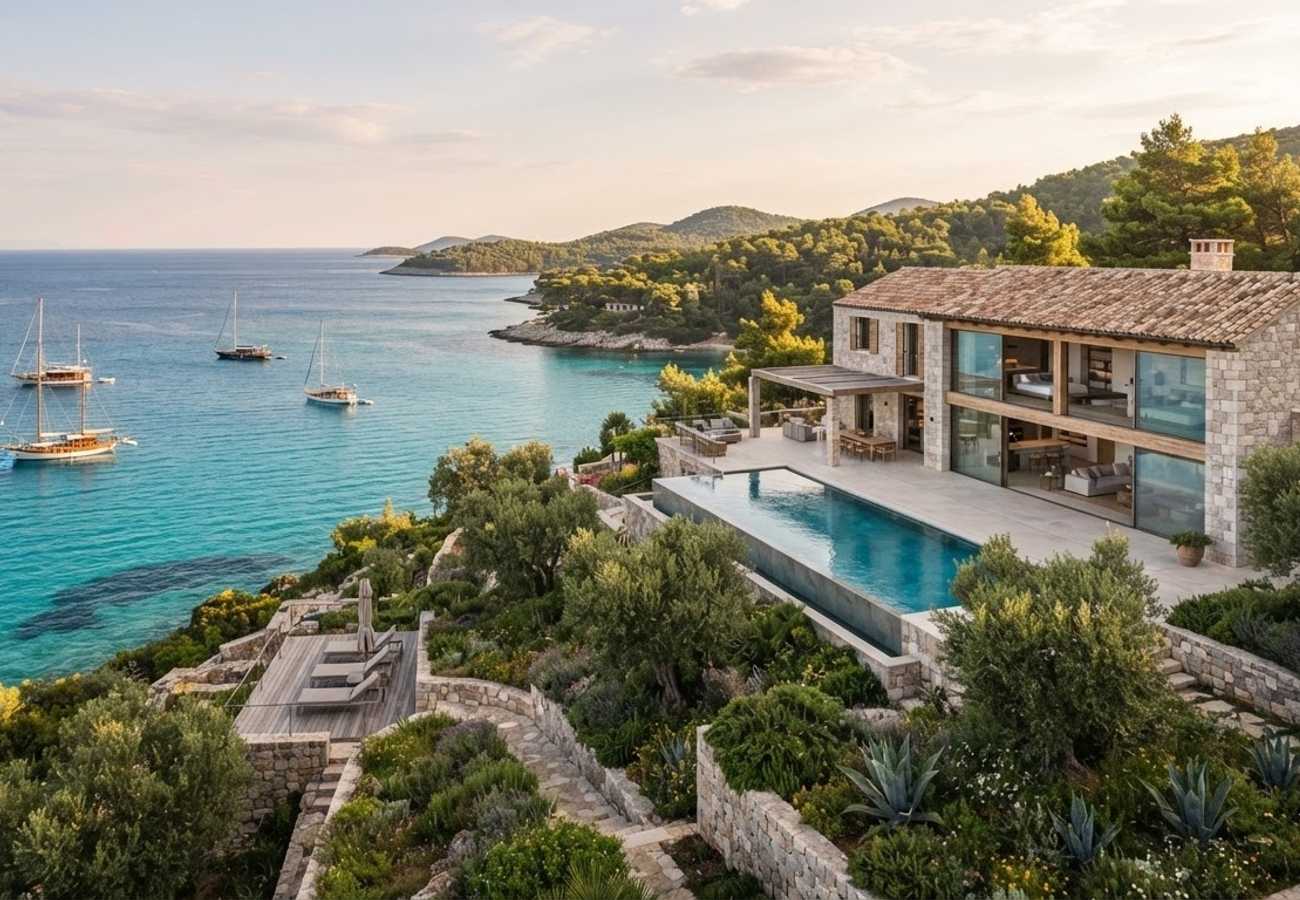
Image generated by AI
The global luxury vacation rental market reached a valuation of approximately $26.5 billion in 2024, with private villas accounting for 49 per cent of the sector. On Croatia’s Hvar Island, this shift is manifesting as the "villa-cation"—a hybrid travel model that replaces traditional hotel rooms with expansive, serviced estates.
The Shift Toward Ultra-Private Luxury
The traditional five-star hotel experience is facing a challenge from travelers who prioritize autonomy over standardized luxury. On Hvar Island, this evolution is led by Maslina Resort, which has introduced a collection of private residences designed to eliminate the friction between high-end service and personal privacy.
Located along the shores of Maslinica Bay, these residences are integrated into the island's natural environment, characterized by traditional stone architecture and Mediterranean gardens. The current offering consists of two four-bedroom villas and one larger five-bedroom villa. These spaces are specifically engineered for multi-generational families and high-net-worth groups who require spacious communal areas without sacrificing individual sanctuary.
Market Data and Regional Growth
The appetite for exclusive coastal stays is backed by significant regional data. In the second quarter of 2025, Croatia’s coastal destinations recorded 9.6 million guest nights through online accommodation bookings. This surge indicates that the Adriatic coast is no longer just a seasonal destination but a primary hub for the global luxury rental market.
For the visitor, the real impact of the villa-cation trend is the removal of the "resort schedule." Unlike traditional hotels, where dining and activities are bound by operating hours, the villa model allows for:
- Customized Dining: Personal chefs and tailored menus served within the residence.
- Temporal Freedom: The ability to design a daily itinerary based on mood rather than hotel programming.
- Intergenerational Bonding: A single shared architectural space that accommodates different age groups under one roof.
Cultural and Environmental Integration
The growth of these luxury estates on Hvar is not merely about opulence; it is about a deeper connection to the Dalmatian way of life. By utilizing traditional stone architecture and preserving the surrounding olive groves, the development supports the regional heritage of the Adriatic coast.
This trend moves away from "excess" and toward "meaning." By integrating residences into the existing natural landscape of Maslinica Bay, the focus shifts to sustainable luxury—where the environment is the primary amenity. This approach aligns with broader European trends of eco-conscious high-end travel, where the goal is to leave a minimal footprint while maximizing the authentic experience of the destination.
Visitor Insider Tips
To get the most out of a Hvar villa-cation, travelers should look beyond the peak July and August window.
- The Golden Window: Visit during the shoulder seasons of September and October. The Adriatic waters remain warm, but the crowds vanish, and the temperatures are far more comfortable for exploring the island's interior.
- Local Flavor: While resort dining is premium, seek out local konobas (traditional taverns) in the village of Maslinica for authentic grilled fish and local wines.
- Island Etiquette: When exploring the stone villages, remember that many areas are residential. Respect the "pomalo" (take it easy) philosophy of the locals—rushing is considered culturally out of place on Hvar.
- Hidden Gem: Rent a small boat to visit the Pakleni Islands, but avoid the main tourist hubs; find a secluded cove for a private swim before returning to the villa.
Tourism Outlook
The rise of the villa-cation marks a permanent change in the luxury landscape. As travelers continue to avoid the constraints of traditional hotels, destinations like Hvar are positioning themselves as leaders in "experiential privacy." The long-term impact will likely see a further decentralization of tourism, moving guests away from crowded city centers and into the rural, natural pockets of the coast, thereby distributing economic benefits more evenly across the island's communities.
The future of Mediterranean luxury is no longer about the gold leaf in the lobby, but the silence of an olive grove and the freedom of a private key.
Related Travel Guides
Disclaimer
This article is for informational and educational purposes only. It does not constitute legal, financial, or professional advice. While we strive to provide accurate and up-to-date information, travel policies, regulations, and conditions change rapidly. Always verify information with official sources before making travel decisions. Nomad Lawyer makes no representations about the accuracy, reliability, completeness, or suitability of the information provided. Readers should consult qualified professionals for advice specific to their circumstances. The views expressed in this article are those of the author and do not necessarily reflect the views of Nomad Lawyer.
Naina Thakur
Contributor & Travel Specialist
Travel enthusiast and legal writer covering visa regulations, responsible tourism, and cultural journeys across global destinations.
Learn more about our team →