
Aviation Updates: Ukraine Strikes on Crimea Energy Infrastructure Trigger Major Travel Chaos Across Black Sea Region as Sevastopol Blackout, Fuel Suspension and Northern France Heatwave Power Outages Create Compounding Airport Disruptions and Airline Risk Alerts Across Europe
Ukrainian strikes targeting energy infrastructure in Russian-occupied Crimea have triggered widespread power outages across Sevastopol, forced a temporary suspension of public fuel sales, and generated mounting travel and aviation security alerts across the Black Sea region — while Europe's record summer heatwave simultaneously batters northern France with electricity disruptions, creating a compounding travel chaos scenario for the continent.

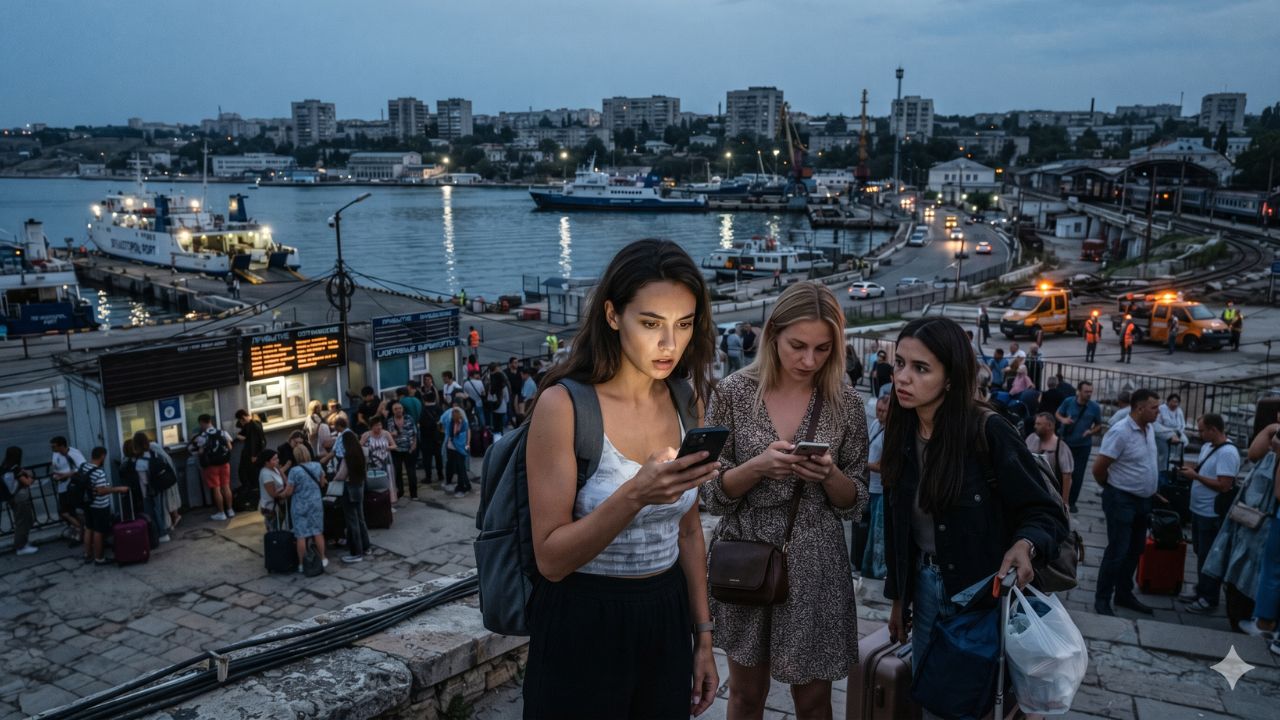
Image generated by AI
Aviation Updates: Ukraine Strikes on Crimea Energy Infrastructure Trigger Major Travel Chaos Across Black Sea Region as Sevastopol Blackout, Fuel Suspension and Northern France Heatwave Power Outages Create Compounding Airport Disruptions and Airline Risk Alerts Across Europe
As the geopolitical and meteorological pressures battering European infrastructure converge into a single, brutal summer of disruption, travelers across the Black Sea region and Western Europe are being confronted with a new and deeply unsettling reality: the forces reshaping global mobility in 2026 are not waiting politely for one crisis to resolve before launching the next.
Critical airline news and travel security intelligence emerging on June 25, 2026 confirms that Ukrainian military strikes targeting energy infrastructure in Russian-occupied Crimea have produced widespread electricity outages across Sevastopol — the peninsula's largest city — while simultaneously forcing local authorities to implement an emergency suspension of public fuel sales across the region. The compounding infrastructure collapse has generated severe travel chaos for residents, transport operators, and any international travelers with itineraries that include or transit near the Black Sea corridor, elevating airport disruptions and aviation risk assessment protocols across a region that was already among the most operationally volatile in the global travel ecosystem.
The developments in Crimea are not unfolding in isolation. At precisely the same moment that Ukrainian strikes are degrading energy systems in Sevastopol, Europe's record-breaking summer heatwave is producing widespread power outages across northern France, placing tens of thousands of households and businesses under electricity disruption while straining transport and communications infrastructure across one of the continent's most heavily traveled aviation corridors. The simultaneous emergence of conflict-driven and climate-driven infrastructure failures across different European theaters creates a uniquely complex aviation updates picture for airlines, airport operators, insurance providers, and international travelers navigating Europe during the 2026 summer peak.
Expanded Overview: The Dual Infrastructure Crisis Reshaping European Travel
The core narrative of European aviation disruption in summer 2026 has, until recently, been dominated by the familiar pressure points of peak demand, ATC capacity constraints, and labor cost inflation. The June 25 developments introduce a qualitatively different category of disruption: the intersection of active military operations with civilian energy infrastructure in a strategically contested region, overlaid against the atmospheric consequences of a climate system producing historically extreme heat events across Western Europe simultaneously.
For travel and aviation operators, the significance of both events extends well beyond their immediate geographic footprint. The Crimea energy attack and Sevastopol blackout directly affect a region whose Black Sea maritime and aviation corridors have already been substantially rerouted since 2022, as international carriers have progressively avoided airspace over conflict-affected territories and adjusted their route planning accordingly. Every new escalation in the energy infrastructure campaign raises fresh questions for airline operations teams about where existing no-fly and risk-elevation zones may expand, and what additional route modifications may be required in the days and weeks following significant strikes.
The northern France heatwave outages, meanwhile, compound an already-strained European power grid during a period when passenger demand is driving airport infrastructure — air conditioning, passenger processing systems, baggage handling technology — at maximum utilization. When power disruptions occur at or near major European airports during peak summer throughput, the downstream impact on flight schedules can be swift and severe.
Section-Wise Breakdown: Sevastopol and the Black Sea Under Pressure
Sevastopol: Power Outages and Fuel Suspension Paralyse Regional Mobility
Sevastopol, home to several hundred thousand residents and the primary urban center of the Crimean Peninsula, experienced the most direct and immediately disruptive consequences of the June 25 infrastructure strikes. The electricity outages that followed targeted attacks on energy facilities supplying the city created immediate cascading effects across residential neighborhoods, commercial establishments, and public services throughout the urban area. While emergency systems at critical facilities maintained operational status, the broader disruption to traffic management systems, communication networks, fuel distribution infrastructure, and tourism-related businesses generated a comprehensive mobility crisis for the city's inhabitants.
The temporary suspension of public fuel sales — implemented by local authorities to prioritize essential services while supply chains were assessed and stabilized — added a second, compounding constraint on regional mobility. For road transport operators, private vehicles, and the logistics chains that supply regional markets, the fuel restriction represents an immediate operational constraint with direct consequences for any transportation activity that depends on access to civilian fuel supplies.
For travelers, the implications are clear. Any itinerary that included Crimean destinations or transit through regional transport hubs served by Sevastopol's infrastructure faces heightened operational uncertainty. Ground transportation, accommodation connectivity, and access to airports within the affected area are all subject to disruption timelines that depend entirely on the speed of emergency restoration efforts.
Northern France: Heatwave-Driven Outages Add a Western European Dimension
The simultaneous electricity disruptions across northern France — driven by an exceptionally intense summer heatwave placing record demand on national power grids — introduce a geographically distinct but operationally analogous travel challenge across Western Europe. When power outages affect residential and commercial areas during peak summer travel periods, the knock-on effects for aviation infrastructure can be significant: ground handling equipment, passenger processing technology, and terminal environmental systems all depend on reliable electricity supply to maintain the throughput rates that summer demand requires.
Northern France sits within one of Europe's most densely utilized aviation corridors — a region through which enormous volumes of transatlantic, intra-European, and domestic French traffic flows on a daily basis. Infrastructure stress events in this geographic area carry potential implications for airports and ATC systems operating within the affected electricity grid zones.
Verified Disruption Intelligence Matrix
Key Development Summary — Crimea Energy Strike, June 25, 2026
| Key Development | Latest Update |
|---|---|
| Area Affected | Sevastopol, Crimea |
| Primary Target | Energy infrastructure |
| Major Impact | Widespread power outage |
| Local Response | Emergency restoration efforts underway |
| Public Advisory | Residents urged to remain calm |
Infrastructure Impact Assessment
| Impact Area | Effect |
|---|---|
| Electricity Supply | Major interruption |
| Public Services | Operating under emergency conditions |
| Businesses | Temporary operational disruptions |
| Transportation | Potential service interruptions |
| Tourism | Increased travel uncertainty |
Regional Fuel Situation
| Fuel Situation | Status |
|---|---|
| Public Fuel Sales | Temporarily suspended |
| Priority Access | Essential services only |
| Transport Impact | Possible delays |
| Travel Planning | Greater uncertainty |
European Disruption Overview — June 25, 2026
| Region | Primary Issue |
|---|---|
| Crimea | Conflict-related power outage |
| Sevastopol | Electricity disruption from infrastructure strikes |
| Northern France | Heatwave-related power outages |
| Europe Broadly | Increased travel challenges across multiple theaters |
All data sourced from official local authority reports and international security monitoring as of June 25, 2026.
Passenger Impact: What Travelers Must Understand About Black Sea Risk
For travelers with existing itineraries involving the Black Sea region — whether as a destination, a cruise departure port, or a transit corridor — the June 25 developments demand immediate and thorough reassessment. The combination of active infrastructure strikes, civilian power outages, and fuel supply restrictions in Sevastopol creates a travel environment where the reliability of every component of a planned journey — ground transport, accommodation, airport access, and onward connectivity — has become materially less certain than it was 24 hours earlier.
Airlines continuously monitor regional security conditions and adjust routing, risk designations, and passenger advisories in response to significant infrastructure events in conflict-affected territories. Passengers holding reservations on carriers operating services that transit Black Sea airspace — or who are booked on routes to destinations in or adjacent to the affected region — should immediately verify their airline's current operational status and review any revised travel advisories issued by their government's foreign affairs department.
The fuel restriction in Crimea carries specific practical consequences for any ground transport bookings — rental vehicles, coach transfers, taxi services — that form part of a planned itinerary in the affected area. Travelers who had planned to self-drive within the region should treat current fuel availability as unreliable until authorities confirm that public fuel sales have been restored.
Industry Analysis: Geopolitical and Climate Disruption as Structural Aviation Risk
The June 25 developments illustrate a trend that aviation risk analysts have been tracking with increasing concern throughout 2025 and 2026: the progressive convergence of geopolitical conflict and climate-driven infrastructure stress as simultaneous, compounding sources of flight cancellations and airport disruptions across the European aviation system.
In previous decades, these risk categories were operationally separable. A conflict zone in Eastern Europe and a heatwave in Western Europe could be managed as distinct operational challenges with distinct mitigation strategies. The summer of 2026 is demonstrating with uncomfortable clarity that these categories are increasingly simultaneous — that airlines, airports, and travelers can no longer assume that managing one source of disruption will be sufficient to protect a journey when multiple unrelated crises are actively degrading different components of the same infrastructure ecosystem on the same day.
The Black Sea region has remained under elevated aviation risk status since 2022. Each successive escalation in the conflict's infrastructure dimension reinforces the rationale for existing route modifications and extends the timeline for any return to pre-conflict operational normalcy. The parallel heatwave-driven disruptions in Western Europe add a climate-risk dimension to the operational picture that aviation planners are only beginning to systematically incorporate into summer scheduling frameworks.
Conclusion: A Compounding Summer Crisis and What Travelers Must Do
The simultaneous energy infrastructure crisis in Sevastopol and the heatwave-driven power disruptions across northern France represent a dual-front challenge to European travel confidence in the summer of 2026. Neither crisis is likely to resolve quickly. Infrastructure restoration in a conflict-affected territory is subject to ongoing military activity that can reverse engineering progress within hours. Heatwave conditions across Western Europe are projected to persist through the coming weeks, maintaining stress on power grids that were already operating without adequate margin before summer demand peaked.
For the international traveler navigating this environment, the fundamental imperative is active information management rather than passive assumption of schedule reliability. Official government travel advisories for the Black Sea region, airline operational bulletins covering Black Sea and Eastern European airspace, and real-time monitoring of European airport infrastructure status should all be treated as mandatory pre-departure research activities rather than optional supplements to booking confirmation.
The forces reshaping global travel in 2026 are not temporary inconveniences — they are structural features of a travel environment that demands more from passengers in terms of preparation, flexibility, and risk awareness than any previous summer season in recent memory.
Key Takeaways
- Sevastopol Blackout: Ukrainian strikes on energy infrastructure in Russian-occupied Crimea have produced widespread electricity outages across Sevastopol, the peninsula's largest city, as of June 25, 2026.
- Fuel Sales Suspended: Local authorities have temporarily halted public fuel sales in the affected area to prioritize essential services while supply chains stabilize — directly impacting ground transport for residents and any travelers in the region.
- Black Sea Aviation Risk Elevated: Airlines are continuously monitoring regional security conditions and may adjust routes, risk designations, or passenger advisories in response to the infrastructure strike escalation.
- Northern France Heatwave Outages: Europe's record summer heatwave is simultaneously producing widespread power outages across northern France, adding a climate-driven disruption dimension to the continent's summer aviation picture.
- Dual Disruption Convergence: The simultaneous emergence of conflict-driven and climate-driven infrastructure failures across different European theaters creates compounding travel chaos and operational uncertainty across the broader European aviation network.
- Passenger Action Required: Travelers with Black Sea itineraries must immediately verify airline operational status, review official government travel advisories, and treat ground transport and fuel availability in Crimea as operationally unreliable until authorities confirm restoration of normal services.
Related Travel Guides
Travel Chaos Cripples Spain as Iberia and Ryanair Suffer 1,079 Delays
Global Flight Cancellation and Compensation Guide 2026
Disclaimer: This article is strictly for informational purposes only. Security situations, infrastructure damage assessments, fuel availability, and regional travel conditions in conflict-affected territories are highly volatile and subject to continuous, real-time change based on active military operations and emergency authority decisions. Travelers are urgently advised to verify their specific itinerary status directly with their airline and to consult their government's official foreign travel advisory before making any journey decisions involving the Black Sea region or adjacent territories.
Disclaimer
This article is for informational and educational purposes only. It does not constitute legal, financial, or professional advice. While we strive to provide accurate and up-to-date information, travel policies, regulations, and conditions change rapidly. Always verify information with official sources before making travel decisions. Nomad Lawyer makes no representations about the accuracy, reliability, completeness, or suitability of the information provided. Readers should consult qualified professionals for advice specific to their circumstances. The views expressed in this article are those of the author and do not necessarily reflect the views of Nomad Lawyer.
Preeti Gunjan
Contributor & Community Manager
A passionate traveller and community builder. Preeti helps grow the Nomad Lawyer community, fostering engagement and bringing the reader experience to life.
Learn more about our team →