
Crete Storm and Travel Advisory Guide 2026: Flood Impacts, Road Closures, and Samaria Gorge Protocols

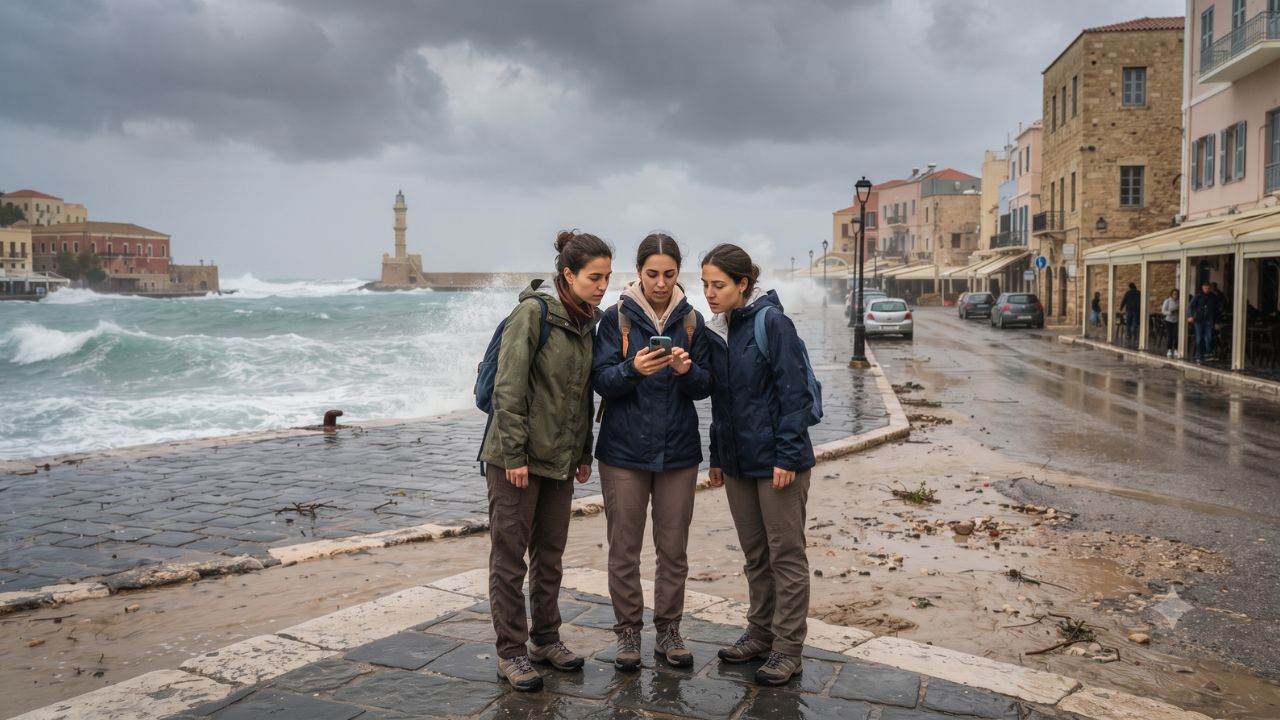
While October is traditionally celebrated as the golden shoulder season for exploring ancient Minoan ruins and quiet Aegean coves, an extreme autumn storm system drenched western Crete with a staggering 318 millimeters of rainfall at Xyloskalo, prompting Greek emergency authorities to issue an island-wide Red Code through 4 October 2026. Torrential flash floods, destabilizing mudslides, and gale-force northeastern winds reaching Force 8 to 9 on the Beaufort scale have swept across Crete’s four regional units—Chania, Rethymno, Heraklion, and Lasithi—temporarily transforming scenic mountain highways into hazardous torrents.
Travelers currently visiting Greece’s largest island must adjust their itineraries from open-road sightseeing to proactive safety management. Crete’s limestone topography, deep ravines, and steep coastal cliffs mean heavy rainfall upstream can trigger sudden flash floods downstream in coastal valleys hours after skies appear clear. By coordinating directly with emergency guidance from the General Secretariat for Civil Protection, respecting trail closures, and confirming rental car routes, visitors can stay secure while regional recovery efforts progress.
Weather Emergency Breakdown: Regional Flooding and Structural Impacts
The meteorological system that struck Crete on 2 and 3 October 2026 produced rainfall volumes that rapidly overwhelmed natural drainage channels and coastal roadways. Severe disruption has concentrated across distinct geographic pockets:
- Lasithi Regional Unit & Ierapetra: Southeastern Crete experienced catastrophic flash flooding. Along the coastal corridor between Ierapetra and Sitia, surging runoff washed portions of the roadbed directly toward the sea, leaving 23 people rescued from inundated vehicles and residences in villages like Ferma and Makry Gialos. A taxi transporting three international tourists and a driver was swept off the tarmac before becoming lodged on the roadside, enabling a safe evacuation.
- Chania Regional Unit & Old Town: Historic waterfront restaurants along Chania’s Venetian Harbour sustained structural damage from battering seawall waves. In the White Mountains (Lefka Ori), the National Observatory of Athens weather station at Xyloskalo recorded 318 millimeters of rain, triggering rockfalls across upland routes.
- Rethymno & Mylopotamos: Rural agricultural communities faced mudslides and washed-out roads, impacting olive groves, hillside vineyards, and local municipal water distribution networks.
- Heraklion & Central Transport Links: Road approaches linking the capital to Heraklion International Airport (HER) and southern archaeological sites experienced localized pooling and heavy sediment accumulation.
| Regional Unit & Corridor | Severity Level | Primary Hazard Profile | Traveler Action Required |
|---|---|---|---|
| Ierapetra to Sitia Coastal Road | High Emergency | Roadbed erosion & mud deposits | Avoid driving; use inland diversions |
| Chania Venetian Harbour Seawall | Active Warning | Force 8–9 Beaufort surf & wave damage | Keep clear of exposed stone piers |
| Samaria Gorge National Park | Closed to Public | Narrow canyon flash flooding | Absolute prohibition on hiking |
| Mylopotamos Valley (Rethymno) | Moderate / High | Hillside mudslides & rockfalls | Remain on paved arterial highways |
| Heraklion Airport Approach (HER) | Operational Delay | Heavy traffic & standing water | Allow extra 90-minute transfer window |
What Makes Island Mountain Weather and Canyon Hydrology Distinct
Crete’s dramatic geographic spine, crowned by the Lefka Ori, Mount Ida (Psiloritis), and the Dikti Mountains, creates unique microclimates. Moisture-laden storms sweeping across the Sea of Crete collide with 2,000-meter peaks, forcing rapid orographic condensation that channels massive volumes of water down steep gorges toward the Libyan Sea.
Nowhere is this dynamic clearer than at the Samaria Gorge, a globally recognized biosphere reserve documented by the UNESCO World Heritage Centre. The 13-kilometer canyon narrows to just three meters wide at the "Iron Gates" (Portes), flanked by vertical 300-meter cliffs. During the October storm event, eight maintenance workers were stranded seven kilometers inside the gorge when rising waters blocked trail crossings. While the crew sheltered safely with emergency rations, the incident highlights why hiking gorges during autumn storm alerts is strictly prohibited.
When mountain runoff hits coastal plains, roads running parallel to dry riverbeds (potamoi) become submerged with little warning. Understanding that a dry riverbed can turn into a raging river within minutes is fundamental to traveling safely in rural Greece.
| Historic & Natural Landmark | Standard Attraction Profile | Current Storm Impact | Safety Protocol |
|---|---|---|---|
| Samaria Gorge | World-famous 13 km hiking trail | High flood surge in narrow slots | Entry strictly prohibited by forestry service |
| Palace of Knossos | Bronze Age Minoan archaeological site | Open with localized outdoor mud | Wear non-slip footwear on ancient stone |
| Chania Old Venetian Harbor | 14th-century lighthouse & promenade | Seawall wave impact on cafes | Maintain safe distance from harbour edge |
| Elafonissi & Balos Lagoons | World-renowned coastal beaches | High winds & rough sea conditions | Postpone boat trips and coastal drives |
| Heraklion Archaeological Museum | Masterpieces of Minoan art & culture | Fully operational indoor venue | Ideal educational alternative during storms |
Visitor Insider Tips
- Heed Greece's 112 Emergency Alerts Immediately: Greece operates an automated cell broadcast emergency system. If your smartphone sounds a loud siren with a bilingual 112 alert, read the instructions carefully. The service operates 24/7 in Greek, English, and French, even on phones without a local SIM card, providing life-saving evacuation and shelter-in-place directives.
- Never Cross Standing Water in a Rental Car: Rental vehicle insurance policies in Greece explicitly exclude undercarriage and engine flood damage. If you encounter running water or submerged asphalt along rural roads, turn around immediately. Hidden potholes, washed-out asphalt, and mud conceal lethal road defects.
- Pivot to World-Class Indoor Cultural Venues: When outdoor trekking is suspended, explore Crete's enclosed cultural treasures. The Heraklion Archaeological Museum houses the world's finest collection of Minoan artifacts, including the Phaistos Disc and the Snake Goddess figurines, while the Historical Museum of Crete provides fascinating insight into medieval and modern Cretan history.
- Confirm Airport Transfers Directly with Airlines: While Heraklion (HER) and Chania (CHQ) airports have maintained operational runways, connecting mountain roads and coastal expressways (VOAK) can experience severe transit bottlenecks. Allow at least three hours before domestic and international departures.
Cultural and Environmental Context
According to seasonal travel frameworks promoted by Visit Greece / Greek National Tourism Organization, extending tourism into October and November supports sustainable regional economies by reducing peak-summer strain on fragile water tables and coastal ecosystems. However, extreme weather events driven by Mediterranean warming patterns (Medicanes) require greater environmental resilience.
Rural Cretan communities depend heavily on autumn agricultural harvests. The recent storm damaged centuries-old olive terraces and organic vineyards across Mylopotamos and Lasithi just weeks before the annual olive harvest. International travelers can support local recovery by staying in family-run agritourism guesthouses, dining at inland village tavernas serving mountain greens (horta) and slow-roasted goat (tsigariasto), and purchasing PDO-certified Cretan olive oil and thyme honey directly from local farming cooperatives.
FAQ: Visiting Crete During Storm Disruptions 2026
What should travelers do if they receive a 112 emergency alert?
Follow the official instructions immediately. Remain indoors, avoid unnecessary road travel, and stay away from rivers, dry ravines, and low-lying coastal roads.
Is the Samaria Gorge open for hiking?
No. Samaria Gorge and surrounding mountain canyons are closed during and immediately following heavy rainfall due to extreme flash flood surges and active rockfall hazards.
Are flights operating normally out of Chania and Heraklion?
Yes, airport runways remain operational, but travelers must verify flight statuses directly with their airlines and allow significant extra driving time due to highway debris.
Which Crete attractions are best to visit during stormy weather?
Indoor historical venues such as the Heraklion Archaeological Museum, the Venetian Loggia, and indoor wine tasting cellars across the Peza and Archanes regions offer safe, rewarding experiences.
Respecting nature's seasonal power ensures your Cretan adventure remains safe, enriching, and unforgettable.
Related Travel Guides
Disclaimer
This article is for informational and educational purposes only. It does not constitute legal, financial, or professional advice. While we strive to provide accurate and up-to-date information, travel policies, regulations, and conditions change rapidly. Always verify information with official sources before making travel decisions. Nomad Lawyer makes no representations about the accuracy, reliability, completeness, or suitability of the information provided. Readers should consult qualified professionals for advice specific to their circumstances. The views expressed in this article are those of the author and do not necessarily reflect the views of Nomad Lawyer.
Raushan Kumar
Founder & Lead Developer
Full-stack developer with 11+ years of experience and a passionate traveller. Raushan built Nomad Lawyer from the ground up with a vision to create the best travel and law experience on the web.
Learn more about our team →