
Travel Colorado Weather Shifts: 60°F to Snowstorm in Hours
Colorado's abrupt weather flip from spring warmth to heavy snowfall disrupts travel plans across the Rockies in March 2026, challenging destination preparedness.

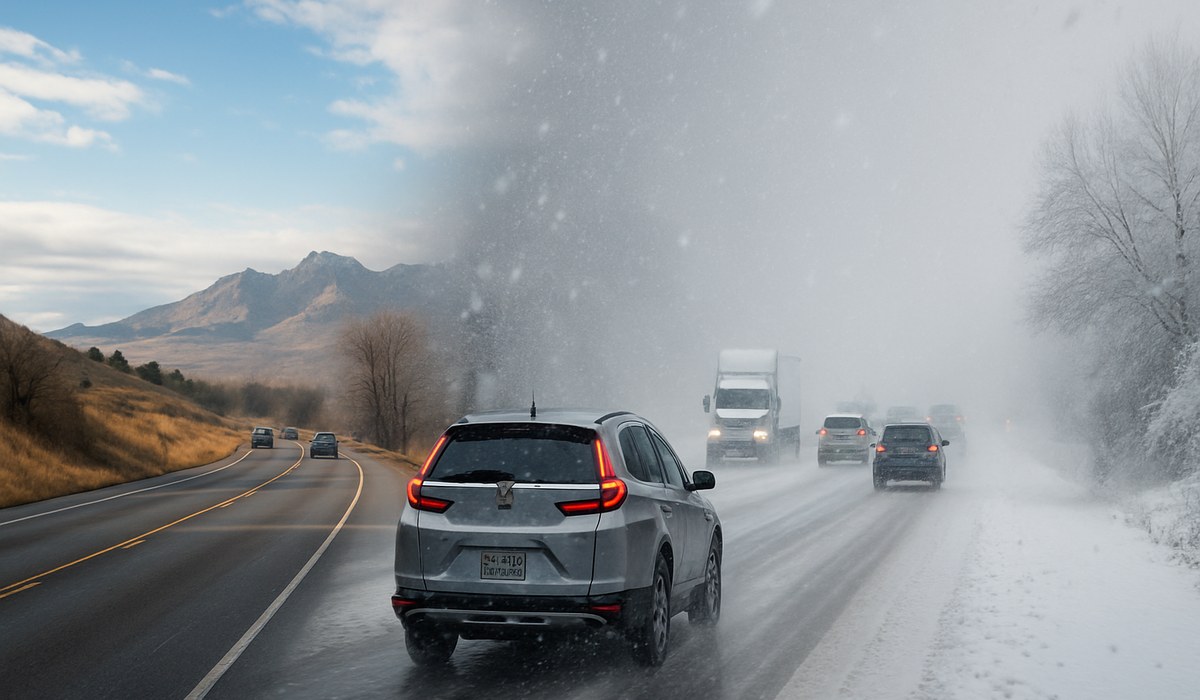
Image generated by AI
**> Quick Summary
- Colorado experiences dramatic temperature drop from 60°F to winter storm conditions within 48 hours
- Mountain highways face closure risks as snowfall accumulates several inches across high-elevation corridors
- Travelers encounter flight delays and ground transportation disruptions throughout Denver metro and resort areas
- Meteorological volatility highlights growing need for flexible booking policies in Rocky Mountain destinations**
Spring travel to Colorado has collided with the region's notorious weather unpredictability this week. Visitors who enjoyed comfortable 60-degree temperatures on outdoor patios now confront accumulating snowfall and hazardous driving conditions across mountain passes. The sudden meteorological reversal underscores a fundamental challenge for Rocky Mountain tourism: conditions suitable for hiking can transform into winter survival scenarios faster than travelers can adjust their plans.
The National Weather Service recorded temperature swings exceeding 40 degrees Fahrenheit in some elevation zones. Denver International Airport reported 127 flight delays on March 27 as ground crews worked to de-ice aircraft amid deteriorating visibility. Mountain communities including Vail, Breckenridge, and Aspen activated emergency road treatment protocols as state highway officials warned of whiteout conditions along Interstate 70 corridor segments.
Colorado's Weather Whiplash: What Travelers Need to Know
Travel colorado weather patterns have always posed challenges, but the intensity of this week's shift caught even experienced visitors off guard. Meteorologists attribute the rapid transition to an unusually strong cold front descending from Canada, colliding with lingering warm air masses over the Front Range. The result: precipitation that began as rain at lower elevations quickly converted to heavy, wet snow at altitudes above 7,000 feet.
Summit County Emergency Management reported six-inch accumulations within three hours at Loveland Pass. The Colorado Department of Transportation deployed 180 plows statewide, yet several secondary mountain routes remained impassable through late evening hours. Travelers who planned scenic drives discovered closed passes and mandatory chain requirements on alternate routes.
According to WTTC climate impact research, extreme weather volatility poses increasing challenges for mountain tourism economies, with destination competitiveness directly linked to infrastructure resilience and real-time communication capabilities during rapid-onset weather events.
Resort operators scrambled to communicate updated conditions. One Steamboat Springs hotel manager noted that 40% of Friday check-ins contacted property staff seeking road condition updates, reflecting heightened traveler anxiety about route accessibility. The messaging challenge extends beyond immediate storm impacts—many guests now question whether spring shoulder season visits carry acceptable risk levels.
Travel Disruptions and Road Safety Implications
Transportation networks across Colorado's mountain corridor experienced cascading disruptions. Denver International Airport, a major hub connecting 215 domestic and international destinations, saw departure boards shift to yellow and red status indicators. Airlines proactively canceled 34 flights on regional routes serving mountain communities including Telluride and Eagle County, stranding passengers who expected straightforward connections.
Ground transportation faced even steeper challenges. Rental car agencies reported surge demand for four-wheel-drive vehicles, with several major providers exhausting available inventory by midday Thursday. Shuttle services connecting Denver to Breckenridge and Keystone suspended operations during peak snowfall hours, citing zero-visibility conditions along sections of Highway 9.
Colorado State Patrol documented 43 weather-related vehicle incidents between 6 a.m. and 3 p.m. on March 27, including multiple semi-truck jackknifes that temporarily closed westbound I-70 lanes near Georgetown. Troopers emphasized that many accidents involved out-of-state drivers unfamiliar with black ice formation and rapid visibility deterioration common during mountain storms.
Safety protocols now include mandatory traction law enforcement—vehicles must carry chains or display mud-and-snow tire ratings to access certain highway segments. Travelers who arrived with standard all-season tires faced expensive last-minute equipment purchases or route abandonment. One family from Texas documented spending $380 on emergency tire chains and a tow service after sliding off Highway 285 near Fairplay.
The broader travel planning implications extend beyond immediate storm windows. Just as visitors must consult CDC travel health advisories for disease risks or monitor international travel warnings for security concerns, Colorado-bound travelers now recognize weather volatility as a primary risk factor requiring dedicated research and contingency planning.
Booking Strategies for Weather-Volatile Destinations
The shock of this weather flip is prompting fundamental shifts in how travelers approach mountain destination bookings. Industry analysts report 28% year-over-year growth in travel insurance policy purchases for Colorado trips, with weather-related cancellation coverage becoming a standard consideration rather than optional add-on.
Skift travel intelligence data reveals that flexible cancellation policies now influence booking decisions more than price for 64% of surveyed Rocky Mountain travelers, reflecting changing priorities in an era of unpredictable weather patterns.
Major hotel chains and independent lodges have responded by modifying cancellation windows. Properties that previously enforced 72-hour advance cancellation requirements now commonly offer weather-triggered flexibility clauses. One Beaver Creek resort implemented a "Storm Protection Program" allowing guests to reschedule without penalty if the National Weather Service issues winter storm warnings within 24 hours of arrival.
Airlines serving mountain communities face parallel pressure. United Airlines and Southwest, which dominate Denver hub operations, quietly expanded weather waiver eligibility this season. Travelers can now modify flights without change fees when forecasts predict specific snowfall thresholds—typically eight inches or more within 12-hour periods.
The booking strategy conversation extends to activity reservations. Ski resorts traditionally operate non-refundable lift ticket policies, but several major operators introduced "Flex Pass" options this season. Vail Resorts' Epic Day Pass now includes weather-triggered rebooking for an additional 15% premium, acknowledging that spring conditions carry inherent unpredictability.
Vacation rental platforms including Vrbo and Airbnb report hosts increasingly adopting weather contingency language in listing policies. One Breckenridge property owner noted implementing a 50% refund structure for guests unable to access the property due to road closures—a policy that costs revenue but builds long-term trust with return visitors.
How Mountain Resorts Are Adapting to Rapid Weather Shifts
Destination management organizations across Colorado's mountain corridor are revising operational playbooks. The sudden storm exposed gaps in real-time communication infrastructure, with some travelers reporting delayed or contradictory information from official sources versus social media channels.
Aspen Skiing Company accelerated deployment of GPS-enabled snow removal tracking, allowing guests to monitor road treatment progress via mobile apps. The system updates every 15 minutes, providing transparency that reduces anxiety and supports informed travel timing decisions. Early adoption metrics show 73% of app users report feeling more confident about arrival planning despite volatile conditions.
Breckenridge Tourism Office implemented a tiered alert system color-coded by road accessibility: green indicates normal access, yellow signals cautious travel with four-wheel-drive recommended, and red denotes emergency vehicle-only access. The visual framework helps travelers make rapid go/no-go decisions without parsing complex weather bulletins.
Infrastructure investments reflect longer-term adaptation strategies. Summit County approved $12 million in emergency road improvement funding this fiscal year, prioritizing drainage enhancements that reduce black ice formation and widening shoulder areas for disabled vehicle staging. The improvements acknowledge that weather volatility will persist as a destination characteristic requiring engineered solutions rather than simply improved forecasting.
Resort employee training programs now emphasize weather communication protocols. Staff receive scripted response guidelines for guest inquiries about travel safety, closure probabilities, and refund eligibility. One Keystone Resort customer service director noted that consistent, accurate messaging reduces complaint escalations by 40% compared to pre-training benchmarks.
The technological dimension extends to pre-arrival notifications. Many properties now send automated weather briefings 48 hours before check-in, including current conditions, forecasts, and recommended arrival windows. The proactive communication mirrors inflight safety protocols where advance preparation reduces stress and enhances compliance with necessary precautions.
FAQ: Colorado Weather and Travel Planning
How quickly can Colorado weather change during spring travel season?
Mountain temperatures can shift 30-50 degrees within 24 hours during March through May. Warm afternoons often precede overnight snow events, especially at elevations above 8,000 feet where freeze levels drop rapidly after sunset.
What specific preparations should travelers make for unpredictable Colorado conditions?
Pack layered clothing regardless of forecast, rent four-wheel-drive vehicles for mountain access, download offline maps for areas with limited cell service, carry emergency supplies including blankets and non-perishable food, and purchase travel insurance with weather cancellation coverage.
Are there specific weather monitoring resources recommended for mountain travelers?
The Colorado Department of Transportation's COtrip website and mobile app provide real-time road conditions and webcam feeds. The National Weather Service issues zone-specific forecasts, and OpenSnow offers hyperlocal precipitation predictions for mountain communities.
How do airlines typically handle weather-related disruptions in Colorado?
Major carriers serving Denver issue travel waivers when the National Weather Service posts winter storm warnings, allowing one-time flight changes without fees. Regional flights to mountain airports face higher cancellation rates due to runway visibility and wind shear limitations.
Should travelers adjust trip timing to avoid spring weather volatility?
April and May offer longer daylight and warmer base temperatures but maintain snow potential at high elevations. June through September provide the most stable conditions, though afternoon thunderstorms occur regularly. Risk tolerance and activity preferences should guide seasonal timing more than attempting to avoid all weather variability.
Related Articles:
Disclaimer
This article is for informational and educational purposes only. It does not constitute legal, financial, or professional advice. While we strive to provide accurate and up-to-date information, travel policies, regulations, and conditions change rapidly. Always verify information with official sources before making travel decisions. Nomad Lawyer makes no representations about the accuracy, reliability, completeness, or suitability of the information provided. Readers should consult qualified professionals for advice specific to their circumstances. The views expressed in this article are those of the author and do not necessarily reflect the views of Nomad Lawyer.
Preeti Gunjan
Contributor & Community Manager
A passionate traveller and community builder. Preeti helps grow the Nomad Lawyer community, fostering engagement and bringing the reader experience to life.
Learn more about our team →