
China Railway Tourism Expansion: 1.01 Billion Summer Trips and New Scenic Routes in 2026
China is transforming its rail network into a tourism engine, projecting 1.01 billion passenger trips this summer through themed trains and high-speed rail incentives.

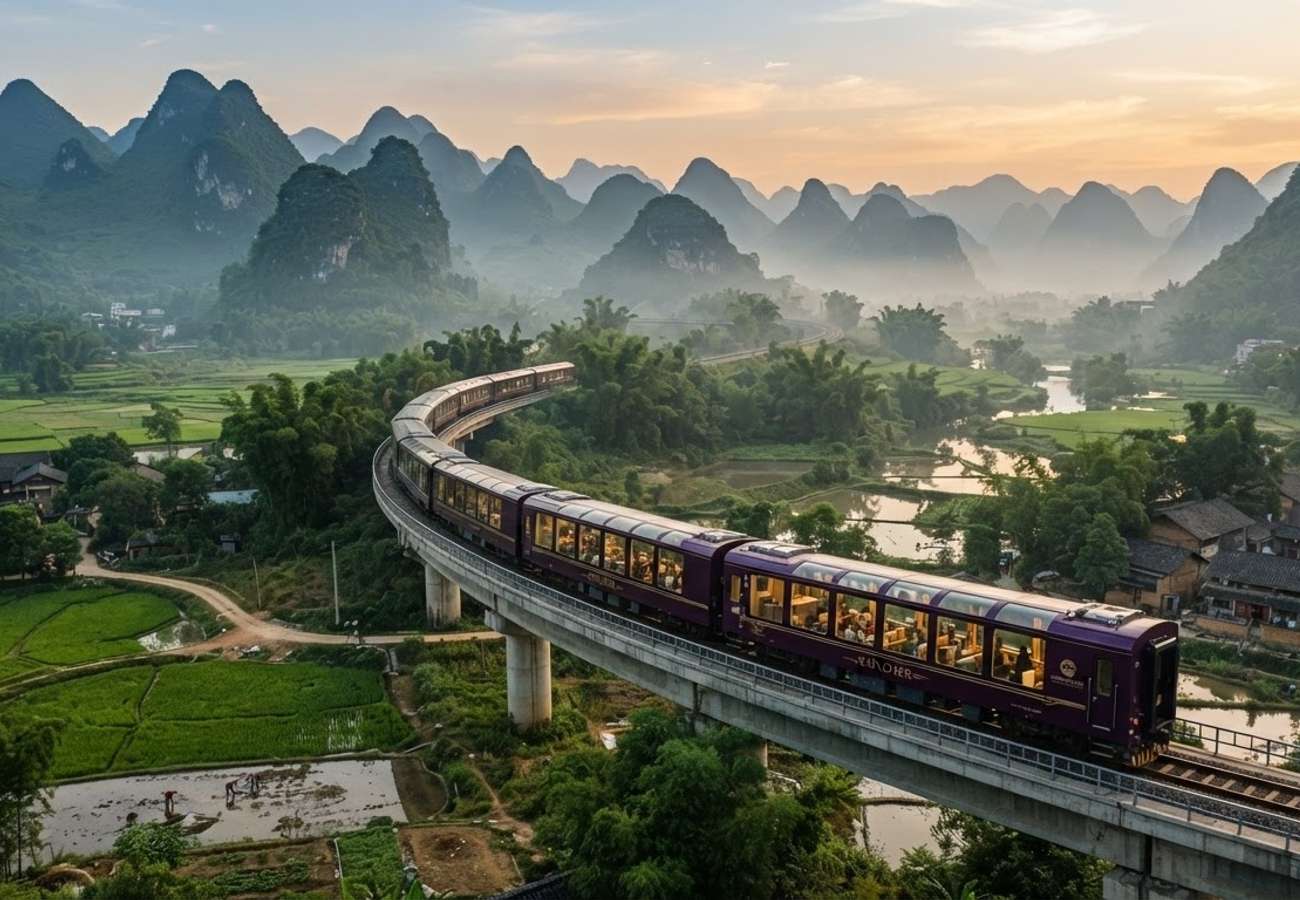
Image generated by AI
China's rail network is currently managing a massive surge in passenger volume, with projections suggesting 1.01 billion trips during the 2026 summer season. This growth is driven by a strategic shift where the journey itself is marketed as a primary tourist attraction, blending transportation with cultural immersion and sightseeing.
The transformation of the national rail system is moving beyond simple transit. By introducing themed carriages, panoramic viewing lounges, and integrated tourism packages, railway operators are converting standard commutes into curated holiday experiences. This evolution is particularly evident in the Southwest and Western regions, where the landscape is being leveraged to attract both domestic and international explorers.
Record-Breaking Summer Passenger Volume in 2026
The scale of movement across China's rail corridors during the current peak season is unprecedented. According to data from the China State Railway Group, the network facilitated 432 million passenger trips in July alone.
Industry analysts expect the full 62-day summer window, spanning July 1 to August 31, to culminate in approximately 1.01 billion total journeys. This equates to a staggering daily average of more than 16 million passengers. To accommodate this volume, authorities have transitioned from merely increasing seat capacity to diversifying the "travel product."
Current expansions focus on specialized niches, including:
- Educational and Cultural Tours: Targeted at students and history enthusiasts.
- Wellness Tourism: Integrating health-focused stops and slow-travel itineraries.
- Family-Centric Packages: Tailored services for multi-generational travel.
Immersive Scenic Routes in Southwest China
A centerpiece of this strategy is the deployment of "sightseeing trains" that function as mobile hotels and galleries. In Southwest China, a distinctive purple-themed train now operates between Guizhou and Sichuan provinces.
This specific service is designed to introduce travelers to local ethnic traditions through interior cultural motifs. The train consists of 11 carriages, featuring a mix of sleeper cabins, a dedicated dining area, and a panoramic lounge. The large-scale windows are specifically designed to provide unobstructed views of the region's rugged mountains and rural villages.
The route connects several high-traffic hubs, including:
- Guiyang
- Chengdu
- Xichang
By linking these cities via a visually stimulating environment, the railway has shifted the passenger's perspective from viewing the train as a necessary evil to seeing it as a highlight of the itinerary.
Long-Distance Themed Expeditions Across Xinjiang
For travelers seeking more extensive exploration, China is launching specialized long-haul tourist trains. A notable example is the panda-themed expedition that departed Chengdu in May.
This journey carried 92 passengers on a 16-day odyssey through Xinjiang. The operational model relies on overnight transit, allowing visitors to sleep while the train moves between distant landmarks, maximizing daytime hours for exploration. Key stops on this itinerary included:
- Kashgar
- Turpan
- Sayram Lake
This "mobile hotel" approach eliminates the logistical friction of frequent hotel check-ins and complex local transport arrangements, making the vast distances of Western China more accessible to the average tourist.
High-Speed Rail Integration and Regional Tourism
The high-speed rail (HSR) network is fundamentally altering short-distance travel patterns, particularly for weekend getaways. The China Railway Chengdu Group has implemented a tiered tourism program based on travel time from the city center.
| Travel Time from Chengdu | Tourism Classification | Example Destinations |
|---|---|---|
| Within 1 Hour | Day-Trip Destinations | Local attractions and nearby suburbs |
| 2 to 3 Hours | Short Holidays / Regional Escapes | Leshan, Zigong, Ya’an, Xichang |
This temporal mapping encourages spontaneous travel and pushes tourism revenue away from saturated urban centers into smaller regional economies.
Financial Incentives for Rail Passengers
To further stimulate demand, several municipalities are offering direct financial benefits to those who arrive via the rail network. In Guangyuan, Sichuan province, high-speed rail passengers are eligible for a 30 percent discount at designated scenic sites if they visit within seven days of their arrival.
Similar incentives are appearing in other regions:
- Maoxian and Songpan Counties: Offering reduced hotel rates and attraction discounts for rail travelers.
- Jiangxi Province: Providing discounted entry to selected cultural sites for passengers with verified recent rail travel records.
These policies create a symbiotic relationship between the transport sector and local hospitality businesses, encouraging longer stays and deeper exploration.
Strategic Government Targets for 2030
The expansion of railway tourism is not accidental but is the result of a coordinated national policy. In June, multiple government agencies released a framework to synchronize transportation infrastructure with tourism growth.
The central goal of this initiative is to create a seamless link between the rail network and the destination's "last mile" of travel. The government has set a specific target to develop more than 160 dedicated tourist train sets by the year 2030. This long-term investment signals that the rail network will remain the primary engine for domestic cultural promotion and regional economic development for the next several years.
Why This Matters: The Shift to "Journey-Centric" Travel
For the modern traveler, this shift means that the logistical stress of crossing China is being replaced by a curated experience. From a logistical standpoint, the integration of discounts and themed transport reduces the need for third-party tour operators, giving travelers more autonomy while maintaining the comfort of a structured trip.
The transition to "journey-centric" travel—where the transport is the destination—reflects a global trend toward slow travel and immersive experiences. By turning a 16-day trip across Xinjiang into a themed adventure, China is effectively expanding the "tourist zone" from a few specific landmarks to the thousands of miles of track in between.
The era of the boring commute is ending, replaced by a rail system that treats every passenger as a tourist.
Related Travel Guides
Disclaimer
This article is for informational and educational purposes only. It does not constitute legal, financial, or professional advice. While we strive to provide accurate and up-to-date information, travel policies, regulations, and conditions change rapidly. Always verify information with official sources before making travel decisions. Nomad Lawyer makes no representations about the accuracy, reliability, completeness, or suitability of the information provided. Readers should consult qualified professionals for advice specific to their circumstances. The views expressed in this article are those of the author and do not necessarily reflect the views of Nomad Lawyer.
Kunal K Choudhary
Co-Founder & Contributor
A passionate traveller and tech enthusiast. Kunal contributes to the vision and growth of Nomad Lawyer, bringing fresh perspectives and driving the community forward.
Learn more about our team →