
Unprecedented Travel Chaos Grips China as Major Carriers Trigger 148 Flight Cancellations and Severe Airport Disruptions Across Beijing, Shanghai, Guangzhou, and Shenzhen: Latest Airline News and Aviation Updates
A massive wave of flight cancellations hits China's busiest aviation hubs, grounding 148 departures across Air China, China Eastern, and China Southern networks, disrupting domestic and international routes.

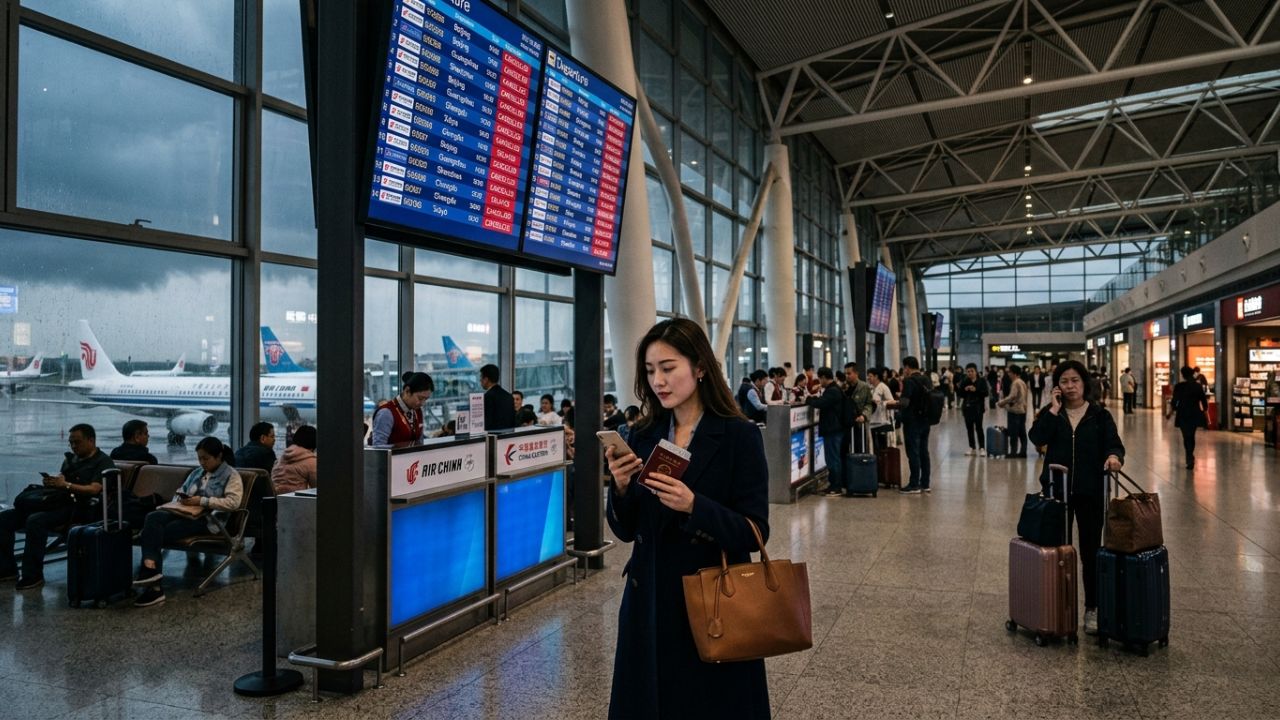
Image generated by AI
In a structural development that has completely paralyzed the Asian aviation network, a massive and synchronized wave of sudden flight cancellations has plunged China’s busiest transit hubs into unprecedented travel chaos. Over the span of three consecutive days, major domestic carriers including Air China, China Eastern, and China Southern have triggered severe logistical meltdowns, grounding a confirmed 148 departures across Guangzhou, Shanghai, Beijing, and Shenzhen airports. The sprawling airport disruptions have crippled some of the nation's most vital domestic business corridors while cascading into international routing, grounding everything from narrowbody domestic shuttles to widebody international services bound for Cairo. As stranded passengers overwhelm terminal customer service desks, this multi-hub systemic breakdown represents the premier headline in today's airline news and global aviation updates.
By introducing direct passenger coordination and dynamic scheduling backups, the regional aviation hubs target growing passenger demand across vital commerce sectors. The choice to coordinate flight departures in phases helps to manage gate capacity, supporting the country's broader regional transportation network.
Context: A Systemic Breakdown Across China's Aviation Network
China's domestic aviation network operates as a highly sensitive, interconnected web. When operational strain hits the "Big Four" coastal mega-hubs simultaneously, the ripple effects are devastating.
The current wave of disruptions is placing extreme pressure on a vast array of aircraft types. The cancellations have forced the grounding of domestic backbone aircraft, including the Airbus A320-family and Boeing 737 variants, alongside the highly touted domestic COMAC C919. Furthermore, heavy long-haul assets, including Boeing 787 Dreamliners and Airbus A330 widebody jets, have been abruptly removed from schedules, severely restricting high-density capacity on the country's most vital commercial corridors.
To view live flight schedules, real-time terminal maps, or check-in rules at major Chinese hubs, travelers can consult the official Civil Aviation Administration of China (CAAC) directory. For direct booking access, specific airline delay policies, and rebooking procedures, passengers can check the official Air China portal. To explore live flight tracking, check delay maps, or monitor exact cancellation metrics, passengers can consult the official FlightAware tracking service.
Section-Wise Breakdown of the Chinese Aviation Meltdown
Guangzhou Baiyun International Airport: Sustained Groundings
The southern super-hub of Guangzhou recorded 36 canceled departures over three consecutive days. The disruptions severely impacted routes linking the Pearl River Delta to major commercial cities, including Beijing, Shanghai, Chengdu, and Xi’an. Alarmingly, several high-density widebody services (A330s and B787s) to Beijing were wiped from the schedule, with the heaviest concentration of cancellations occurring during the vital Friday-to-Sunday evening windows.
Shanghai Pudong International Airport: Heavy Evening Disruptions
Shanghai Pudong endured the most intense volume of disruptions, logging 45 canceled departures. The operational breakdown primarily impacted evening departures, with flights to Wuhan, Shenzhen, Beijing, and Dalian axed within extremely short time windows. The vital Shanghai–Beijing corporate corridor was decimated, with services to both Beijing Capital and Beijing Daxing abruptly canceled.
Beijing Airports: Ongoing Network Pressure
Both of the capital's massive hubs faced relentless service disruptions. Beijing Capital recorded 22 cancellations, wiping out Boeing 787 and Airbus A330 widebody capacity destined for Guangzhou, alongside a canceled COMAC C919 service to Hangzhou. Meanwhile, Beijing Daxing logged 18 canceled departures, heavily concentrated on the Xi’an and Wuhan routes, proving that the disruption was not isolated to a single airport but systemic across the capital's airspace.
Shenzhen Bao’an International Airport: Domestic and International Impact
Shenzhen suffered 27 canceled departures, affecting vital business routes to Shanghai, Beijing, and Chengdu. Notably, the disruptions at Shenzhen spilled over into the international market; a high-profile Boeing 787 service destined for Cairo International Airport was abruptly canceled, highlighting the severity of the operational strain.
Technical Roster: Breakdown of Chinese Flight Cancellations
To ensure absolute factual accuracy regarding the scale of this aviation crisis, the following table summarizes the 148 confirmed canceled departures across the affected Chinese mega-hubs:
| Affected Chinese Hub | Total Canceled Departures | Major Destination Routes Impacted |
|---|---|---|
| Shanghai Pudong International Airport (PVG) | 45 | Wuhan, Shenzhen, Beijing, Dalian, Nanning, Guilin |
| Guangzhou Baiyun International Airport (CAN) | 36 | Beijing, Shanghai, Chongqing, Chengdu, Xi’an, Hangzhou |
| Shenzhen Bao’an International Airport (SZX) | 27 | Shanghai, Beijing, Wuhan, Chengdu, Cairo (International) |
| Beijing Capital International Airport (PEK) | 22 | Guangzhou, Shenzhen, Chengdu, Shanghai, Xi’an |
| Beijing Daxing International Airport (PKX) | 18 | Xi’an, Wuhan, Guangzhou, Shanghai Pudong |
| Total Nationwide Cancellations | 148 | Systemic Domestic & International Routing Failures |
Passenger Impact: Stranded Corporate Travelers and Overnight Delays
For passengers navigating China's domestic network, the timing of these cancellations was brutal. Because the disruptions heavily targeted evening departures, thousands of corporate and leisure travelers were stranded at the airports overnight with absolutely zero same-day rebooking options available.
The decimation of the Beijing–Shanghai and Shanghai–Shenzhen business corridors meant that vital commercial meetings were forcibly canceled. Furthermore, because short-haul A320 and B737 aircraft operate multiple sectors per day, a single morning cancellation frequently triggered a domino effect, stranding passengers in secondary cities across the mainland.
Industry Analysis: The Fragility of Interconnected Networks
Aviation industry analysts view this massive disruption as a stark reminder of the fragility of China's hyper-interconnected aviation system.
While the exact cause of the simultaneous breakdown remains unclear—ranging from severe weather cells to airspace congestion or military air traffic control restrictions—the rapid spread of cancellations proves that the nation's "Big Four" hubs operate with very little slack. When airlines are forced to ground high-capacity widebodies like the A330 and B787 on domestic routes, the systemic capacity loss is incredibly difficult to recover without spilling into multi-day delays.
Actionable Advice for Travelers in China
If you are scheduled to fly through China's major coastal hubs during this period of extreme operational volatility, follow this vital checklist:
- Monitor Hub Activity Constantly: Download official airline apps (like Air China or China Eastern) and enable push notifications; do not rely on third-party booking sites for live cancellation updates.
- Avoid Evening Departures: Statistically, evening flights suffered the highest rate of cancellations. Rebook onto early morning departures to maximize your chances of securing a same-day backup flight if disruptions occur.
- Book High-Speed Rail Alternatives: If your flight on the Beijing–Shanghai or Shenzhen–Guangzhou corridor is canceled, immediately book a high-speed train ticket as a backup, as air rebooking queues will be hours long.
- Prepare for Overnight Stays: If flying through Shanghai Pudong or Guangzhou Baiyun, pack essential medications and a change of clothes in your carry-on in the event you are stranded in the terminal overnight.
- Verify International Connections: If you are flying out of Shenzhen or Beijing to an international destination (like Cairo), arrive at the airport exceptionally early to confirm that your widebody aircraft has actually arrived from its previous domestic sector.
FAQ: The Massive Chinese Flight Cancellation Crisis
How many flights were canceled across China?
A total of 148 departures were confirmed canceled across four of China's busiest aviation hubs: Shanghai, Guangzhou, Shenzhen, and Beijing.
Which Chinese airports experienced the most disruptions?
Shanghai Pudong International Airport suffered the heaviest impact with 45 cancellations, followed closely by Guangzhou Baiyun International Airport with 36 canceled departures.
Were international flights affected by the chaos?
Yes. While the majority of disruptions hit domestic corporate corridors, international routing was also impacted, including the cancellation of a Boeing 787 service from Shenzhen to Cairo.
A System Paralyzed by Interconnectivity
The massive wave of 148 flight cancellations across Beijing, Shanghai, Guangzhou, and Shenzhen has exposed the vulnerability of China's rapidly expanding aviation network. As carriers like Air China and China Eastern struggle to reposition grounded aircraft and clear the immense backlog of stranded passengers, the immediate future of domestic Chinese transit remains highly volatile. Until operational stability is fully restored across these vital mega-hubs, travelers must brace for continued delays, last-minute groundings, and the lingering threat of national travel chaos.
Key Takeaways
- Massive Groundings: A staggering 148 departures were canceled across China's busiest transit hubs over a three-day period.
- Shanghai Decimated: Shanghai Pudong International Airport was hit hardest, suffering 45 cancellations, heavily impacting evening operations.
- Widebody Impact: Crucial high-density domestic routes operating Airbus A330s and Boeing 787s between Guangzhou and Beijing were abruptly axed.
- International Spillover: The chaos was not strictly domestic; a Boeing 787 service from Shenzhen to Cairo was completely grounded.
- Systemic Failure: The disruptions spanned the entire fleets of Air China, China Eastern, and China Southern, grounding A320s, B737s, and the new COMAC C919.
Related Travel Guides
Saudi Arabia Issues Critical Aviation Safety Alert as GACA Bans In-Flight Power Banks
United Airlines Unleashes Revolutionary AI to Delay Flights for Late Passengers
Disclaimer
This article is for informational and educational purposes only. It does not constitute legal, financial, or professional advice. While we strive to provide accurate and up-to-date information, travel policies, regulations, and conditions change rapidly. Always verify information with official sources before making travel decisions. Nomad Lawyer makes no representations about the accuracy, reliability, completeness, or suitability of the information provided. Readers should consult qualified professionals for advice specific to their circumstances. The views expressed in this article are those of the author and do not necessarily reflect the views of Nomad Lawyer.
Kunal K Choudhary
Co-Founder & Contributor
A passionate traveller and tech enthusiast. Kunal contributes to the vision and growth of Nomad Lawyer, bringing fresh perspectives and driving the community forward.
Learn more about our team →