
China Aviation Meltdown Triggers Epic Travel Chaos as Guangzhou, Shenzhen, and Beijing Cancel 182 Flights and Delay Thousands
Breaking airline news: A massive operational meltdown across China has triggered severe travel chaos, forcing major carriers to cancel 182 flights and delay thousands more across Guangzhou, Shenzhen, and Beijing.

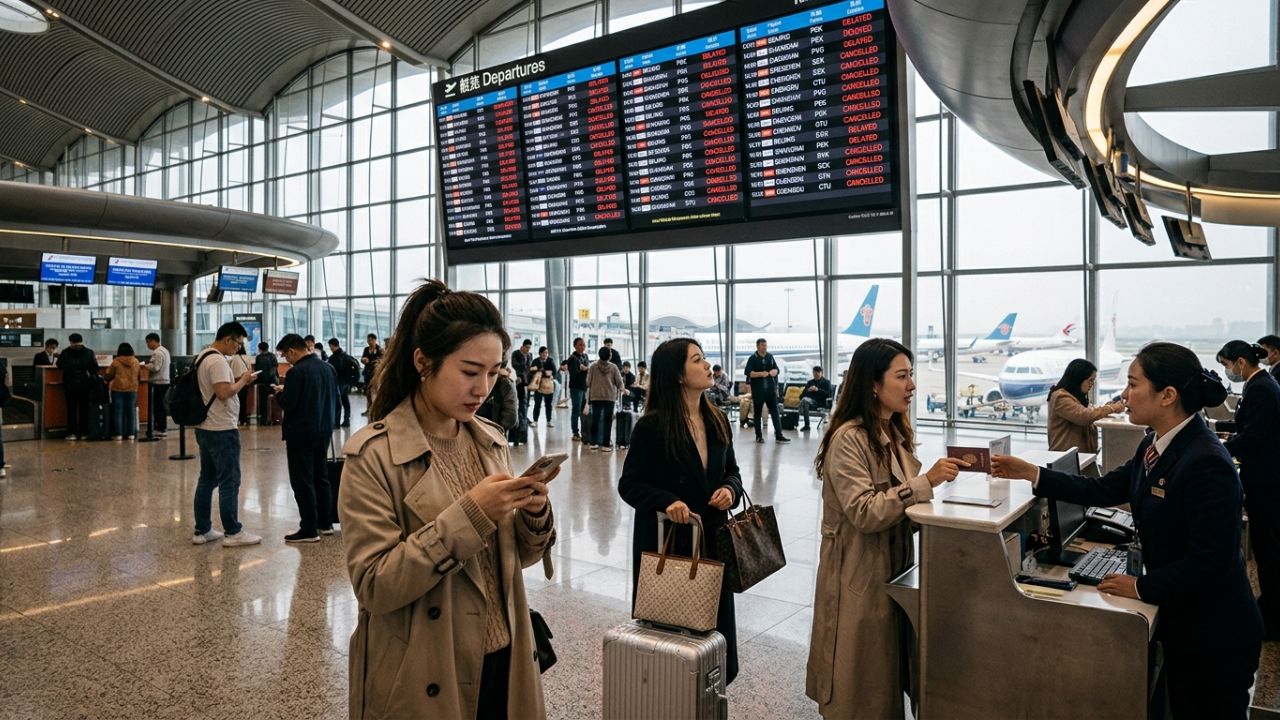
Image representing the unprecedented operational breakdown across China's commercial aviation network, where scheduling backlogs have generated epic travel chaos, crippling China Southern, Air China, and China Eastern with 182 flight cancellations and 1,870 severe rolling delays. (Image Credit: Aviation Tracking Network)
China Aviation Meltdown Triggers Epic Travel Chaos as Guangzhou, Shenzhen, and Beijing Cancel 182 Flights and Delay Thousands
Severe Operational Friction Decimates Scheduling for China Southern, Air China, and China Eastern
The commercial aviation network across the People's Republic of China is currently buckling under the intense pressure of a catastrophic, widespread operational collapse. According to the latest breaking airline news and critical aviation updates, thousands of travelers have been left trapped across the country as a massive convergence of scheduling setbacks triggers absolute travel chaos. On June 14, 2026, the national aviation grid suffered a massive logistical failure, generating an astounding 182 absolute flight cancellations and 1,870 severe, rolling delays. Major state-backed and regional carriers—including China Southern Airlines, Air China, China Eastern, Hainan Airlines, and Lucky Air—have been profoundly disrupted by these relentless scheduling setbacks. This massive wave of airport disruptions has violently paralyzed key hubs across Guangzhou, Shenzhen, Beijing, Shanghai, and Changsha, definitively proving how quickly isolated operational strain can permanently sever heavily interconnected domestic and international routes.
This incredibly widespread disruption is absolutely not limited to a single geographic region; rather, it is a devastating, systemic failure infecting massive international gateways. As immense scheduling backlogs violently ripple through multiple provinces, major terminals are being forcefully required to manage heavily congested departure halls and highly complex rebooking requests. With numerous high-density interconnecting routes completely affected, travelers are currently facing painfully prolonged waiting periods, catastrophic missed connections, and sudden cancellations. This event exposes the immense, unsustainable operational pressure currently placed on China's commercial aviation infrastructure, threatening not only immediate travel plans but the broader stability of the nation's immense tourism sector.
Section-Wise Breakdown: The Anatomy of the Regional Collapse
The operational data reveals that the massive delays are heavily concentrated within critical airspace corridors, completely obliterating regional connectivity:
The Guangzhou and Shenzhen Epicenter The intensely busy southern aviation corridor is currently experiencing the absolute brunt of this logistical nightmare. Guangzhou Baiyun Int’l operated as the primary epicenter of the crisis, forcefully grounding an astounding 59 absolute cancellations alongside 512 severe rolling delays. The disaster immediately spilled over into neighboring mega-hubs. Shenzhen Bao’an Int’l suffered a massive operational breakdown, recording 30 direct cancellations while forcing travelers to endure a staggering 527 delayed departures. This terrifying cluster reflects how severe scheduling instability in the south creates an inescapable ripple effect that paralyzes the entire commercial network.
Beijing and Shanghai Hub Bottlenecks In the north and east, the massive scale of the disruption severely amplified the chaos at China's most critical international gateways. Beijing Daxing International Airport buckled under the pressure, registering 14 absolute cancellations and 116 severe delays at the capital city’s premier terminal. Simultaneously, Shanghai Pudong Int’l absorbed 20 unrecoverable cancellations and a further 223 delays tracking through its massive international facility. Because these hubs process immense volumes of both international holidaymakers and domestic tourists, the bottlenecks here instantly sever global connectivity, completely destroying tightly scheduled itineraries.
Regional Connectivity Severed in the Interior The intense logistical friction generated on the coasts violently propagated into China's massive interior hubs. Hangzhou Xiaoshan Int’l suffered a devastating 11 cancellations in tandem with 178 delays. Changsha Huanghua Int’l recorded 14 cancellations alongside 31 delays, while Kunming Changshui Int’l reported 10 cancellations and 100 delays that heavily hampered regional schedules. The disruption continued into Chongqing Jiangbei Int’l (10 cancellations, 97 delays), Chengdu Tianfu Int’l (7 cancellations, 74 delays), and Nanchang Changbei Int’l (7 cancellations, 12 delays). These figures indicate that the disruption is not localized but is spreading relentlessly across long-haul and regional feeder routes.
Flight Details: The Nationwide Airport Disruption Matrix
To provide exact, factual clarity on the immense scale of this logistical failure, aviation analysts have mapped the specific operational metrics reported across the affected Chinese hubs. The following factual matrix details the precise breakdown of the absolute cancellations and active delays by airport:
Factual China Aviation Hub Cancellation & Delay Matrix
| Airport Gateway | Cancelled Flights | Delayed Flights |
|---|---|---|
| Guangzhou Baiyun Int’l | 59 | 512 |
| Shenzhen Bao’an Int’l | 30 | 527 |
| Shanghai Pudong Int’l | 20 | 223 |
| Beijing Daxing International Airport | 14 | 116 |
| Changsha Huanghua Int’l | 14 | 31 |
| Hangzhou Xiaoshan Int’l | 11 | 178 |
| Kunming Changshui Int’l | 10 | 100 |
| Chongqing Jiangbei Int’l | 10 | 97 |
| Chengdu Tianfu Int’l | 7 | 74 |
| Nanchang Changbei Int’l | 7 | 12 |
Data accurately reflects operational failures recorded on June 14, 2026. (Source: FlightAware)
Passenger Impact: The Shift to High-Speed Rail
For the traveling public and the massive Chinese tourism sector, this staggering breakdown represents an absolute nightmare. When premier hubs like Guangzhou and Shenzhen drop thousands of simultaneous delays, international holidaymakers are forced to reconsider the reliability of tightly scheduled itineraries. Travel agencies are actively adjusting recommended transfer windows at key regional transit points to prevent devastating missed connections. Furthermore, the substantial schedule modifications sustained by primary carriers like China Southern Airlines and China Eastern have prompted a massive, immediate preference for alternative high-speed rail networks where geographical overlap permits. Leisure travelers are increasingly postponing journeys, severely exposing the tourism sector to short-term fluctuations in visitor arrivals.
Industry Analysis: Managing Complex Rebooking Logistics
Aviation analysts tracking this historic meltdown emphasize that the primary challenge for the airlines is no longer just moving aircraft, but managing the immense human logistical backlog. With 1,870 delayed departures, the physical terminals are unable to process the sheer volume of stranded passengers. Complex rebooking requests are overwhelming the digital infrastructure of Hainan Airlines, Lucky Air, and Air China. Because airlines maintain strict check-in deadlines and baggage drop windows even when departure times shift rapidly, passengers are forced to remain physically present in the airport, exponentially increasing terminal congestion and straining duty of care protocols (meals, accommodations) to their absolute breaking point.
Conclusion: A Vulnerable Commercial Infrastructure
The unprecedented June 14, 2026, operational collapse serves as a highly visible warning regarding the sheer fragility of China's commercial aviation infrastructure. With an astounding 182 cancellations and 1,870 severe delays spread across virtually every major hub—including Guangzhou, Shenzhen, Beijing, and Shanghai—this crisis has definitively exposed the immense vulnerability of tightly scheduled domestic and international networks. Major carriers like China Southern, Air China, and China Eastern have been pushed to the brink, resulting in undeniable travel chaos. Until scheduling backlogs are cleared and network capacity is completely restored, severe airport disruptions will remain a terrifying reality for travelers caught in the crossfire. Moving forward, passengers must maintain extreme flexibility and heavily utilize digital rebooking tools to survive this highly volatile operational environment. (Source: FlightAware via Nomad Lawyer)
Key Takeaways
- Massive Network Failure: China's aviation network suffered a massive collapse on June 14, 2026, generating 182 absolute cancellations and 1,870 severe delays.
- Guangzhou & Shenzhen Epicenter: Guangzhou Baiyun (59 cancellations, 512 delays) and Shenzhen Bao’an (30 cancellations, 527 delays) suffered the most catastrophic breakdowns.
- Major Airlines Paralyzed: China Southern Airlines, Air China, China Eastern, Hainan Airlines, and Lucky Air were all profoundly disrupted.
- Capital Corridors Crippled: Beijing Daxing (14 cancellations) and Shanghai Pudong (20 cancellations, 223 delays) experienced major bottlenecks.
- High-Speed Rail Shift: The massive logistical friction has forced travelers and tourism agencies to temporarily abandon aviation in favor of high-speed rail networks.
✈️ Frequently Asked Questions (Factual Aviation & Disruption Data)
Exactly how many total cancellations and delays were recorded across China on June 14, 2026? A staggering 182 absolute flight cancellations and 1,870 severe rolling delays were officially recorded across the national aviation network.
Which major Chinese airlines were most heavily affected by this scheduling meltdown? Major state-backed and regional carriers were profoundly disrupted, including China Southern Airlines, Air China, China Eastern, Hainan Airlines, and Lucky Air.
Which specific airport operated as the primary epicenter with the highest number of cancellations? Guangzhou Baiyun Int’l operated as the epicenter, recording an astounding 59 absolute cancellations and 512 rolling delays.
How severely was Shenzhen Bao’an Int’l impacted by this massive operational strain? Shenzhen Bao’an Int’l suffered a massive operational breakdown, generating 30 direct cancellations and a staggering 527 delayed departures.
What operational numbers did Beijing Daxing and Shanghai Pudong report during this event? Beijing Daxing International Airport registered 14 cancellations and 116 delays, while Shanghai Pudong Int’l recorded 20 cancellations and 223 delays.
How is this massive disruption impacting the broader tourism sector in China? Travel agencies are actively adjusting recommended transfer windows, and the massive schedule modifications have prompted a temporary preference for alternative high-speed rail networks, leading to short-term fluctuations in visitor arrivals.
What are the recommended immediate actions for travelers experiencing a sudden flight cancellation? Affected travelers are strongly advised to contact their carrier immediately and utilize digital rebooking via airline apps to circumvent long queues at terminal service desks.
What official platform was used to source these exact cancellation and delay metrics? All operational data, airline cancellation metrics, and regional delay statistics were manually obtained and verified from FlightAware’s official flight tracking website.
🌍 Related Travel Guides & Flight Resources
- Navigate Airport Disruptions Like a Pro Master the art of surviving unexpected travel chaos with our expert strategies.
- Breaking Airline News & Evasion Routes Stay ahead of the delays with our real-time aviation updates and route intelligence.
- Global Flight Cancellation Defense Grid Essential legal rights and compensation tactics when your flight goes down.
⚖️ Disclaimer
The massive flight cancellation statistics, severe delay metrics, and systemic airline operational overviews provided in this report are for informational purposes only. The specific aviation variables regarding the massive operational meltdown across China on June 14, 2026—including the exact cancellation figures for Guangzhou, Shenzhen, Beijing, and Shanghai, and the impact on carriers like China Southern and Air China—are highly volatile and subject to rapid, real-time adjustments by airport authorities and corporate airline dispatchers. All data has been officially sourced from FlightAware as of June 14, 2026. NomadLawyer does not guarantee the absolute accuracy or current validity of the information provided and assumes no liability for sudden schedule changes, rolling domestic delays, agonizing missed connections, or any financial consequences resulting from the use of this content. Passengers trapped in the current disruption are strongly advised to utilize their airline’s official mobile applications for emergency rebooking updates.
Disclaimer
This article is for informational and educational purposes only. It does not constitute legal, financial, or professional advice. While we strive to provide accurate and up-to-date information, travel policies, regulations, and conditions change rapidly. Always verify information with official sources before making travel decisions. Nomad Lawyer makes no representations about the accuracy, reliability, completeness, or suitability of the information provided. Readers should consult qualified professionals for advice specific to their circumstances. The views expressed in this article are those of the author and do not necessarily reflect the views of Nomad Lawyer.
Kunal K Choudhary
Co-Founder & Contributor
A passionate traveller and tech enthusiast. Kunal contributes to the vision and growth of Nomad Lawyer, bringing fresh perspectives and driving the community forward.
Learn more about our team →