
Severe Weather and Air Traffic Controls Force 106 Cancellations and 4,116 Delays Across Beijing, Shanghai, and Shenzhen Airport Hubs
Over 106 cancellations and 4,116 delays affect China's major airport hubs. Review regional airport breakdowns, carrier data, and traveler advisories.

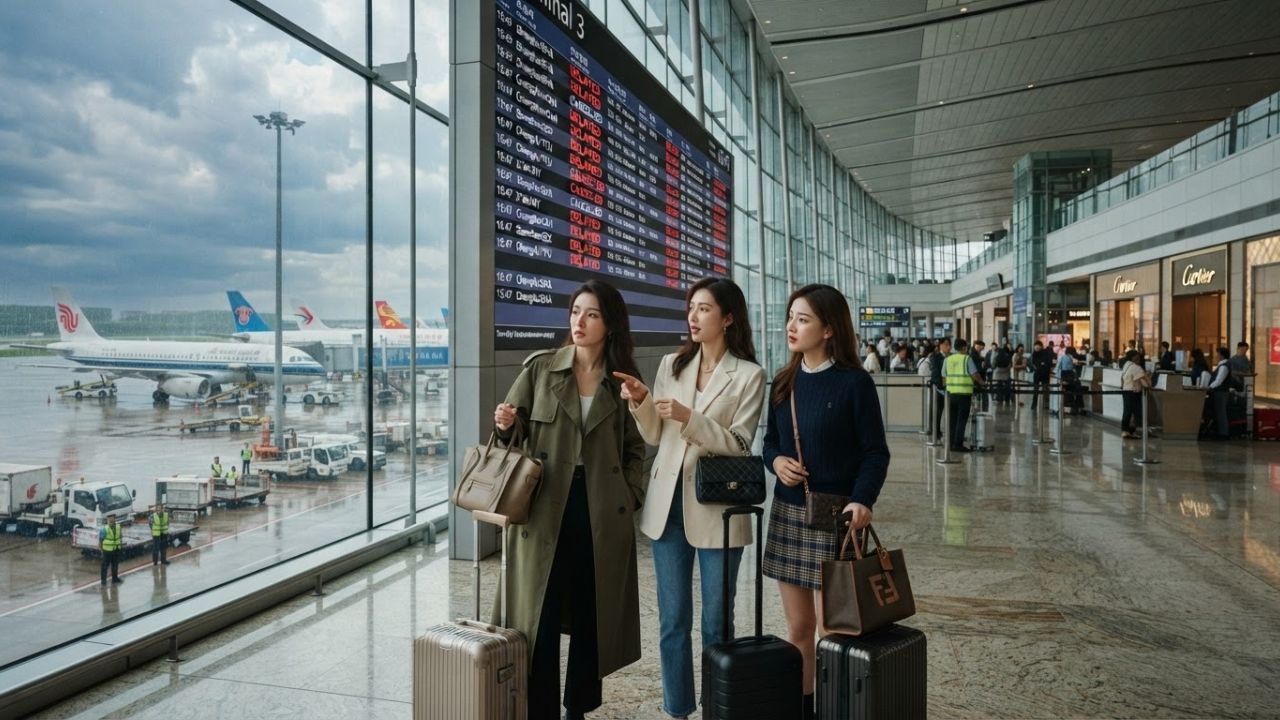
Image generated by AI
Severe Weather and Air Traffic Controls Force 106 Cancellations and 4,116 Delays Across Beijing, Shanghai, and Shenzhen Airport Hubs
Severe weather systems and air traffic control restrictions have grounded flight corridors across mainland China, causing 106 flight cancellations and 4,116 delays. Key transit nodes, including Beijing Capital, Shanghai Pudong, and Shenzhen Bao'an, are experiencing major terminal backlogs.
The Disruption Details
A significant weather event has caused widespread disruptions across mainland China's aviation infrastructure. On Thursday, July 16, 2026, convective thunderstorms combined with sudden air traffic control restrictions to limit runway capacity across the country. According to real-time operations records from FlightAware, the disruptions affected seventeen major domestic airports and eleven regional airlines.
By the afternoon, the national aviation grid had recorded a total of 4,116 flight delays and 106 flight cancellations. The delays began in the morning as heavy rain and lightning forced ground stops at key hubs. As departures were held back, gates filled quickly, leading to secondary delays for arriving flights and causing airline crew duty schedules to expire.
The regional civil aviation regulator has implemented traffic management programs to clear the backlog, but travelers are advised that scheduling delays may persist as carriers reposition aircraft.
Flight & Airport Impact Breakdown
Our analysis of regional air traffic logs shows that major economic gateways faced significant operational slowdowns:
- Shenzhen Bao’an International Airport (SZX):Endured the highest volume of delays nationwide, with 642 flights delayed and 13 canceled.
- Shanghai Pudong International Airport (PVG): Experienced 468 delays and 3 cancellations, affecting both domestic and long-haul international flights.
- Guangzhou Baiyun International Airport (CAN): Endured 401 delays and 3 cancellations, disrupting cargo and passenger traffic in the Pearl River Delta.
- Beijing Capital International Airport (PEK): Endured the highest cancellation volume of any single gateway, with 19 flights canceled alongside 202 delays.
- Beijing Daxing International Airport (PKX): Endured 202 delays and 4 cancellations, mirroring Capital Airport's delay metrics but with fewer route cancellations.
The detailed breakdown of airport and airline metrics is structured in the tables below:
Flight Disruption Metrics by Mainland China Airport Hub
| Airport Name | IATA Code | Flight Delays | Flight Cancellations | Disruption Level Status |
|---|---|---|---|---|
| Shenzhen Bao’an | SZX | 642 | 13 | High Delay Volume |
| Shanghai Pudong | PVG | 468 | 3 | Moderate Disruptions |
| Guangzhou Baiyun | CAN | 401 | 3 | Regional Congestion |
| Xi’an Xianyang | XIY | 309 | 12 | Substantial Backlog |
| Kunming Changshui | KMG | 292 | 3 | Moderate Delay |
| Hangzhou Xiaoshan | HGH | 272 | 5 | Moderate Delay |
| Chongqing Jiangbei | CKG | 225 | 5 | Regional Delay |
| Haikou Meilan | HAK | 218 | 3 | Regional Delay |
| Chengdu Shuangliu | CTU | 213 | 9 | Substantial Backlog |
| Beijing Capital | PEK | 202 | 19 | High Cancellations |
| Beijing Daxing | PKX | 202 | 4 | Moderate Delay |
| Zhengzhou Xinzheng | CGO | 187 | 10 | Substantial Backlog |
| Wuhan Tianhe | WUH | 165 | 3 | Moderate Delay |
| Hohhot Baita | HET | 90 | 3 | Low-to-Moderate |
| Nanchang Changbei | KHN | 81 | 3 | Low-to-Moderate |
| Jieyang Chaoshan | SWA | 77 | 4 | Low-to-Moderate |
| Yinchuan Helanshan | INC | 72 | 4 | Low-to-Moderate |
Airline Performance and Fleet Disruptions
| Airline Brand | Flight Delays | Flight Cancellations | Primary Hub Center |
|---|---|---|---|
| China Eastern Airlines | 780 | 16 | Shanghai Pudong (PVG) |
| China Southern Airlines | 672 | 10 | Guangzhou Baiyun (CAN) |
| Shenzhen Airlines | 373 | 3 | Shenzhen Bao’an (SZX) |
| Air China | 305 | 28 | Beijing Capital (PEK) |
| XiamenAir | 302 | 1 | Xiamen Gaoqi (XMN) |
| Hainan Airlines | 210 | 3 | Haikou Meilan (HAK) |
| China Express Airlines | 126 | 5 | Chongqing Jiangbei (CKG) |
| Tianjin Airlines | 86 | 2 | Tianjin Binhai (TSN) |
| Lucky Air | 70 | 2 | Kunming Changshui (KMG) |
| West Air | 52 | 2 | Chongqing Jiangbei (CKG) |
| Ruili Airlines | 35 | 2 | Kunming Changshui (KMG) |
Passenger Rights & Advisory (Information Gain)
- CAAC Passenger Compensation Frameworks:
- Carrier-Controlled Delays: Under guidelines set by the Civil Aviation Administration of China (CAAC), airlines must provide free meals, refreshments, and hotel accommodations if a flight is delayed or canceled due to carrier-controlled factors, such as mechanical problems or crew constraints.
- Weather-Related Disruptions: Because the current cancellations are caused primarily by severe convective thunderstorms, they are classified as non-carrier-controlled events. In these cases, airlines must assist passengers in finding hotel lodging and food, but the cost is typically borne by the passenger.
- Securing Travel Certificates and Insurance Claims:
- Flight Delay Certificate: Passengers should obtain an official "Flight Delay Certificate" (Mianfei Zhengming) from their carrier's gate agents or customer service counters. This document is required to submit travel insurance claims for reimbursement of lodging and meal costs.
- Digital Rebooking: To avoid long lines at the terminal, travelers should use the airline's mobile application or WeChat mini-programs to check rebooking options.
- Terrestrial Travel Alternatives:
- High-Speed Rail Networks: For routes connecting major economic centers—such as the Beijing-Shanghai or Shanghai-Shenzhen corridors—passengers should consider transferring to China's high-speed rail network. Train departures are generally less affected by summer storm systems and offer reliable transit times.
Industry Analyst View
This widespread grounding illustrates the challenge of managing high-density airspace in mainland China during the summer convective storm season. The concentration of air traffic along narrow flight corridors means that even minor delays at primary hubs, such as Beijing Capital or Shanghai Pudong, quickly cascade through the domestic network, affecting secondary routes in western and central provinces.
For state-backed carriers like Air China, China Eastern, and China Southern, managing large-scale disruptions requires close coordination of crew schedules and aircraft routing. When a narrow-body aircraft is delayed at a hub, its subsequent scheduled flights for the day are impacted, often leading to cancellations to prevent crews from exceeding duty limits.
Additionally, because hubs like Pudong and Guangzhou Baiyun connect China's domestic network with international routes, these domestic delays can cause missed connections for passengers traveling to Europe, North America, and other parts of Asia. Airlines are increasingly utilizing digital rebooking systems and automated notifications to manage passenger flows and minimize terminal congestion during these events.
FAQ: China Flight Delays and Cancellations
Why are there so many flight cancellations and delays across China?
A combination of severe summer thunderstorms and sudden air traffic control restrictions has reduced runway capacity, leading to scheduling backlogs.
What rights do passengers have under CAAC guidelines during weather delays?
Airlines must assist passengers in securing meals and hotel lodging, but the cost is borne by the passengers since weather is a non-carrier-controlled factor.
Which airline suffered the highest number of flight cancellations?
Air China recorded the highest number of flight cancellations, with 28 flights scrubbed, primarily affecting its hub at Beijing Capital Airport.
Related Travel Guides
- Air New Zealand and Global Carriers Retrofit Boeing 777-300ER Fleets with Upgraded Business Suites and Economy Cabins Starting 2027
- Severe Storm Risks Force 68 Flight Cancellations and 1,178 Delays Across Paris, Nice, and Marseille Hubs in July 2026
- American Airlines Flight AA2227 from Omaha to Phoenix Diverts to Las Vegas Harry Reid International Airport in July 2026
Disclaimer
This article is for informational and educational purposes only. It does not constitute legal, financial, or professional advice. While we strive to provide accurate and up-to-date information, travel policies, regulations, and conditions change rapidly. Always verify information with official sources before making travel decisions. Nomad Lawyer makes no representations about the accuracy, reliability, completeness, or suitability of the information provided. Readers should consult qualified professionals for advice specific to their circumstances. The views expressed in this article are those of the author and do not necessarily reflect the views of Nomad Lawyer.
Kunal K Choudhary
Co-Founder & Contributor
A passionate traveller and tech enthusiast. Kunal contributes to the vision and growth of Nomad Lawyer, bringing fresh perspectives and driving the community forward.
Learn more about our team →