
China's Busiest Airports Paralyzed: Over 200 Flight Cancellations Spike Across Guangzhou, Shanghai, Beijing, and Shenzhen as Major Airlines Implement Aggressive Schedule Cuts
A severe disruption wave swept through China's aviation network as over 200 departures were cancelled across five major airport hubs, severely impacting domestic and international connectivity to Dubai, Saudi Arabia, Bangkok, and key Asian markets during Monday and Tuesday operations.

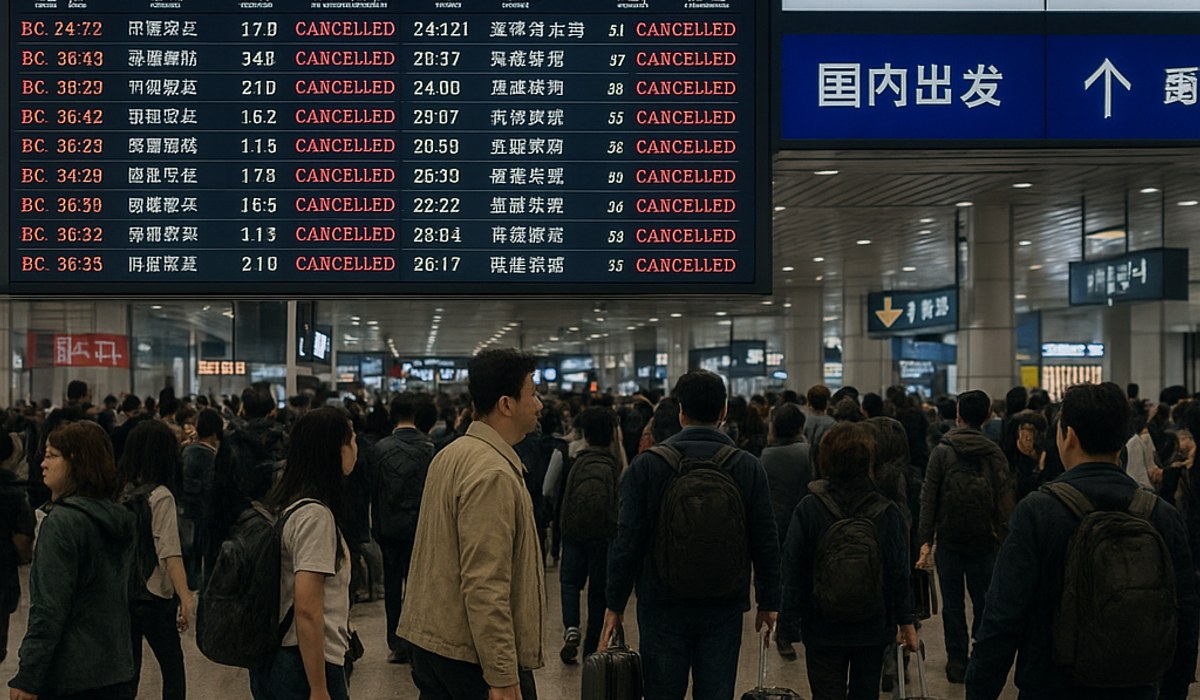
Image generated by AI
Quick Summary
- Over 200 flights cancelled across China's five largest airport hubs during peak Monday-Tuesday operations
- Guangzhou Baiyun reported 50+ cancellations with heaviest concentration during 5:00 PM–9:30 PM window
- Major carriers affected: China Southern Airlines, China Eastern Airlines, and Air China implemented network-wide schedule reductions
- International routes impacted: Flights to Dubai and Saudi Arabia grounded; Asian connections to Bangkok disrupted
- Cascading effect: Evening peak hours saw concentrated disruptions suggesting systemic operational strain rather than isolated incidents
China's Aviation Network Faces Unprecedented Disruption Wave
China's interconnected airline system experienced a massive operational crisis as multiple major carriers simultaneously cancelled over 200 scheduled departures across the country's busiest aviation hubs. The disruption, concentrated primarily during Monday and Tuesday operations, rippled across domestic connections spanning Beijing, Shanghai, Guangzhou, Shenzhen, and Chengdu, while also affecting critical international corridors extending to the Middle East and Southeast Asia.
This surge in cancellations represents one of the most severe disruption events documented across China's aviation infrastructure in recent months. Rather than isolated airport incidents, the broad geographic spread and multi-carrier involvement suggest systemic operational pressures affecting the entire national network.
Guangzhou Baiyun's Crisis: The Epicenter of Disruptions
Guangzhou Baiyun International Airport emerged as the focal point of this disruption wave, with more than 50 confirmed flight cancellations documented during the affected period. The airport serving southern China's manufacturing and trade hub bore the heaviest burden of operational challenges.
Scope of Guangzhou Cancellations
The cancelled departures from Guangzhou extended across a network of key destinations:
Major Domestic Hubs Affected:
- Beijing connections disrupted
- Shanghai Hongqiao services grounded
- Nanjing routes cancelled
- Hangzhou flights cancelled
- Chengdu services affected
- Wuhan connectivity interrupted
- Kunming regional routes grounded
- Qingdao northern hub connections disrupted
The diversity of affected destinations demonstrates that disruptions weren't limited to any single corridor, but rather reflected network-wide constraints.
Temporal Concentration During Evening Peak
A striking pattern emerged in the timing of Guangzhou cancellations: the most severe disruption concentrated between 5:00 PM and 9:30 PM local time. This clustering during peak evening departure windows suggests that operational strain accumulated throughout the day, culminating in wholesale schedule abandonment during critical evening operations.
Both narrow-body regional aircraft and wide-body long-haul jets were involved in cancellations, indicating that operational challenges transcended aircraft type or flight distance category. Airlines appeared to reduce capacity indiscriminately across their Guangzhou operation rather than managing specific aircraft or route-level issues.
Shanghai Pudong's Pattern: Repeated Route Failures
Shanghai Pudong International Airport, China's largest international gateway, experienced widespread disruptions affecting both domestic and international connectivity.
Domestic Route Concentration
Multiple domestic services from Shanghai Pudong faced cancellation throughout the day:
- Liuzhou regional connections (cancelled multiple times across different departures)
- Dalian northern route
- Lanzhou far-west connection
- Baotou inner Mongolia service
- Shenzhen major gateway link
A notable operational pattern emerged: Shanghai–Liuzhou routes experienced repeated cancellations across multiple departure slots. This suggests that operational constraints on this specific corridor forced airlines to consolidate passenger loads by combining multiple flights into reduced-frequency service, rather than maintaining full schedules.
International Route Disruption
Shanghai Pudong's international operations weren't spared, with confirmed cancellations affecting the critical Dubai corridor—a major gateway for Middle Eastern connectivity and global transfer traffic. This international service cancellation highlights how disruptions transcended domestic challenges.
Beijing's Dual-Airport System Under Strain
China's capital city operates two major international airports, and both experienced significant operational disruptions simultaneously, compounding travel challenges for Beijing-area passengers.
Beijing Capital International Airport Impact
China's legacy international gateway documented multiple cancellations affecting:
- Shenzhen southern tech hub disconnected
- Guangzhou major southern gateway inaccessible
- Changsha central-southern route grounded
- Chengdu southwestern hub affected
- Shanghai major trunk route cancelled
Wide-body aircraft typically assigned to major trunk routes between Beijing and these critical centers were involved in cancellations, indicating that the disruptions affected premium international-standard routes, not merely regional services.
Beijing Daxing International Airport Disruptions
The newer Beijing Daxing facility, serving the capital's southern areas, also documented significant operational challenges:
- Xiamen southeastern gateway disconnected
- Fuzhou coastal route cancelled
- Shenzhen tech hub link disrupted
- Guangzhou major southern hub cancelled
- International service to Saudi Arabia grounded
The involvement of both Beijing-area airports in significant disruptions suggests citywide operational challenges rather than facility-specific problems.
Shenzhen's Evening Peak Crisis
Shenzhen Bao'an International Airport, serving China's tech and manufacturing heartland, documented approximately 60 flight cancellations—among the highest volumes recorded at any single facility during this disruption event.
Affected Domestic Corridors
Shenzhen's connectivity to major domestic markets suffered severe disruption:
- Shanghai premier industrial link (multiple cancellations)
- Beijing national capital connection (cascade failures)
- Chengdu western hub communication interrupted
- Chongqing southwestern gateway disconnected
- Nanjing central-eastern route affected
- Wuhan central hub connectivity lost
Temporal Pattern: Evening Peak Concentration
Nearly all Shenzhen cancellations concentrated between 7:00 PM and 10:30 PM, suggesting that delays accumulated throughout the afternoon, forcing airlines to abandon evening departure schedules entirely. This pattern indicates that earlier operational challenges cascaded into later time periods, triggering wholesale midnight-hour flight cancellations.
The repeated cancellations to identical destinations within short time intervals further suggests that airlines deliberately consolidated passenger loads through flight cancellations rather than operating reduced-capacity services.
Shanghai Hongqiao and Regional Disruption
Beyond Shanghai Pudong's international operations, Shanghai Hongqiao Airport—the domestic hub serving China's primary financial center—also reported significant disruptions, affecting regional connectivity across southern and eastern China.
The concentration of Shanghai-based cancellations across both major facilities indicates that operational challenges affected the entire Shanghai region's aviation system.
Chengdu Contributes to National Disruption
Chengdu Tianfu International Airport, serving China's southwestern region, reported approximately 10–15 flight cancellations affecting:
- Shanghai eastern gateway connection
- Shenzhen southern hub link
- Guangzhou major industrial center
- Lhasa high-altitude regional destination
- Additional regional markets
These cancellations, though smaller in absolute volume than major eastern hubs, contributed to the national disruption pattern and complicated regional connectivity for southwestern travelers.
Complete Disruption Summary by Airport
| Airport | Est. Cancellations | Key Affected Domestic Destinations | International Impact |
|---|---|---|---|
| Guangzhou Baiyun | 50+ | Beijing, Shanghai, Nanjing, Hangzhou, Chengdu, Wuhan, Kunming, Qingdao | Limited |
| Shenzhen Bao'an | 60+ | Shanghai, Beijing, Chengdu, Chongqing, Nanjing, Wuhan | None documented |
| Shanghai Pudong | 20+ | Liuzhou, Dalian, Lanzhou, Baotou, Shenzhen | Dubai |
| Beijing Capital | 15+ | Shenzhen, Guangzhou, Changsha, Chengdu, Shanghai | None documented |
| Beijing Daxing | 10+ | Xiamen, Fuzhou, Shenzhen, Guangzhou | Saudi Arabia |
| Chengdu Tianfu | 10–15 | Shanghai, Shenzhen, Guangzhou, Lhasa, regional destinations | None documented |
| TOTAL | 165–180+ | Across major domestic network | Dubai, Saudi Arabia, Bangkok regional impacts |
Understanding the Operational Breakdown
When examining patterns across hundreds of cancelled departures, several consistent observations emerge that suggest systemic rather than isolated challenges.
Cascading Delay Theory
The concentration of cancellations during evening hours (5:00 PM–10:30 PM across most facilities) strongly suggests that airlines experienced disruptions earlier in the day that accumulated throughout afternoon operations. As delay chains lengthened, aircraft rotations became impossible to maintain, forcing cancellation of evening schedules as the only viable operational recovery strategy.
Airlines typically follow this pattern: accept and manage delays during initial disruption hours, attempt recovery during mid-day operations, and ultimately cancel remaining departures when recovery becomes impossible. The temporal clustering of cancellations indicates all three phases played out across China's network simultaneously.
High-Frequency Route Vulnerability
Major trunk routes—particularly Beijing–Shanghai, Guangzhou–Shanghai, and Shenzhen–Beijing connections—experienced repeated cancellations. These high-frequency routes, typically employing maximum daily flight frequencies, appear most vulnerable to disruption because any operational issue immediately creates cascade effects across multiple daily departures.
Aircraft Rotation Collapse
The involvement of both narrow-body regional aircraft and wide-body international jets in cancellations indicates that aircraft couldn't complete expected rotations. When planes can't cycle through scheduled routes, downstream flights automatically get cancelled—explaining why cancellations spread across aircraft types and route categories.
Impact on Travelers: Practical Consequences
Immediate Rebooking Challenges
Passengers with cancelled reservations faced severely constrained rebooking options. With 50–60 cancellations from single airports, alternative flight availability on identical routes became scarce, forcing travelers toward:
- Multi-day travel delays while awaiting available seats
- Forced rerouting through circuitous connecting paths
- Premium price charges for alternative service
- Original itinerary abandonment in some cases
Missed Connections
Passengers on multi-leg journeys—particularly international travelers connecting through Shanghai or Beijing hubs toward Europe or America—faced impossible connection windows. Evening cancellations meant that late-afternoon arrivals couldn't connect to cancelled evening departures, creating stranded passenger situations.
International Traveler Impact
The cancellation of Shanghai–Dubai and Beijing–Saudi Arabia services directly affected international travelers attempting to access Middle Eastern connections. Regional disruptions to Bangkok routes also restricted Southeast Asian connectivity.
Systemic Factors Behind the Disruptions
Accumulation of Delay and Strain
China's aviation network, like all large systems, has limited slack capacity. When initial disruptions occur, the system attempts recovery through:
- Delay acceptance (first few hours)
- Operational adjustments (mid-day recovery attempts)
- Strategic cancellation (evening schedule abandonment)
The pattern observed—minimal cancellations during morning operations, increasing through afternoon, and concentrated during evening—matches this theoretical progression precisely.
Weather, Airspace Restrictions, or Staffing
While specific root causes weren't publicly detailed, the scale and geographic distribution of disruptions suggest either:
- Severe weather affecting multiple regions simultaneously
- Airspace restrictions impacting national capacity
- Widespread staffing/crew availability issues
- Cascading mechanical issues affecting shared infrastructure
Any of these factors could trigger the multi-airport, multi-carrier network-wide disruptions observed.
Interconnected Hub Structure Vulnerability
China's aviation architecture concentrates traffic through Beijing, Shanghai, and Guangzhou hubs. Disruption at any hub immediately cascades throughout the system because thousands of passenger connections depend on specific arriving/departing flight combinations. A single major hub disruption can trigger national-scale effects.
What This Means for Travelers
For Current and Future China Travel:
- Build extended buffer time between flight segments—minimum 3–4 hours for connections
- Avoid tight connections through major hubs during afternoon/evening windows
- Monitor flight status actively during peak disruption hours (3:00 PM–9:00 PM)
- Consider purchasing flexible change policies given demonstrated disruption vulnerability
- Research alternative routing options before travel (consider trains for domestic travel under 8 hours)
Airlines' Operational Perspective:
China's carriers balanced network recovery against passenger accommodation pressure. Cancelling evening flights preserves next-day operations and crew rest requirements—a legitimate operational choice under severe strain, but one with significant passenger impact.
Looking Forward: Recovery and Resilience
As airlines worked to restore normal operations beyond Tuesday evening, several questions emerged about systemic resilience:
- Will operational issues recur under similar stress conditions?
- What measures can enhance Chinese aviation's ability to absorb disruption?
- How can hub vulnerabilities be mitigated?
The scale of this disruption event will influence airline operational planning, airport capacity management, and regulatory responses throughout the coming months.
FAQ: Travelers' Questions About China Airline Disruptions
Q: Should I avoid flying within China for the next few weeks?
A: These disruptions, while significant, appear to be acute operational challenges rather than systemic failures. Standard precautions (flexible tickets, buffer time, monitoring) suffice for ordinary travel planning.
Q: Will my flight be cancelled if I'm booked tomorrow?
A: The specific disruption event occurred Monday–Tuesday. Query your airline directly about your particular flight's status rather than assuming disruption continuation.
Q: Which airlines should I avoid?
A: All three major carriers (China Southern, China Eastern, Air China) experienced disruptions, suggesting system-wide rather than carrier-specific issues. Choose based on flight timing and routing, not carrier preference.
Q: Are international flights more vulnerable than domestic?
A: This disruption primarily affected domestic capacity, with limited international impacts. However, connecting through disrupted hubs (Shanghai, Beijing) delays international journeys even if international-dedicated flights operate normally.
Q: What's the best way to protect myself from future China flight disruptions?
A: Purchase refundable or flexible change policies; build buffer time into connections; use real-time flight tracking; maintain contact with airlines; and consider train alternatives for shorter domestic routes.
Conclusion
The disruption wave affecting China's aviation network illustrates how quickly modern airline systems can become overwhelmed under operational stress. Over 200 cancellations across multiple major airports demonstrate that when conditions exceed operational capacity, carriers respond with aggressive schedule reduction rather than attempting to maintain full operations through delays.
For travelers, this event reinforces the importance of flexibility, buffer time, and realistic expectations when navigating complex international aviation networks. As China's airlines and airports implement improvements to prevent recurrence, the resilience of systemic design becomes increasingly critical to aviation's continued reliability and growth.
Keywords: China flight cancellations, Guangzhou Shanghai Beijing Shenzhen disruptions, airline delays March 2026, China aviation news, Asia travel disruptions
Disclaimer
This article is for informational and educational purposes only. It does not constitute legal, financial, or professional advice. While we strive to provide accurate and up-to-date information, travel policies, regulations, and conditions change rapidly. Always verify information with official sources before making travel decisions. Nomad Lawyer makes no representations about the accuracy, reliability, completeness, or suitability of the information provided. Readers should consult qualified professionals for advice specific to their circumstances. The views expressed in this article are those of the author and do not necessarily reflect the views of Nomad Lawyer.
Raushan Kumar
Founder & Lead Developer
Full-stack developer with 11+ years of experience and a passionate traveller. Raushan built Nomad Lawyer from the ground up with a vision to create the best travel and law experience on the web.
Learn more about our team →