
Chicago O'Hare Meltdown: Thunderstorms Trigger 1,318 Delays and 148 Cancellations Across the US Network
Chicago O'Hare International Airport has become ground zero for a massive aviation meltdown, recording 1,318 delays and 148 cancellations as thunderstorms devastate the Midwest. Regional carriers Envoy Air, Republic, and SkyWest absorb the worst damage while United, American, and Delta struggle to maintain operations.

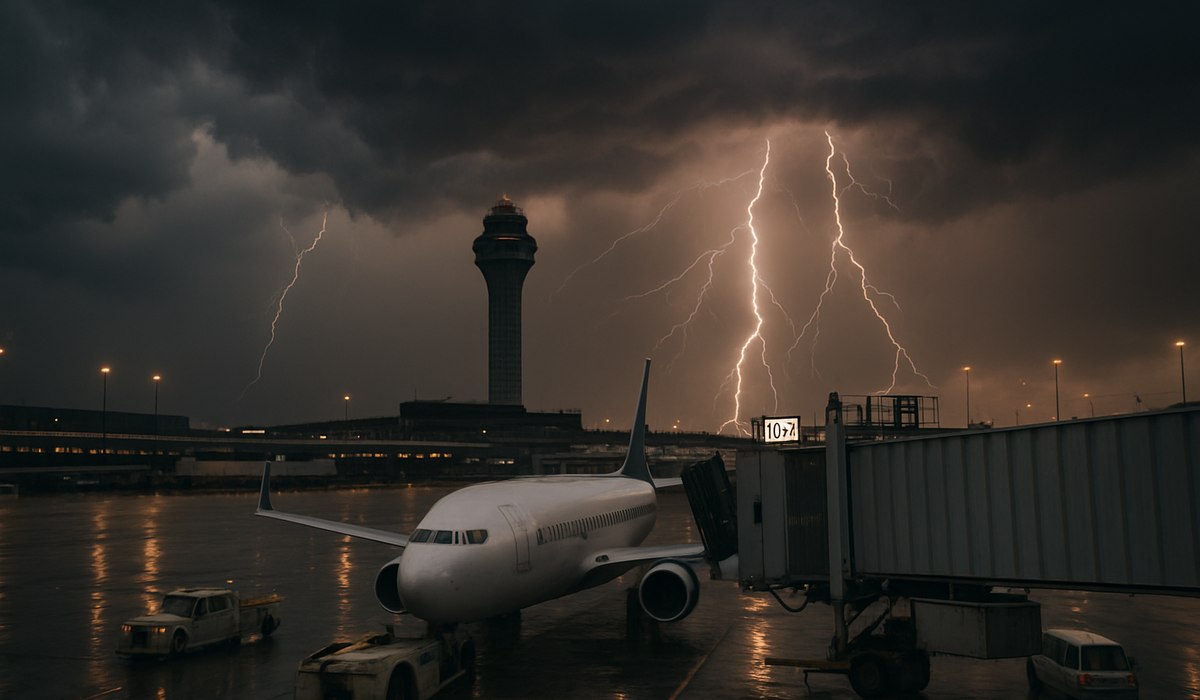
Image generated by AI
Thunderstorms Reduce Chicago O'Hare to Operational Gridlock
Chicago O'Hare International Airport (ORD)—the critical hub pulsing at the absolute center of the American aviation network—has suffered a devastating operational meltdown as violent thunderstorms swept across the Midwest region. The damage toll: a staggering 1,318 flight delays and 148 outright cancellations, transforming one of the world's busiest airports into a vast holding pattern of frustrated travelers, stranded crews, and paralyzed supply chains, per FlightAware real-time tracking data.
The storm-driven chaos wasn't contained to Illinois. The sheer volume of aircraft trapped at O'Hare triggered cascading disruptions that bled aggressively into New York LaGuardia, Toronto Pearson, Detroit Metropolitan, Columbus, and Hartsfield-Jackson Atlanta—effectively poisoning arterial connections spanning the entire eastern half of North America.
Regional Carriers Bear the Brunt of the Carnage
While every carrier at O'Hare suffered, the operational devastation fell disproportionately on the regional airlines that function as the connective tissue linking smaller cities to the mega-hub:
- Envoy Air (operating as American Eagle): 44 cancellations, 170 delays — the single highest cancellation count at O'Hare
- Republic Airways: 32 cancellations, 120 delays — feeder operations for Delta and United decimated
- SkyWest Airlines: 26 cancellations, 257 delays — the highest raw delay count among regionals
- GoJet Airlines: 13 cancellations, 86 delays — regional jet operations severely compromised
- PSA Airlines: 6 cancellations, 10 delays — smaller scale but high cancellation percentage
The pattern is unmistakable: when Air Traffic Control imposes flow restrictions at a mega-hub, airlines ruthlessly sacrifice smaller 50-76 seat regional jets to protect the departure slots of their highly profitable 180-220 seat mainline narrowbodies. If you were booked on a regional connection through O'Hare today, you were statistically far more likely to be stranded than a passenger on a mainline flight.
Mainline Giants: Delayed But Not Destroyed
The major carriers managed to keep cancellation rates relatively contained, though sheer delay volumes were punishing:
- United Airlines: 17 cancellations, 333 delays — the single highest delay count among all carriers
- American Airlines: 2 cancellations, 205 delays — operationally strained but strategically protected
- Delta Air Lines: Limited O'Hare exposure but delays rippled through connected Atlanta operations
- Southwest Airlines: Moderate disruption across its point-to-point network
United Airlines, which operates O'Hare as its primary domestic hub, absorbed the worst absolute numbers. With 333 flights delayed, the airline's entire connecting bank sequence was thrown into chaos, creating a devastating domino effect that stranded passengers attempting to reach West Coast and international destinations.
The Thunderstorm Mechanics: Why O'Hare Is Uniquely Vulnerable
Chicago O'Hare's geographic positioning makes it uniquely susceptible to severe convective weather. The airport sits directly in the path of the classic North American thunderstorm corridor, where warm, moist air from the Gulf of Mexico collides violently with cooler Canadian air masses.
When the FAA detects dangerous thunderstorm cells approaching O'Hare's airspace, it implements Ground Stops (halting all departures) and Ground Delay Programs (metering arriving flights to prevent airborne gridlock). Today's storms triggered both protocols simultaneously, essentially freezing the airport's operational pipeline.
The effects compound exponentially: a 45-minute ground stop doesn't create a 45-minute delay—it creates a massive backlog as hundreds of aircraft must be sequenced back through arrival and departure queues once operations resume.
What Guests Get
- Automated rebooking notifications pushed via United, American, and Delta mobile applications
- FAA-mandated weather delay protections, though compensation structures vary by carrier
- Interline rebooking — passengers on cancelled regionals may be rerouted onto mainline flights
- Priority restauration for elite frequent flyers attempting to secure limited remaining seats
- Chicago Midway (MDW) overflow options for Southwest and point-to-point travelers
Chicago O'Hare Thunderstorm Impact: Carrier Breakdown
| Carrier | Cancellations | Delays | Primary Impact Profile |
|---|---|---|---|
| Envoy Air | 44 | 170 | Highest cancellation count, American Eagle feeder |
| Republic Airways | 32 | 120 | Delta/United regional feed destroyed |
| SkyWest Airlines | 26 | 257 | Highest regional delay count |
| United Airlines | 17 | 333 | Highest overall delay count, hub carrier |
| GoJet Airlines | 13 | 86 | Regional short-haul severely compromised |
| PSA Airlines | 6 | 10 | High cancellation rate relative to volume |
| American Airlines | 2 | 205 | Mainline protected, delays absorbed |
What This Means for Travelers
If you are connecting through Chicago O'Hare during a severe weather event, your single most critical defensive action is monitoring the inbound aircraft assigned to your outbound flight. A departure board showing "On Time" is meaningless if the physical aircraft that will operate your flight is currently sitting in a queue on a runway in Detroit or Toronto. Use third-party flight tracking applications to locate your specific tail number and make rebooking decisions proactively.
Furthermore, passengers with international connections through O'Hare must inject massive schedule padding into their itineraries. A 90-minute domestic layover that seems reasonable on paper becomes suicide when 1,300+ flights are competing for recovery slots. Build minimum 3-hour connection windows during the spring thunderstorm season (March through June), and seriously consider whether routing through alternative hubs like Minneapolis, Dallas, or Denver might offer more weather-resilient connectivity.
FAQ: Chicago O'Hare Thunderstorm Delays
Why do regional airlines get cancelled first during weather events? Airlines practice "yield management" during disruptions. A 50-seat Embraer regional jet generates far less revenue than a 180-seat Airbus A320. When the FAA restricts the number of aircraft that can depart per hour, airlines will sacrifice the smaller, less profitable regional flights to protect departure slots for their high-revenue mainline operations.
Can I claim compensation for a weather delay at O'Hare? In the United States, weather-related delays are classified as "uncontrollable" events, meaning airlines are not federally required to provide cash compensation. However, most major carriers will offer meal vouchers for extended delays and hotel accommodations if the delay stretches overnight, particularly if you request them directly.
Is Chicago Midway a viable alternative when O'Hare melts down? Yes, for certain carriers. Southwest Airlines operates its Chicago operations primarily from Midway (MDW), which operates under a different air traffic control jurisdiction. During O'Hare ground stops, Midway sometimes maintains operational flow, though severe regional thunderstorms can impact both airports simultaneously.
Related Travel Guides
The Ultimate Chicago O'Hare Layover Survival Guide
Weather-Proofing Your Travel: How to Avoid Thunderstorm Season Delays
Regional Airlines Explained: Why Your Small Jet Gets Cancelled First
Disclaimer
This article is for informational and educational purposes only. It does not constitute legal, financial, or professional advice. While we strive to provide accurate and up-to-date information, travel policies, regulations, and conditions change rapidly. Always verify information with official sources before making travel decisions. Nomad Lawyer makes no representations about the accuracy, reliability, completeness, or suitability of the information provided. Readers should consult qualified professionals for advice specific to their circumstances. The views expressed in this article are those of the author and do not necessarily reflect the views of Nomad Lawyer.
Raushan Kumar
Founder & Lead Developer
Full-stack developer with 11+ years of experience and a passionate traveller. Raushan built Nomad Lawyer from the ground up with a vision to create the best travel and law experience on the web.
Learn more about our team →