Chiba Prefecture Launches Luxury Restaurant Bus Tours in November 2026 to Drive Post-Flood Recovery

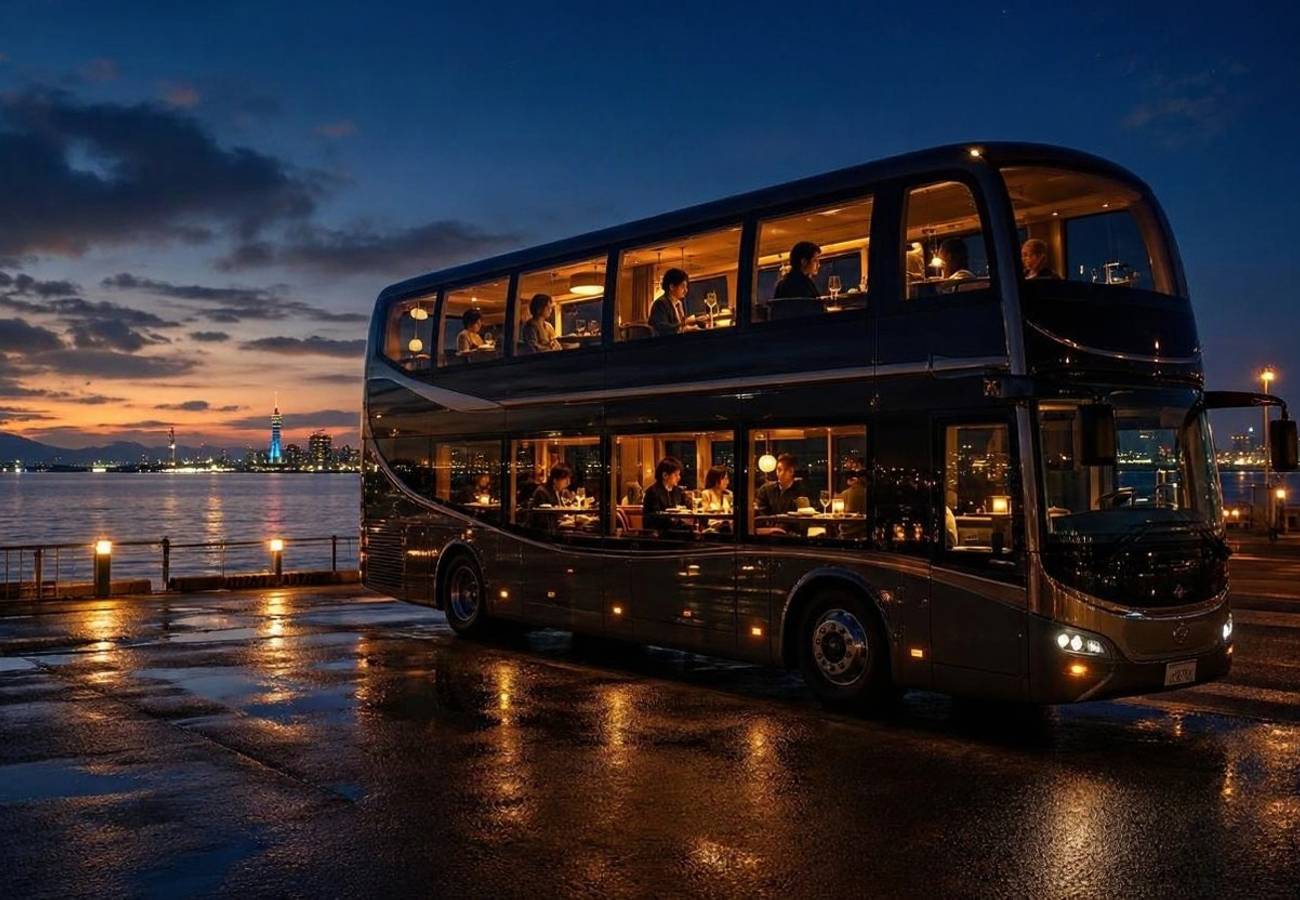
Image generated by AI
Chiba’s 2025 tourism visits grew by a marginal 0.8% to reach 172.26 million—a baseline that now faces the volatility of post-disaster recovery. The launch of the Chiba Restaurant Bus tours in November 2026 is not merely a luxury offering but a strategic attempt to stabilize a region reeling from heavy rains that began on 13 August 2026. By integrating high-ticket experiential dining with disaster-affected zones, the prefecture is testing whether "premiumization" can accelerate the return of domestic and international spenders to the southern Boso region.
The Recovery Metrics: Tourism vs. Disaster Impact
The timing of these tours is surgically precise. Following the 13 August 2026 floods, official disaster relief was triggered on 14 August. By 16 October, transport advisories still warned of road disruptions caused by typhoons and heavy rainfall. The transition from disaster response to tourism promotion happened rapidly: by 1 November, most facilities were reported as operational, and by 14 November, the first restaurant bus was scheduled to depart.
This trajectory aligns with broader patterns seen in UN Tourism (UNWTO) data, where "event-based" or "experiential" tourism is often used to signal a destination's readiness to the global market after a climate event. However, the data suggests a fragile equilibrium. While the tours are launching, the government issued updates as late as 10 November to support agricultural and fisheries businesses still struggling with crop damage and insurance claims.
Regional Benchmarks and Capacity Analysis
To understand the scale of this initiative, one must compare the niche capacity of the restaurant bus against the broader regional statistics. The program is a micro-intervention: six departures with a maximum of 23 passengers each, totaling only 138 potential passenger seats. This is a stark contrast to the 28.24 million overnight guest nights recorded in 2025.
The following table breaks down the 2025 baseline data against the 2026 recovery initiative:
| Metric | 2025 Baseline Data | 2026 Restaurant Bus Program | Variance/Scale |
|---|---|---|---|
| Total Visits | 172.26 Million (+0.8% YoY) | 138 Max Seats (Total) | Niche Intervention |
| Overnight Stays | 28.24 Million (-0.1% YoY) | Day-trip format | Non-overnight |
| Foreign Guest Nights | 4.38 Million (-0.7% YoY) | Open to foreigners | Target: High-spend |
| Price Point | Standard regional avg. | ¥39,800 per person | Premium Tier |
| Capacity Threshold | N/A | 10 passengers (43.5%) | Minimum Op. Level |
The slight decline in foreign guest nights (-0.7%) in 2025 suggests that Chiba was already facing a stagnation in international appeal before the August floods. The introduction of a ¥39,800 per person ticket indicates a shift toward attracting higher-net-worth individuals who are less price-sensitive and more interested in exclusive access, such as the restricted sections of the Tateyama Sunset Pier.
What This Means for Travelers
For those planning to visit the Boso region in late 2026, the data indicates that while primary tourism hubs are open, the "last mile" of infrastructure remains sensitive. If you are booking these specific tours or independent travel to Tateyama, keep the following logistics in mind:
- Booking Windows are Tight: The required booking deadline is 10 days prior to departure. For the November 14, 15, 18, 21, 22, and 23 dates, the windows for the first four trips have already closed.
- Logistical Precision: The tours operate on a strict timeline—assembling at Chiba Station's east exit at 10:45 and returning as late as 21:15. Given the late return, travelers should book accommodation within walking distance of Chiba Station or verify late-night rail availability via Japan Railways (JR).
- Environmental Readiness: Because the itinerary includes Takabe Shrine and local dairy farms in areas recently affected by rain, footwear and weather protection are non-negotiable.
Projection: The "Experience Economy" as Recovery Tool
The Chiba Restaurant Bus is a prototype for a larger trend in Japanese regional tourism: moving away from mass-market sightseeing toward "high-value, low-impact" experiences. By using a double-decker bus with a retractable roof and an onboard kitchen, the prefecture minimizes the need for new permanent infrastructure in fragile coastal zones while still capturing high per-capita spending.
If the 43.5% occupancy threshold (10 passengers) is consistently met or exceeded across the six November departures, expect similar "mobile luxury" concepts to expand into other disaster-recovery zones across Japan. This strategy allows the Japan Tourism Agency to stimulate local economies without risking the safety of large crowds in areas where road repairs may still be ongoing.
FAQ: Chiba Restaurant Bus Tours 2026
Will prices for Chiba tourism increase after the floods? While general attraction prices remain stable, there is a clear trend toward "premium" packages like the ¥39,800 bus tour to offset regional losses and attract higher-spending visitors.
Is it safe to visit Tateyama and the Boso region now? Yes, as of November 1, most facilities and restaurants are operating normally. However, some secondary roads may still have restrictions; using registered tour operators is the safest way to navigate these areas.
Which airlines provide the best access to Chiba? Most international travelers fly into Narita International Airport (NRT), which serves as the primary gateway to Chiba Prefecture, followed by a rail connection to Chiba Station.
Luxury dining on wheels is the new signal for regional resilience.
Related Travel Guides
This article is for informational purposes. Flight routes, passenger regulations, visa rules, and transit advisories are subject to change by airlines and aviation authorities. Readers are advised to verify schedules and travel documentation with relevant carriers and border agencies before departure.
Related Stories
Amex Virgin Atlantic 30% Transfer Bonus 2026: How to Score Cheap Flights to London and Japan

Globus Black Friday 2026: How to Secure 30% Off 2027 Worldwide Tours and European River Cruises