
Chiang Mai International Airport (CNX) Terminal Map: Arrival and Transport Guide 2026
A professional analysis of the Chiang Mai International Airport (CNX) terminal layout, detailing the split between domestic and international arrivals, baggage claim logistics, and ground transport exits for 2026.

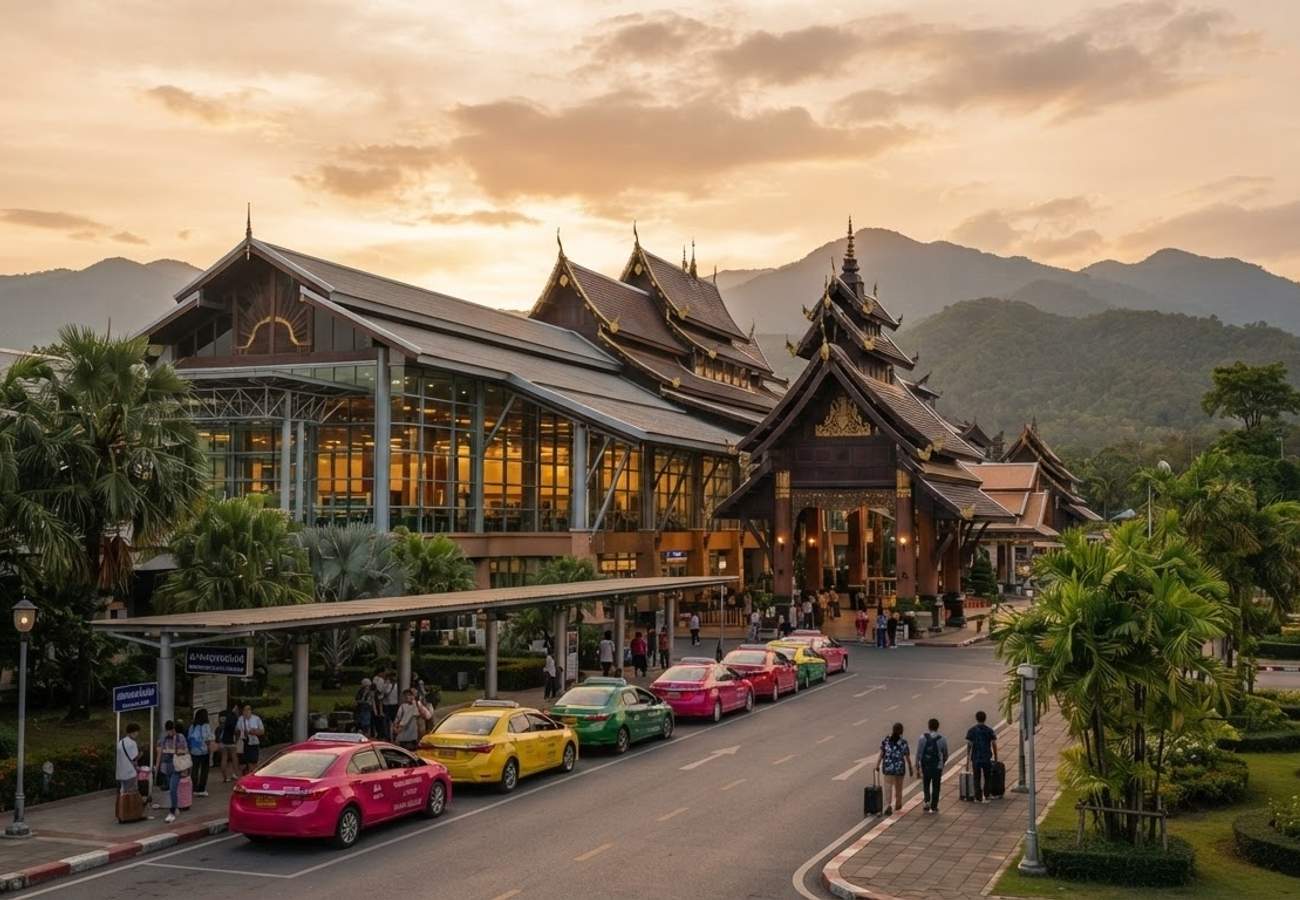
Image generated by AI
Chiang Mai International Airport (CNX) utilizes a single-terminal system divided into two functional zones. Understanding the internal connectivity between the domestic and international wings is essential for efficient transit to the city center.
The facility is structured as one main building rather than separate terminals. From an external perspective, the domestic section is located on the right (north side), and the international section is on the left (south side). Both zones are internally connected, allowing passengers to transit between them in under five minutes.
The airport operates on a two-level system:
- Ground Floor: Dedicated to arrivals, baggage claim, customs, car rental desks, and all ground transport exits.
- First Floor: Dedicated to departures, including check-in counters, security screening, and boarding gates.
Arrival Logistics and Ground Transport
Domestic Arrivals: Flow and Exits
Domestic passengers land on the ground floor. The process is streamlined, with no immigration or customs requirements. For flights from Bangkok, Phuket, or Krabi, the transition from aircraft to the curb often takes less than 15 minutes.
Baggage claim is located immediately inside the domestic arrivals hall. Thai Airways, Thai Smile, and Bangkok Airways typically use the carousels closest to the exit, while low-cost carriers like AirAsia, Thai Vietjet, and Nok Air utilize carousels further along the hall.
Key Transport Hubs (Domestic Side):
- Airport Taxi Meter Counter: Located near the exit doors. This is a fixed-fare system where passengers pay in Thai baht and receive a slip for a specific parking bay.
- Car Rental Desks: Major brands including Budget, Hertz, and Avis are clustered near Exit Doors 1 and 2.
International Arrivals: Immigration and Customs
International passengers enter the ground floor via the south wing. The workflow follows a strict sequence: Immigration $\rightarrow$ Security $\rightarrow$ Baggage Claim $\rightarrow$ Customs.
Due to the arrival of multiple narrow-body aircraft from regional hubs in the late evening, queues can lengthen. Our analysis suggests that international arrivals should allow at least one hour from touchdown to reaching the curb to account for passport control and customs.
Upon exiting customs, passengers enter a hall featuring currency exchange, ATMs, and mobile SIM/eSIM kiosks. A critical logistical point for international travelers is that the primary taxi and car rental counters are not located immediately in the international hall; passengers must walk left toward the domestic arrivals section to access these services.
Terminal Layout and Fare Data
The following data reflects standard operational layouts and typical pricing for transport from the terminal.
Transport Fare Estimates (CNX to City)
| Destination | Estimated Taxi Fare (Fixed) | Estimated Transit Time |
|---|---|---|
| Old City Moat | 150 Baht | 15-20 Minutes |
| Nimman Area | 200 Baht | 10-15 Minutes |
| Night Bazaar | 150-200 Baht | 15-20 Minutes |
Why This Matters: Industry Analysis
From a logistical perspective, CNX is a "high-density, low-footprint" airport. Unlike Bangkok’s Suvarnabhumi, there is no rail link or multi-level transport hub. Everything radiates from a single ground-floor curb.
For the traveler, the real impact is the "bottleneck effect." Because taxis, hotel shuttles, and private vehicles share a short roadway, congestion peaks during the late afternoon and evening when flights from Singapore, Kuala Lumpur, and Bangkok converge.
The most common point of failure for first-time visitors is the "International-to-Domestic" walk. Many passengers mistakenly wait in the international arrivals greeting area for taxis, unaware that the official taxi kiosks are located in the domestic wing. To avoid delays, travelers should move immediately toward the domestic arrivals signage upon clearing customs.
Forward Outlook
As regional tourism in Northern Thailand continues to scale, the reliance on a single-curb transport system will likely lead to increased congestion. We expect a shift toward more digitized ride-hailing integration (Grab) and potentially more structured shuttle zones to alleviate the pressure on the ground floor exits. Travelers should prioritize pre-booked transfers or eSIM activation immediately upon landing to streamline the exit process.
Efficient navigation of CNX requires moving against the crowd toward the domestic wing for the fastest transport access.
Related Travel Guides
Disclaimer
This article is for informational and educational purposes only. It does not constitute legal, financial, or professional advice. While we strive to provide accurate and up-to-date information, travel policies, regulations, and conditions change rapidly. Always verify information with official sources before making travel decisions. Nomad Lawyer makes no representations about the accuracy, reliability, completeness, or suitability of the information provided. Readers should consult qualified professionals for advice specific to their circumstances. The views expressed in this article are those of the author and do not necessarily reflect the views of Nomad Lawyer.
Raushan Kumar
Founder & Lead Developer
Full-stack developer with 11+ years of experience and a passionate traveller. Raushan built Nomad Lawyer from the ground up with a vision to create the best travel and law experience on the web.
Learn more about our team →