
United Airlines CEO Flies American Instead of Own Carrier, Sparking Industry Questions
Breaking airline news and aviation industry updates for 2026.

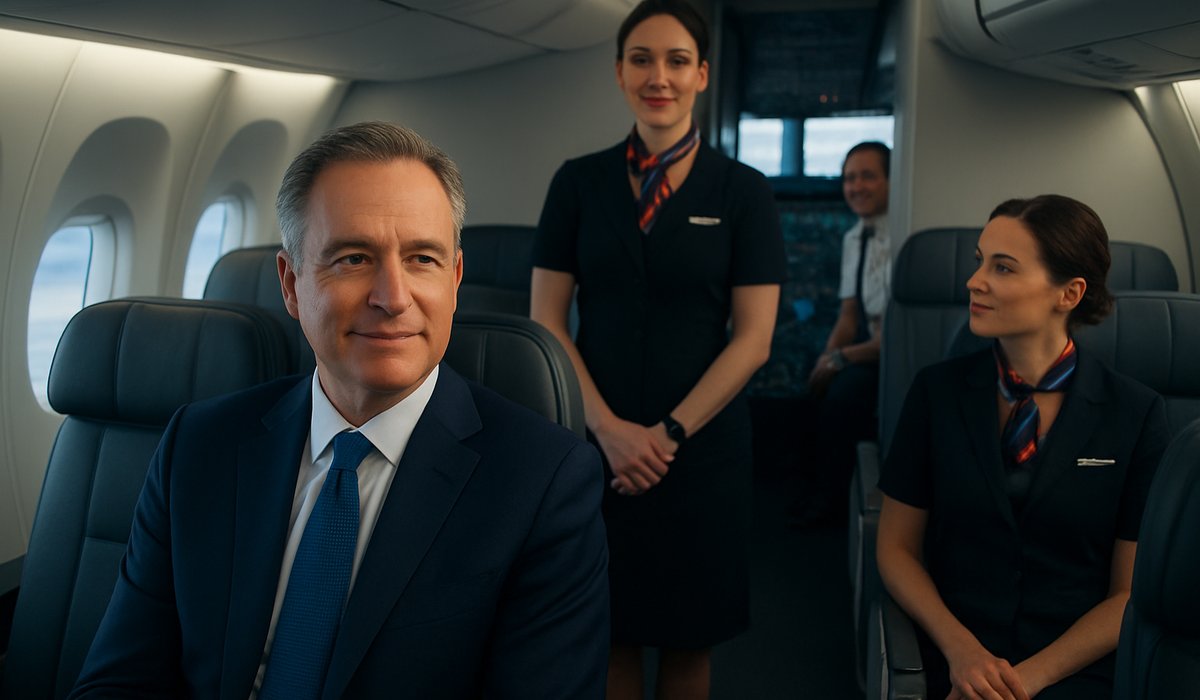
Image generated by AI
United Airlines CEO Flies American Instead of Own Carrier, Sparking Industry Questions
Scott Kirby's choice to travel competitor's aircraft raises eyebrows about airline loyalty and executive privilege in competitive market
Executive's Unexpected Travel Choice Ignites Debate
Scott Kirby, the Chief Executive Officer of United Airlines, was recently observed aboard an American Airlines flight, triggering widespread discussion within aviation circles about executive loyalty and airline preference patterns. The sighting has become a talking point in an industry increasingly focused on customer retention and brand differentiation as carriers compete fiercely for passengers amid volatile fuel costs and evolving travel demand.
The Executive's Longstanding Relationship With American
Kirby's decision to travel via American Airlines is not without historical context. Before assuming leadership at United Airlines, Kirby served as President of American Airlines, where he held a senior executive position until his departure approximately a decade ago. His tenure at American secured him lifetime travel privileges with the oneworld alliance carrier, granting him complimentary personal travel benefits that remain valid regardless of his current employment.
What This Reveals About Airline Industry Dynamics
The incident underscores broader questions within the aviation sector regarding executive decision-making and competitive positioning. In an industry where customer loyalty programs and executive perks represent significant financial commitments, the choice by a rival airline's top executive to utilize competitor benefits rather than his own airline's offerings has sparked informal conversations among aviation analysts and industry observers.
The observation arrives during a period of intense competition across major U.S. carriers. Airlines including United, American, and Delta continue restructuring fee structures, including baggage charges and ancillary revenue streams, while managing rising jet fuel prices that significantly impact operational margins. These revenue models depend partly on customer loyalty and repeat bookings—making brand preference among all passenger segments strategically important.
Industry Commentary and Implications
While Kirby's decision likely reflects his established relationship with American Airlines and the tangible value of his lifetime privileges, it illustrates how even senior aviation executives navigate complex loyalty ecosystems. His choice does not necessarily reflect dissatisfaction with United's service or operations, but rather demonstrates the competitive advantages that legacy executive arrangements provide within the industry.
The incident serves as a reminder that in commercial aviation, loyalty—even among executives—follows the most advantageous path available, regardless of corporate affiliation. As airlines continue investing heavily in premium experiences and loyalty benefits to attract high-value customers, the travel choices of industry leaders remain under informal scrutiny.
FAQ: Airline Executive Travel and Industry Practices
Why do airline executives retain lifetime travel privileges from former employers? Lifetime travel benefits are often contractual components of senior executive compensation packages, particularly in industries with established pension and perks structures like aviation.
Does an executive flying a competitor's airline indicate problems with their own airline? Not necessarily. Executives typically utilize whichever airline offers the most convenient routing, timing, or benefits, similar to other passengers optimizing their travel value.
How do baggage fees and ancillary charges affect airline revenue models? Baggage charges, seat selection fees, and other ancillary revenue now account for substantial portions of major U.S. carriers' operating income—sometimes 15-20% of total revenue.
What impact do jet fuel prices have on airline fee structures? Rising fuel costs typically correlate with increased ancillary fees and ticket prices, as carriers attempt to maintain margins while managing volatile operating expenses.
How do oneworld alliance benefits differ from competitors? Oneworld, along with Star Alliance and SkyTeam, provides members reciprocal benefits across partner carriers, allowing executives to access worldwide travel networks through single loyalty accounts.
Related Travel Guides
- SalamAir Establishes Direct Muscat to Kigali Flight Routes to Enhance Tourism and Trade Connectivity Between Oman and Rwanda in 2026
- Breaking Airline News: Singapore, US, UK, Canada, and Australia Deploy Massive Regulatory Shields to Violently Crush Global Travel Chaos in 2026
- Breaking Airline News: Emirates Deploys Massive A380 Fortress at ILA Berlin to Shield German Travelers from Apocalyptic Travel Chaos
Disclaimer
This article is for informational and educational purposes only. It does not constitute legal, financial, or professional advice. While we strive to provide accurate and up-to-date information, travel policies, regulations, and conditions change rapidly. Always verify information with official sources before making travel decisions. Nomad Lawyer makes no representations about the accuracy, reliability, completeness, or suitability of the information provided. Readers should consult qualified professionals for advice specific to their circumstances. The views expressed in this article are those of the author and do not necessarily reflect the views of Nomad Lawyer.
Preeti Gunjan
Contributor & Community Manager
A passionate traveller and community builder. Preeti helps grow the Nomad Lawyer community, fostering engagement and bringing the reader experience to life.
Learn more about our team →