
Cancun Stands With Tulum and More Destinations as Mexico Looks Beyond US Travellers After Witnessing a Drop From Its Largest Source Market in 2026
Cancun Stands With Tulum and More Destinations as Mexico Looks Beyond US Travellers After Witnessing a Drop From Its Largest Source Market in 2026

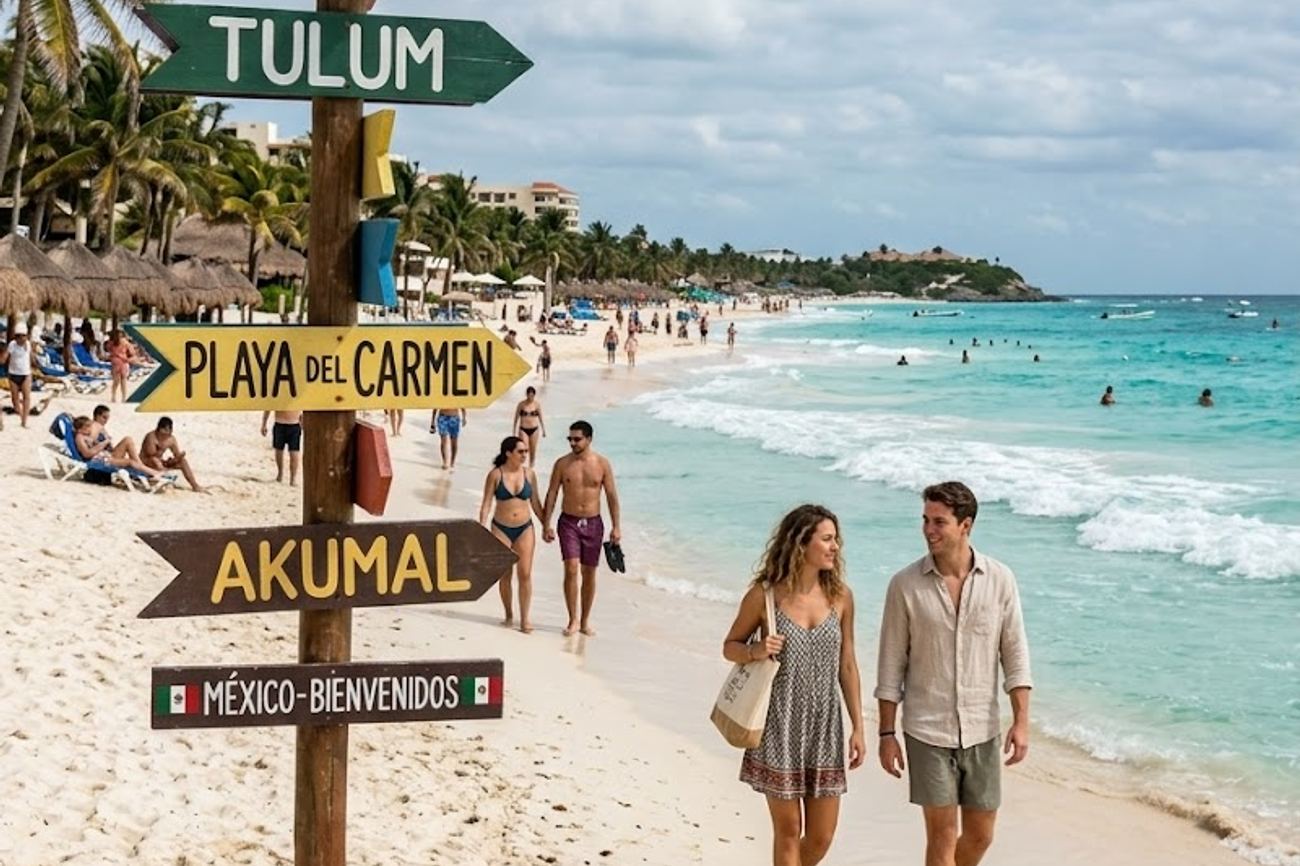
Image generated by AI
[Cancún, August 2026] — Mexico is aggressively pivoting its national tourism strategy toward Asian and Latin American markets following a sharp 6.1% decline in international air traffic at its primary gateway, Cancún.
The shift comes as the country grapples with a significant downturn in visitors from the United States, its largest source of tourism. Data for the first eight months of 2026 reveals that Cancún saw 12,930,607 passenger movements between January and August, a drop of 845,714 passengers compared to the 13,776,321 movements recorded during the same period in 2025.
The US Market Contraction
The immediate catalyst for this strategic pivot is a sustained weakening of demand from the United States. Through July 2026, US arrivals plummeted by 10.0%, falling to 8,061,646 from 8,961,027 in 2025. This represents a loss of approximately 899,381 travelers.
Because US citizens still constitute 65.0% of all international air arrivals into Mexico, the Secretaría de Turismo (SECTUR) and local operators are feeling a disproportionate economic impact. The decline was not immediate but accelerated throughout the year. While January and February 2026 saw modest growth of 2.2% and 3.3% respectively, the trend reversed in March with a 4.1% dip. The contraction then spiraled into double-digit losses: May fell 11.1%, June dropped 13.1%, July decreased 12.7%, and August hit a period low with a 15.0% decline.
Markets in Transition
While the US and Tulum are struggling—the latter seeing a 5.1% year-to-date drop in visitors—other corridors are expanding. Mexico is now leveraging growth from Canada and South America to offset the North American deficit.
| Source Market | 2025 Arrivals | 2026 Arrivals | Growth Rate | Market Share Shift |
|---|---|---|---|---|
| United States | 8,961,027 | 8,061,646 | -10.0% | 65.0% (Current) |
| Canada | 1,791,025 | 1,924,109 | +7.4% | 13.6% $\rightarrow$ 15.5% |
| Colombia | 216,872 | 280,607 | +29.4% | 1.6% $\rightarrow$ 2.3% |
| Brazil | 101,966 | 125,248 | +22.8% | 0.8% $\rightarrow$ 1.0% |
| Japan | 34,602 | 39,853 | +15.2% | ~0.3% |
The surge in Colombian and Brazilian traffic suggests a growing appetite for regional travel. Colombia’s nearly 30% increase is particularly notable, signaling that Mexico City, Guadalajara, and Monterrey are becoming primary targets for Latin American travelers seeking gastronomy and heritage over traditional beach resorts.
What This Means for Travelers
For the average traveler, this shift in Mexico's target demographic will manifest in several tangible ways:
1. Flight Availability and Pricing: As airlines adjust to the 10% drop in US demand, travelers may see more aggressive discounting on flights from US hubs to Cancún International Airport (CUN) as carriers fight for a shrinking pool of passengers. Conversely, increased capacity from Canada and South America may lead to more direct route options from cities like Toronto, Bogotá, and São Paulo.
2. Resort Experience: With a strategic push toward "higher-spending Asian travellers," expect a rise in ultra-luxury offerings and tailored services in the Riviera Maya and Los Cabos. The focus is shifting from mass-market all-inclusive packages to high-end, curated cultural experiences.
3. Destination Diversification: The push to reduce dependence on the "sun and sand" formula means more government and promotional investment in the interior. Travelers may find improved infrastructure and more English/multilingual support in cultural hubs like Mérida and Mexico City as the country courts a more global, urban-centric visitor.
The Asian and Canadian Hedge
Mexico is positioning Canada as a critical counterweight to US volatility. Canadian arrivals grew by 7.4%, increasing their total market share to 15.5%. While this remains largely seasonal, the Mexican government is attempting to convert this winter-sun demand into year-round visitation.
Simultaneously, the 15.2% growth in Japanese arrivals represents a strategic long-term play. Although Japan accounts for only 0.3% of total arrivals, these travelers typically have higher per-capita spending and a strong interest in UNESCO World Heritage sites and archaeological zones. This aligns with Mexico's goal of attracting "high-value" tourists who spend more per day than the average short-haul traveler from the US.
The broader international arrival trend through July shows a general decline of 5.7%, confirming that the struggle is not limited to a single city but is a systemic shift in how the world accesses Mexico. The goal is no longer "automatic growth" based on US proximity, but a diversified portfolio that protects the economy from a downturn in any single foreign market.
FAQ: Mexico Tourism Shifts 2026
Why are US visits to Mexico declining in 2026? The data shows a sustained weakening of the US market, with a 10% drop in arrivals through July. While specific economic drivers aren't detailed, the decline has forced Mexico to diversify its visitor base to avoid over-reliance on a single source.
Which countries are visiting Mexico more frequently? Canada is a primary growth driver (+7.4%), while Latin American markets are surging, specifically Colombia (+29.4%) and Brazil (+22.8%). Japan is also showing strong growth in the Asian sector with a 15.2% increase.
Is Cancún still a viable destination despite the traffic drop? Yes. Despite a 6.1% decline, Cancún still handled nearly 13 million international passenger movements in eight months. The city remains a global powerhouse, but it is no longer experiencing the effortless growth of previous years.
Will this change the types of hotels available in Mexico? Likely. Mexico is targeting higher-spending travelers from Asia and diversifying into cultural tourism. This suggests a move toward more luxury boutique options and heritage-focused accommodations over standard mass-market resorts.
Mexico is trading the reliability of the American neighbor for a globalized guest list.
#MexicoTourism2026 #CancunAirport #CUN #USMexicoTravel #CanadianTourism #LatinAmericanTravel #SECTUR
Related Travel Guides
- Canada and France Remain Top Tourism Sources for Arizona Despite Major Visitor Declines During the First Eight Months of 2026
- Jordan Tourism Sector Crisis as $120M Recovery Plan Amid Historic 61% Visitor Drop
- US House Advances Russia Sanctions Bill With Travel And Trade Implications For India And Global Tourism
Disclaimer
This article is for informational and educational purposes only. It does not constitute legal, financial, or professional advice. While we strive to provide accurate and up-to-date information, travel policies, regulations, and conditions change rapidly. Always verify information with official sources before making travel decisions. Nomad Lawyer makes no representations about the accuracy, reliability, completeness, or suitability of the information provided. Readers should consult qualified professionals for advice specific to their circumstances. The views expressed in this article are those of the author and do not necessarily reflect the views of Nomad Lawyer.
Preeti Gunjan
Contributor & Community Manager
A passionate traveller and community builder. Preeti helps grow the Nomad Lawyer community, fostering engagement and bringing the reader experience to life.
Learn more about our team →