
Canary Islands Tourism Leaders Warn Residential Conversions Could Threaten Holiday Accommodation
Canary Islands Tourism Leaders Warn Residential Conversions Could Threaten Holiday Accommodation

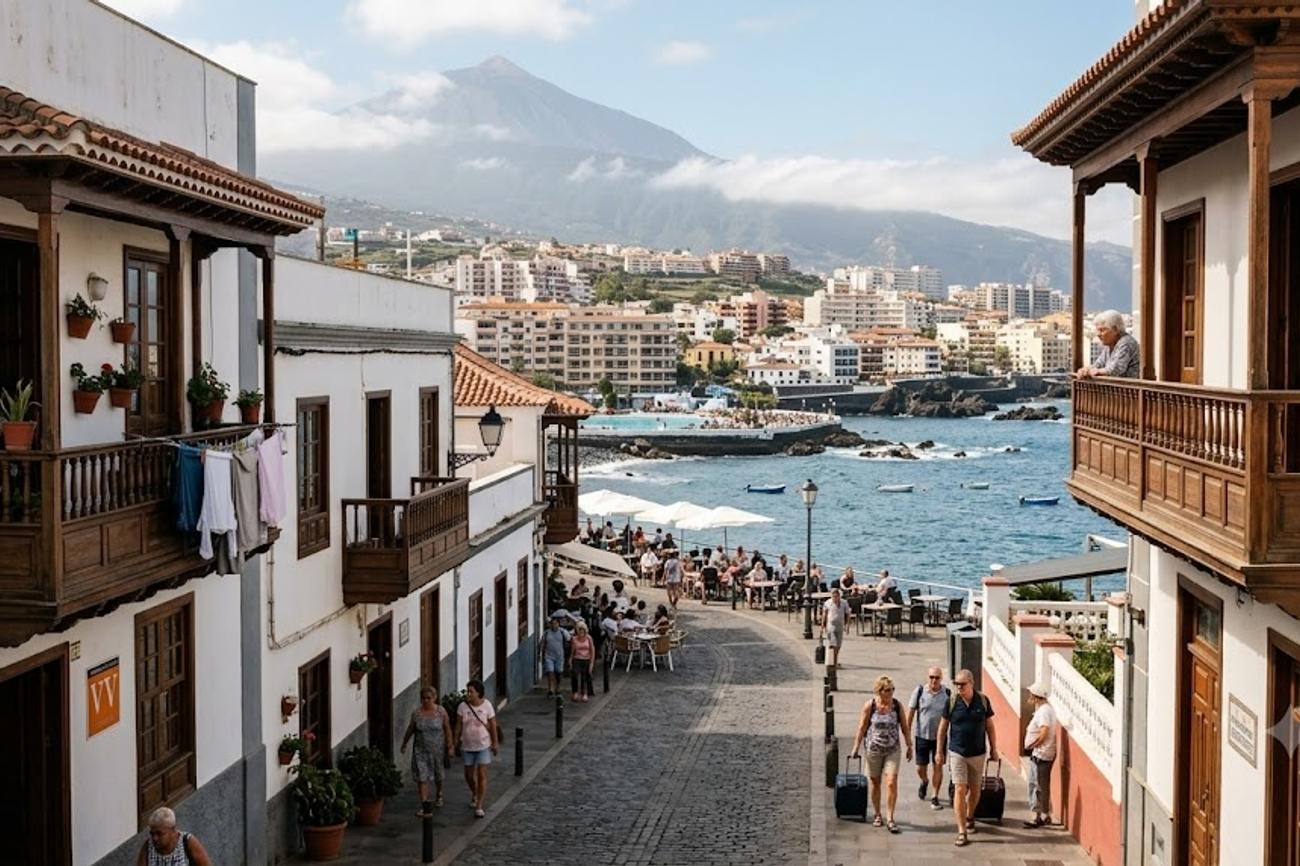
Image generated by AI
€3.586 billion in annual turnover is the staggering amount of revenue currently at risk in the Canary Islands due to the "residentialisation" of tourism properties. This figure, alongside a potential loss of €943 million in tax revenue and the disappearance of 88,000 jobs, forms the core of a mounting alarm raised by the islands' primary tourism business federations. The tension centers on a regulatory crossroads: whether to liberalize the use of tourism establishments to allow them to become permanent residences or to protect the regulated "extrahotel" sector to ensure long-term destination stability.
The Regulatory Friction in the Macaronesia Hub
The conflict is not merely a dispute over property deeds but a systemic clash between private ownership rights and regional economic security. For decades, the Canary Islands have relied on a hybrid model of accommodation, where traditional hotels are supplemented by a robust "extrahotel" sector—regulated holiday apartments and complexes designed specifically for transient visitors.
Currently, four major industry bodies—the Federation of Hospitality and Tourism Businesses of Las Palmas (FEHT Las Palmas), the Hotel and Extra-Hotel Association of Tenerife, La Palma, La Gomera and El Hierro (Ashotel), the Association of Tourism Businesses of Fuerteventura (Asofuer), and the Lanzarote Tourism Federation (FTL)—are lobbying the Canary Islands Government’s Department of Tourism and Employment. Their goal is to prevent a broad legislative shift that would allow tourism-zoned properties to be converted into residential homes.
While these organizations acknowledge that some properties have evolved into residential spaces over several decades, they argue that a blanket liberalization would dismantle the tourism identity of these complexes. This is particularly sensitive in a region where the Canary Islands Government must balance the demands of local residents with the needs of millions of international travelers who sustain the local economy.
Quantifying the Cost of Residentialisation
The shift from tourism use to residential use is not a neutral transition; it is a structural erosion of the islands' hospitality capacity. Data presented during the 2024 Maspalomas Summer University sessions, based on research from the Institute of Tourism and Sustainable Economic Development (Tides) at the University of Las Palmas de Gran Canaria, illustrates the scale of the potential economic hemorrhage.
The following table outlines the specific risks identified by tourism organizations based on the Tides research and industry analysis:
| Metric/Area | Potential Impact of Generalised Liberalisation |
|---|---|
| Annual Turnover Loss | €3.586 billion |
| Annual Tax Revenue Loss | €943 million |
| Employment Impact | 88,000 jobs at risk |
| Infrastructure | Decline in coordinated investment and shared service maintenance |
| Capacity | Reduction in regulated "extrahotel" visitor beds |
| Market Position | Erosion of destination competitiveness and accommodation quality |
This data suggests that when a property moves from the tourism register to the residential register, it doesn't just change its occupant; it exits a specific economic ecosystem. Tourism properties generate higher velocity spending, higher tax yields per square meter, and require a specialized workforce for management and maintenance—all of which vanish when the property becomes a private home.
Expert Analysis: The "Extrahotel" Death Spiral
For the seasoned traveler or the digital nomad looking at the Canary Islands, this regulatory battle is the "canary in the coal mine" for destination degradation. The "extrahotel" sector is the backbone of flexible travel; it provides the mid-tier pricing and spatial autonomy that traditional hotels cannot.
The direct consequence of residentialisation is a phenomenon I call the "Maintenance Death Spiral." In tourism complexes, costs for pools, elevators, landscaping, and security are managed collectively through commercial operational budgets. When a significant percentage of units in a complex transition to residential use, the financial burden of maintaining these shared amenities shifts. Residential owners often resist the high maintenance fees required to keep a property at "tourism grade," leading to a visible decline in the quality of the complex.
For the traveler booking these routes, this means a gradual decrease in the quality of non-hotel accommodation. As regulated beds disappear, the market will likely split into two extremes: ultra-luxury hotels and unregulated, lower-quality short-term rentals. The "middle market" of regulated holiday apartments—which ensures a baseline of safety and quality through International Air Transport Association (IATA) linked travel flows and local tourism laws—is what is currently under threat.
Furthermore, the pricing pressure created by a reduction in regulated supply will inevitably drive up costs for visitors. When the supply of legal tourism beds shrinks while demand remains constant or grows, the remaining providers will hike prices, potentially pricing out the very demographic of long-term visitors and nomads that the islands seek to attract.
Key Takeaways
- Economic Stakes: The residentialisation of tourism properties could cost the region €3.586 billion in turnover and eliminate 88,000 jobs.
- Fiscal Impact: A potential €943 million gap in tax revenue threatens public funding for regional infrastructure.
- Regulatory Cut-off: Properties that can prove residential use prior to 1 January 2017 may be exempt from certain restrictions, creating a legal divide between "legacy" residences and "tourism" units.
- Infrastructure Risk: The shift toward residential use undermines the collective funding model used to maintain high-standard amenities in extrahotel complexes.
- Industry Stance: Major federations (FEHT, Ashotel, Asofuer, FTL) support targeted reforms for specific cases but oppose a general law allowing tourism-to-residential conversion.
FAQ: Canary Islands Accommodation Regulations 2024
What is "residentialisation" in the Canary Islands? It is the process where properties legally zoned and designed for tourism accommodation (like holiday apartments) are converted into permanent residential homes, removing them from the visitor market.
Can I legally live in a tourism apartment in the Canary Islands? Generally, no, unless the property was used residentially before 1 January 2017. Most tourism-zoned properties must remain available for visitors under current regulations.
How does this affect the price of holiday rentals? If broad liberalisation is avoided but supply continues to shrink, the reduction in regulated "extrahotel" beds will likely lead to higher prices for travelers due to decreased competition.
Who is fighting against the change in property use? Four main industry bodies: FEHT Las Palmas, Ashotel, Asofuer, and the Lanzarote Tourism Federation, supported by research from the Tides Institute.
The battle for the Canary Islands' zoning laws is a proxy war for the future of the global tourism economy: a struggle to decide if a destination is a place for people to live, or a product for the world to visit.
Tags: FEHT Las Palmas, Ashotel, Canary Islands Tourism Law 2024, Extrahotel Sector, Tides University Las Palmas, Maspalomas Summer University
Related Travel Guides
Disclaimer
This article is for informational and educational purposes only. It does not constitute legal, financial, or professional advice. While we strive to provide accurate and up-to-date information, travel policies, regulations, and conditions change rapidly. Always verify information with official sources before making travel decisions. Nomad Lawyer makes no representations about the accuracy, reliability, completeness, or suitability of the information provided. Readers should consult qualified professionals for advice specific to their circumstances. The views expressed in this article are those of the author and do not necessarily reflect the views of Nomad Lawyer.
Preeti Gunjan
Contributor & Community Manager
A passionate traveller and community builder. Preeti helps grow the Nomad Lawyer community, fostering engagement and bringing the reader experience to life.
Learn more about our team →