
Canada Scenic Rail Escapes 2027: Jasper, Banff, and the Battle Between Luxury and Public Rail
An in-depth analysis of Canada's 2027 scenic rail market, comparing private luxury excursions like Rocky Mountaineer with year-round public routes operated by VIA Rail across Jasper, Banff, Prince Rupert, and Churchill.

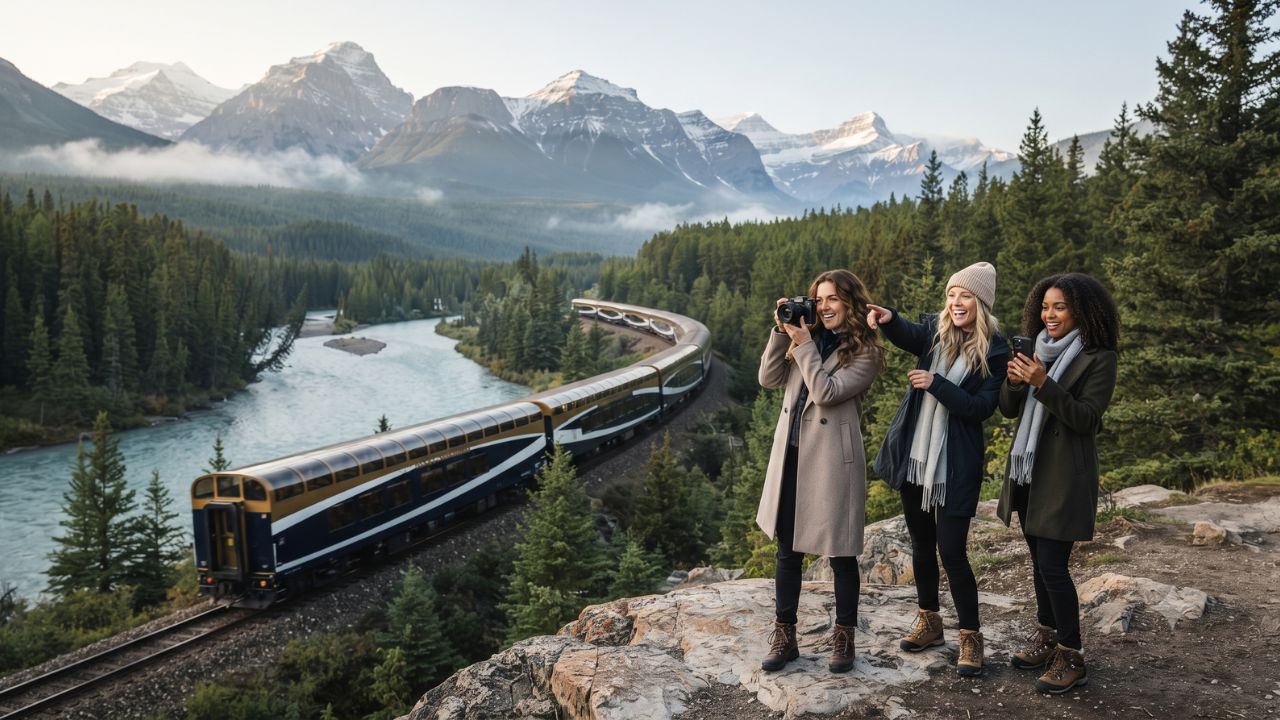
With cross-country transit times stretching across four nights and subarctic regional runs requiring 45 hours to cover roughly 1,700 kilometers, Canada's passenger rail network is redefining slow-travel economics heading into 2027. The passenger market is experiencing a pronounced divergence between private daylight excursions operating at premium price points and publicly subsidized long-distance corridors managed by VIA Rail Canada. As leisure travelers look beyond road trips and short-haul flights, alpine junctions such as Jasper and coastal gateways like Vancouver and Prince Rupert serve as operational focal points testing traveler patience, booking lead times, and multi-generational accessibility.
Behind the scenic brochures, consumer demand faces complex structural friction. Private tourist trains maintain rigid seasonal windows, halting operations entirely between November and March. Meanwhile, public carrier corridors grapple with freight-train track congestion, legacy equipment constraints, and distinct fare tiering that separate high-end sleeper guests from economy passengers. Understanding the mechanical, legal, and operational dividing lines between these networks is essential for anyone budgeting thousands of dollars for a Canadian rail journey.
Operational Divergence: Daytime Luxury Excursions Versus Long-Haul Sleeper Rail
The Canadian rail landscape divides into two distinct operational models that require entirely different planning strategies. The private luxury model, represented by Rocky Mountaineer's First Passage to the West, connects Vancouver, Kamloops, Lake Louise, Banff, and Calgary. Designed entirely around daylight sightseeing, the service operates over two full days with a mandatory mid-route overnight hotel stay in Kamloops. Passengers never sleep onboard the train. Instead, the product relies on bi-level GoldLeaf railcars featuring panoramic upper-level glass domes, lower-level fine dining rooms, and open-air vestibule viewing platforms.
In direct contrast, national carrier VIA Rail operates classic sleeper equipment that runs continuously across several days and nights. Its flagship transcontinental service, The Canadian, links Toronto and Vancouver across Ontario, Manitoba, Saskatchewan, Alberta, and British Columbia, making a vital alpine stop at Jasper. This four-night marathon utilizes stainless-steel rolling stock equipped with private sleeping cabins, upper-deck Skyline dome lounges, and dedicated dining cars.
                               CANADIAN PASSENGER RAIL CORRIDORS

  [ Pacific Gateway ]                                              [ Eastern Terminus ]
       Vancouver <========== Rocky Mountaineer (Daylight Only) ========> Calgary / Banff
           ||                (Overnight Hotel in Kamloops)
           ||
           || <============== VIA Rail "The Canadian" (4 Nights) ========> Toronto
           ||                (Transcontinental Sleeper Service)
           \/
     Jasper Junction
       ||
       ||===============> VIA Rail Skeena (3x Weekly, Economy Only) ====> Prince Rupert

  [ Subarctic Route ]
       Winnipeg <======== VIA Rail Hudson Bay (~45 Hours) ============> Churchill
Beyond the western trunk lines, regional arteries provide transit access to remote territories. The Skeena service from Jasper to Prince Rupert runs three times weekly through northern British Columbia to Kaien Island on the Pacific coast, requiring approximately 1.5 days of travel. Operating strictly in an Economy configuration without sleeping berths or panoramic dome cars, it serves remote communities while offering wilderness travelers an alternative to congested tourist centers. In central Canada, the Winnipeg-to-Churchill train spans 1 day, 20 hours, and 55 minutes, providing the only ground transport link to Hudson Bay's subarctic frontier.
Comparative Route Specifications and Operational Boundaries
Travelers evaluating Canadian rail itineraries frequently encounter confusing marketing claims regarding winter travel, viewing features, and onboard hospitality. To clarify these operational distinctions, the following matrix outlines verified journey lengths, operating seasons, and equipment configurations across major corridors.
| Origin / Junction | Rail Service & Route Name | Operating Entity | Typical Transit Duration | Primary Viewing Feature | Operating Season & Cabin Profile |
|---|---|---|---|---|---|
| Vancouver, BC | First Passage to the West (to Banff/Calgary) | Rocky Mountaineer | 2 daylight rail days | Bi-level GoldLeaf glass dome & open platform | Seasonal (April–October); hotel overnight in Kamloops |
| Toronto, ON | The Canadian (to Jasper & Vancouver) | VIA Rail Canada | Approx. 4 nights (96+ hours) | Skyline dome cars & rounded Park car | Year-round; berths, private cabins (1–3 berths), economy |
| Jasper, AB | Jasper–Prince Rupert (Skeena corridor) | VIA Rail Canada | Approx. 1.5 days | Standard picture windows | Year-round (3x weekly); Economy class only; no sleeper cabins |
| Winnipeg, MB | Winnipeg–Churchill (Hudson Bay line) | VIA Rail Canada | 1 day 20 hrs 55 mins (~45 hrs) | Subarctic tundra vistas | Year-round; Economy and Sleeper Plus (bunks; food for purchase) |
| Québec City, QC | Train de Charlevoix (to La Malbaie) | Train de Charlevoix | Approx. 4.5 hours | St. Lawrence River shoreline | Seasonal (May to early Nov); day coach; requires step climb |
| Sault Ste. Marie, ON | Agawa Canyon Tour Train | Agawa Canyon Rail | 10-hour round-trip excursion | Canadian Shield forest views | Seasonal (early summer to mid-Oct); day excursion coach |
Expert Analysis: The High Cost of Track Priority, Seasonality Traps, and Multigenerational Rail Economics
For travelers booking transcontinental or alpine rail itineraries, the direct consequence of Canada's freight-dominated rail architecture is chronic schedule vulnerability. Unlike passenger networks in Western Europe or Japan, neither VIA Rail nor Rocky Mountaineer owns the underlying steel over which their trains travel. Outside of select urban corridors in Ontario and Quebec, the tracks belong to private freight giants Canadian National (CN) and Canadian Pacific Kansas City (CPKC). Under operating agreements monitored by Transport Canada, mile-long freight convoys hauling bulk commodities frequently receive dispatching preference. This dynamic can cause multi-hour siding delays for passenger trains, rendering tight flight connections in Vancouver, Calgary, or Toronto extremely risky.
The pricing pressure this creates means passenger rail must be evaluated as an experiential cruise rather than point-to-point transit. A peak-season GoldLeaf booking on Rocky Mountaineer regularly exceeds several thousand dollars per passenger, pricing multi-generational family groups out of spontaneous travel. Conversely, VIA Rail's Sleeper Plus class on The Canadian includes onboard dining, shower access, and dedicated dome car privileges, yet requires bookings six to nine months in advance to secure private double cabins. For families traveling with small children, VIA Rail permits infants under two to travel free on an adult's lap, while children aged two to 12 qualify for reduced fares on eligible routes. However, budget-minded groups opting for the remote Jasper-to-Prince Rupert run must recognize that the absence of sleeping berths or included hot meals requires self-catering discipline across a multi-day regional timetable.
A persistent industry distortion surrounds cold-season rail holidays. Promotional materials frequently tout winter wonderland escapes alongside imagery of glass-domed private trains. In reality, Rocky Mountaineer's published Canadian schedule closes firmly in October and does not reopen until April. Similarly, Train de Charlevoix along the St. Lawrence River concludes service in early November, and the Agawa Canyon Tour Train terminates its autumn run by mid-October.
Travelers seeking authentic snowy journeys must look exclusively to year-round public carriers. VIA Rail classifies the window from mid-November to mid-April as off-peak. During this interval, passenger volumes drop substantially, cabin fares decrease, and Sleeper Plus ticket holders enjoy unrestricted access to the historic Park car lounge. In northern Manitoba, the Winnipeg-to-Churchill train transforms during winter into an aurora-viewing artery, with optimal northern lights activity spanning late November through March, peaking in February and March. This seasonal cadence differs sharply from the autumn polar bear migration window of October and November, requiring travelers to align their bookings precisely with regional biological and meteorological calendars rather than broad marketing slogans.
Consumer protections in passenger rail also lag behind commercial aviation. While airline travelers in Canada can invoke the Air Passenger Protection Regulations (APPR) through the Canadian Transportation Agency for statutory cash payouts during operational delays, rail passengers operate under contractual tariffs that strictly limit operator liability. Delays caused by freight bottlenecks, extreme subarctic cold, or track maintenance rarely trigger cash compensation, providing travelers only meal vouchers or credits toward future rail travel. Anyone undertaking extended rail journeys through the Rockies or the subarctic must carry comprehensive private travel insurance that explicitly covers carrier delays and missed connections.
Key Takeaways
- Rocky Mountaineer operates strictly as a seasonal daytime product between April and October; travelers cannot book winter rail journeys on this route between November and March.
- VIA Rail's The Canadian provides year-round transcontinental sleeper service connecting Toronto, Winnipeg, Jasper, and Vancouver across four nights, featuring off-peak fare reductions from mid-November to mid-April.
- The Jasper-to-Prince Rupert regional service operates year-round three times per week, but offers Economy seating only, without private sleeping cabins or full dining cars.
- Churchill, Manitoba, is accessible by passenger train via a 45-hour route from Winnipeg, serving as a dedicated gateway for autumn polar bear viewing (October–November) and winter aurora excursions (late November–March).
- Freight priority on CN and CPKC tracks regularly generates operational delays on passenger routes, necessitating buffer days between train arrivals and scheduled flights.
FAQ: Canadian Scenic Rail Travel 2027
Can tourists ride the Rocky Mountaineer train during the winter months?
No. The Rocky Mountaineer operates exclusively from April through October. Its Canadian itineraries do not run during the winter season between November and March. Travelers seeking winter rail travel through the Canadian Rockies must book VIA Rail's transcontinental train, The Canadian.
Does the train between Jasper and Prince Rupert offer private sleeping compartments?
No. VIA Rail's Skeena service between Jasper and Prince Rupert operates entirely in an Economy configuration. There are no private sleeping cabins or bi-level glass-dome cars on this regional route. Passengers travel in standard coach seating across the multi-day journey.
How long does the train trip from Winnipeg to Churchill take?
The journey aboard VIA Rail from Winnipeg to Churchill takes approximately 1 day, 20 hours, and 55 minutes (roughly 45 hours). The route operates year-round, connecting southern Manitoba with the subarctic coast of Hudson Bay without road access.
What amenities are included with VIA Rail Sleeper Plus tickets on The Canadian?
Sleeper Plus tickets include private berths or cabins, all freshly prepared onboard meals in the dining car, shower access, and entry to scenic Skyline dome cars and observation lounges. Economy passengers must purchase pre-packaged meals and snacks separately.
Careful verification of operating seasons, carrier track constraints, and equipment configurations remains the ultimate prerequisite for mastering Canada's expansive passenger rail network.
Related Travel Guides
Disclaimer
This article is for informational and educational purposes only. It does not constitute legal, financial, or professional advice. While we strive to provide accurate and up-to-date information, travel policies, regulations, and conditions change rapidly. Always verify information with official sources before making travel decisions. Nomad Lawyer makes no representations about the accuracy, reliability, completeness, or suitability of the information provided. Readers should consult qualified professionals for advice specific to their circumstances. The views expressed in this article are those of the author and do not necessarily reflect the views of Nomad Lawyer.
Raushan Kumar
Founder & Lead Developer
Full-stack developer with 11+ years of experience and a passionate traveller. Raushan built Nomad Lawyer from the ground up with a vision to create the best travel and law experience on the web.
Learn more about our team →