
Canada Overhauls Passport Theft and Travel Document Security Directives: Emergency Consular Boundaries Clarified

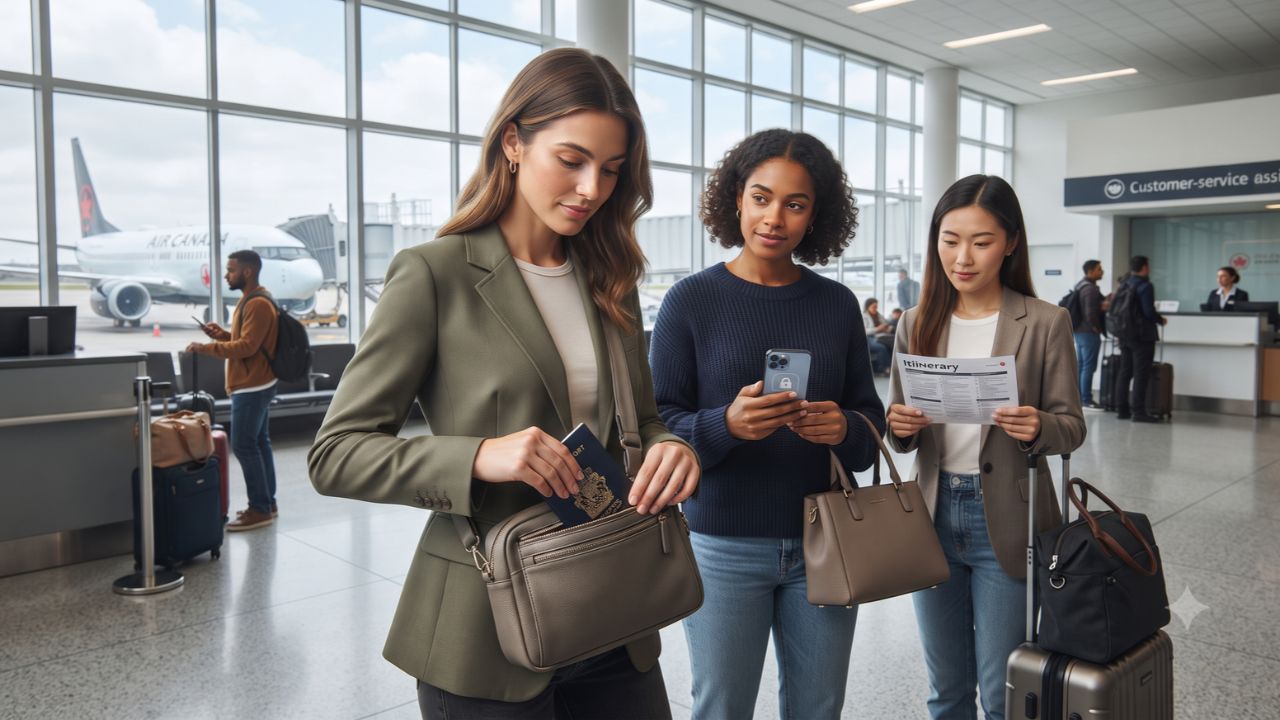
Warning that recovered lost property at overseas diplomatic missions is retained for a maximum of 30 days while cancelled passports are permanently decommissioned and never returned to citizens, the Government of Canada issued comprehensive international travel document security directives on 15 October 2026. Explicitly instructing passengers never to leave identity credentials in aircraft seatback pockets or overhead storage compartments, the federal guidance establishes mandatory physical custody protocols and multi-layered financial redundancies to counter sophisticated distraction theft syndicates operating across international transit corridors. The policy recalibration reflects escalating reports of document loss in transit hubs, railway platforms, and overseas hotel lobbies, where momentary lapses in situational awareness lead to severe travel paralysis.
A stolen passport creates an immediate administrative crisis. Beyond missing connecting flights or facing refusal of entry at foreign borders, international travelers face complex consular procedures to obtain emergency travel documents (ETDs). By delineating the boundaries of consular assistance, Ottawa is reminding tourists that foreign embassies cannot pay emergency bills, issue instant replacement passports at every post, or override foreign sovereign immigration requirements.
Cabin Vulnerabilities and Tactical Distraction Syndicates
The updated Canadian travel advisory identifies aircraft cabins, airport boarding gates, and metropolitan railway stations as prime targets for opportunistic theft. Modern travelers frequently handle passports, mobile devices, boarding cards, and duty-free baggage simultaneously, creating moments of acute distraction:
- In-Flight Cabin Exposure: Passengers routinely slide passports into seatback pockets during international flights or leave them inside carry-on luggage placed in overhead bins. In crowded cabins, unmonitored overhead lockers are vulnerable during boarding, disembarkation, and darkened night flights, while seatback pockets represent the single most common location for accidental abandonment upon landing.
- Coordinated Distraction Schemes: In crowded urban centers and tourist monuments, organized pickpocketing rings utilize staged distractions. Common techniques include staged liquid spills on clothing, deliberate physical bumps, dropping coins or keys to induce a traveler to assist, or offering unsolicited directions while an accomplice extracts credentials from unzipped pockets.
- Single-Bag Vulnerability: A persistent mistake among family travelers is consolidating all household passports and bank cards inside a single travel pouch or daypack. A single bag theft consequently strips an entire family of international mobility in one stroke.
Federal guidelines direct passengers to wear passports inside zipped compartments or body-harness money belts beneath clothing, while dividing family travel credentials across multiple responsible adults.
Document Protection Protocols Across International Travel Environments
The table below contrasts high-risk overseas operational environments with specific document vulnerabilities, mandated Canadian security practices, and legal consular boundaries:
| Travel Environment | Document Vulnerability | Recommended Preventative Protocol | Statutory Consular Reality |
|---|---|---|---|
| Aircraft Cabins | Seatback pocket abandonment; overhead bin theft | Retain passport on body in zipped inside pocket | Consulates cannot expedite airport airside access |
| Airports & Rail Hubs | Distraction during baggage checks and ticketing | Crossbody bags held in front; vigilance in queues | Stolen tickets must be replaced via issuing carriers |
| Hotels & Resorts | Unattended lobby luggage; room vulnerability | Store passports and reserves in certified room safes | Consular missions do not dispatch retrieval teams |
| Cafes & Dining Venues | Bags hanging on chair backs or placed on floors | Keep bags on lap or securely anchored across body | Police theft reports required for insurance claims |
| Rental Motor Vehicles | Smash-and-grab theft; luggage visibility | Transfer bags to trunk before arriving at site | Stolen cash and property cannot be reimbursed |
| Public Transit / Buses | Coordinated bumping in dense passenger flows | Avoid rear backpacks; utilize concealed money belts | Foreign police investigations cannot be overridden |
Sources: Compiled from Global Affairs Canada consular bulletins, Travel.gc.ca safety advisories, and Canadian Foreign Service operational directives.
Digital Duplication, Banking Segregation, and Replacement Mechanics
While the Government of Canada advises travelers to maintain secure digital photographs or photocopies of their passport biographical page, federal directives clarify a fundamental legal limitation: photocopies cannot replace original documents and are rejected as valid travel credentials by commercial airlines and foreign border forces. Copies serve exclusively to establish identity and expedite processing during formal replacement applications at Canadian embassies.
Financial segregation is similarly mandated. Travelers are advised to record bank emergency contact numbers separately from physical cards and distribute payment methods across independent storage locations. Carrying backup credit cards in hotel safes ensures travelers retain liquidity if a daily wallet is compromised.
When a passport is stolen, travelers must execute a four-stage emergency protocol:
- Prioritize Personal Safety: Never pursue or physically confront suspected thieves in foreign jurisdictions.
- File a Local Police Report: While not strictly mandatory for Canadian passport reissuance, a formal police report is indispensable for filing travel insurance claims covering cancelled bookings or emergency lodging.
- Notify the Nearest Consular Mission: Contact the nearest Canadian embassy or high commission to formally cancel the compromised document, preventing identity fraud.
- Determine Emergency Document Eligibility: Evaluate whether an Emergency Travel Document (ETD) can be issued to facilitate immediate transit back to Canada or to the next itinerary stop.
Expert Analysis: ETD Transit Restrictions, Airline Carriage Rejections, and Insurance Voids
The legal mechanics of replacing a stolen passport abroad reveal severe operational obstacles that catch unprepared travelers off guard. According to travel documentation standards enforced by the International Civil Aviation Organization (ICAO), emergency travel documents are subject to strict bilateral limitations. For travelers booking this route, the direct consequence is that an emergency passport issued by a Canadian consulate in Europe or Asia may permit single-direction transit back to Canada, but will frequently be rejected for onward entry by third-party nations on a multi-destination itinerary.
Airlines operating under mandates tracked by the International Air Transport Association (IATA) face heavy sovereign immigration fines if they transport passengers holding non-standard travel credentials. The pricing pressure this creates means carrier check-in agents will refuse boarding to passengers holding temporary emergency papers unless the traveler can provide verified written proof of transit visas and destination entry clearance, forcing stranded passengers to purchase costly last-minute direct tickets home.
Furthermore, travelers must understand the strict statutory limits governing Canadian consular assistance. Consular officers are legally prohibited from acting as legal counsel, posting bail, paying hotel accounts, or reimbursing stolen cash. If a recovered passport is turned in to a Canadian embassy, federal security regulations mandate that the document be shredded and returned to the central passport authority in Gatineau; it can never be reactivated or returned to the citizen.
Key Takeaways
- Prohibited Seatback Storage: Federal guidance explicitly bans placing passports in aircraft seat pockets or overhead bins, mandating zipped, on-person storage.
- Strict Consular Limits: Canadian embassies cannot provide emergency loans, reimburse stolen funds, guarantee physical safety, or act as legal representatives.
- Copies Are Not Credentials: Digital scans or paper photocopies of passports cannot be used for international border crossings or airline boarding.
- 30-Day Recovery Destruction: Recovered passports turned into consular offices are permanently cancelled and returned to Canada; they are never re-issued to holders.
- Emergency Document Limitations: Emergency travel papers issued overseas often restrict transit options and can be rejected by third-party foreign destinations.
FAQ: Canadian Passport Protection and Safety 2026
What should I do immediately if my Canadian passport is stolen abroad?
Move to a secure location, file a theft report with local police, and immediately contact the nearest Canadian embassy, high commission, or consulate to cancel the document and request emergency replacement procedures.
Can I fly internationally using a photocopy of my Canadian passport?
No. Foreign border authorities and commercial airlines strictly reject photocopies and digital scans as valid travel identification. You must obtain an official Emergency Travel Document or replacement passport.
Will a Canadian embassy pay for my hotel if my money and passport are stolen?
No. Canadian consular officials do not provide cash relief, pay hotel expenses, or reimburse stolen funds. They can assist by contacting relatives in Canada to coordinate private commercial money transfers.
If local police recover my stolen Canadian passport, can I use it again?
No. Once a passport is reported lost or stolen to Canadian authorities, it is permanently cancelled to prevent identity theft. Recovered passports are returned to the issuing office in Canada and cannot be reused.
[In international travel, a passport is your sole proof of sovereign protection; treat it like your life depends on it, because your journey certainly does.]
Related Travel Guides
- EgyptAir and Ethiopian Airlines Suspend Flights to Riyadh and Dammam: Airport Strikes Trigger Middle East Air Corridor Shutdown
- European Travel Surcharges Mount as Fuel Prices Surge Over 34%: Saudi-Houthi Conflict Drives Continental Energy Shock
- EUROCONTROL Airspace Congestion Fractures Mediterranean Schedules: Spain, France, and Greece Generate 60% of Flight Delays
Disclaimer
This article is for informational and educational purposes only. It does not constitute legal, financial, or professional advice. While we strive to provide accurate and up-to-date information, travel policies, regulations, and conditions change rapidly. Always verify information with official sources before making travel decisions. Nomad Lawyer makes no representations about the accuracy, reliability, completeness, or suitability of the information provided. Readers should consult qualified professionals for advice specific to their circumstances. The views expressed in this article are those of the author and do not necessarily reflect the views of Nomad Lawyer.
Kunal K Choudhary
Co-Founder & Contributor
A passionate traveller and tech enthusiast. Kunal contributes to the vision and growth of Nomad Lawyer, bringing fresh perspectives and driving the community forward.
Learn more about our team →