
Car-Free Canada Wildlife Travel Guide: How to Visit Banff, Cap Tourmente, and Wapusk Without Renting a Vehicle
Explore Canada's iconic wildlife destinations—Banff, Cap Tourmente, and Wapusk—using transit shuttles, pre-arranged transfers, and licensed polar bear tour operators.

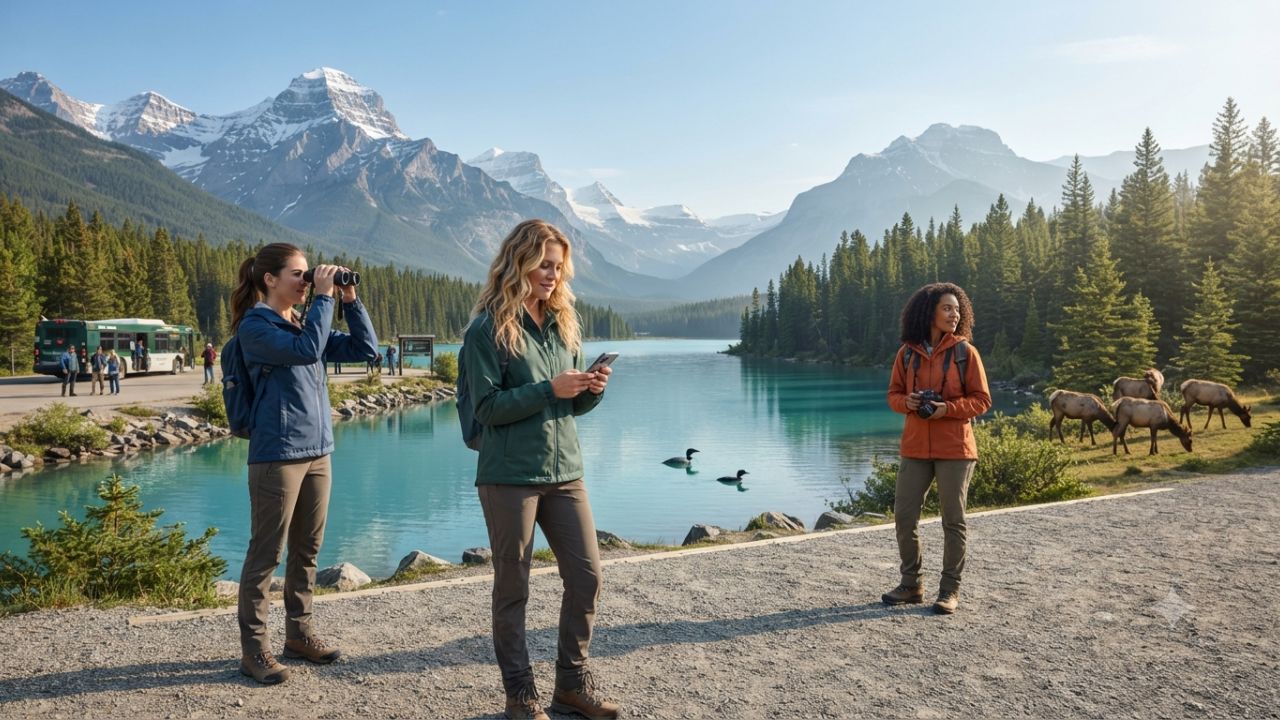
Canada's national parks and wildlife sanctuaries—including Banff, Cap Tourmente, and Wapusk—offer transit-accessible wildlife viewing options.
Navigating Canada's premier wilderness areas without renting a car is increasingly feasible for international travelers, provided itineraries align with gateway transit schedules, vehicle access bans, and mandatory park guide requirements. From airport shuttles servicing Banff National Park to pre-arranged transfers at Cap Tourmente National Wildlife Area and licensed tundra vehicles in Wapusk National Park, car-free travelers can reach iconic wildlife habitats using public and commercial transport networks.
[CALGARY] — As sustainable travel demand expands across North America, exploring Canada's protected ecosystems without a rental vehicle has become a practical option for eco-conscious visitors. However, accessing Canada's diverse wildlife zones—ranging from the Rocky Mountains to St. Lawrence estuary wetlands and Arctic tundra—requires distinct logistical planning tailored to local environmental regulations and transit infrastructure.
While major national parks like Banff feature integrated public bus networks and restrictions on personal cars, remote reserves like Wapusk National Park in northern Manitoba enforce strict commercial guide requirements. Understanding gateway transit options, final-leg connections, and mandatory booking rules allows travelers to build reliable, car-free wildlife itineraries.
Comparative Overview: Car-Free Access Across Three Canadian Wildlife Destinations
Each of Canada's major nature destinations operates under distinct access protocols designed to manage visitor volume and protect sensitive wildlife habitats.
| Wildlife Destination | Gateway Hub | Final-Leg Transit Mode | Mandatory Booking & Access Rules |
|---|---|---|---|
| Banff National Park (Alberta) | Calgary International Airport (YYC) | Express airport shuttle & Roam Regional Transit | Personal vehicles banned on Moraine Lake Road; shuttle reservations required |
| Cap Tourmente National Wildlife Area (Québec) | Québec City (YQB) | Pre-arranged private ground transfer / taxi | Day-use operating hours; verify return transfer before departure |
| Wapusk National Park (Manitoba) | Churchill (YYQ via Winnipeg) | Licensed commercial tundra operator vehicle / helicopter | Licensed tour operator legally required for all activities inside park |
Banff National Park: Transit Systems and Moraine Lake Vehicle Bans
Located in Alberta's Rocky Mountains, Banff National Park is Canada's oldest national park, originally established in 1885 around a thermal hot springs reserve. The park serves as a model for transit-assisted wilderness access, handling record visitor numbers while limiting vehicle congestion along fragile alpine corridors.
According to Parks Canada, Banff recorded 4.515 million visits in its 2025 annual management report—a 7.14 percent increase compared to 2024, marking the highest visitor total in the park's history.
Calgary Gateway to Banff Townsite
Calgary International Airport (YYC) is situated approximately 144 kilometers east of Banff. Multiple private shuttle operators (including Banff Airporter and Brewster Express) run high-frequency connections between Calgary terminal arrival curbs and Banff hotels.
Navigating Lake Louise and Moraine Lake
To protect subalpine ecosystems and eliminate gridlock, Parks Canada strictly prohibits personal vehicles on Moraine Lake Road. Car-free travelers can easily access both iconic lakes using local public transit:
- Roam Public Transit: Operates scheduled bus routes connecting Banff townsite with Lake Louise.
- Parks Canada Lake Connector: Holders of reservable Roam Super Passes or Parks Canada shuttle tickets can board connector shuttles running between Lake Louise and Moraine Lake during the operational summer season.
- Wildlife Safety Distances: Banff is home to 53 mammal species—including grizzly bears, wolves, cougars, and wolverines—and over 311 bird species. Parks Canada guidelines require visitors to maintain a minimum distance of 30 meters from elk and 100 meters from bears and cougars.
| Banff Transit Route | Operational Service Provider | Booking & Pass Requirement | Key Destination Served |
|---|---|---|---|
| Calgary Airport Express | Banff Airporter / Brewster | Pre-booked seat reservation | Calgary Airport to Banff hotels |
| Roam Route 8X | Roam Regional Transit | Express day pass / Super Pass | Banff townsite to Lake Louise |
| Parks Canada Lake Connector | Parks Canada | Shuttle reservation / Super Pass | Lake Louise to Moraine Lake shuttle |
Cap Tourmente National Wildlife Area: Birdwatching Without a Car
Situated near Saint-Joachim, approximately 50 kilometers northeast of Québec City along the St. Lawrence River, Cap Tourmente National Wildlife Area provides a protected sanctuary for migratory waterfowl. The reserve's coastal marshes serve as a vital staging ground for tens of thousands of greater snow geese during spring and autumn migrations.
Managed by Environment and Climate Change Canada, the site supports more than 180 bird species across tidal marshes, coastal meadows, and cliffside forests.
Ground Logistics from Québec City
While Québec City (YQB) acts as the primary transit gateway, there is no direct scheduled public bus service terminating at the Cap Tourmente entrance. Car-free birdwatchers should arrange a pre-booked local taxi transfer or charter shuttle along Route 138 toward Sainte-Anne-de-Beaupré.
Conservation Designations Explained
Environment and Climate Change Canada maintains two distinct categories of protected avian habitats: 64 National Wildlife Areas (such as Cap Tourmente) and 92 Migratory Bird Sanctuaries. National Wildlife Areas permit day-use eco-tourism along designated hiking trails during published seasonal hours, making pre-verified return transit arrangements essential.
| Wildlife Sanctuary Feature | Metric / Regulatory Rule | Visitor Experience Impact |
|---|---|---|
| Gateway Distance | ~50 km northeast of Québec City | Requires pre-arranged private return transfer |
| Protected Avian Species | >180 bird species (Greater Snow Geese focus) | Peak migration viewing in spring & autumn |
| National Designations | 64 National Wildlife Areas vs. 92 Sanctuaries | Day-use access permitted during published hours |
Wapusk National Park: Licensed Tundra Tours in Polar Bear Country
Protecting 11,475 square kilometers of subarctic wilderness in northern Manitoba, Wapusk National Park safeguards one of the world's largest polar bear maternity denning areas where boreal forest transitions into Arctic tundra.
Wapusk presents the most stringent test for car-free travel planning: there are no roads leading into Churchill or Wapusk National Park.
Reaching the Churchill Gateway
Travelers must reach the gateway town of Churchill by commercial regional flight from Winnipeg (YWG) or via Via Rail’s two-day passenger train from Winnipeg. However, arriving in Churchill does not grant immediate access to Wapusk.
Mandatory Licensed Tour Operators
Under Parks Canada safety and environmental regulations, visitors cannot enter Wapusk National Park independently. All activities inside the park boundaries legally require a licensed commercial tour operator equipped with specialized tundra vehicles or helicopter charters.
- Confirming Excursion Scope: Travelers must verify that their booked tour actually crosses into Wapusk National Park, as general Churchill townsite tours do not necessarily enter park boundaries.
- Wildlife Encounters: Polar bear and Arctic fox sightings depend on seasonal ice conditions and guided itineraries, requiring flight, rail, and hotel arrangements to align strictly with tour dates.
| Arctic Transit Leg | Transport Mode / Provider | Booking Requirement |
|---|---|---|
| Winnipeg to Churchill | Calm Air flight / Via Rail passenger train | Advance seat reservation required |
| Churchill to Wapusk Park | Licensed commercial tundra vehicle / helicopter | Mandatory licensed guide booking required |
Economic Context: Canadian Tourism GDP and Eco-Travel Trends
The expansion of transit options across national parks aligns with broader growth in Canada's travel economy. Official data from Statistics Canada indicates that real tourism Gross Domestic Product (GDP) increased by 0.4 percent in the second quarter of 2026, following a 0.5 percent expansion in the first quarter.
While national GDP statistics reflect overall hospitality and passenger transport activity, car-free wilderness travel represents a growing niche that reduces carbon emissions and relieves parking pressure on national park infrastructure.
Practical Advice for Planning Car-Free Canada Nature Trips
Travelers organizing non-driving wildlife itineraries should follow these operational steps:
- Secure Park Permits and Shuttles First: In destinations like Banff (Moraine Lake) and Wapusk, book shuttle passes and licensed guide slots before purchasing non-refundable airfare.
- Confirm Return Ground Transport: For unserviced sites like Cap Tourmente, ensure your driver or taxi provider confirms a fixed return pickup time.
- Pack Weather-Appropriate Gear: Carry bear spray, multi-layer cold-weather clothing, and high-powered binoculars, as wildlife observation must take place from designated safe distances.
Frequently Asked Questions
Can I visit Moraine Lake in Banff National Park without a car?
Yes. Personal vehicles are banned on Moraine Lake Road. Visitors can access Moraine Lake by reserving Parks Canada shuttles or utilizing Roam Public Transit's Super Pass from Banff townsite.
Is there public transit from Québec City to Cap Tourmente?
No direct scheduled public transit runs to the Cap Tourmente entrance. Visitors without a car must pre-arrange a private taxi or shuttle transfer from Québec City.
Can I enter Wapusk National Park independently from Churchill?
No. Parks Canada regulations state that a licensed commercial tour operator is legally required for all activities inside Wapusk National Park.
How far is Banff from Calgary International Airport?
Banff National Park is located approximately 144 kilometers west of Calgary International Airport (YYC), connected by frequent express shuttle buses.
Related Travel Guides
Disclaimer
This article is for informational and educational purposes only. It does not constitute legal, financial, or professional advice. While we strive to provide accurate and up-to-date information, travel policies, regulations, and conditions change rapidly. Always verify information with official sources before making travel decisions. Nomad Lawyer makes no representations about the accuracy, reliability, completeness, or suitability of the information provided. Readers should consult qualified professionals for advice specific to their circumstances. The views expressed in this article are those of the author and do not necessarily reflect the views of Nomad Lawyer.
Kunal K Choudhary
Co-Founder & Contributor
A passionate traveller and tech enthusiast. Kunal contributes to the vision and growth of Nomad Lawyer, bringing fresh perspectives and driving the community forward.
Learn more about our team →