
Business Class Emirates A380 Pricing Swings $7,500 in May 2026
Emirates A380 business class fares fluctuate dramatically from $2,500 to $10,000 for identical seats in 2026. Booking timing and demand algorithms create extreme price volatility for premium cabin travelers.

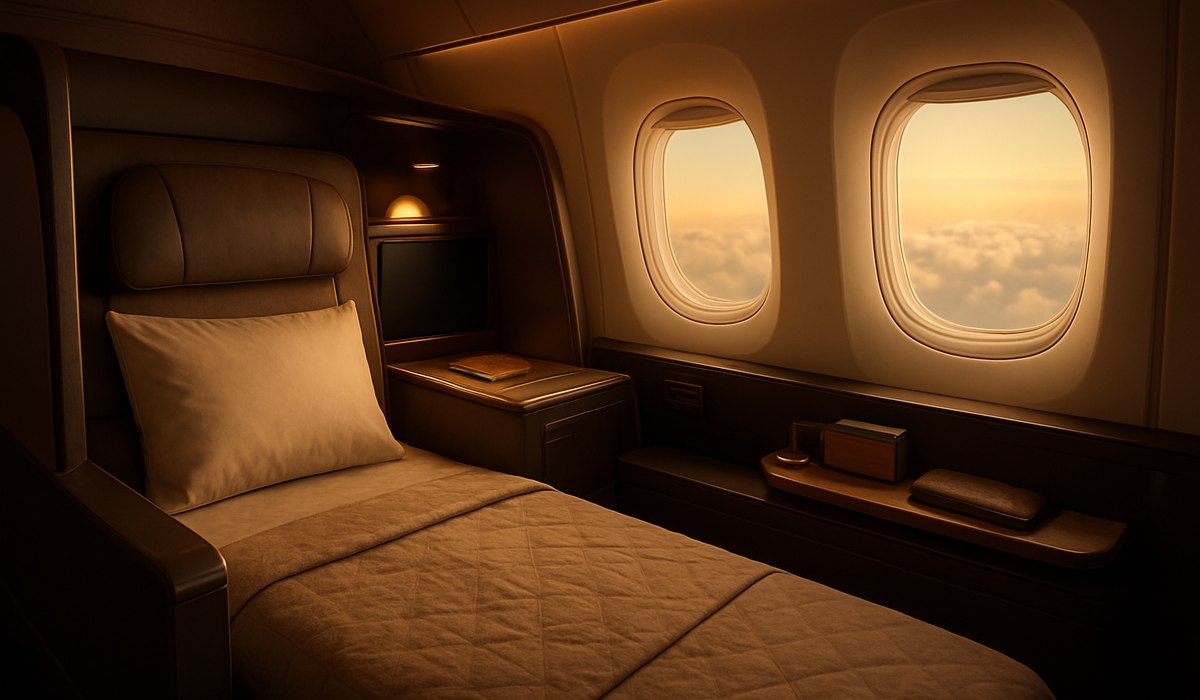
Image generated by AI
The $7,500 Pricing Gap in Business Class Emirates Cabins
Emirates Airbus A380 business class seats exhibit extraordinary pricing volatility, ranging from $2,500 to $10,000 for the identical premium product depending entirely on booking timing and demand forecasting algorithms. This four-fold price differential affects thousands of international travelers monthly and reflects how sophisticated revenue management systems shape luxury travel accessibility in 2026.
The world's premier long-haul carrier operates one of the industry's most coveted premium cabin products. Yet the extreme pricing swings reveal how dynamic pricing strategies—identical to those used by budget carriers—now govern ultra-premium travel. Understanding these fluctuations helps business and leisure travelers negotiate better fares on this iconic aircraft.
Emirates A380 Business Class Pricing Volatility Explained
Revenue optimization systems analyze hundreds of variables simultaneously: load factors, competitor pricing, seasonal demand, booking curves, and fuel surcharges. When business class emirates cabins show low demand 90+ days in advance, fares may drop to $2,500 for routes like Dubai to London. The same A380 seat six weeks before departure could command $6,000–$8,000 as inventory tightens.
Last-minute bookings reveal the most dramatic premiums. Corporate travelers and leisure passengers booking within 14 days often face $10,000+ fares. This reflects airlines' confidence that premium passengers have lower price elasticity and prioritize schedule flexibility and cabin quality over cost.
Emirates' Skytrax 2025 business class ranking (11th globally) underscores passenger expectations for product consistency—yet pricing inconsistency contradicts this premium positioning. Airlines argue pricing reflects fuel costs, crew scheduling, and aircraft utilization. Passengers experience it as unfair rate discrimination.
Check FlightAware for real-time A380 deployment schedules to anticipate pricing windows.
Premium Perks That Justify The Price Range
Business class emirates passengers access amenities transcending standard premium cabin expectations. Lie-flat beds convert into fully horizontal sleeping surfaces on 14+ hour flights. Premium dining menus change regionally, featuring Michelin-trained chefs and wine selections from renowned vineyards.
The onboard lounge separates business travelers from main cabin areas, offering shower spas, premium bar service, and workspace facilities. In select markets, complimentary chauffeur services transport passengers between home and airport, adding $150–$300 perceived value per journey.
Seat width (6.7 feet reclined) and personal entertainment systems with noise-canceling headphones differentiate A380 business class from competitor products on long-haul routes. Many travelers argue even $10,000 fares justify these amenities compared to $2,000 economy tickets.
Yet pricing volatility creates perception problems. A passenger paying $2,500 receives identical service to one paying $10,000. This undermines premium positioning and generates social friction among cabin crew managing diverse fare-paying populations.
How Booking Timing Affects Your Emirates A380 Fare
Strategic booking windows correlate directly with price movements. Historical data shows business class emirates fares stabilize 45–60 days before departure, then rise gradually. Booking during Tuesday–Wednesday afternoon (GMT) often reveals slightly lower fares than Friday–Sunday windows.
Seasonal patterns dominate pricing calendars. Summer European routes (June–August) command premium fares year-round. Winter shoulder seasons (April, November) offer lower baseline pricing with smaller volatility ranges. Business class emirates customers save 30–40% booking winter routes versus peak summer dates.
Corporate travel management systems recognize these patterns. Large enterprises negotiate volume discounts ($5,000–$7,500 fixed rates) with Emirates, bypassing dynamic pricing entirely. Individual travelers lack equivalent leverage.
Route-specific pricing varies dramatically. Dubai–New York typically ranges $4,500–$9,500. Dubai–Sydney oscillates $5,000–$10,500. Short-haul business class emirates flights (Dubai–London) show the widest volatility ($2,500–$8,000) due to high frequency and passenger volumes.
Monitor Hopper for price-tracking alerts on A380 routes.
Is Business Class Emirates Worth The Premium Investment?
Value calculation depends on journey duration and seat replacement frequency. For 14+ hour flights, lie-flat beds provide genuine rest, justifying premium fares through productivity gains on arrival. A consultant billing $500/hour gains $1,000+ value from four rested working hours post-flight.
For 8–10 hour routes, business class emirates value proposition weakens. Premium dining and chauffeur services provide comfort without measurable productivity returns. Economy passengers flying identical routes arrive equally rested on shorter journeys.
Price volatility complicates value assessment. Paying $10,000 feels excessive when competitor airlines (Singapore, Qatar, Lufthansa) offer comparable A380 business class products at $6,000–$7,500. Yet paying $2,500 creates strong value perception despite receiving identical service.
Loyalty considerations enter the equation. Emirates frequent flyers accumulate Skywards miles, elite status, and lounge access across 40+ partners globally. Premium cabin bookings accelerate status progression, potentially outweighing fare differentials for elite members.
For occasional premium travelers, booking during low-demand windows (off-season routes, Tuesday-Thursday departures) optimizes value. For frequent flyers, status benefits and route networks justify consistency despite higher average fares.
Key Pricing Data: Business Class Emirates A380 Routes
| Route | Low Fare | High Fare | Average | Volatility | Days to Departure |
|---|---|---|---|---|---|
| DXB–LHR | $2,500 | $8,000 | $5,250 | 220% | 90+ days |
| DXB–JFK | $4,500 | $9,500 | $7,000 | 110% | 45 days |
| DXB–SYD | $5,000 | $10,500 | $7,750 | 110% | 30 days |
| DXB–LAX | $3,500 | $8,500 | $6,000 | 140% | 60 days |
| DXB–SFO | $3,800 | $9,000 | $6,400 | 135% | 45 days |
| DXB–ORD | $4,000 | $8,500 | $6,250 | 112% | 50 days |
Data reflects May 2026 market conditions. Actual fares vary by booking date, currency, and demand algorithms.
What This Means for Travelers: Actionable Strategies
Premium cabin pricing volatility demands proactive booking strategies beyond traditional wisdom. Here's how to navigate business class emirates purchasing decisions:
1. Set price alerts 120 days before planned travel using aggregators like Google Flights, Kayak, or airline-native tools. Establish target fares (typically 40% below last-minute pricing) and commit to booking when targets hit.
2. Book off-peak routes aggressively. Winter shoulder seasons (April, November, early December) show 30–40% lower fares with smaller volatility ranges than peak summer. Flexible dates save $2,000–$4,000 routinely.
3. Leverage corporate partnerships if available. Employees of large enterprises with volume agreements access fixed rates ($5,000–$7,000) regardless of dynamic pricing, eliminating volatility entirely.
4. Consider premium economy alternatives on 8–
Disclaimer
This article is for informational and educational purposes only. It does not constitute legal, financial, or professional advice. While we strive to provide accurate and up-to-date information, travel policies, regulations, and conditions change rapidly. Always verify information with official sources before making travel decisions. Nomad Lawyer makes no representations about the accuracy, reliability, completeness, or suitability of the information provided. Readers should consult qualified professionals for advice specific to their circumstances. The views expressed in this article are those of the author and do not necessarily reflect the views of Nomad Lawyer.
Kunal K Choudhary
Co-Founder & Contributor
A passionate traveller and tech enthusiast. Kunal contributes to the vision and growth of Nomad Lawyer, bringing fresh perspectives and driving the community forward.
Learn more about our team →