
Burkina Faso, Sudan, and Somalia Remain Top High-Risk Travel Destinations in 2026 Amid Conflict and Terrorism
Burkina Faso, Sudan, and Somalia lead the list of Level 4 Do Not Travel destinations in 2026 as systemic conflict, terrorism, and humanitarian collapses persist across these regions.

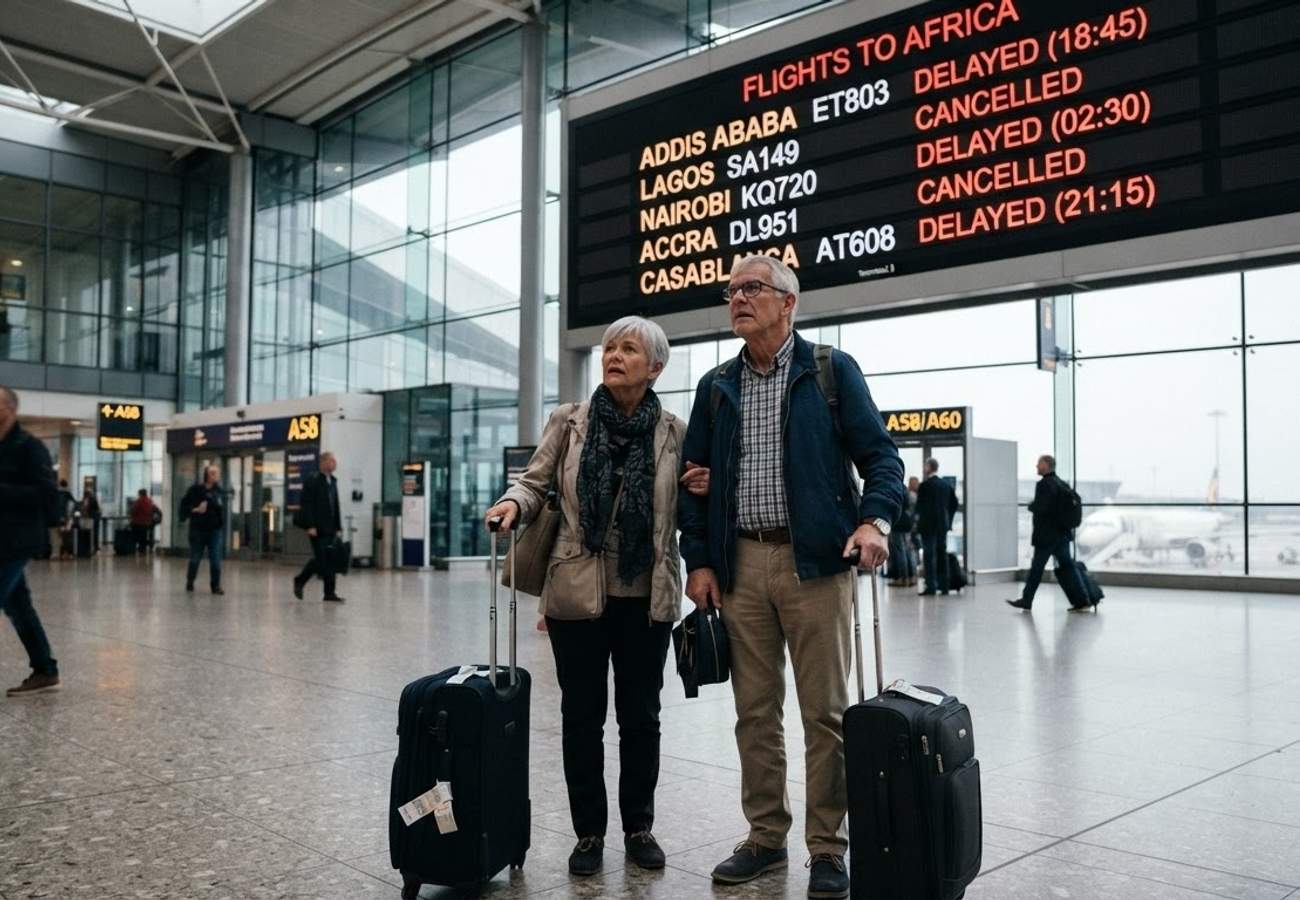
Image generated by AI
[City, July 13, 2026] — Despite a global resurgence in international tourism and expanded airline connectivity, a cluster of eight nations continues to be flagged as the most dangerous places on earth for travelers. As of July 13, 2026, Burkina Faso, Central African Republic, Libya, Mali, Niger, Somalia, South Sudan, and Sudan remain under Level 4 "Do Not Travel" advisories, driven by deepening humanitarian crises and entrenched armed conflicts.
These designations, issued by the U.S. State Department and mirrored by various global governments, are reserved for environments where safety cannot be guaranteed. The convergence of terrorism, political volatility, systemic healthcare failure, and the prevalence of kidnapping makes these regions unsuitable for any form of tourism or non-essential travel.
Critical Security Factors Driving Level 4 Classifications
The assignment of the highest possible risk level to these eight countries is not a precautionary measure but a reflection of overlapping threats. Industry observers note that visitors to these regions do not face a single isolated danger, but rather a combination of organized crime, militant insurgencies, and a total lack of diplomatic or medical infrastructure.
In these territories, state authority is often fragmented. In many instances, legitimate government institutions have been entirely supplanted by militias or extremist groups that exercise absolute control over vast geographic areas. This power vacuum means that standard safety protocols—such as staying in registered hotels or using licensed transport—provide virtually no protection, as attacks frequently target civilian infrastructure without warning.
Geopolitical Shifts and the Sahel Security Crisis
The Sahel region, encompassing Burkina Faso, Mali, and Niger, remains one of the most volatile zones globally. These three nations have recently formed the Alliance of Sahel States (AES), a geopolitical pivot intended to bolster regional sovereignty and collective defense. This shift has resulted in a move away from traditional Western security partnerships.
Despite the formation of the AES, the practical security environment for foreigners has not improved. Large swathes of these countries remain under the influence of militant groups, making travel outside of heavily fortified urban centers exceptionally hazardous.
The Impact of Security Vacuums and Paramilitary Presence
The departure of United Nations peacekeeping missions and French counter-terrorism forces created significant security gaps across the Sahel. To fill this void, national armies have integrated Russian paramilitary personnel operating under the Africa Corps (formerly the Wagner Group). While these forces attempt to suppress insurgencies, extremist organizations continue to operate with relative impunity in rural areas.
Reports indicate that Al-Qaeda-affiliated Jama’at Nusrat al-Islam wal-Muslimin (JNIM) and the Islamic State in the Greater Sahara (ISGS) remain the primary aggressors. In early 2026, JNIM launched a series of coordinated offensives in Burkina Faso, specifically targeting the Centre-Nord and Boucle du Mouhoun regions. These operations underscore the inability of civilian governments to maintain order outside of major cities.
Kidnapping as a Financial Engine for Extremists
In the Sahel, kidnapping has transitioned from a tactical tool to a primary funding mechanism for terrorist networks. Foreign nationals, particularly those from Western countries, are viewed as high-value assets capable of yielding massive ransom payments.
The porous borders between Mali, Niger, and Burkina Faso allow criminal networks to move hostages rapidly across jurisdictions, which severely complicates international rescue efforts. Additionally, volatility along the Mali-Mauritania border has increased due to clashes involving the Malian Armed Forces and their Russian allies.
Diplomatic support in these areas is nearly non-existent. Outside of capital cities, embassies have minimal operational capacity, rendering emergency evacuations or hostage recovery missions nearly impossible in most scenarios.
Sudan’s Descent into Humanitarian and Military Collapse
Sudan currently represents one of the most severe combinations of civil war and systemic collapse among all Level 4 destinations. The conflict that began in April 2023 between the Sudanese Armed Forces (SAF) and the Rapid Support Forces (RSF) has entered its fourth year in 2026, leaving a trail of widespread destruction.
The war has fragmented the country into contested zones with rapidly shifting front lines. Civilian populations are subjected to constant aerial bombardments, drone strikes, and heavy artillery exchanges.
Infrastructure and Movement Constraints in Sudan
The volatility is most acute in Omdurman and Khartoum, where territorial control fluctuates. Khartoum International Airport remains under severe restrictions, and frequent communication blackouts hinder the flow of information.
Travel between cities is perilous due to the proliferation of checkpoints manned by competing armed factions. Reports suggest that civilians frequently face extortion, intimidation, and arbitrary detention, with many being held until substantial financial payments are made.
The Collapse of Medical Services
The security threat in Sudan is compounded by the total deterioration of the healthcare system. Many medical facilities have been abandoned or destroyed, leaving a critical shortage of qualified personnel and essential medicines.
Between 2024 and early 2026, a severe cholera epidemic devastated the population, while famine conditions were officially declared in regions such as North Darfur. In this environment, minor injuries or treatable illnesses frequently become fatal due to the absence of functioning emergency services.
Persistent Militancy and Instability in Somalia
Somalia continues to be plagued by the operational capabilities of Al-Shabaab, which maintains a persistent presence and continues to launch violent attacks against government targets and civilians alike. The instability remains systemic, ensuring that the nation stays on the highest risk list for 2026.
Why This Matters: The Broader Aviation and Travel Impact
The persistence of Level 4 advisories in these eight nations creates "black holes" in global aviation networks. While the rest of the world sees a recovery in travel, these regions suffer from a total lack of insurance coverage for travelers and a complete withdrawal of commercial airline services to many interior hubs.
From an industry perspective, the shift in the Sahel toward the Africa Corps and the AES signifies a move toward non-traditional security architectures. For the travel industry, this means that traditional risk assessments—which relied on Western diplomatic intelligence—are becoming obsolete. The rise of kidnapping-for-ransom as a corporate-style business model for extremists in the Sahel means that any accidental entry into these zones is no longer a diplomatic incident, but a high-stakes financial transaction.
Furthermore, the situation in Sudan highlights a terrifying trend: the "weaponization of healthcare." When medical infrastructure is intentionally targeted or allowed to collapse, the risk for any remaining foreign personnel shifts from purely kinetic threats (bullets and bombs) to biological and systemic threats (cholera and famine).
Travelers are urged to strictly adhere to all government warnings and avoid these regions entirely to ensure their personal safety.
Related Travel Guides
Disclaimer
This article is for informational and educational purposes only. It does not constitute legal, financial, or professional advice. While we strive to provide accurate and up-to-date information, travel policies, regulations, and conditions change rapidly. Always verify information with official sources before making travel decisions. Nomad Lawyer makes no representations about the accuracy, reliability, completeness, or suitability of the information provided. Readers should consult qualified professionals for advice specific to their circumstances. The views expressed in this article are those of the author and do not necessarily reflect the views of Nomad Lawyer.
Preeti Gunjan
Contributor & Community Manager
A passionate traveller and community builder. Preeti helps grow the Nomad Lawyer community, fostering engagement and bringing the reader experience to life.
Learn more about our team →