
Brussels Tourism Slowdown: Why European Leisure Travel Dropped in 2026 and What Insider Visitors Can Expect

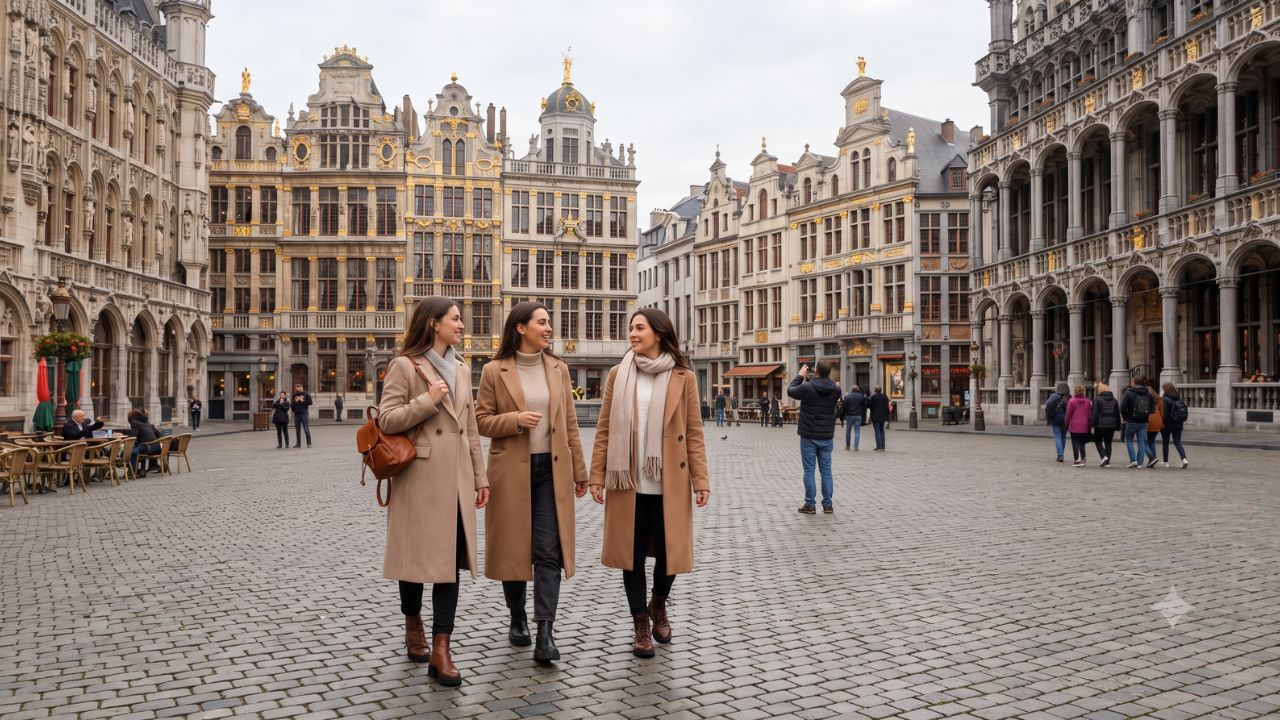
While Eurocrats pack corporate conference halls in the European Quarter from Tuesday to Thursday, Brussels' historic cultural heart saw nearly 300,000 fewer leisure visitors step through museum turnstiles during the first six months of 2026. Data released by regional tourism monitoring bodies reveals that attendance across the capital's galleries, heritage mansions, and monuments dropped 9.73% to 2.9 million, alongside sharp drops in overnight leisure stays from neighboring Britain, Spain, and the Netherlands. For curious travelers who understand the city's seasonal rhythms, this statistical chill translates into an unexpected gift: uncrowded cobblestones around the Grand-Place, walk-in tables at premier gueuze breweries, and serene galleries inside world-class art collections.
European Leisure Markets Pull Back Across the Belgian Capital
The first half of 2026 delivered an unmistakable deceleration across Brussels' visitor economy. According to official tourism observatory records, hotels and youth accommodation facilities registered approximately four million overnight stays between January and June 2026, representing a 3.47% contraction compared to the same period in 2025. When short-term holiday apartment rentals are factored in, total accommodation demand dropped 4.32% year on year, falling from roughly 4.6 million overnight stays to 4.4 million.
The retreat was particularly sharp among the city’s most dependable European feeder nations. Overnight stays from the Netherlands plunged 9.74%, Spanish visitors dropped 8.93%, and travelers from the United Kingdom recorded a 6.4% decline, weighed down by post-Brexit administrative friction, stubborn travel inflation, and diminished consumer purchasing power. Traditional long-haul and cross-border markets followed suit: Germany dropped 4.5%, France dipped 3.84%, and United States bookings contracted 3.74%. Domestic Belgian leisure travel remained comparatively steady, slipping just 0.81%.
Curiously, hotel room occupancy showed surprising resilience, registering 71.6% in July 2026—edging out the 71.5% mark logged in July 2025 by 0.1 percentage points. This stability reflects the heavy structural footprint of international business travel, European Union institutional assemblies, and diplomatic symposiums, which insulated large business hotels even as vacationers trimmed weekend city breaks.
| Source Market / Indicator | Performance First Half 2026 | Benchmark Period (H1 2025 / Context) | Core Travel Dynamics |
|---|---|---|---|
| Museum & Attraction Visits | 2.9 million visits (-9.73%) | ~3.2 million visits in H1 2025 | Sharp pullback in cultural tourism footfall following record 6.6M visits in full-year 2025. |
| Hotel & Youth Hostel Nights | ~4.0 million stays (-3.47%) | ~4.14 million stays in H1 2025 | Commercial leisure drop partially buffered by steady weekday diplomatic travel. |
| Total Overnight Stays (Inc. Rentals) | ~4.4 million stays (-4.32%) | ~4.6 million stays in H1 2025 | Broad softening across private vacation rentals and boutique accommodations. |
| Netherlands Overnight Demand | -9.74% | Top border source market | Notable reduction from nearby Dutch weekenders relying on rail connections. |
| Spain Overnight Demand | -8.93% | Major Southern European leisure base | Budget constraints and flight price sensitivity impacting short-haul getaways. |
| United Kingdom Overnight Stays | -6.40% | Core historical market | Currency volatility, Brexit customs realities, and inflation cooling Eurostar trips. |
| Turkey & Emerging Markets | +12.50% (Turkey), +4.39% (Italy), +3.82% (Brazil) | Rapid diversification trend | Counterbalancing traditional western European declines through expanded flight links. |
| Hotel Occupancy Rate (July) | 71.60% (+0.1 percentage points) | 71.50% in July 2025 | High room yields sustained by institutional business and conference bookings. |
The Corporate Divide: Business Resilience Versus Leisure Retreat
The widening gap between institutional demand and leisure travel continues an established pattern. In 2025, total overnight stays across Brussels closed at 9.63 million—a minor 1.7% dip from 2024. Throughout that year, professional and corporate travel expanded by 3.2%, accounting for a dominant 53.5% share of all overnight lodging across the capital. Business traffic from Italy surged 21%, Spanish corporate travelers rose 12%, and Chinese business arrivals climbed 35.6% thanks to restored direct flights. Conversely, pure leisure bookings fell 3.5% in 2025, accelerating into the steeper cultural declines recorded throughout early 2026.
This divide defines the personality of Brussels. While business travelers concentrate around the glass office corridors of Schuman and Leopold Park, cultural neighborhoods—such as Saint-Gilles, Ixelles, and the historic Marolles—rely heavily on independent vacationers who patronize antique shops, neighborhood brasseries, and experimental galleries. The museum attendance drop from 3.2 million to 2.9 million marks a real operational challenge for civic institutions, but it also means independent travelers can explore world-renowned collections without fighting tour group bottlenecks.
Architectural Heritage and the KANAL Transformation
Brussels possesses an architectural and visual identity that defies simple categorization. The 17th-century baroque guildhalls of the Grand-Place remain protected through the UNESCO World Heritage Centre, alongside the revolutionary Art Nouveau residences designed by architect Victor Horta, including the Horta Museum in Saint-Gilles and the Solvay House along Avenue Louise.
The city is preparing a monumental cultural counteroffensive with the opening of KANAL on 28 November 2026. Taking over an expansive former Art Deco Citroën automobile showroom and factory along the Willebroek Canal, KANAL represents a partnership with the Centre Pompidou. The opening weekend on 28 and 29 November 2026 will feature free public access, ten debut exhibitions, performance art, cinema screenings, and historic masterpieces drawn from one of the world's greatest modern art collections. City planners hope the launch will spark a renewed wave of creative tourism, transforming the post-industrial canal district into an international creative magnet.
Visitor Insider Tips: Navigating Brussels Like a Local
- Capitalize on Off-Peak Museum Hours: With cultural footfall down nearly 10%, scheduling morning visits yields serene viewings. Arrive at the Royal Museums of Fine Arts of Belgium or the Magritte Museum at 10:00 am on Wednesday or Thursday to stand alone before masterworks by Pieter Bruegel the Elder and René Magritte.
- Escape the Tourist Enclaves for Dining: Avoid the overpriced seafood displays lining the tourist-heavy Rue des Bouchers near the Grand-Place. Walk south into the Marolles district along Rue Haute and Rue Blaes, or head to Place Saint-Gilles for authentic Flemish beef carbonnade, hand-peeled frites fried in beef tallow, and warm shrimp croquettes served at neighborhood prices.
- Master the Tram and Train Cross-City Network: Brussels' transit authority operates an integrated metro, tram, and bus grid. Avoid expensive taxis between the Gare du Midi Eurostar terminal and the city center. Tap your contactless payment card directly at turnstiles for an affordable journey, or board Tram 92 for a picturesque ride past the Royal Palace, Place Royale, and the botanical gardens.
- Explore Authentic Cantillon Lambic Breweries: While mass-market beer museums near the center push sweetened commercial fruit beers, take the short walk to Brasserie Cantillon in Anderlecht. Cantillon remains the last traditional lambic brewery in Brussels operating with open-air copper coolships and wild airborne yeasts. Book cellar tasting tours at least two weeks ahead.
- Base Yourself in Ixelles or the Sablon: Instead of impersonal conference high-rises near the European Commission, choose boutique hotels in the Sablon antiques district or around the tree-lined ponds of Flagey in Ixelles. The area offers independent coffee houses, historic Art Deco cinemas, and weekend food markets patronized by locals. Consult Visit Brussels for seasonal neighborhood festival listings.
Cultural and Environmental Context: Sustainable Urban Life
Brussels is steadily reshaping its urban spaces to combat environmental pressures and overtourism. Over the past four years, the city expanded the Piétonnier—one of Europe's largest continuous downtown pedestrian zones—transforming polluted traffic boulevards into tree-lined promenades centered around the neoclassical Bourse building, which now houses Belgian Beer World.
This urban reorientation encourages low-carbon regional travel. High-speed rail networks, including Eurostar and ICE links, allow visitors from London, Paris, Cologne, and Amsterdam to reach Brussels in under two hours without burning jet fuel. Concurrently, local neighborhood associations in Saint-Gilles and Molenbeek work closely with municipal authorities to ensure cultural regeneration projects like KANAL preserve community affordability and provide creative vocational opportunities for local youths, proving that sustainable tourism must uplift residential neighborhoods rather than displace them.
FAQ: Visiting Brussels in 2026–2027
Why did museum visits in Brussels decline in early 2026?
Museum attendance dropped 9.73% to 2.9 million due to reduced leisure travel from key European markets, persistent post-Brexit travel costs, and broader European consumer inflation.
What is the major new cultural attraction opening in Brussels?
KANAL, a vast contemporary art museum created in partnership with Centre Pompidou inside a renovated Art Deco garage, opens to the public on 28 November 2026 with free inaugural access.
Is English widely spoken across Brussels?
Yes. Although Brussels is officially bilingual (French and Dutch), English is universally understood and spoken across hotels, museums, public transit, and restaurants due to the city's international diplomatic presence.
What is the most efficient way to travel from Brussels Airport to the city center?
Direct airport express trains depart every ten minutes from the airport basement terminal, reaching Brussels Central, Brussels North, and Brussels Midi stations in under 18 minutes.
When temporary crowds fade, the true spirit of Brussels shines through its quiet guildhall alleys, warm wood-paneled cafes, and world-renowned artistic treasures.
Related Travel Guides
Disclaimer
This article is for informational and educational purposes only. It does not constitute legal, financial, or professional advice. While we strive to provide accurate and up-to-date information, travel policies, regulations, and conditions change rapidly. Always verify information with official sources before making travel decisions. Nomad Lawyer makes no representations about the accuracy, reliability, completeness, or suitability of the information provided. Readers should consult qualified professionals for advice specific to their circumstances. The views expressed in this article are those of the author and do not necessarily reflect the views of Nomad Lawyer.
Naina Thakur
Contributor & Travel Specialist
Travel enthusiast and legal writer covering visa regulations, responsible tourism, and cultural journeys across global destinations.
Learn more about our team →