
British Columbia Wildfire Crisis 2026: South Okanagan Tourism Hit by Bald Range Fire Evacuations
Mass evacuations and the devastating Bald Range wildfire are disrupting tourism across British Columbia's South Okanagan and Interior regions in 2026.

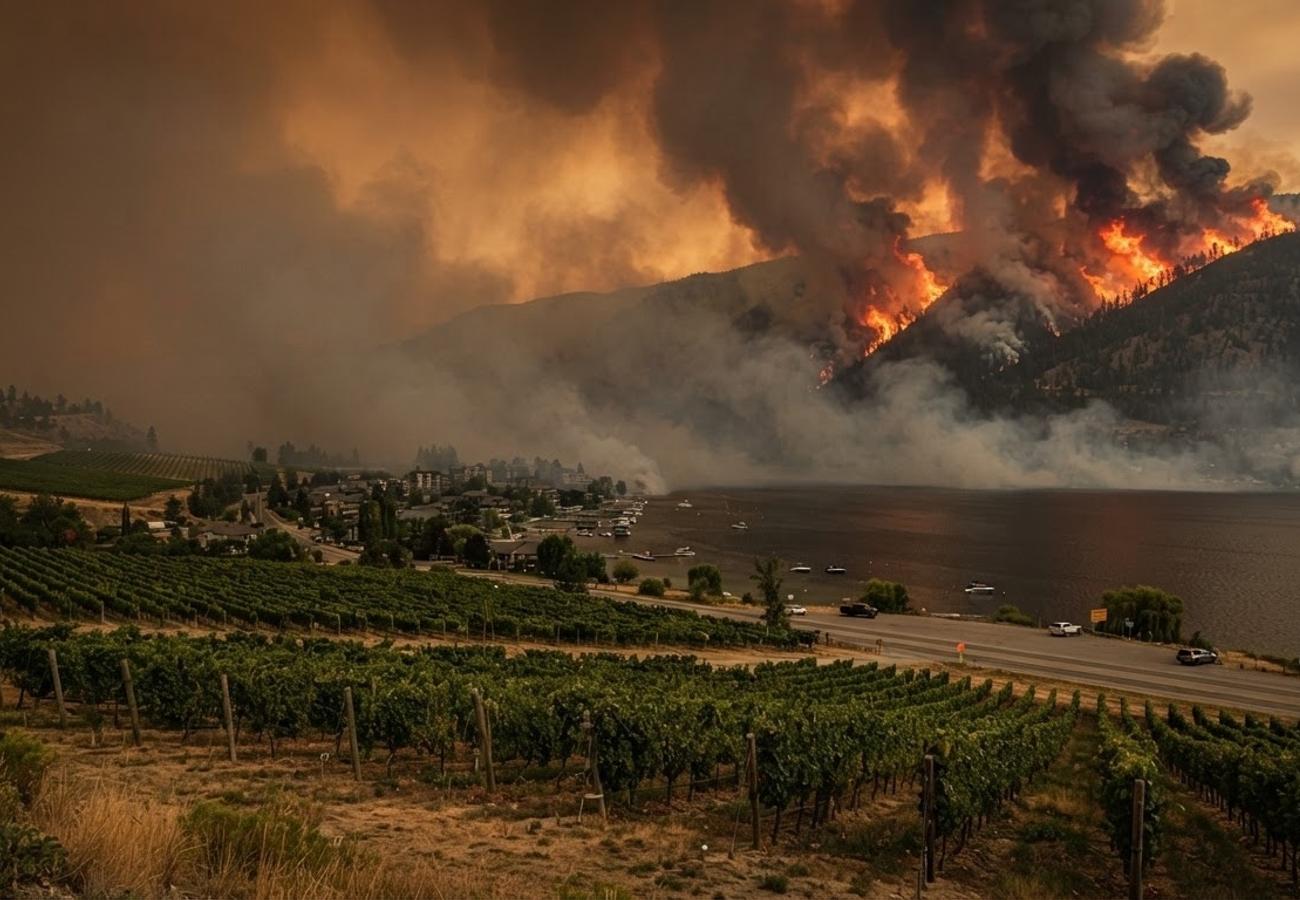
Image generated by AI
Over 20,000 people were forced to evacuate at the peak of the Bald Range wildfire crisis, with approximately 150 structures damaged or destroyed in the South Okanagan. This emergency has triggered a cascade of travel disruptions across British Columbia’s Interior, shifting the region's tourism focus from leisure to crisis management.
The Shift in BC’s Tourism Landscape
British Columbia is currently navigating a severe wildfire emergency that has fundamentally altered travel patterns across the province. While the province is geographically diverse, the South Okanagan has become the epicenter of the 2026 crisis. The Bald Range wildfire, fueled by extreme dryness and volatile winds, has transformed a premier destination for vineyard tours and lakeside resorts into a zone of mass evacuation and property loss.
The impact is not uniform. While the South Okanagan—specifically around Summerland and Faulder—has suffered the most acute damage, a wider network of alerts and restrictions now spans the Cariboo, Thompson-Nicola, Central and North Okanagan, Kootenays, Revelstoke, Fraser Valley, and Squamish-Lillooet regions. For the modern traveler, this means the "destination" is no longer a static point on a map but a fluid zone of safety and accessibility.
Regional Impact Analysis
The crisis has created a fragmented travel environment where one community may be under a mandatory evacuation order while a neighboring town remains open for business.
South Okanagan and the Okanagan Valley
The Bald Range fire has heavily impacted the Regional District of Okanagan-Similkameen, the Regional District of Central Okanagan, and the Penticton Indian Band areas. Because this region is an international hub for wine tourism and summer holidays, the economic ripple effects are significant. However, visitors are cautioned against treating the Okanagan as a single entity; conditions in Kelowna or Vernon may differ wildly from those in Summerland.
The Cariboo and Thompson-Nicola Corridors
In the Cariboo region, the focus has shifted toward restricting high-risk activities. The B.C. government has implemented temporary bans on recreational off-road vehicle use on Crown land within the Cariboo Fire Centre to prevent human-caused ignitions.
Similarly, the Thompson-Nicola region, including areas connected with the Lower Nicola Indian Band, serves as a critical transit artery. Because this region links the Lower Mainland to the Interior, wildfire-related road closures here can isolate entire sections of the province, affecting accommodation availability and transit times for thousands of travelers.
Central, North Okanagan, and the Kootenays
While less publicized than the Bald Range event, the West Electoral Area near La Casa in the Central Okanagan has seen active fire response. Further south, the City of Revelstoke and the Regional District of Central Kootenay remain under close monitoring, threatening the hiking and camping economies that sustain these mountain communities.
Cultural and Environmental Value
For the visitor, the real impact of these fires is the realization of the fragility of the Pacific Northwest ecosystem. The current crisis highlights a shift toward "Resilient Tourism." Rather than ignoring the smoke and fire risks, there is a growing movement toward supporting local economies that are struggling to recover from property loss.
Directly supporting local businesses in non-evacuated zones and adhering to strict "Leave No Trace" principles is no longer just an eco-friendly suggestion—it is a necessity for regional survival. The reliance on official bodies like EmergencyInfoBC and the Government of Canada’s wildfire updates reflects a new era of travel where real-time data is the most valuable tool in a tourist's kit.
Visitor Insider Tips
Navigating British Columbia during a wildfire season requires a different strategy than standard vacation planning.
- The "Hyper-Local" Check: Never rely on general social media posts to determine if a region is "closed." Check the specific community or regional district via EmergencyInfoBC. A warning for the North Okanagan does not necessarily apply to the South Okanagan.
- Air Quality Management: If traveling to the Kootenays or Revelstoke, pack N95 masks. Even in non-evacuation zones, smoke drift can make outdoor activities hazardous for those with respiratory issues.
- Off-Peak Window: Historically, the highest risk occurs in late July and August. Planning Interior BC trips for early June or late September significantly reduces the likelihood of encountering "hellish" fire conditions.
- Respect the Crown Land: If you are in the Cariboo region, strictly avoid off-road vehicles in restricted zones. Local enforcement is high, and the environmental cost of a human-caused fire is catastrophic.
Tourism Outlook
The long-term trajectory for British Columbia's tourism depends on the integration of wildfire preparedness into the visitor experience. The province is likely to see a permanent shift toward more regulated outdoor recreation and a stronger emphasis on seasonal travel windows. As the South Okanagan works to rebuild the 150 structures lost to the Bald Range fire, the global travel community will be watching how Canada balances its "spectacular western province" image with the reality of a changing climate.
Stay informed, travel light, and prioritize local safety over itinerary goals.
Related Travel Guides
Disclaimer
This article is for informational and educational purposes only. It does not constitute legal, financial, or professional advice. While we strive to provide accurate and up-to-date information, travel policies, regulations, and conditions change rapidly. Always verify information with official sources before making travel decisions. Nomad Lawyer makes no representations about the accuracy, reliability, completeness, or suitability of the information provided. Readers should consult qualified professionals for advice specific to their circumstances. The views expressed in this article are those of the author and do not necessarily reflect the views of Nomad Lawyer.
Kunal K Choudhary
Co-Founder & Contributor
A passionate traveller and tech enthusiast. Kunal contributes to the vision and growth of Nomad Lawyer, bringing fresh perspectives and driving the community forward.
Learn more about our team →