
British Airways Starlink: In-Flight Calls Now Allowed on UK Routes
British Airways will permit in-flight phone calls via Starlink on UK and EU flights in 2026, marking a regulatory divergence from US airspace restrictions and sparking debate over passenger comfort standards.

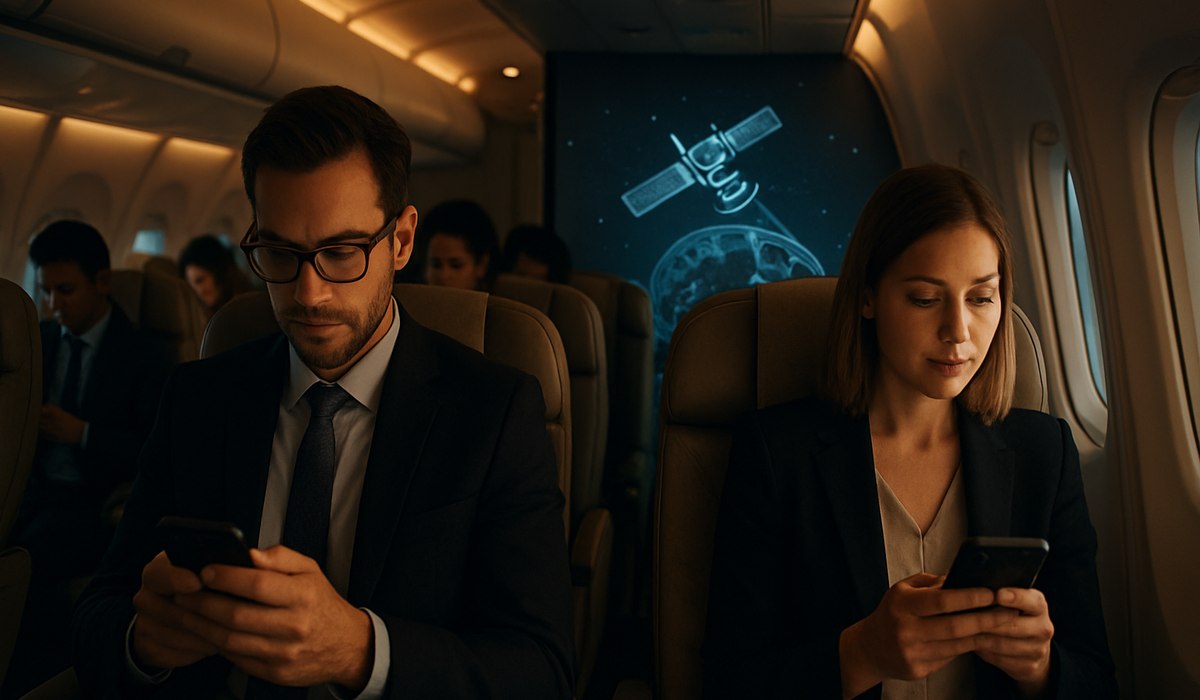
Image generated by AI
British Airways Embraces Starlink for In-Flight Connectivity
British Airways has announced plans to permit in-flight phone calls via Starlink on routes operating throughout the UK and European airspace. This marks a significant departure from North American aviation policy, where such calls remain prohibited under federal regulations. The decision positions the carrier at the forefront of satellite-enabled passenger connectivity while simultaneously igniting industry-wide conversation about the future passenger experience and regulatory harmonization across major aviation markets.
The technology leverages Elon Musk's Starlink satellite constellation to deliver broadband connectivity capable of supporting voice calls aboard aircraft. British Airways' regulatory environment permits this innovation, whereas equivalent flights operated by US carriers face strict prohibitions from the Federal Communications Commission and Federal Aviation Administration.
British Airways' Bold Move Into In-Flight Connectivity
British Airways' adoption of Starlink represents a calculated business strategy targeting premium cabin passengers and business travelers who demand uninterrupted connectivity during flights. The carrier positions the service as a competitive advantage in an increasingly connected world where ground-level productivity expectations extend to 35,000 feet.
Starlink's low-latency satellite infrastructure provides the technical foundation necessary for voice communication at altitude. Unlike older satellite phone systems, modern constellations eliminate the noticeable delays that historically plagued airborne calling. British Airways engineering teams have conducted extensive testing across multiple aircraft types to ensure compatibility and reliability.
The rollout timeline suggests initial deployment on long-haul international routes before expanding to domestic services. Passengers traveling on these flights will experience near-terrestrial call quality, enabling business continuity and personal communication previously impossible during flight. Premium tier passengers may receive complimentary access, while economy passengers may face optional service fees.
The Regulatory Divide: US Restrictions vs UK and EU Freedom
The fundamental difference between aviation markets stems from divergent regulatory philosophies. The Federal Communications Commission maintains an explicit ban on cellular connectivity aboard US-registered aircraft, a position rooted in terrestrial network protection concerns and historical passenger comfort considerations established in the 1980s.
The UK Civil Aviation Authority and European Aviation Safety Agency have adopted more permissive frameworks. These regulators differentiate between satellite-based and terrestrial wireless systems, allowing carriers operational flexibility within their respective airspace. This regulatory asymmetry creates opportunities for international carriers to offer service variations based on departure and destination points.
American carriers operating transatlantic routes must disable Starlink calling functions when crossing into US airspace, even mid-flight. This technical requirement adds operational complexity but maintains compliance with Federal Communications Commission directives. European carriers face no equivalent restriction when serving North American airports, creating competitive imbalance and consumer confusion regarding available services.
Visit the FAA official website for comprehensive regulations governing in-flight electronic devices and communications systems.
Passenger Experience and Industry Backlash
Aviation industry observers express legitimate concerns regarding British Airways Starlink implementation and its broader implications for cabin environment quality. In-flight phone calls present significant challenges for passenger comfort, crew management, and cabin crew workload distribution.
Frequent flyer communities voice particular objection, citing research indicating passenger annoyance with audible conversations in enclosed spaces. Airlines historically restricted calling partly due to passenger preference data suggesting that uncontrolled cabin conversations negatively impact satisfaction metrics and repeat booking behavior.
Cabin crew unions raise operational concerns regarding call volume management, noise complaints, and potential safety implications. Flight attendants would shoulder responsibility for monitoring call-related disturbances and managing passenger conflicts arising from unwanted audio exposure.
However, technology enables potential solutions. Implementation frameworks might include designated quiet zones, premium cabin exclusivity, or calling-free flight hours during rest periods. These mitigation strategies could balance connectivity benefits against passenger experience preservation.
What This Means for the Future of Air Travel
British Airways' regulatory arbitrage positions the carrier as a innovation leader while raising questions about global aviation standards harmonization. If UK and EU implementations prove commercially successful, pressure will mount on North American regulators to reconsider existing prohibitions.
The decision reflects broader industry trends toward seamless digital connectivity across transportation modes. Passengers increasingly expect unified communication access regardless of altitude, creating business case arguments for policy modernization. Future aircraft designs may incorporate Starlink infrastructure as standard equipment rather than optional retrofits.
Check FlightAware for real-time tracking of British Airways aircraft equipped with Starlink calling capabilities.
Key Data: British Airways Starlink Implementation Timeline
| Aspect | Details |
|---|---|
| Service Provider | Starlink (SpaceX satellite constellation) |
| Regulatory Framework | UK CAA and EASA approval |
| Initial Routes | Long-haul international services |
| Calling Quality | Low-latency satellite (estimated 50ms latency) |
| US Airspace Status | Service disabled per FCC regulations |
| Passenger Tiers | Premium cabin priority; economy optional fee structure |
| Expected Launch | Mid-2026 for initial aircraft fleet |
| Competitor Response | Under industry evaluation across carriers |
| Estimated Cost | £8-15 per flight for economy passengers |
| Technical Compatibility | Boeing 787 and Airbus A350 initial deployment |
What This Means for Travelers
Traveler Action Checklist
-
Verify calling availability on your specific British Airways flight by checking the booking confirmation or contacting customer service prior to travel.
-
Understand cost implications — determine whether your fare class includes complimentary Starlink calling access or requires additional payment.
-
Review cabin policies regarding designated quiet zones where calls are restricted to preserve passenger comfort.
-
Plan connectivity strategy for business travelers requiring uninterrupted call capabilities during flights over UK and European airspace.
-
Check transatlantic routing if traveling between North America and Europe, as US airspace prohibitions will disable calling functionality mid-route.
-
Report technical issues to crew members immediately if call quality problems or service failures occur during flight.
-
Respect quiet zones by adhering to cabin policies designating areas where calling is restricted for other passengers.
-
Consider noise-canceling headphones if seated near passengers utilizing calling services.
Frequently Asked Questions
Can I make phone calls on all British Airways flights?
Calling via Starlink remains available exclusively on routes within UK and European airspace. Service automatically disables when crossing into North American airspace due to FCC regulations. Domestic US flights operated by British Airways cannot offer this service.
What is the cost for in-flight calling on British Airways?
Premium cabin passengers typically receive complimentary Starlink calling access. Economy passengers may pay per-flight fees (estimated £8-15) or purchase subscription plans. Exact pricing varies by route and booking class.
How does British Airways calling compare to terrestrial phone service?
Starlink's low-latency satellite technology delivers near-terrestrial quality voice transmission with minimal noticeable delays. Call clarity approximates ground-level standards, distinguishing it from older satellite phone systems characterized by significant audio delays.
Will cabin crews enforce quiet zones during flight?
Yes, designated quiet zones restrict calling during specific flight hours and cabin sections. Crew members manage enforcement through standard service protocols and passenger communication regarding designated calling areas.
Related Travel Guides
- UK Flight Regulations: What Travelers Need to Know
- European Air Travel Rights and Passenger Protections
- Transatlantic Flight Guide: US-EU Route Essentials
Disclaimer
This article synthesizes publicly available information regarding British Airways' Starlink implementation as of April 2026. Regulatory frameworks governing in-flight communications differ significantly across jurisdictions and remain subject to change. For authoritative guidance on specific routes,
Disclaimer
This article is for informational and educational purposes only. It does not constitute legal, financial, or professional advice. While we strive to provide accurate and up-to-date information, travel policies, regulations, and conditions change rapidly. Always verify information with official sources before making travel decisions. Nomad Lawyer makes no representations about the accuracy, reliability, completeness, or suitability of the information provided. Readers should consult qualified professionals for advice specific to their circumstances. The views expressed in this article are those of the author and do not necessarily reflect the views of Nomad Lawyer.
Raushan Kumar
Founder & Lead Developer
Full-stack developer with 11+ years of experience and a passionate traveller. Raushan built Nomad Lawyer from the ground up with a vision to create the best travel and law experience on the web.
Learn more about our team →