
Breeze Airways Slashes 18 Routes as Ultra-Low-Cost Carrier Recalibrates US Network Strategy
Breaking airline news and aviation industry updates for 2026.

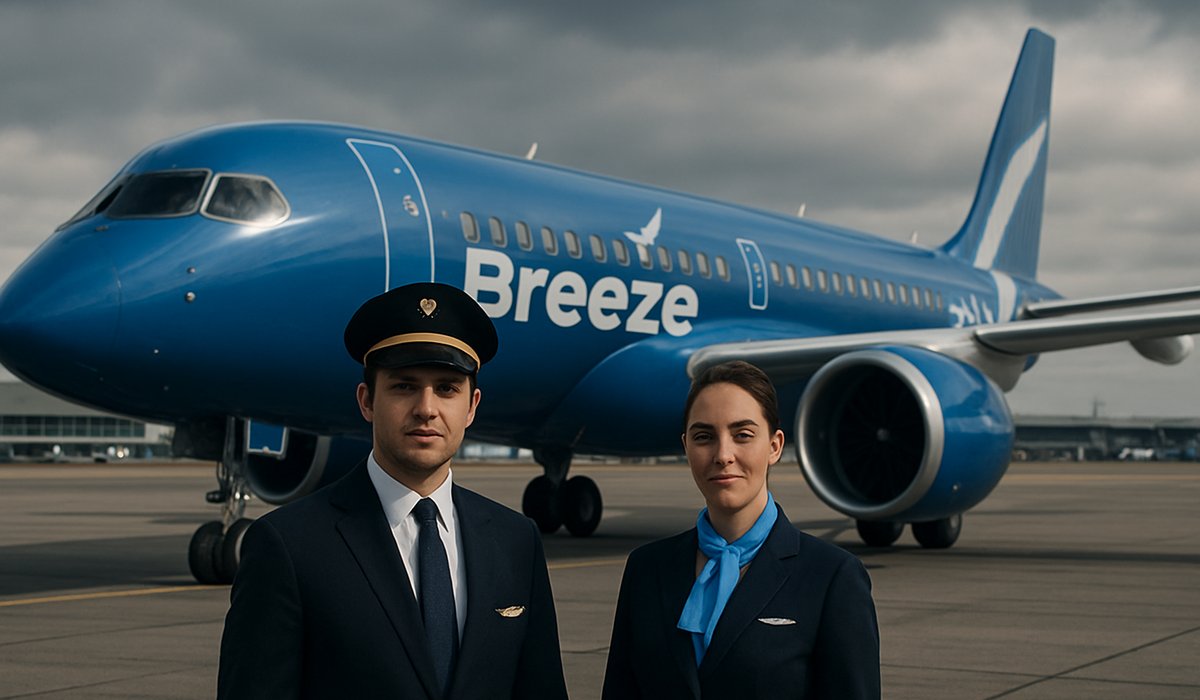
Image generated by AI
Breeze Airways Slashes 18 Routes as Ultra-Low-Cost Carrier Recalibrates US Network Strategy
The five-year-old airline retreats from select markets amid competitive pressures and shifting demand patterns
Rapid Expansion Hits Strategic Pause
Breeze Airways, the fastest-growing ultra-low-cost carrier in the United States, has announced the discontinuation of 18 flight routes as part of a major network restructuring. The decision marks a significant pivot for the airline, which has experienced explosive growth since launching commercial operations in 2021 but now faces intensifying competition and operational pressures across America's crowded aviation market.
The Numbers Behind the Pullback
Despite its meteoric rise, Breeze's market penetration remains modest relative to the US aviation sector's enormous scale. Since its inaugural revenue flight just over five years ago, the carrier has transported more than 16 million passengers—a remarkable achievement for a young airline. However, federal Department of Transportation data reveals that Breeze has captured just one in every 313 passengers traveling within American airspace, underscoring the immense competitive challenge facing smaller carriers in an industry dominated by legacy giants.
The route reductions represent Breeze's first major retreat from its aggressive expansion strategy, signaling that growth at all costs may no longer be viable in the current aviation environment.
Industry Context: Pressure Mounting on Budget Carriers
The move comes as ultra-low-cost carriers (ULCCs) across the sector grapple with headwinds including volatile jet fuel prices, rising labor costs, and intensifying competition from both traditional airlines and rival budget operators. Airlines have increasingly relied on ancillary revenue streams—baggage charges, seat selection fees, and onboard purchases—to maintain profitability, but demand elasticity remains a critical challenge.
Breeze's network pullback reflects the delicate balance low-cost carriers must maintain between rapid expansion and sustainable operations. Unlike established carriers with diversified route portfolios and premium-cabin revenue, ULCCs operate on razor-thin margins where each route must deliver specific load factors and yield targets.
What's Next for Breeze?
The 18 discontinued routes will be reallocated as the airline focuses its resources on higher-performing markets and key hub connections. Industry analysts suggest this consolidation could allow Breeze to strengthen its presence in profitable corridors while reducing operational complexity and fuel expenditure across redundant or underperforming services.
As the aviation industry continues navigating post-pandemic demand normalization and rising operational costs, Breeze's strategic retreat offers a cautionary tale for emerging carriers attempting to challenge established competitors without sufficient scale or capital reserves.
FAQ: Breeze Airways Route Cuts & Ultra-Low-Cost Airlines
What is Breeze Airways and why is it cutting routes? Breeze Airways is a US-based ultra-low-cost carrier founded in 2021 that has transported over 16 million passengers. The airline is discontinuing 18 routes to reallocate resources toward more profitable markets and improve overall operational efficiency amid rising aviation costs.
How do airline baggage charges and fees impact route profitability? Ancillary revenue from baggage fees, seat selection, and onboard services is critical for ULCC profitability. Routes must generate sufficient passenger volume and ancillary income to offset fuel costs and operational expenses; underperforming routes may not meet these thresholds.
Why are jet fuel prices affecting airlines like Breeze more severely? Ultra-low-cost carriers operate on margins of 1-3%, making them highly vulnerable to fuel price volatility. Unlike legacy carriers with premium cabins and hedging strategies, ULCCs have limited ability to absorb fuel cost increases without cutting routes or raising fares.
Which airlines compete with Breeze Airways? Breeze competes with Spirit Airlines, Frontier Airlines, and Allegiant Air in the ULCC segment, while also facing competition from budget divisions of major carriers like Southwest and regional operators.
Is the US aviation industry consolidating? The sector shows mixed signals—some carriers are expanding while others like Breeze are consolidating. Jet fuel prices, labor agreements, and post-pandemic demand shifts continue reshaping route networks across the industry.
Related Travel Guides
Flight Delay Compensation Guide 2026
Understanding Airline Route Changes
Airport Security Process Updated (2026)
External Resources
Disclaimer
This article is for informational and educational purposes only. It does not constitute legal, financial, or professional advice. While we strive to provide accurate and up-to-date information, travel policies, regulations, and conditions change rapidly. Always verify information with official sources before making travel decisions. Nomad Lawyer makes no representations about the accuracy, reliability, completeness, or suitability of the information provided. Readers should consult qualified professionals for advice specific to their circumstances. The views expressed in this article are those of the author and do not necessarily reflect the views of Nomad Lawyer.
Kunal K Choudhary
Co-Founder & Contributor
A passionate traveller and tech enthusiast. Kunal contributes to the vision and growth of Nomad Lawyer, bringing fresh perspectives and driving the community forward.
Learn more about our team →