
Border Delays Leave Dozens Stranded as European Flights Depart Empty
Border delays leave passengers stranded at Marseille and Milan airports in April 2026. Eighty-three Ryanair travelers and 120 EasyJet passengers missed flights due to Schengen exit bottlenecks, exposing staffing gaps amid new EU security systems.

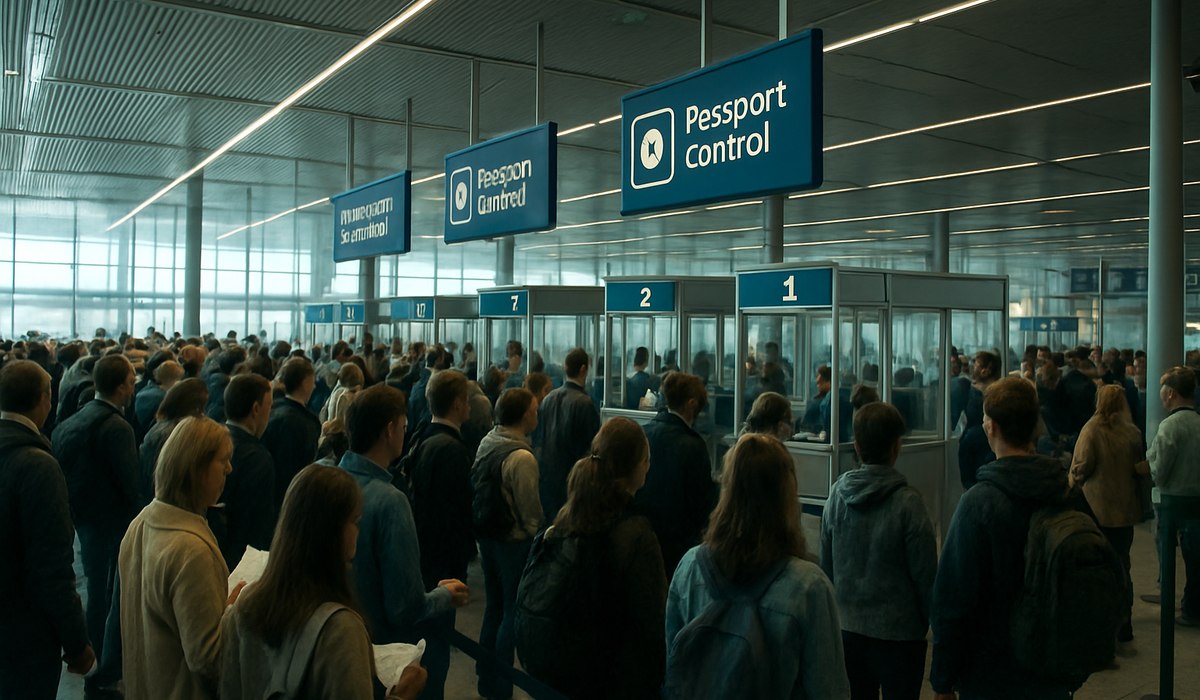
Image generated by AI
Border Delays Leave Dozens Stranded as Flights Depart Without Them
Eighty-three passengers booked on a Ryanair flight from Marseille Provence Airport became trapped in lengthy Schengen exit queues on April 20, 2026, missing their departure as the aircraft left with dozens of empty seats. The incident marks the second major disruption in as many weeks, following a similar episode at Milan Linate involving over 120 EasyJet travelers bound for Manchester. These back-to-back cases expose a systemic vulnerability: European airports are struggling to balance new biometric border-control systems with peak-season passenger volumes and insufficient staffing.
The border delays leave passengers facing unexpected costs, rearranged itineraries, and potential gaps in compensation under European regulations. Airlines warn that boarding deadlines remain firm, while border authorities and airports grapple with infrastructure limitations that predate new EU security protocols.
Marseille Provence: 83 Ryanair Passengers Miss Flight Amid Border Bottleneck
On April 20, passengers ticketed on a Ryanair service departing Marseille Provence Airport found themselves unable to clear exit-border formalities before the gate closed. The flight, routing from the Schengen zone to a non-Schengen destination, required all travelers to pass through passport inspection—a mandatory checkpoint for anyone leaving the European free-travel area.
Reports indicate that passport-control lines grew significantly slower than expected, particularly as the departure window narrowed. Airport staff and border police attempted to expedite processing, yet dozens of queued passengers remained in the restricted area when the airline's boarding cut-off arrived. The aircraft departed with approximately one-third of its booked capacity vacant. Stranded travelers were escorted from the secure zone and left to arrange fresh tickets, accommodation, and transportation independently, compounding their travel costs.
This incident parallels ongoing congestion at European exit checks, where new biometric systems and legacy terminal layouts collide during holiday weeks, school breaks, and sporting events. The border delays leave operators and airports under intense pressure to resolve the underlying capacity issues.
Milan Linate EasyJet Disruption Reveals Emerging Pattern Across Europe
Earlier in April, Milan Linate Airport experienced a comparable breakdown when more than 120 EasyJet passengers bound for Manchester missed their scheduled departure following extended passport-control waits. The aircraft departed with barely 20% of its ticketed passenger count aboard—a stark illustration of how border processing failures cascade into operational disruption.
Travelers reported that information displays and boarding announcements failed to communicate the severity of exit-queue delays, leaving many to believe they retained sufficient time to reach the gate. By the time passengers approached the boarding bridge, ground handlers had already secured the doors and repositioned the aircraft for turnaround.
The Milan-to-Marseille pattern suggests that border delays leave individual airlines and airports isolated from one another in terms of coordination, yet affected by identical root causes: understaffed passport terminals, new EU Entry/Exit System processing steps, and terminal designs predating modern border infrastructure needs. Consumer advocates note that this geographic spread indicates a continent-wide exposure rather than localized breakdown.
Why Peak Season and Staffing Shortfalls Are Colliding at Border Control
The European Union's rollout of its new Entry/Exit System adds mandatory biometric capture and travel-data recording for non-EU nationals crossing Schengen external borders. While designed to enhance security, the system requires extra processing time at each checkpoint—particularly at departure gates where passengers exit the zone heading to non-EU destinations like the United Kingdom.
Airport terminals in Marseille, Milan, Lanzarote, and other hubs were constructed decades ago, before such extended processing times became necessary. Peak-season traffic—holidays, school breaks, sports events—compounds the mismatch between passenger volumes and checkpoint capacity. Industry analysis suggests that airports have not adequately scaled staffing to absorb the additional steps mandated by the Entry/Exit System.
Regional business groups in Spain warned earlier in 2026 that without parallel investment in training, equipment, and personnel, the digital border upgrades risked creating serious bottlenecks. Historical incidents in Lanzarote, where dozens of Ryanair passengers were similarly stranded, underscore that the problem predates the April disruptions and signals a systemic misalignment.
The border delays leave airports and national border authorities facing pressure to recalibrate queue management, equipment allocation, and shift scheduling. Until capacity meets peak demand, flights operating on tight rotations remain vulnerable to departing with stranded passengers.
What Stranded Passengers Face: Costs and Next Steps
Passengers who miss flights due to border delays occupy a complex legal position. Under European airline-passenger-rights regulations, compensation entitlements typically apply when airlines directly deny boarding or delay flights beyond four hours. However, when border-control processes—rather than airline operations—cause the miss, compensation thresholds become ambiguous.
Stranded travelers must independently rebook flights, often at premium last-minute rates. Ground transportation, hotel stays, and meal expenses fall outside airline liability in many cases. Some travel insurance policies cover border-delay scenarios, but coverage varies widely.
Affected passengers should immediately contact their airline's customer service, retain all receipts and documentation, and request written confirmation of the reason for missing the flight. When border delays are formally logged by airport authorities, this documentation strengthens any future compensation claim. Legal observers recommend consulting European air-passenger-rights organizations, which provide guidance on claims under specific national frameworks.
Key Facts: Border Delays Leave Passengers Stranded in 2026
| Incident | Location | Airline | Passengers Affected | Date | Destination | Root Cause |
|---|---|---|---|---|---|---|
| Marseille disruption | Marseille Provence | Ryanair | 83 | April 20, 2026 | Non-Schengen | Schengen exit queue bottleneck |
| Milan disruption | Milan Linate | EasyJet | 120+ | Early April 2026 | Manchester (UK) | Passport control delay + unclear communication |
| Lanzarote incidents | Lanzarote Airport | Ryanair | Dozens (multiple) | Throughout 2026 | Various | EU Entry/Exit System processing |
| Systemic cause | European hubs | Multiple | Ongoing | 2026 | Across network | New biometric systems + understaffing |
| Peak-season factor | All airports | All carriers | Increasing | Holiday/event weeks | All routes | Terminal capacity vs. passenger volume |
| Compensation gap | Varies by jurisdiction | Multiple | Unclear entitlements | Post-April 2026 | Multiple | Border-delay liability ambiguity |
What This Means for Travelers: Your Action Checklist
-
Arrive at the airport with extended buffer time. Budget at least 45 minutes for Schengen exit-border formalities when departing for non-EU destinations, especially during peak weeks. Confirm current wait times on airport websites before travel.
-
Monitor real-time queue information. Use FlightAware to track your aircraft's status and check airport-specific border-delay alerts published via airport social media and passenger apps.
-
Request gate information updates. Ask airline staff or ground handlers to confirm your boarding time and gate status periodically, particularly if border queues appear longer than scheduled.
-
Document everything if delayed. Photograph queue conditions, note timestamps, and request written confirmation from airline or airport staff explaining why you missed your flight. Retain all receipts.
-
Review your travel insurance coverage. Verify whether your policy includes border-delay scenarios and file claims with supporting documentation immediately after the incident.
-
Know your rights under EU261/2004. Consult the [US Department
Disclaimer
This article is for informational and educational purposes only. It does not constitute legal, financial, or professional advice. While we strive to provide accurate and up-to-date information, travel policies, regulations, and conditions change rapidly. Always verify information with official sources before making travel decisions. Nomad Lawyer makes no representations about the accuracy, reliability, completeness, or suitability of the information provided. Readers should consult qualified professionals for advice specific to their circumstances. The views expressed in this article are those of the author and do not necessarily reflect the views of Nomad Lawyer.
Preeti Gunjan
Contributor & Community Manager
A passionate traveller and community builder. Preeti helps grow the Nomad Lawyer community, fostering engagement and bringing the reader experience to life.
Learn more about our team →