
Boeing's Forgotten Supersonic Dream: The 2707 That Congress Grounded Before Takeoff
Breaking airline news and aviation industry updates for 2026.

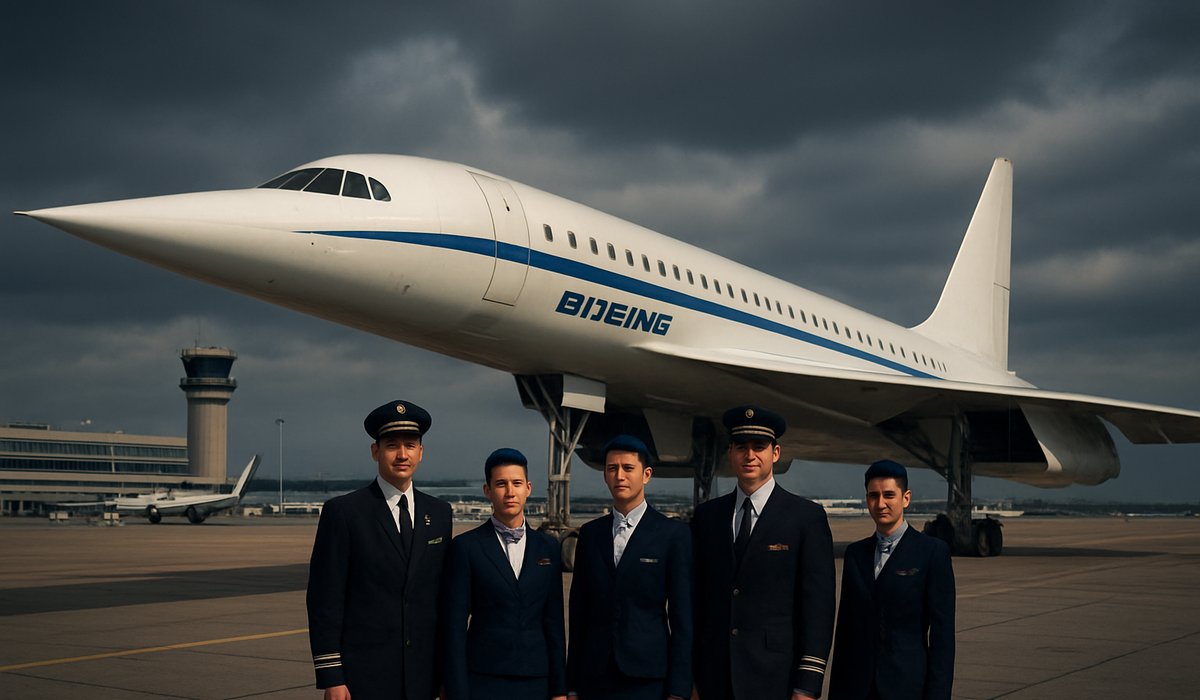
Image generated by AI
Boeing's Forgotten Supersonic Dream: The 2707 That Congress Grounded Before Takeoff
How a $1 billion aviation project fell victim to environmental concerns and political pressure during the height of the jet age
The Ambitious Challenger to Concorde
While the British-French Concorde dominated transatlantic headlines throughout the late 1960s, Boeing was quietly engineering an even more ambitious vision: a supersonic airliner designed to outpace and outsize its European competitor. The Boeing 2707, conceived during an era when speed and technological prowess defined aviation's frontier, promised to be faster and larger than the legendary Concorde—yet it would never complete a single passenger flight.
A Billion-Dollar Vision Derailed
The Seattle-based manufacturer invested approximately $1 billion into developing the 2707 program, positioning it as America's answer to Concorde's transatlantic dominance. The project represented not merely incremental advancement but a bold technological leap, promising capabilities that would have redefined luxury air travel for the world's elite.
However, Boeing's supersonic ambitions collided with an emerging force reshaping the aviation industry: environmental consciousness. As the 1960s gave way to the early 1970s, public concern over aircraft noise pollution and atmospheric emissions intensified dramatically. The 2707's projected operational footprint—both in decibels and emissions—attracted mounting criticism from environmental advocates and policymakers alike.
Congressional Intervention Ends the Program
The fatal blow came in 1971 when Congress effectively terminated the program, citing environmental concerns as the primary justification. The decision reflected a broader cultural shift occurring across the developed world, where ecological responsibility began competing with technological ambition for the first time at the highest policy levels.
The 2707's cancellation marked a watershed moment for the aviation industry, demonstrating that even well-funded, technologically feasible projects could be halted when environmental and public health considerations came into focus. Unlike Concorde, which continued operations for three decades before economic and safety pressures forced its retirement in 2003, Boeing's supersonic vision never materialized beyond the design phase.
The Lasting Impact on Aviation Development
The 2707's demise fundamentally altered Boeing's strategic direction and influenced how the broader aviation sector approached environmental regulation. Subsequent aircraft development prioritized fuel efficiency and noise reduction—priorities that would eventually define modern commercial aviation.
Today, as the industry grapples with sustainability challenges and carbon emissions targets, Boeing's abandoned 2707 serves as a historical reminder that technological capability alone cannot overcome environmental imperatives and public policy concerns—a lesson that remains acutely relevant in contemporary debates over aviation's environmental footprint.
Frequently Asked Questions
What was the Boeing 2707 designed to do? The 2707 was conceived as a supersonic passenger aircraft intended to outperform the Concorde by traveling faster and carrying more passengers, designed specifically to compete on transatlantic routes.
Why did Congress cancel the Boeing 2707? The program was terminated in 1971 primarily due to environmental concerns, particularly regarding aircraft noise pollution and atmospheric emissions that the aircraft would have generated during operations.
How much money did Boeing spend on the 2707 project? Approximately $1 billion was invested in the development and design of the 2707 before the program's cancellation.
Did the 2707 ever fly commercially? No. The aircraft never entered production or commercial service. The program was canceled during the development phase before any passenger flights could occur.
How does the 2707's fate compare to the Concorde? While the Concorde successfully operated for three decades, the 2707 never flew. Both aircraft eventually became economically unviable, but the 2707 was halted by government intervention before achieving operational status.
Related Travel Guides
Flight Delay Compensation Guide 2026
Understanding Airline Route Changes
Airport Security Process Updated (2026)
External Resources
Disclaimer
This article is for informational and educational purposes only. It does not constitute legal, financial, or professional advice. While we strive to provide accurate and up-to-date information, travel policies, regulations, and conditions change rapidly. Always verify information with official sources before making travel decisions. Nomad Lawyer makes no representations about the accuracy, reliability, completeness, or suitability of the information provided. Readers should consult qualified professionals for advice specific to their circumstances. The views expressed in this article are those of the author and do not necessarily reflect the views of Nomad Lawyer.
Kunal K Choudhary
Co-Founder & Contributor
A passionate traveller and tech enthusiast. Kunal contributes to the vision and growth of Nomad Lawyer, bringing fresh perspectives and driving the community forward.
Learn more about our team →