
Blind Travelers Navigate the World Beyond Vision: How Sensory Exploration Redefines Modern Travel
Blind travelers experience destinations through touch, taste, sound, and connection—challenging visual-centric assumptions about what makes travel meaningful and transformative.

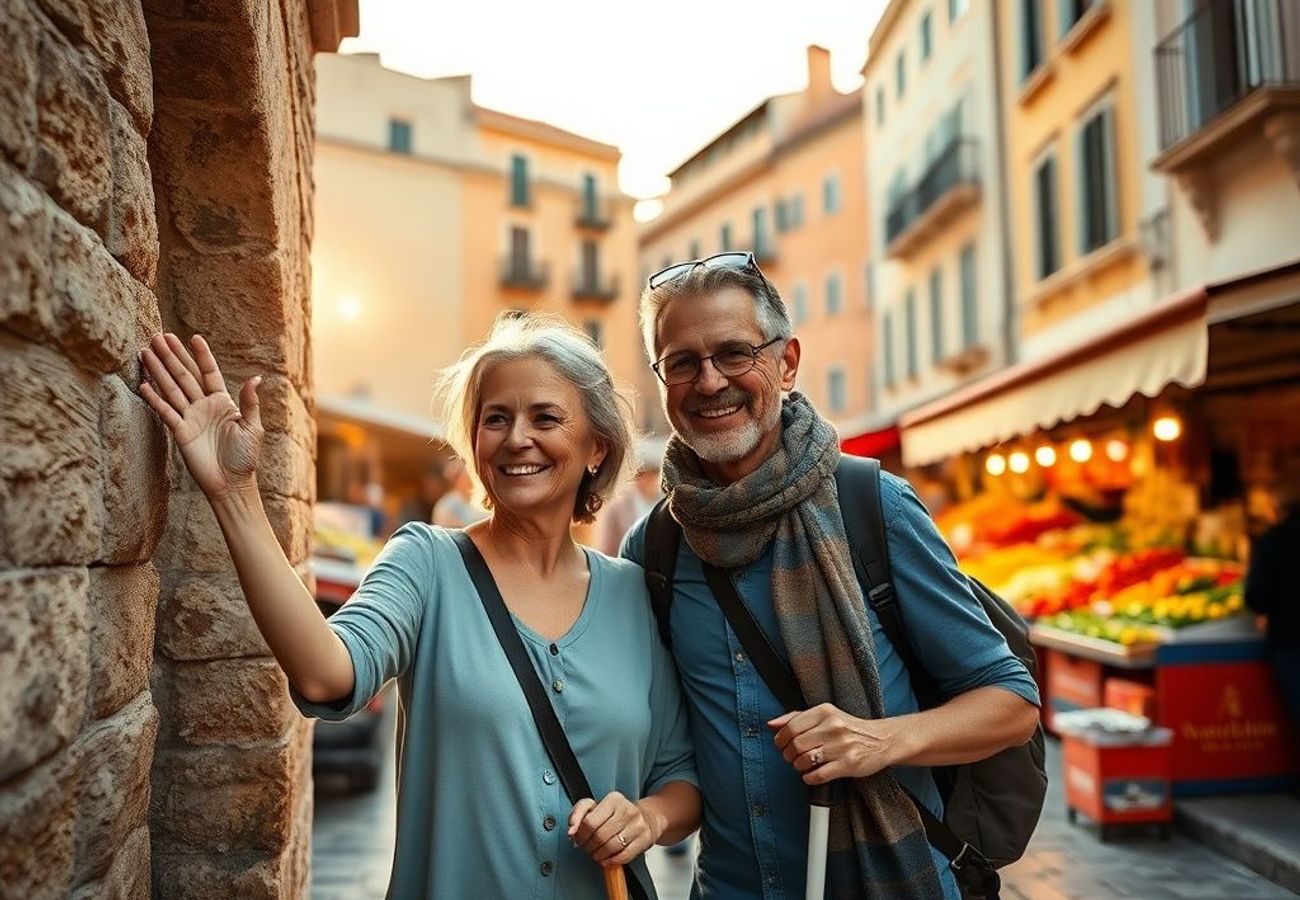
Image generated by AI
When Edith Lemay and Sébastien Pelletier learned in 2018 that three of their four children were losing their vision to retinitis pigmentosa (RP)—a progressive, incurable retinal disease—they faced a devastating medical reality. A specialist's advice was stark: build up a visual memory bank before blindness sets in. Fill their eyes with images of giraffes, elephants, exotic panoramas.
But Lemay rejected that passive prescription.
Instead, she made a radical decision: Why show pictures when you can experience the real thing? The Montreal-based family embarked on a globe-trotting adventure across 15 countries, documented in the National Geographic film Blink, racing to capture visual memories before vision disappeared. Camel rides in Egypt. Himalayan treks at dawn. Whitewater rafting through the Amazon. Instagram-perfect sunsets over the White Desert National Park.
The family's journey, though born from love and urgency, revealed something troubling: a deep cultural prejudice about blindness and travel.
The Question That Reveals Everything
During the film, Lemay asks her daughter Mia as they watch a glowing sunset: "Do you think, even if you couldn't see, you'd be able to enjoy a place like this?"
Listen carefully to that question. It contains an assumption so embedded in our culture that most viewers wouldn't even notice it: How could you possibly enjoy travel without sight?
This is the question blind travelers hear constantly. It's rooted in a hyper-visual society that treats sight as the gateway to all meaningful experience—from the astronomer's telescope to the lover's gaze. But it's also profoundly, demonstrably wrong.
Reddit: "Blind people have been traveling for centuries. The assumption that you need eyes to experience the world is ableist nonsense." — r/travel
Learning from History's Greatest Blind Traveler
In 1832, James Holman became the first blind person to circumnavigate the globe. His memoirs are a sensory feast: the melting metal tip of his cane as he summits the active Mount Vesuvius; the furtive kisses he exchanges with a Kyrgyz maiden during a bone-rattling horse-drawn sprint across frozen Russian steppes; conversations with strangers that penetrated cultural depths most sighted travelers never reached.
"I am constantly asked what is the use of traveling to one who cannot see?" Holman wrote. "The picturesque in nature, it is true, is shut out from me, but perhaps this very circumstance affords a stronger zest to curiosity."
Holman argued that his blindness forced him to make "a more close and searching examination of details" than the average sighted traveler, who might satisfy himself with superficial views. He was conducting fieldwork in human connection and cultural nuance—work that required all five senses, but especially ears, touch, and intuition.
The Modern Blind Traveler: A YouTube Series Changes the Narrative
Mona Minkara, an assistant professor of bioengineering at Northeastern University, has been blind since childhood. In 2019, she launched Planes, Trains, and Canes, a YouTube series that follows her solo travels to Manila, Johannesburg, Tokyo, and beyond—with a sighted friend filming but strictly instructed never to intervene.
The videos offer something rare: an unflinching, visceral look at how a blind person travels independently. Minkara, wearing her hijab, white cane in hand, rolling a massive bag, navigates wrong turns, unhelpful strangers, lucky guesses, and delightful surprises. She's exhausted and frustrated at times. But she maintains an unflappable, wry openness that reframes travel entirely.
"The whole premise of my show is that you don't need your eyesight to see the world," Minkara told me.
Her insight cuts to the heart of why the Lemay-Pelletier approach—while understandable—misses something crucial. When you strip away the visual, you discover what actually differentiates one destination from another: stories. Human lives. Historical layers. The texture of a culture.
"We live in the age of Instagram," Minkara explains. "People are always snapping pictures, posting shots of a mountain—but what differentiates one mountain from another? Honestly, it's the stories. It's only when you interact with people, learning about their lives and the history of a place, that the landscape comes into relief."
Touch, Taste, and Belonging: What Sighted Travelers Miss
Tom Babinszki, who's been blind since birth, spent years traveling the world as an IBM trainer. His guide dog has visited 13 countries; he's been to roughly 30. He now runs a consultancy and publishes Even Grounds, a newsletter dedicated to inclusive and accessible travel for blind people.
For Babinszki, travel is about people first—always. "I always find the people more interesting than anything else," he said.
But his sensory palette extends far beyond social connection. On a trip to India, he was so enamored with his hotel's breakfast that he ate it twice daily. Touch, for him, is sacred—he deliberately seeks out local coin museums and coin clubs in every city. "I've touched millions of dollars' worth of gold and silver," he said with evident pride. "Three-thousand-year-old currency; blocks of silver; beaver skin; everything anyone has ever paid with."
This is not deprivation. This is specialization.
The Troubling Message of "Fill Their Eyes"
Lemay's book about her family's journey is titled Plein Leurs Yeux—in English, roughly Fill Their Eyes. The title encapsulates the family's mission. But it also frames blindness as a visual death sentence, transforming their trip into a sort of death-row last meal. The narrative that circulated in media coverage reinforced a cultural message: Blindness is tragedy. Grab the visuals before they're gone.
For the Lemay-Pelletier children, this framing is dangerous. It tells them that the life they're about to live—as blind people—is inherently diminished. It tells the world that blind travelers are tragic figures making the best of loss, rather than explorers engaging the world through different sensory channels.
The truth is more complex and more hopeful.
What the Lemay-Pelletier Family Actually Gave Their Children
Despite the troubling message embedded in the family's narrative, their trip instilled something genuinely valuable: a spirit of exploration. Their children will share this with Holman, Babinszki, Minkara, and generations of blind travelers past and future—a willingness to get lost, to tolerate the discomfort and fear of unfamiliar places, and faith that it will be worth the trouble.
The difference is that now, these children can learn from blind travelers who've already charted the territory. They can follow Minkara's YouTube channel and see that independence is possible. They can read Holman's memoirs and understand that sensory depth beats visual breadth. They can connect with communities of blind travelers who've already proven that the world reveals itself in ways far beyond the visual.
The real journey—the one that matters—isn't filling their eyes before darkness comes. It's learning to see with everything else.
Travel is about belonging to the world, not just seeing it.
Related Travel Guides
Disclaimer
This article is for informational and educational purposes only. It does not constitute legal, financial, or professional advice. While we strive to provide accurate and up-to-date information, travel policies, regulations, and conditions change rapidly. Always verify information with official sources before making travel decisions. Nomad Lawyer makes no representations about the accuracy, reliability, completeness, or suitability of the information provided. Readers should consult qualified professionals for advice specific to their circumstances. The views expressed in this article are those of the author and do not necessarily reflect the views of Nomad Lawyer.
Kunal K Choudhary
Co-Founder & Contributor
A passionate traveller and tech enthusiast. Kunal contributes to the vision and growth of Nomad Lawyer, bringing fresh perspectives and driving the community forward.
Learn more about our team →