
13 Best Cities for Photographers in 2026: London, Paris, Rome & Dubai for Epic Urban Shots
Discover the 13 best cities for photographers worldwide. From London's Notting Hill to Dubai's Burj Khalifa, capture iconic landmarks and street scenes in 2026.

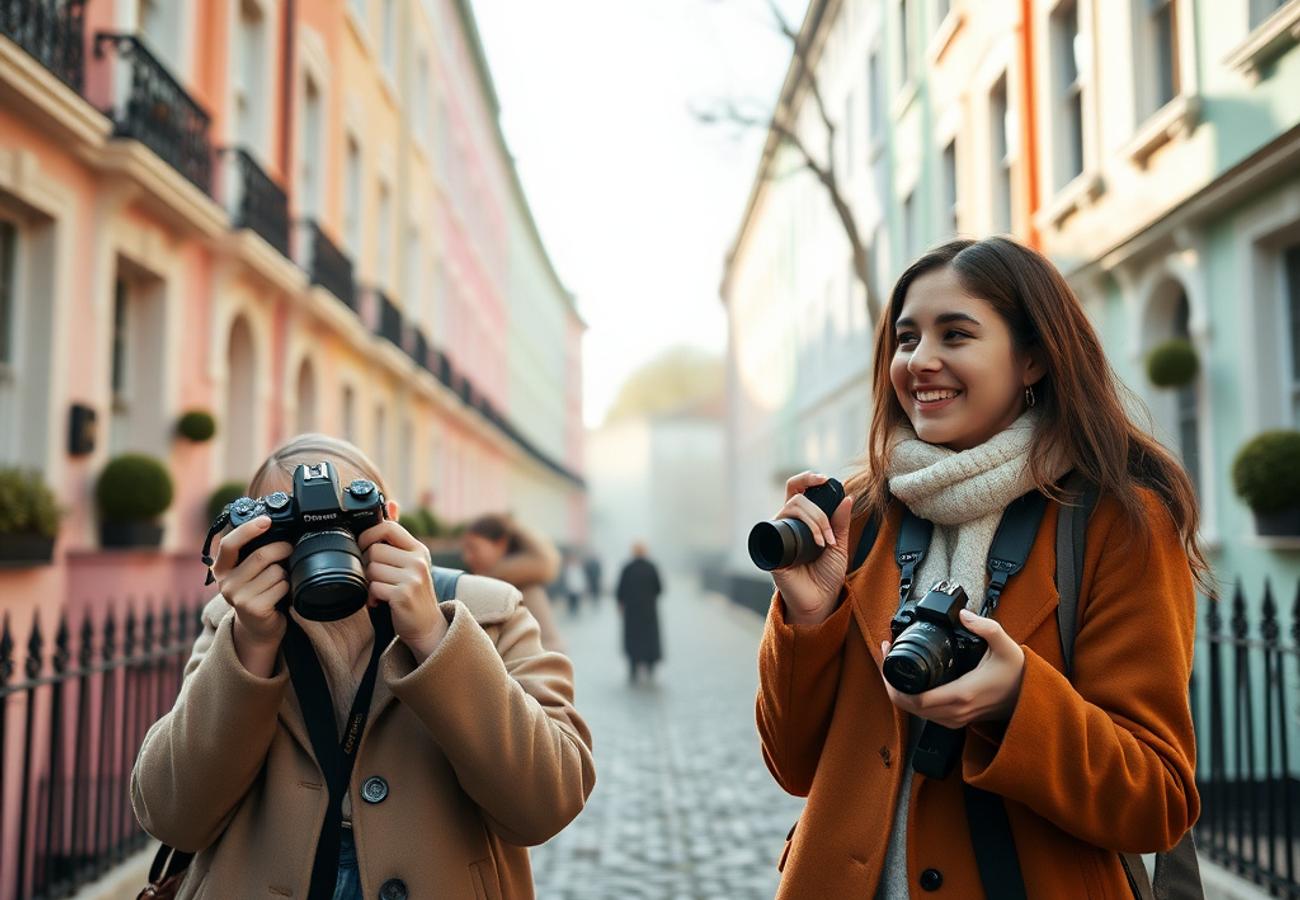
Image generated by AI
The Ultimate Photography Pilgrimage: 13 Cities That'll Transform Your Camera Roll
I've stood in countless destinations with a camera in hand, but some cities simply demand to be photographed. They whisper stories through their architecture, scream with color in their street markets, and pose perfectly as the sun sets behind centuries-old monuments.
If you're a photographer hunting for that next breakthrough shot — the one that stops the endless scroll and demands attention — these 13 cities aren't just destinations. They're visual symphonies waiting to be captured.
Reddit: "I visited London, Rome, and Paris back-to-back last year specifically for photography. Best three weeks of my creative life. Every corner was a different composition challenge." — r/photography
## London, UK: Where Every Street Corner Screams "Photograph Me"
The British capital is absolute cinema for lens-wielders. I walked through Notting Hill on a grey morning and watched the pastel-colored Victorian townhouses come alive under soft London light. This neighborhood alone is worth the flight.
What makes London magnetic for photographers:
- Historic architecture collides with modernity: The Shard piercing the Thames skyline. The London Eye rotating like a giant clock. The Gothic grandeur of Big Ben reflected in puddles after rain.
- Street photography goldmine: Soho's neon nights. The mist-wrapped mornings along the Thames. Borough Market's controlled chaos.
- Layered light: London's famously moody weather creates dramatic shadows and diffused light that makes even mediocre compositions look cinematic.
Best time to shoot? Early morning in any neighborhood. The city belongs to photographers before the tourist masses arrive.
## Rome, Italy: The Golden Hour Capital
Rome isn't just photogenic — it's unfairly photogenic. Every cobblestone echoes with 2,000 years of visual storytelling.
Here's what I learned shooting Rome: wake up at 5 AM. This isn't optional advice; it's the difference between a generic tourist photo and a portfolio-worthy image.
The Colosseum at dawn is empty. The light hits the ancient stone at angles that make your phone camera look professional. The Vatican glows in early morning gold. The Trevi Fountain transitions from serene to suffocating between 7 AM and 10 AM.
Pro tip: Focus on hidden corners. The Appian Way's ancient ruins. The catacomb passages where light filters through stone cracks. These shots separate your feed from everyone else's.
## Hamburg, Germany: Industrial Beauty Meets Modern Architecture
Hamburg represents an architectural paradox that photographers live for — the collision of old and new.
The UNESCO-listed Speicherstadt (old warehouse district) is all exposed brick, arched bridges, and water reflections. Shoot it during blue hour (just after sunset) and the district transforms into a moody, atmospheric masterpiece.
Then cross over to HafenCity, where the Elbphilharmonie concert hall stands like a glass crown jewel. This building is legitimately one of the most photogenic structures in Europe. The wavy glass facade catches light differently at every hour. The architecture alone justifies a 48-hour Hamburg stop.
The contrast between rustic warehouses and cutting-edge design gives you narrative depth in a single frame.
## Paris, France: The City Built for Photography
Paris is the obvious choice, but it's obvious for a reason.
Yes, the Eiffel Tower is iconic. But true Paris photography happens in Montmartre, where bohemian energy radiates from centuries-old streets. It happens in the artistic bistros, the winding staircases, the street musicians framed against Belle Époque storefronts.
The Louvre isn't just a museum; it's a geometric marvel. The Palace of Versailles offers opulence at every angle. The Seine at different times of day reveals completely different cities.
What separates great Paris photos from average ones? Perspective hunting. Shoot from unexpected angles. Capture reflections. Frame monuments through archways and windows. Every photographer shoots the Eiffel Tower from the Trocadéro platform — so don't.
## Berlin, Germany: Raw Urban Energy Captured
Berlin is where street art becomes fine art and urban grit translates to visual authenticity.
Kreuzberg and Friedrichshain districts are open-air galleries. Every wall is a canvas. The murals change seasonally, offering fresh content for return visits. The raw expressionism feels honest in a way most curated tourist destinations don't.
Then there's the architectural paradox: the Brandenburg Gate (Cold War relic), the Reichstag with its futuristic glass dome, the TV Tower piercing the skyline. History and modernity locked in visual tension.
Berlin photographs differently than other European capitals. It feels lived-in. Real. That authenticity translates to compelling imagery.
## Dubai, United Arab Emirates: The Impossible Made Visual
Dubai is peak Instagram bait, but here's why it works for photographers: the scale is genuinely staggering.
The Burj Khalifa (828 meters tall) isn't just tall — it's photographically extreme. From the observation deck, you can capture 360-degree panoramic shots that make viewers believe you're either superhuman or insane. The Palm Jumeirah from above looks like cartography, not reality.
But the real Dubai photography magic? The contrast. Glass skyscrapers meet Arabian Desert. Indoor skiing coexists with dune bashing. Luxury malls stand across from traditional souks. This juxtaposition is visual storytelling gold.
Best shots: Sunrise over the desert. The skyline at blue hour. The architectural details of the Dubai Aquarium. Desert dunes reflecting twilight.
## Kyoto, Japan: Temporal Displacement Through the Viewfinder
Kyoto doesn't feel like the modern world exists here. That's the photography advantage.
Over 17,000 temples means endless architectural variations. The Fushimi Inari shrine with thousands of vermillion torii gates is surreal. Arashiyama bamboo groves create natural framing that's almost too perfect to believe.
What makes Kyoto essential for photographers: seasonal transformation. Cherry blossoms in spring. Emerald bamboo in summer. Crimson maples in autumn. Snow on temple roofs in winter. One city, four completely different visual narratives.
The light filtering through bamboo groves. Temple gardens reflecting in still water. Geishas in traditional dress passing through historic streets. Kyoto isn't just a destination — it's time travel with a camera.
## Bangkok, Thailand: Controlled Chaos Photography
Bangkok's street markets are sensory overload, which makes them visually addictive.
The Chatuchak Weekend Market has 15,000 stalls. Every angle reveals new color combinations, vendor expressions, cultural details. The floating markets at dawn offer water reflections and traditional longtail boats framed against misty atmosphere.
Temple photography here is distinctive: Wat Arun (Temple of Dawn) glows orange at sunrise. Wat Pho (Temple of the Reclining Buddha) has architectural complexity that rewards multiple visits.
Bangkok rewards photographers who wake early and embrace the heat. Morning light before the crowds. Evening light after the chaos settles. The in-between moments are where extraordinary shots live.
## Istanbul, Turkey: Where East Meets West Visually
Istanbul is three cities in one: European Istanbul, Asian Istanbul, and the strait that divides them.
The Hagia Sophia is architecturally transcendent — the light through its dome creates an almost spiritual quality. The Blue Mosque glows blue at specific times. Topkapi Palace offers palatial grandeur mixed with garden serenity.
But the real Istanbul? The Grand Bazaar. The spice markets. The street vendors. The call to prayer echoing across neighborhoods. The ferries crossing the Bosphorus at sunset.
The city's visual duality — ancient meets modern, Europe meets Asia, sacred meets secular — creates narrative tension in every frame. This isn't just beautiful; it's meaningful photography.
## Barcelona, Spain: Architecture as Art Medium
Antoni Gaudí's Sagrada Familia is the most photogenic religious building on Earth. The Gothic Quarter's narrow streets create natural framing. Park Güell offers impossible geometric perspectives.
Barcelona's advantage: architectural evolution visible in a single frame. Medieval gothic next to modernist mosaics. Beach life coexisting with urban density. The Montjüïc hill provides vantage points that make the city look designed specifically for photographers.
Shoot the Sagrada Familia at different times — it reveals new dimensions hourly as light angles shift.
## Venice, Italy: Water, Reflections, and Timelessness
Venice is literally built for photography because every building floats above water, creating perfect reflections.
The Grand Canal at dawn. The Bridge of Sighs from unexpected angles. St. Mark's Basilica with its Byzantine domes and mosaics. The Rialto Bridge framed through window reflections.
The challenge here: avoiding cliché. Everyone photographs Venice the same way. The photographers who succeed? They shoot reflections instead of structures. They capture locals instead of landmarks. They embrace the fog and mist instead of waiting for clear skies.
Venice forces you to rethink composition because standard approaches produce standard results.
## New York, USA: Urban Density as Visual Advantage
New York's skyline is the most recognizable urban profile globally. Central Park offers nature within concrete. Times Square is visual chaos optimized.
But NYC's real photography advantage? The vertical composition potential. Shoot upward between skyscrapers. The light bouncing off glass facades. The street-level human drama framed against architectural grandeur.
Best neighborhoods for photos: SoHo's cast-iron architecture. The Lower East Side's street art. Brooklyn Bridge at every time of day. Chelsea's gallery district.
New York rewards photographers who understand that the city's density is a feature, not a limitation. Tight framing. Layered compositions. Human subjects against urban backdrops.
## Marrakech, Morocco: Color, Culture, and Labyrinthine Streets
Jemaa el-Fnaa (the main square) is controlled sensory chaos. Snake charmers, food stalls, musicians, performers — it's documentary photography in real-time.
The medina's narrow alleyways create natural leading lines. The souks overflow with textiles, spices, and traditional crafts. The Koutoubia Mosque dominates the skyline.
What makes Marrakech unique: authentic cultural documentation. You're not photographing tourist attractions; you're capturing actual daily life. The light in the medina's narrow streets creates dramatic shadows and highlights. The colors are vivid without being artificial.
Early morning in the medina, before tourist groups arrive, offers the most authentic photography opportunities.
## Sydney, Australia: Natural Drama Meets Urban Design
The Sydney Opera House and Harbour Bridge together create one of Earth's most iconic skylines. Bondi Beach represents Australian beach culture visually.
But Sydney's secret for photographers? The coastal cliffs. Shooting along the coast between Bondi and Clovelly offers dramatic natural backdrops. The Blue Mountains (90 minutes west) offer landscape photography that rivals anywhere globally.
Sydney's advantage: diverse visual narratives. Urban architecture. Natural landscapes. Beach culture. Indigenous art galleries. You can shoot three completely different photographic stories without leaving the metropolitan area.
## Timing Your Photography Pilgrimage
The best time to visit these cities depends on your photographic priorities:
- Spring (March-May): Cherry blossoms in Kyoto. Mild light in European cities.
- Summer (June-August): Long daylight hours. Clear skies. Peak crowds.
- Autumn (September-November): Dramatic light. Fewer tourists. Seasonal color transformations.
- Winter (December-February): Moody atmospheres. Empty streets. Snow in some locations.
Pro advice: Visit famous cities in shoulder seasons (September-October, March-April) for the light quality without the tourist masses that ruin composition opportunities.
## Equipment Matters Less Than Vision
You don't need expensive gear to capture these cities. A smartphone with a quality camera produces portfolio-worthy shots in 2026. What matters:
- Understanding light: Golden hour (sunrise/sunset). Blue hour (twilight). Harsh midday shadows.
- Composition fundamentals: Leading lines. Rule of thirds. Framing. Depth.
- Location scouting: Arrive early. Explore side streets. Return to promising spots at different times.
- Cultural sensitivity: Ask before photographing people. Respect sacred spaces. Understand local photography restrictions.
The photographers producing the most compelling urban imagery aren't necessarily using the most expensive equipment. They're understanding their environment, respecting local cultures, and showing up when light is optimal.
## The Real Photography Goal
These 13 cities offer infinite visual opportunities, but the real goal isn't collecting landmarks. It's capturing the feeling of places. The energy. The light. The human moments that reveal culture.
The best shot you'll take in Rome isn't necessarily the Colosseum. It's the elderly Italian couple sitting on ancient steps, framed by weathered stone and golden afternoon light. The best Dubai photograph isn't the Burj Khalifa; it's the architectural details that reveal human ambition and scale.
Visit these cities with intentionality. Shoot with purpose. Accept that some of the world's most
Disclaimer
This article is for informational and educational purposes only. It does not constitute legal, financial, or professional advice. While we strive to provide accurate and up-to-date information, travel policies, regulations, and conditions change rapidly. Always verify information with official sources before making travel decisions. Nomad Lawyer makes no representations about the accuracy, reliability, completeness, or suitability of the information provided. Readers should consult qualified professionals for advice specific to their circumstances. The views expressed in this article are those of the author and do not necessarily reflect the views of Nomad Lawyer.
Preeti Gunjan
Contributor & Community Manager
A passionate traveller and community builder. Preeti helps grow the Nomad Lawyer community, fostering engagement and bringing the reader experience to life.
Learn more about our team →