
Ryanair Threatens Massive Flight Cancellations as Belgium’s Tax Hike Risks Unprecedented Travel Chaos
Breaking airline news: Ryanair, Brussels Airlines, and TUI fly Belgium issue a severe warning over Belgium's escalating passenger tax, threatening massive flight cancellations and deep travel chaos.

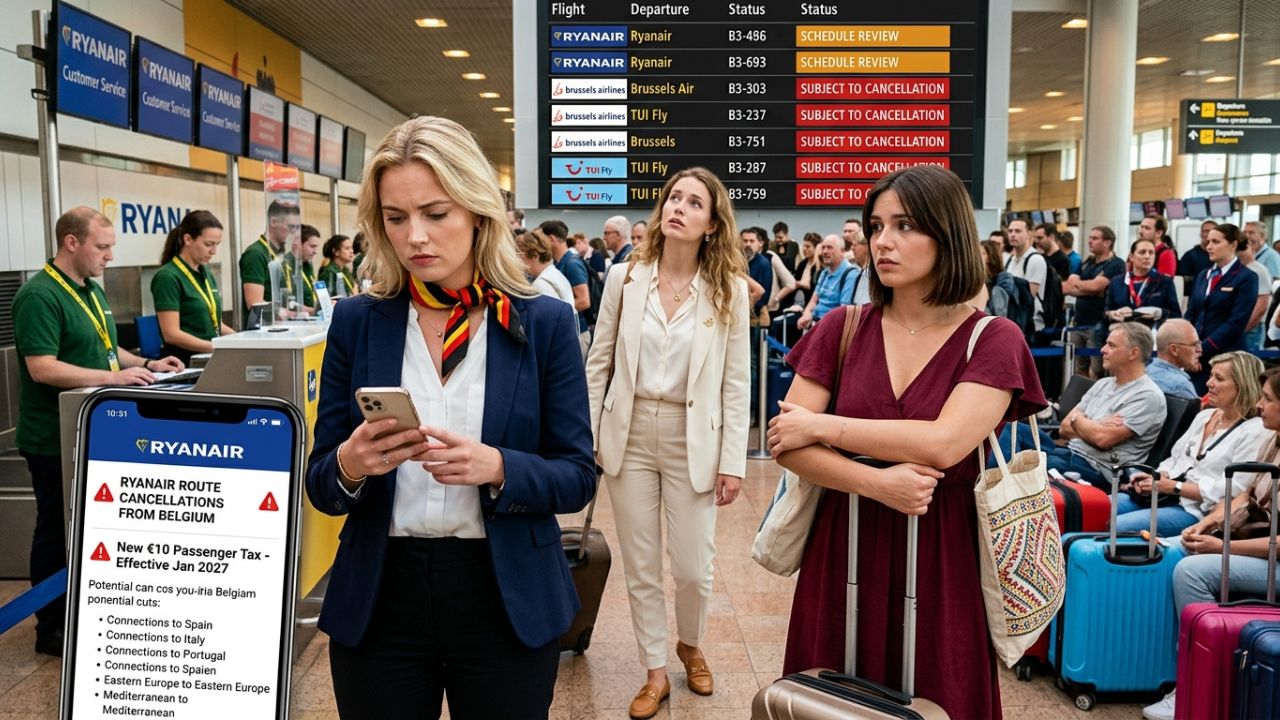
Image representing the intense aviation standoff in Belgium, as Ryanair and other major carriers threaten massive flight cancellations and route cuts in response to escalating passenger taxes.
Ryanair Threatens Massive Flight Cancellations as Belgium’s Tax Hike Risks Unprecedented Travel Chaos
An Escalating Policy War Threatens Belgian Air Connectivity
A highly aggressive aviation tax dispute is rapidly deteriorating into one of Europe’s most destructive policy battles, threatening to plunge Belgian airports into unprecedented travel chaos. According to the latest breaking airline news, what initially began as an isolated confrontation between Belgium’s federal government and Ryanair has instantly morphed into a massive, industry-wide rebellion. Brussels Airlines, TUI fly Belgium, Air Belgium, and powerful aviation trade groups have forcefully united against the government's controversial decision to aggressively escalate aviation departure taxes. If these tax hikes are fully implemented in January 2027, airlines are explicitly threatening to execute massive route cuts and aircraft withdrawals. This catastrophic reduction in capacity will virtually guarantee localized airport disruptions and rolling flight cancellations, fundamentally destroying Belgium's competitiveness while rival European markets actively slash aviation costs.
The stakes for the European travel sector are staggering. Belgium operates as a critical transit and leisure crossroads, serving millions of passengers annually through highly congested hubs like Brussels Airport and Brussels South Charleroi Airport. Under the newly approved legislation, passengers departing on flights exceeding 500 kilometers will face a standardized €10 tax, with further massive hikes targeting short-haul routes in subsequent years. While the government claims this will generate up to €189 million annually by the end of the decade, the airline industry warns of an absolute operational meltdown. As carriers ruthlessly calculate their marginal route economics, this aggressive taxation guarantees that airlines will abandon Belgian tarmac, leaving passengers stranded amid massive network travel chaos and severely degraded destination accessibility.
Section-Wise Breakdown: The Threat of Mass Cancellations
The industry backlash is widespread, with different sectors of the aviation market responding to the crisis:
The Ryanair Capacity Threat According to recent aviation updates, Ryanair has adopted the most violent stance against the Belgian government. The dominant low-cost carrier has explicitly outlined plans to completely slash its Belgian operation by approximately 22% if the tax hike proceeds. This equates to pulling five based aircraft directly out of Charleroi Airport and executing 20 brutal route cancellations. By removing roughly two million annual passenger seats from the market, Ryanair will trigger an immediate capacity crisis, forcing severe flight cancellations and driving fares exponentially higher for passengers desperately scrambling for remaining seats.
Flag Carrier Opposition and the Charleroi Crisis Brussels Airlines, the national flag carrier, has openly condemned the policy, noting that airlines operate on extremely narrow margins and cannot indefinitely absorb these operational costs. Without a highly developed high-speed rail network to act as a release valve, the tax ensures absolute passenger exploitation. The epicenter of this looming travel chaos is Brussels South Charleroi Airport. Completely reliant on Ryanair's vast network, Charleroi faces near-total economic devastation. A massive withdrawal of aircraft will instantly trigger a cascading collapse in passenger traffic, retail spending, and regional employment, creating localized airport disruptions that will paralyze the Walloon region's tourism economy.
The TUI Fly Leisure Squeeze For TUI fly Belgium—which operates an extensive leisure network of over 100 destinations connecting Belgians to the Mediterranean, Canary Islands, and North Africa—this tax is catastrophic. The leisure market relies entirely on volume and affordability. A €10 to €11 tax multiplied across a family booking utterly destroys route profitability. As airlines are forced to pass these costs onto highly price-sensitive holidaymakers, seasonal routes will fail, generating further flight cancellations and fundamentally altering European holiday booking patterns.
Operational Infrastructure Details: The Aviation Tax Matrices
To provide exact, factual clarity on the immense scope of this escalating policy disaster, industry analysts track the specific tax timelines and operational threats. The following factual matrices detail the precise breakdown of the Belgian aviation crisis:
Factual Belgium Aviation Tax Timeline
| Year | Tax Development |
|---|---|
| 2022 | Belgium introduces passenger aviation tax |
| July 2025 | Longer flights over 500 km rise to €5 |
| January 2027 | All flights above 500 km move to €10 |
| January 2028 | Short-haul flights increase to €10.50 |
| January 2029 | Short-haul flights increase further to €11 |
Factual Ryanair Planned Reductions
| Operational Metric | Factual Threat if Tax Proceeds |
|---|---|
| Routes | 20 route cancellations |
| Aircraft | Five aircraft removed from Charleroi |
| Winter Capacity | Around one million fewer winter seats |
| Annual Capacity | Approximately two million fewer annual passenger seats |
| Overall Impact | Reduced connectivity from Charleroi and Brussels |
Factual Brussels Airlines’ Main Concerns
| Concern | Potential Impact |
|---|---|
| Higher passenger taxes | Increased fares |
| Reduced competitiveness | Traffic leakage to neighbouring airports |
| Lower demand growth | Pressure on route economics |
| Weak rail integration | Fewer alternatives for short-haul journeys |
| Long-term connectivity risks | Reduced market attractiveness |
Factual Why Leisure Airlines Are Concerned
| Factor | Impact on Travellers |
|---|---|
| Higher ticket taxes | Increased holiday costs |
| Family bookings | Larger cumulative expense |
| Competitive destinations | Greater price sensitivity |
| Seasonal routes | Reduced profitability |
| Charter operations | Lower flexibility in absorbing costs |
Factual Potential Impact on Charleroi Airport
| Area | Potential Consequence |
|---|---|
| Passenger traffic | Significant decline |
| Retail spending | Lower airport revenues |
| Ground handling | Reduced activity |
| Hospitality sector | Fewer overnight visitors |
| Employment | Direct and indirect job pressure |
| Regional tourism | Reduced international access |
Factual European Aviation Tax Comparison
| Country | Recent Direction |
|---|---|
| Belgium | Increasing aviation taxes |
| Germany | Moving towards lower aviation burden |
| Sweden | Eliminated aviation tax |
| Hungary | Reduced aviation-related costs |
| Slovakia | Competitive low-tax environment |
| Netherlands | Higher aviation taxation remains |
Industry Analysis: Defying the European Trend
The strongest criticism has emerged from Airlines for Europe (A4E), highlighting that Belgium is acting in total defiance of current European aviation strategy. While Belgium aggressively penalizes passengers, competing jurisdictions are actively lowering barriers to simulate tourism and defeat economic travel chaos. Sweden has completely eliminated its aviation tax; Germany is moving toward a lower aviation burden; and Hungary and Slovakia have established highly competitive, low-tax environments. Airlines will not hesitate to abandon Belgium to redeploy aircraft to these lucrative, highly supportive markets, effectively handing Belgium's aviation dominance to its neighbors.
Conclusion: A Countdown to Capacity Collapse
Belgium’s aggressive passenger tax hike is rapidly engineering a massive aviation crisis. With Ryanair threatening to rip five aircraft and two million seats out of the market, and Brussels Airlines, TUI fly Belgium, and Air Belgium openly warning of catastrophic route economics, the threat of massive flight cancellations is imminent. As the January 2027 deadline approaches, airlines are finalizing their winter 2026-27 schedules. If the federal government does not reverse course, travelers must immediately prepare for unprecedented travel chaos, soaring ticket prices, and severe airport disruptions at both Charleroi and Brussels Airport as airlines systematically dismantle their Belgian networks.
Key Takeaways
- Massive Capacity Threat: Ryanair threatens 20 route cancellations and the removal of five aircraft (2 million annual seats) from Charleroi.
- Tax Escalation: The departure tax hits €10 for most flights in 2027, rising to €11 for short-haul flights by 2029.
- Industry Unity: Brussels Airlines, TUI fly Belgium, and Air Belgium join Ryanair in fiercely opposing the tax hike.
- Charleroi in Danger: Brussels South Charleroi Airport faces catastrophic economic damage if low-cost operators withdraw.
- European Evasion: Airlines threaten to redeploy aircraft to competitive, low-tax markets like Sweden (tax eliminated) and Slovakia.
✈️ Frequently Asked Questions (Factual Aviation Data)
1. Why are airlines opposing Belgium’s aviation tax increase? Airlines argue that Belgium’s planned increase in passenger departure taxes from January 2027 will raise operating costs, make Belgian airports less competitive and ultimately increase ticket prices for travellers. Carriers also warn that aircraft and capacity could be shifted to countries with lower aviation taxes.
2. Which airlines have expressed concerns about the new tax? While Ryanair has announced potential route and capacity cuts, concerns have also been raised by Brussels Airlines, TUI fly Belgium, Air Belgium and industry body Airlines for Europe (A4E). These stakeholders believe the measure could affect connectivity, tourism demand and airline investment in Belgium.
3. What changes could travellers see if airlines reduce operations in Belgium? Passengers could face fewer direct routes, reduced flight frequencies, higher fares on certain destinations and less competition on popular European leisure and business routes. Airports such as Charleroi and Brussels Airport could experience noticeable capacity reductions if airlines scale back operations.
4. Why is Charleroi Airport considered the most vulnerable? Charleroi Airport relies heavily on low-cost airline traffic, particularly Ryanair. The airline has warned that it could remove five based aircraft and cancel multiple routes if the tax increase remains in place, potentially affecting passenger volumes, tourism flows and local employment.
5. When will the new aviation tax take effect and can it still change? The federal tax increase is scheduled to come into force on 1 January 2027. Although the measure has already been approved within Belgium’s legislative framework, political discussions could continue before implementation, meaning airlines, airports and travellers will be closely watching for any revisions in the coming months.
🌍 Related Travel Guides & Flight Resources
- Navigate Airport Disruptions Like a Pro Master the art of surviving unexpected travel chaos with our expert strategies.
- Breaking Airline News & Evasion Routes Stay ahead of the delays with our real-time aviation updates and route intelligence.
- Global Flight Cancellation Defense Grid Essential legal rights and compensation tactics when your flight goes down.
⚖️ Disclaimer
The aviation tax metrics, airline capacity threat projections, and European fiscal comparisons provided in this report are for informational purposes only. Federal taxation policies, airline route network schedules (including Ryanair's planned reductions at Charleroi), and regional airport operations are highly volatile and subject to immediate change based on government legislative revisions and corporate airline strategy. All data regarding the Belgian embarkation tax timeline (2022-2029) and the official responses from Ryanair, Brussels Airlines, TUI fly Belgium, Air Belgium, and A4E has been officially sourced from government documents and carrier statements as of June 2026, and remains completely fluid. NomadLawyer does not guarantee the absolute accuracy or current validity of the information provided and assumes no liability for travel disruptions, sudden flight cancellations, altered itineraries, massive fare hikes, or any financial consequences resulting from the use of this content. Passengers are strongly advised to independently verify all flight availability and ticket costs directly with their respective airlines prior to booking.
Disclaimer
This article is for informational and educational purposes only. It does not constitute legal, financial, or professional advice. While we strive to provide accurate and up-to-date information, travel policies, regulations, and conditions change rapidly. Always verify information with official sources before making travel decisions. Nomad Lawyer makes no representations about the accuracy, reliability, completeness, or suitability of the information provided. Readers should consult qualified professionals for advice specific to their circumstances. The views expressed in this article are those of the author and do not necessarily reflect the views of Nomad Lawyer.
Kunal K Choudhary
Co-Founder & Contributor
A passionate traveller and tech enthusiast. Kunal contributes to the vision and growth of Nomad Lawyer, bringing fresh perspectives and driving the community forward.
Learn more about our team →