
Bangladesh and Japan Forge Strategic Aviation Alliance to Create South Asian Transit Hub
Bangladesh partners with Japan to modernize aviation infrastructure, launch the Dhaka-Narita route, and open Terminal-3 at Hazrat Shahjalal International Airpor

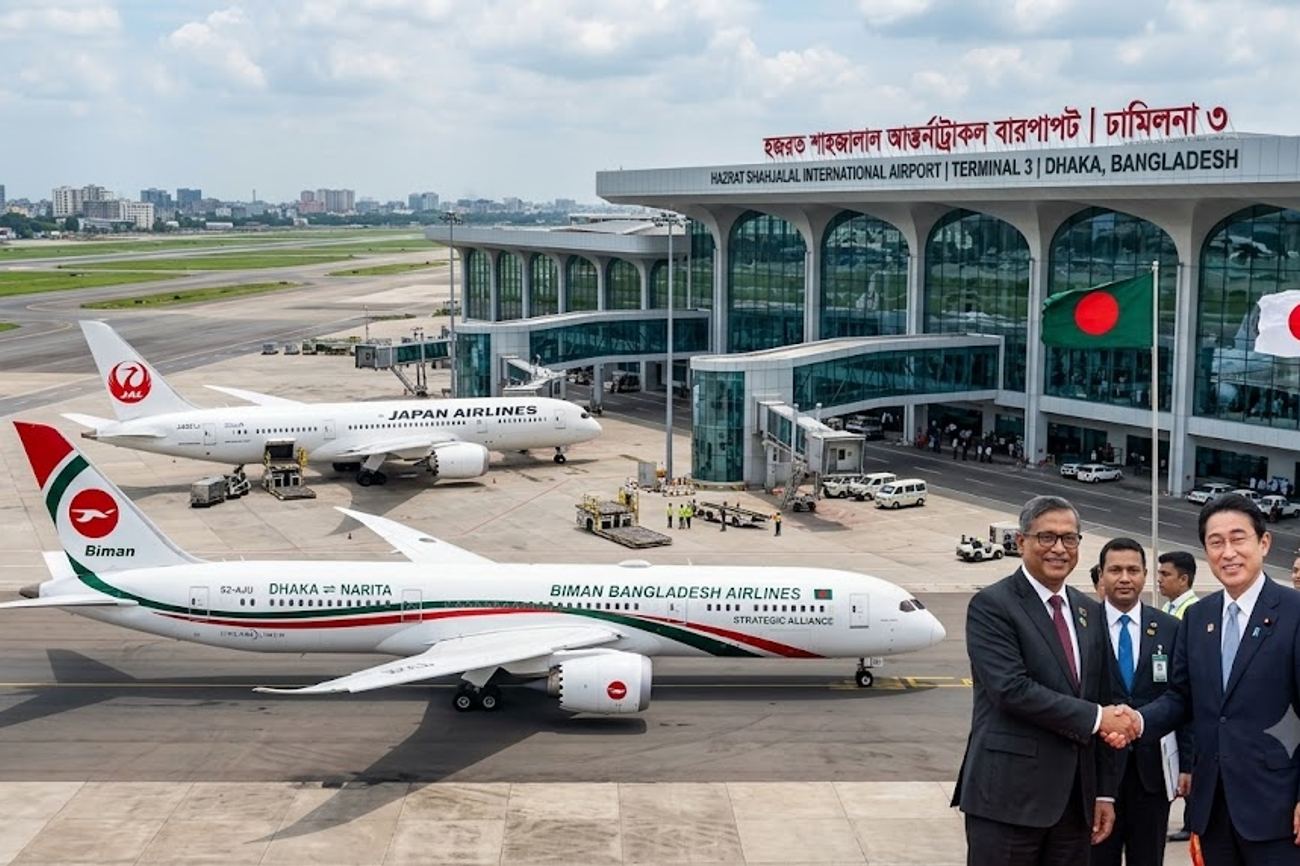
Image generated by AI
Strategic Shift Toward a Regional Aviation Hub
Bangladesh is aggressively restructuring its civil aviation sector through a high-level partnership with Japan. The initiative aims to transition the country from a destination market into a primary aviation gateway connecting South Asia and Southeast Asia.
This collaboration focuses on three primary pillars: the modernization of airport infrastructure, the adoption of international operational standards, and the expansion of direct global flight corridors. By integrating Japanese technical expertise, Bangladesh intends to optimize its geographical advantage to capture increased transit traffic for both passengers and cargo.
Terminal-3: The Catalyst for Capacity Growth
The cornerstone of this aviation overhaul is the development of Terminal-3 at Hazrat Shahjalal International Airport (HSIA) in Dhaka. This facility is designed to alleviate chronic congestion at the primary international gateway and significantly scale passenger throughput.
To ensure the terminal meets global benchmarks upon opening, the government is currently executing Operational Readiness and Airport Transfer (ORATE) protocols. These activities include:
- Rigorous systems testing and staff training.
- Finalizing the Letter of Assurance for long-term operation and management.
- Completing techno-financial evaluations of proposals submitted by the Japanese Sub-working Group.
The successful deployment of Terminal-3 is expected to modernize the passenger experience through advanced baggage handling, enhanced security systems, and streamlined processing.
Strengthening the Dhaka-Narita Corridor
A pivotal achievement in this bilateral strategy is the establishment of direct air connectivity between Dhaka and Narita. This route serves as more than a transport link; it is a commercial bridge designed to facilitate:
- Economic Exchange: Easier movement for business executives and investors between two of Asia's growing economies.
- Academic and Cultural Ties: Increased flow of students and cultural exchange programs.
- Tourism Growth: Direct access for Japanese travelers to explore Bangladesh’s cultural and natural sites.
Beyond Infrastructure: Operational Excellence
Bangladesh is shifting its focus from "bricks and mortar" expansion to the creation of a comprehensive aviation ecosystem. The partnership with Japan emphasizes the "soft" side of aviation—management and efficiency.
The goal is to implement Japanese best practices in airport management to ensure that increased capacity is matched by operational fluidity. This includes the integration of modern airport management systems and the adoption of globally recognized safety and security protocols.
Aviation as a Driver for Heritage Tourism
The government is aligning its aviation growth with a broader tourism strategy. By improving air accessibility, Bangladesh aims to monetize its untapped tourism assets, which include over 500 designated heritage locations. The logic is clear: modern gateways are the prerequisite for increasing international visitor arrivals and boosting tourism-related GDP.
Key Takeaways
- Strategic Alliance: Japan is providing the technical and financial framework to modernize Bangladesh's aviation sector.
- Infrastructure Milestone: Terminal-3 at Hazrat Shahjalal International Airport is the primary project to increase capacity and efficiency.
- Direct Connectivity: The Dhaka-Narita route strengthens bilateral trade, education, and tourism.
- Operational Focus: Emphasis has shifted toward ORATE activities and international management standards to ensure global competitiveness.
- Economic Goal: Using aviation to unlock the potential of 500+ heritage tourism sites.
FAQ
What is the significance of Terminal-3 at Hazrat Shahjalal International Airport? Terminal-3 is designed to increase passenger capacity and introduce advanced airport services, reducing pressure on existing facilities and improving the overall traveler experience.
How does the partnership with Japan benefit Bangladesh's aviation sector? Japan provides expertise in airport operations, techno-financial evaluations, and modern management systems, helping Bangladesh meet international operational standards.
What is the purpose of the ORATE activities? Operational Readiness and Airport Transfer (ORATE) activities are essential for testing systems and training personnel to ensure the airport operates seamlessly from day one.
Related Travel Guides
Disclaimer
This article is for informational and educational purposes only. It does not constitute legal, financial, or professional advice. While we strive to provide accurate and up-to-date information, travel policies, regulations, and conditions change rapidly. Always verify information with official sources before making travel decisions. Nomad Lawyer makes no representations about the accuracy, reliability, completeness, or suitability of the information provided. Readers should consult qualified professionals for advice specific to their circumstances. The views expressed in this article are those of the author and do not necessarily reflect the views of Nomad Lawyer.
Raushan Kumar
Founder & Lead Developer
Full-stack developer with 11+ years of experience and a passionate traveller. Raushan built Nomad Lawyer from the ground up with a vision to create the best travel and law experience on the web.
Learn more about our team →