
British Airways A318 London City to New York: Premium Aviation Strategy Analysis
An analysis of BA's 32-seat A318 service from London City to JFK and its influence on modern ultra-premium narrowbody lo

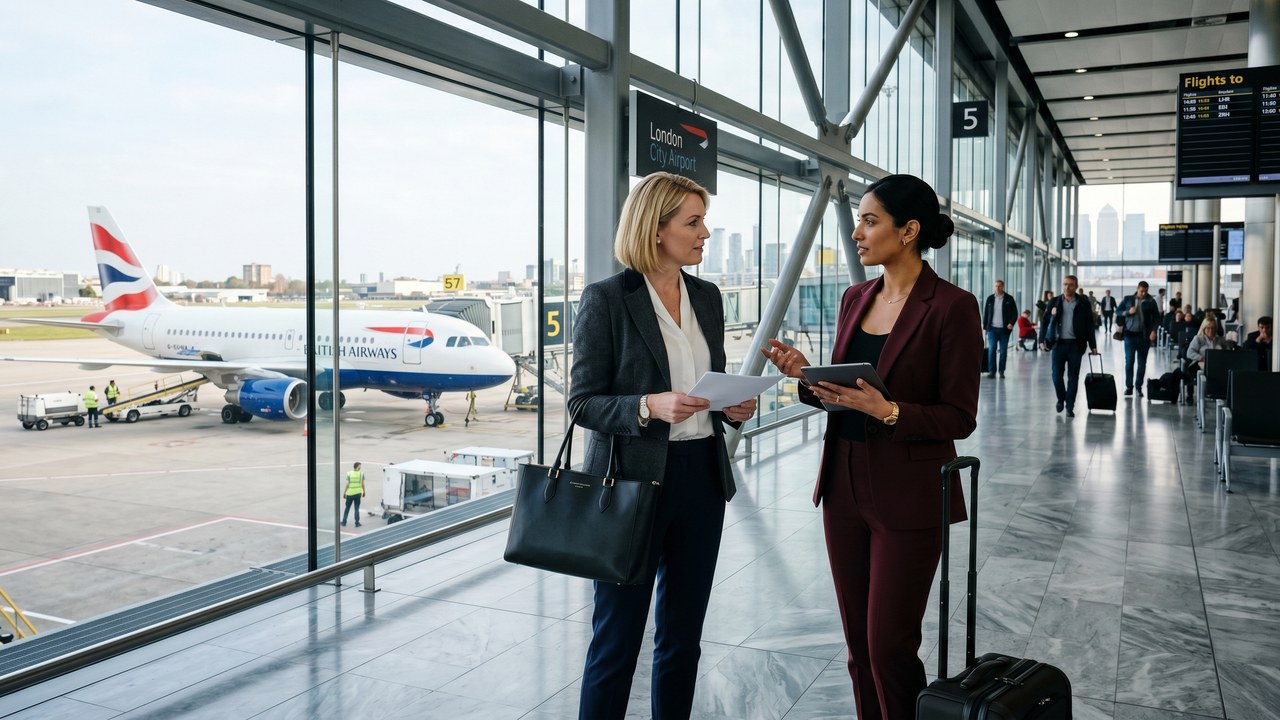
Image generated by AI
The Core Development
Between 2009 and 2020, British Airways operated a highly specialized premium service utilizing the Airbus A318. By deploying the smallest member of the A320 family from London City Airport (LCY) to New York (JFK), BA bypassed the congestion of major hubs to create a direct, high-yield link for the financial sector.
This was not a standard flight path but a strategic exercise in "micro-long-haul" aviation. The aircraft was reconfigured into an all-business-class "flying lounge," prioritizing time-savings and passenger exclusivity over volume.
Key Facts Breakdown
- Aircraft: Airbus A318 (nicknamed the "Baby Bus").
- Capacity: 32 fully flat Club World business class seats.
- Route: London City Airport (LCY) to New York (JFK) via Shannon, Ireland.
- Flight Numbers: BA1, BA2, BA3, and BA4 (utilizing historic Concorde branding).
- Operational Window: 2009 to March 2020.
- Primary Demographic: High-net-worth corporate travelers, lawyers, and executives.
Operational Specifications
| Feature | Detail |
|---|---|
| Aircraft Type | Airbus A318 |
| Configuration | 100% Business Class (32 Seats) |
| Key Gateway | London City Airport (LCY) |
| Strategic Stop | Shannon (SNN) for Refueling & US Pre-clearance |
| Flight Duration | Approximately 10 hours |
Why This Matters (Analysis)
Industry observers note that the A318 service was less about the aircraft and more about a sophisticated regulatory and geographic workaround. The use of London City Airport allowed BA to capture a "city-center" departure advantage, drastically reducing ground transit time for corporate clients.
The most critical element of the strategy was the stop in Shannon, Ireland. By utilizing US immigration pre-clearance in Ireland, BA transformed the arrival at JFK from a congested bureaucratic process into a seamless domestic entry.
Our analysis indicates that this model proved the viability of "revenue density" over "passenger volume." BA demonstrated that a small number of high-yield seats could outperform a larger aircraft if the friction of travel is sufficiently reduced. It shifted the value proposition from the flight itself to the total end-to-end travel time.
Industry Outlook
The principles of the BA1 service are reappearing in 2026 as airlines pivot toward "thin" long-haul routes. Market trends suggest a shift toward:
- Narrowbody Long-Haul: The introduction of the Airbus A321XLR allows carriers to replicate high-yield, low-capacity routes without the need for massive hubs.
- Frictionless Ecosystems: Increased interest in pre-clearance and secondary airport utilization to avoid slot constraints at primary hubs.
- Bespoke Corporate Corridors: A move toward "business aviation-style" commercial services tailored for time-sensitive executives.
The A318 experiment confirms that the future of premium aviation is not defined by aircraft size, but by the intelligent synchronization of routing, regulation, and proximity.
Related Travel Guides
Disclaimer
This article is for informational and educational purposes only. It does not constitute legal, financial, or professional advice. While we strive to provide accurate and up-to-date information, travel policies, regulations, and conditions change rapidly. Always verify information with official sources before making travel decisions. Nomad Lawyer makes no representations about the accuracy, reliability, completeness, or suitability of the information provided. Readers should consult qualified professionals for advice specific to their circumstances. The views expressed in this article are those of the author and do not necessarily reflect the views of Nomad Lawyer.
Kunal K Choudhary
Co-Founder & Contributor
A passionate traveller and tech enthusiast. Kunal contributes to the vision and growth of Nomad Lawyer, bringing fresh perspectives and driving the community forward.
Learn more about our team →