
Austria and France Form Transnational Green Aviation Coalition: ReFuelEU Blending Mandates and Flight Guide 2026–2050

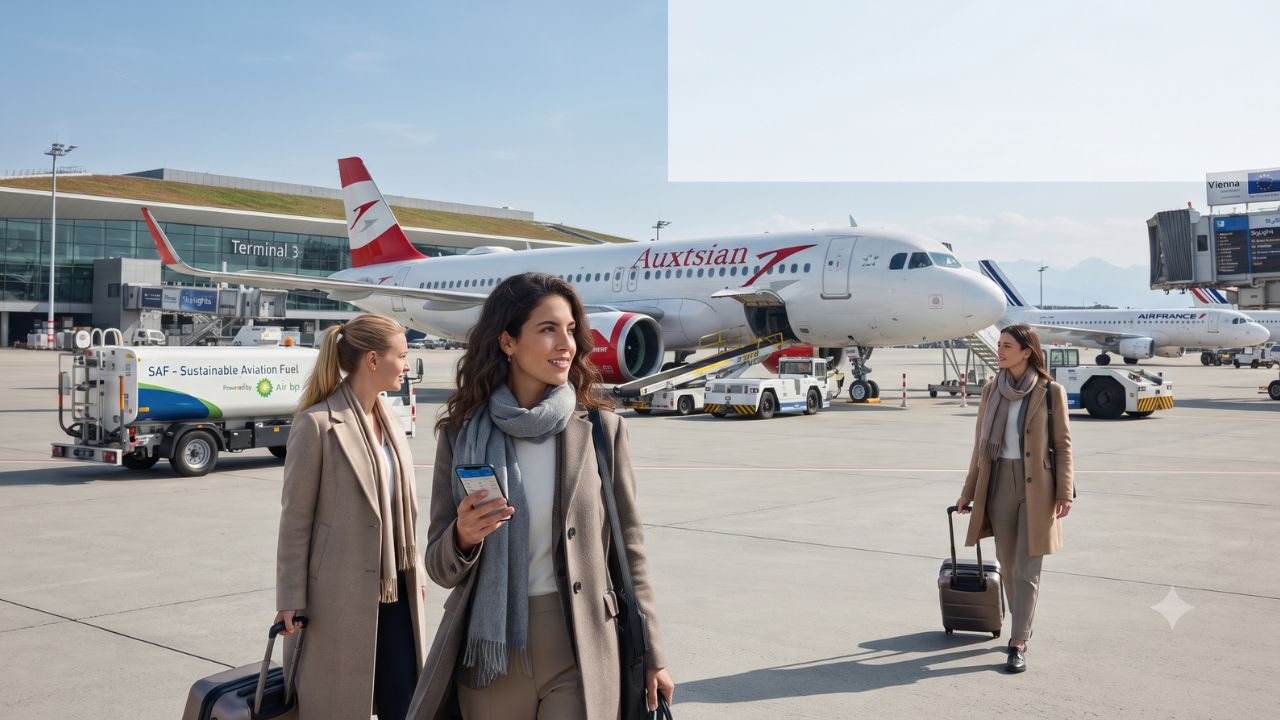
Sustainable Aviation Fuel currently trades at three to five times the cost of conventional fossil kerosene, yet European airlines must legally blend 70% sustainable fuels by 2050 to keep commercial passenger aircraft in the sky. To accelerate the scaling of synthetic e-fuels and prevent severe airline fare inflation, Austria and France joined an eight-nation Early Movers' Coalition alongside Finland, Germany, Luxembourg, the Netherlands, Portugal, and Spain in October 2026. Unveiled during the Transport Council in Brussels following the publication of the ReFuelEU Aviation Annual Technical Report by the European Union Aviation Safety Agency (EASA) on 17 September 2026, the alliance deploys public double-sided auctions to underwrite early production risks for clean aerospace fuels.
The transnational policy shift responds to the European Union's 'Fit for 55' mandate, which requires a minimum 55% reduction in net greenhouse gas emissions by 2030 compared to 1990 levels, before achieving full climate neutrality by 2050. By phasing out free carbon allowances under the EU Emissions Trading System (EU ETS) and enforcing strict anti-tankering rules that stop airlines from carrying excess fossil kerosene from unregulated third countries, European regulators are reshaping the economics of passenger flight.
The ReFuelEU Roadmap: Blending Mandates and Production Benchmarks
The legislative architecture of the ReFuelEU Aviation Regulation establishes progressive, binding SAF quotas across all commercial airports in the European Union. Beginning with a mandatory 2% baseline introduced in 2025, the required sustainable portion scales systematically toward synthetic electronic fuels (e-SAF) derived from renewable electricity, water, and captured carbon dioxide.
European Union ReFuelEU Blending Timetable and Austrian Targets
| Timeline / Regulatory Milestone | Mandatory EU SAF Blending Share | Dedicated Synthetic e-Fuel Quota | Austrian National Demand (BMK SAF-Roadmap) | Primary Industrial & Policy Objective |
|---|---|---|---|---|
| 2025 Mandate | 2% Total SAF | Introductory Phase | Early Uplift Verification at Vienna Airport | Establishing Traceable Blending Infrastructure |
| 2030 Interim Goal | 6% Total SAF | Production Scaling | 51,000 Tonnes Biogenic / 6,800 Tonnes Synthetic | OMV Group Target: 700,000 Tonnes Annual Output |
| 2032 – 2033 Quota | Progressive Ramp-up | 1.2% Minimum e-SAF | Commercial PtL Power-to-Liquid Integration | First Commercial Direct Air Capture Deployment |
| 2035 Horizon | 20% Total SAF | Intermediate Integration | Expansion of Hydrogen and Hydrotreated Esters | Broad Commercialization of Next-Gen Aircraft |
| 2050 Net-Zero Standard | 70% Total SAF | 35% Synthetic e-SAF | Nearly 699,000 Tonnes Total Annual Demand | Complete Continental Aerospace Decarbonization |
According to the official SAF-Roadmap published by the Austrian Ministry for Climate Action (BMK), aviation fuel sales in Austria are projected to range between 0.67 million and 1.2 million tonnes annually by 2050, following a recovery at Vienna International Airport to 93% of pre-pandemic traffic by 2023. To support this transition, Austria's 'Take Off' research program has financed over €9 million in aeronautical innovation grants, while energy producer OMV targets 700,000 tonnes of group-wide SAF capacity by 2030.
What Makes the European Green Aerospace Strategy Different
The Austrian-French initiative diverges sharply from voluntary corporate offsets through structured economic and technological interventions:
- Double-Sided Public Auctions: The Early Movers' Coalition establishes centralized funding mechanisms where state-backed entities purchase SAF directly from refineries at guaranteed production prices and resell it to airlines at competitive market rates, absorbing the price differential until industrial economies of scale emerge.
- Radical Propulsion Engineering: Beyond drop-in fuels, French public research funding backs Airbus in developing experimental hydrogen-powered commercial aircraft designs that produce only water vapor during flight, while Austrian institutions research advanced aerodynamic airframes and lightweight composite materials.
- Stringent Lifecycle Feedstock Accounting: Under the EU Renewable Energy Directive (RED II), all compliant biofuels must avoid feedstocks derived from deforestation or agricultural food crops. Verification systems track raw inputs strictly to used cooking oils, certified forestry residues, and industrial waste gases.
Visitor Insider Tips: Traveling Responsibly Across Central and Western Europe
For travelers booking European flights or navigating alpine transport corridors, the changing policy environment offers clear practical opportunities:
- Evaluate Green Fare Upgrade Options: When booking flights with Austrian Airlines (Lufthansa Group) out of Vienna (VIE) or Air France-KLM out of Paris Charles de Gaulle (CDG), look for integrated sustainable fuel options. These ticket upgrades directly purchase audited SAF allocations uplifted at regional hubs, reducing the carbon footprint of your specific seat.
- Utilize Integrated Rail-Air Links: Take advantage of Austria's ÖBB Railjet and France's SNCF TGV connections that link directly to airport terminals. Austrian Airlines' AIRail service allows passengers to check baggage at Linz or Salzburg central stations and take high-speed trains directly into Vienna Airport on a single unified airline booking.
- Understand Flight Surcharges: Expect modest environmental surcharges on short-haul European segments as airlines account for rising EU ETS carbon allowance prices and mandatory SAF blending expenses. Booking early and flying direct routes minimizes exposure to tiered connection fees.
- Choose Direct Over Multi-Leg Routings: Direct point-to-point flights consume significantly less fuel per passenger kilometer than multi-leg connecting routes through intermediate hubs, minimizing takeoff and climb phases where fuel burn is highest.
Cultural and Environmental Context: Alpine Glaciers and Sustainable Horizons
In the Austrian Alps and the French Pyrenees, melting glaciers and shifting snowfall patterns provide stark visual reminders of the urgent need for climate action. Mountain tourism communities that rely on winter ski seasons and summer hiking routes are actively partnering with national transport agencies to preserve delicate alpine environments.
By redirecting short-haul domestic passenger traffic onto electrified rail networks and transforming long-haul aviation through zero-emission propulsion research, Austria and France demonstrate how historic cultural capitals can maintain international connectivity without compromising environmental preservation. The long-term success of the ReFuelEU mandate will determine whether global travel can coexist with European climate goals over the coming decades.
FAQ: European Green Aviation and Flight Travel 2026–2050
What is the current mandatory SAF blending requirement in the EU? As of 2025 and 2026, European Union regulations require a minimum 2% Sustainable Aviation Fuel blend at all major EU airports, rising to 6% by 2030 and 70% by 2050.
Will SAF blending mandates make European flight tickets more expensive? Because SAF currently costs 3 to 5 times more than traditional fossil kerosene, airlines are gradually incorporating fuel surcharges, though double-sided auctions and production subsidies aim to stabilize long-term passenger fares.
What is the Austrian AIRail service? AIRail is an integrated ticketing partnership between Austrian Airlines and Austrian Federal Railways (ÖBB), allowing travelers from Graz, Linz, or Salzburg to take high-speed trains directly to Vienna Airport on a single flight ticket.
How do synthetic e-fuels differ from biogenic SAF? Biogenic SAF is made from organic waste products like used cooking oil, whereas synthetic e-fuels are manufactured using renewable electricity, water, and captured carbon dioxide, providing unlimited long-term scalability.
Related Travel Guides
- Austrian Alpine Transit Guide: Combining ÖBB Nightjets, Railjet, and Regional Flights
- European Airline Passenger Rights and Environmental Surcharge Explainer
- Official European Union Aviation Safety Agency Environmental Dashboard
From the snowfields of the Hohe Tauern to the skies above Paris, the future of flight is being rebuilt from the molecular level up to keep the world connected sustainably.
Disclaimer
This article is for informational and educational purposes only. It does not constitute legal, financial, or professional advice. While we strive to provide accurate and up-to-date information, travel policies, regulations, and conditions change rapidly. Always verify information with official sources before making travel decisions. Nomad Lawyer makes no representations about the accuracy, reliability, completeness, or suitability of the information provided. Readers should consult qualified professionals for advice specific to their circumstances. The views expressed in this article are those of the author and do not necessarily reflect the views of Nomad Lawyer.
Kunal K Choudhary
Co-Founder & Contributor
A passionate traveller and tech enthusiast. Kunal contributes to the vision and growth of Nomad Lawyer, bringing fresh perspectives and driving the community forward.
Learn more about our team →