
Australia Issues Urgent Middle East Travel Warning Amid Risks of Airport Shutdowns and Border Closures
The Australian Government has expanded its security alerts across the Middle East, warning citizens that a fragile cease

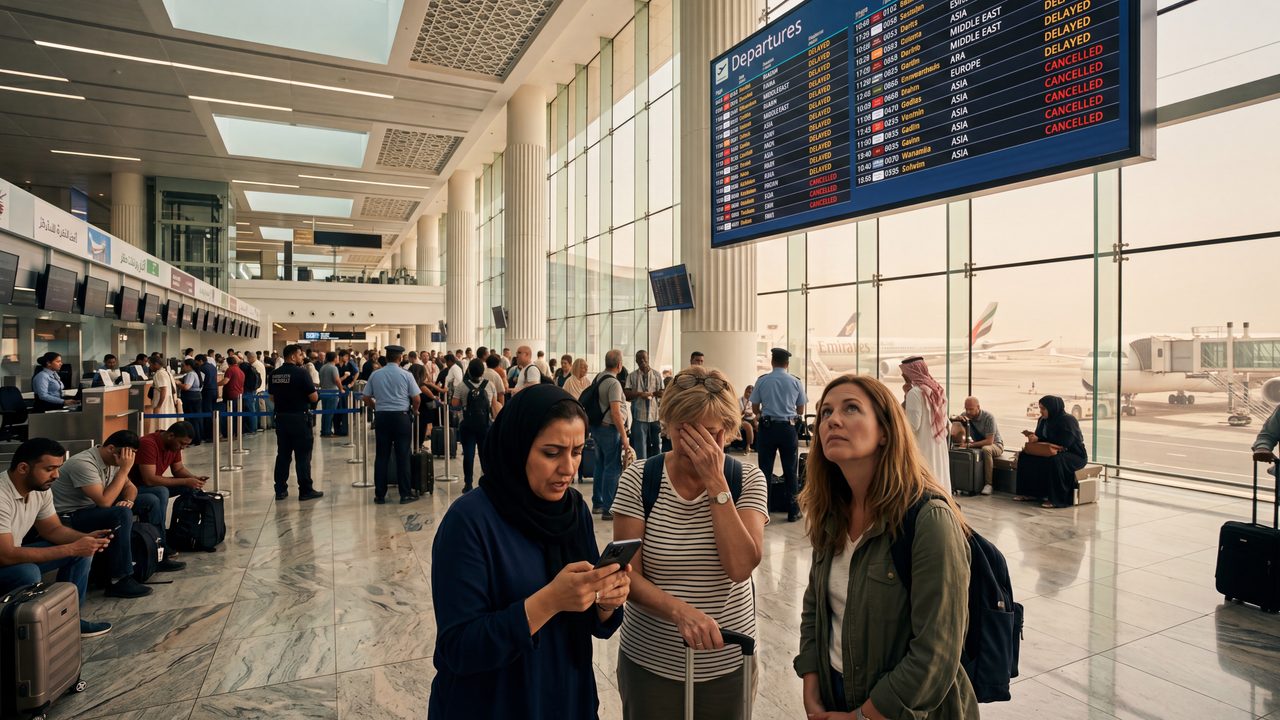
Image generated by AI
Regional Instability Triggers Broad Aviation Alerts
The Australian Department of Foreign Affairs and Trade (DFAT) has significantly expanded its Smartraveller warnings across a wide array of Middle Eastern nations. The updated guidance warns of a volatile security environment where geopolitical tensions could lead to immediate operational failures in civil aviation.
Officials are alerting citizens to the possibility of sudden airport shutdowns, restricted airspace, and abrupt flight cancellations. These risks persist despite a recent 60-day ceasefire period, which the Australian government characterizes as fragile and insufficient to guarantee long-term stability.
The advisory emphasizes that the risk is not limited to conflict zones but extends to major global transit hubs. Travelers are urged to exercise extreme caution or avoid the region entirely, depending on the specific risk classification of their destination.
High-Risk Zones and Transit Vulnerabilities
The Australian government has categorized the region into two primary risk tiers. Level 4 destinations are strictly "Do Not Travel" zones, while Level 3 areas are designated as "Reconsider Travel."
Extreme Risk (Level 4): Travel is strongly discouraged to Iran, Iraq, Lebanon, Palestine, Syria, and Yemen. In these nations, the combination of active conflict, infrastructure vulnerability, and limited consular support makes evacuation difficult and travel highly dangerous.
High Risk Transit (Level 3): Countries including the UAE, Qatar, Saudi Arabia, Israel, Bahrain, Kuwait, Oman, and Jordan remain operational but are subject to sudden volatility. The government specifically warns that major hubs—such as Dubai, Doha, Abu Dhabi, and Tel Aviv—are now considered unstable transit zones.
Aviation and Insurance Implications
The current security climate introduces significant financial and logistical risks for international travelers.
- Flight Disruptions: Passengers should expect emergency rerouting, mid-journey flight path changes, and sudden cancellations without prior notice.
- Transit Risks: DFAT advises minimizing stopovers in Gulf hubs, as airspace closures could leave passengers stranded in transit.
- Insurance Failures: A critical warning has been issued regarding travel insurance. Many policies may exclude coverage for Level 3 or 4 destinations. Furthermore, "war-risk" exclusions may be triggered instantly, leaving travelers without financial protection for cancellations or emergency evacuations.
Middle East Risk Assessment Matrix
| Country | Risk Level | Primary Threats | Aviation Impact |
|---|---|---|---|
| Iran | Level 4 | Conflict escalation, restricted exits | High airspace restrictions |
| Iraq | Level 4 | Security instability, limited evacuation | Likely flight rerouting |
| Lebanon | Level 4 | Infrastructure disruption | Airport instability |
| Syria | Level 4 | Active conflict zones | No safe transit |
| Yemen | Level 4 | War conditions | No aviation safety |
| Palestine | Level 4 | Conflict zones | Restricted access |
| Bahrain | Level 3 | Regional spillover risk | Transit disruption risk |
| Qatar | Level 3 | Airspace volatility | Hub rerouting risk |
| Israel | Level 3 | Security escalation risk | Airspace sensitivity |
| Kuwait | Level 3 | Border uncertainty | Flight disruption risk |
| UAE | Level 3 | Transit hub volatility | High rerouting risk |
| Saudi Arabia | Level 3 | Regional tension spillover | Moderate disruption |
| Jordan | Level 3 | Border instability risk | Moderate aviation risk |
| Oman | Level 3 | Regional spillover exposure | Low–moderate risk |
Key Takeaways
- Ceasefire Fragility: A 60-day ceasefire is in place, but the Australian government warns that this does not equal stability.
- Hub Volatility: Major airports in Dubai, Doha, and Abu Dhabi are now flagged for potential sudden disruptions.
- Insurance Gaps: Standard travel insurance may be void in Level 3 and 4 zones; travelers must verify "war-risk" clauses.
- Strict Guidance: Total avoidance of Level 4 countries is advised, with a strong recommendation to limit time spent in Level 3 regions.
FAQ
Are major airports like Dubai and Doha still open? Yes, they remain operational, but the Australian government has flagged them as high-alert nodes where sudden operational disruptions or airspace closures could occur.
Will my travel insurance cover me in these regions? Possibly not. DFAT warns that policies often exclude Level 3 and 4 destinations, and claims may be rejected if government travel warnings were ignored.
What should I do if I am currently in the region? Australians are advised to register with DFAT, maintain a clear emergency exit plan, and monitor embassy alerts continuously.
Related Travel Guides
Disclaimer
This article is for informational and educational purposes only. It does not constitute legal, financial, or professional advice. While we strive to provide accurate and up-to-date information, travel policies, regulations, and conditions change rapidly. Always verify information with official sources before making travel decisions. Nomad Lawyer makes no representations about the accuracy, reliability, completeness, or suitability of the information provided. Readers should consult qualified professionals for advice specific to their circumstances. The views expressed in this article are those of the author and do not necessarily reflect the views of Nomad Lawyer.
Raushan Kumar
Founder & Lead Developer
Full-stack developer with 11+ years of experience and a passionate traveller. Raushan built Nomad Lawyer from the ground up with a vision to create the best travel and law experience on the web.
Learn more about our team →