
Qantas, Jetstar, and Air New Zealand Trigger Massive Trans-Tasman Travel Chaos as 832 Flights Suffer Severe Delays and Cancellations Across Sydney, Melbourne, and Auckland: Latest Airline News
A highly destructive wave of severe flight delays and sudden cancellations completely fractures the Oceania aviation network, paralyzing vital Australian and New Zealand transit corridors.

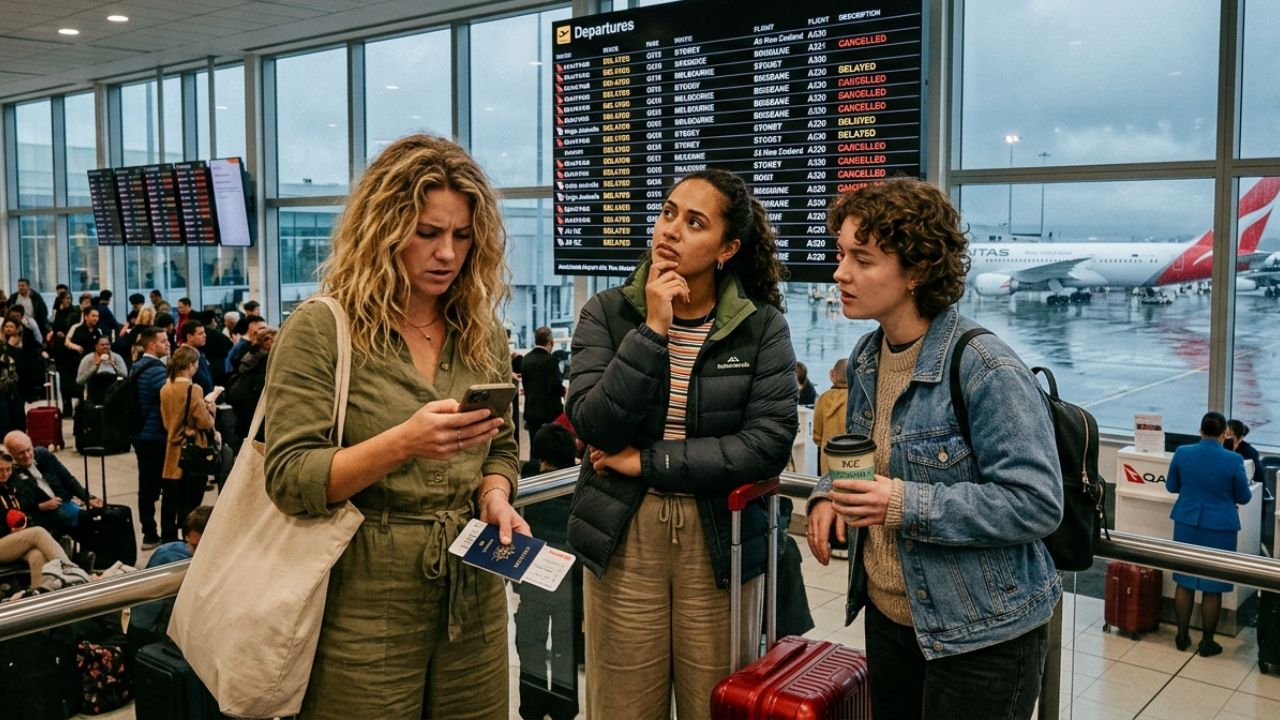
Image generated by AI
A Devastating Collapse in Trans-Tasman Aviation
A terrifying, highly destructive wave of sudden flight cancellations and agonizing schedule delays is currently tearing through the absolute heart of the Oceania aviation system, instantly plunging thousands of unsuspecting domestic and international passengers into a severe state of travel chaos. Over the past 24 hours, an aggressive cascade of 792 severe flight delays and 40 abrupt flight groundings has completely paralyzed operations across the most critical transit hubs in Australia and New Zealand. Heavyweight carriers, led by Qantas, Jetstar, Air New Zealand, Virgin Australia, and Sounds Air, have all heavily contributed to this massive operational collapse. With severe airport disruptions completely dominating today's primary airline news, these highly volatile aviation updates confirm that critical corridors connecting Sydney, Melbourne, Brisbane, Auckland, Christchurch, and Wellington have been violently severed, leaving desperate commuters and international tourists fighting for non-existent re-accommodation in heavily congested terminal lounges.
Expanded Overview: Measuring the Scale of the Disruption
The sheer geographic scale and rapid acceleration of this systemic breakdown mark a highly concerning period of scheduling instability for the trans-Tasman aviation sector. These 832 confirmed disruptions are not isolated to a single, localized mechanical failure at one terminal; rather, they signify a massive, interconnected failure across the heavily dependent Oceania network.
Because the aviation corridors linking the major Australian eastern seaboard hubs with New Zealand's primary gateways operate on a highly delicate, high-frequency schedule, the absolute paralysis of massive hubs like Brisbane and Sydney immediately triggers a devastating domino effect. The sudden accumulation of delayed departures and abruptly cancelled flights completely destroyed terminal flow, overwhelming station managers and ground handling crews who frantically attempted to process the massive backlog of stranded travelers across both domestic short-haul and trans-Tasman routes.
Section-Wise Breakdown of Network Failures
Australian Hubs Paralyzed: Brisbane, Sydney, and Melbourne
The operational rot heavily infected the eastern seaboard of Australia. Brisbane Airport suffered the absolute highest volume of operational degradation, recording a staggering 233 flight delays and 9 cancellations. The massive congestion severely stalled Virgin Australia (69 delays) and QantasLink (59 delays). Sydney Airport, the premier international gateway, faced devastating hurdles with 201 delays and 8 complete cancellations, causing widespread gridlock for domestic and overseas itineraries. Down south, Melbourne Tullamarine was equally shattered, experiencing 150 delays and 9 cancellations that completely crippled the highly utilized “Golden Triangle” domestic routes.
New Zealand Connectivity Severed: Auckland and Regional Hubs
The crisis rapidly bled across the Tasman Sea, shattering connectivity throughout New Zealand. Auckland Airport, the primary international gateway to the country, logged a massive 92 delays and 3 cancellations, with national carrier Air New Zealand bearing the brunt of the operational pressure (58 delays, 3 cancellations). The South Island’s main transit hub, Christchurch International Airport, faced substantial logistical hurdles resulting in 65 flight delays and 6 cancellations. Capital city travelers at Wellington International Airport were also severely inconvenienced as the local hub recorded 51 delays and 5 cancellations, crippling Air New Zealand and regional connector Sounds Air.
Flight Details and Mandatory Carrier Disruption Tables
To fully comprehend the sheer scale and precise distribution of this massive operational strain, the following tables explicitly document the exact delay and cancellation metrics recorded across all major affected airlines operating at the six devastated airports:
Brisbane Airport (Brisbane, Australia)
| Airline | Cancelled | Cancelled (%) | Delayed | Delayed (%) |
|---|---|---|---|---|
| QantasLink | 4 | 4% | 59 | 61% |
| Alliance Airlines | 2 | 2% | 8 | 10% |
| Jetstar | 2 | 2% | 30 | 40% |
| Air New Zealand | 1 | 8% | 6 | 50% |
| China Airlines | 0 | 0% | 2 | 50% |
| EVA Air | 0 | 0% | 1 | 100% |
| Unknown Owner | 0 | 0% | 1 | 50% |
| Unknown Owner | 0 | 0% | 2 | 50% |
| Unknown Owner | 0 | 0% | 1 | 100% |
| Unknown Owner | 0 | 0% | 1 | 25% |
| Unknown Owner | 0 | 0% | 1 | 50% |
| Fiji Airways | 0 | 0% | 2 | 100% |
| Qantas | 0 | 0% | 40 | 23% |
| Regional Express Airlines | 0 | 0% | 7 | 63% |
| Singapore Airlines | 0 | 0% | 1 | 12% |
| Solomon Airlines | 0 | 0% | 1 | 50% |
| Air Canada | 0 | 0% | 1 | 100% |
| Virgin Australia | 0 | 0% | 69 | 47% |
| Air Niugini | 0 | 0% | 1 | 33% |
Sydney Airport (Sydney, Australia)
| Airline | Cancelled | Cancelled (%) | Delayed | Delayed (%) |
|---|---|---|---|---|
| QantasLink | 4 | 3% | 30 | 22% |
| Virgin Australia | 2 | 1% | 44 | 24% |
| Hawaiian Airlines | 1 | 50% | 0 | 0% |
| Jetstar | 1 | 0% | 38 | 31% |
| Air India | 0 | 0% | 2 | 100% |
| Air New Zealand | 0 | 0% | 4 | 28% |
| China Airlines | 0 | 0% | 1 | 50% |
| Unknown Owner | 0 | 0% | 1 | 50% |
| Unknown Owner | 0 | 0% | 1 | 50% |
| Japan Airlines | 0 | 0% | 2 | 100% |
| Korean Air | 0 | 0% | 1 | 50% |
| Qantas | 0 | 0% | 37 | 14% |
| Regional Express Airlines | 0 | 0% | 30 | 68% |
| Singapore Airlines | 0 | 0% | 2 | 16% |
| Emirates | 0 | 0% | 2 | 33% |
| United | 0 | 0% | 1 | 25% |
| Alliance Airlines | 0 | 0% | 1 | 50% |
| VietJet Air | 0 | 0% | 2 | 100% |
Melbourne Airport (Melbourne, Australia)
| Airline | Cancelled | Cancelled (%) | Delayed | Delayed (%) |
|---|---|---|---|---|
| Jetstar | 3 | 2% | 40 | 32% |
| Qantas | 2 | 0% | 32 | 14% |
| Air New Zealand | 2 | 15% | 3 | 23% |
| Virgin Australia | 2 | 1% | 42 | 23% |
| Cathay Pacific | 0 | 0% | 2 | 50% |
| China Southern Airlines | 0 | 0% | 1 | 25% |
| Fiji Airways | 0 | 0% | 1 | 50% |
| Philippine Air Lines | 0 | 0% | 1 | 50% |
| QantasLink | 0 | 0% | 19 | 28% |
| Regional Express Airlines | 0 | 0% | 5 | 20% |
| Scoot | 0 | 0% | 1 | 33% |
| Air India | 0 | 0% | 1 | 100% |
| SriLankan Airlines | 0 | 0% | 1 | 50% |
Auckland Airport (Auckland, New Zealand)
| Airline | Cancelled | Cancelled (%) | Delayed | Delayed (%) |
|---|---|---|---|---|
| Air New Zealand | 3 | 1% | 58 | 19% |
| China Airlines | 0 | 0% | 1 | 50% |
| China Eastern | 0 | 0% | 1 | 25% |
| Jetstar | 0 | 0% | 19 | 39% |
| Malaysia Airlines | 0 | 0% | 2 | 66% |
| Qantas | 0 | 0% | 8 | 25% |
| Singapore Airlines | 0 | 0% | 1 | 25% |
| Air Tahiti Nui | 0 | 0% | 1 | 100% |
Christchurch International Airport (Christchurch, New Zealand)
| Airline | Cancelled | Cancelled (%) | Delayed | Delayed (%) |
|---|---|---|---|---|
| Air New Zealand | 6 | 3% | 45 | 27% |
| Jetstar | 0 | 0% | 12 | 44% |
| Qantas | 0 | 0% | 4 | 28% |
| Singapore Airlines | 0 | 0% | 1 | 50% |
| Emirates | 0 | 0% | 1 | 50% |
Wellington International Airport (Wellington, New Zealand)
| Airline | Cancelled | Cancelled (%) | Delayed | Delayed (%) |
|---|---|---|---|---|
| Air New Zealand | 4 | 2% | 33 | 22% |
| Sounds Air | 1 | 2% | 9 | 25% |
| Jetstar | 0 | 0% | 8 | 42% |
| Qantas | 0 | 0% | 1 | 12% |
Passenger Impact: Systemic Logistical Nightmare
The massive scale of this 832-flight disruption has directly inflicted catastrophic financial and logistical damage on tens of thousands of passengers stranded across Australia and New Zealand. Travelers abruptly facing last-minute schedule changes at Sydney or Auckland were violently subjected to missed trans-Tasman connections, heavily reduced flight availability, and the terrifying prospect of losing prepaid hotel bookings.
Because multi-destination tourism itineraries are highly popular across this region, missing a massive connection out of these hubs typically ruins highly structured vacation plans. Stranded passengers must rapidly secure emergency accommodations, forcing them to absorb massive, unbudgeted costs in incredibly expensive metropolitan areas. The failure of these carriers to maintain schedule reliability severely damages consumer confidence in the regional tourism sector.
Industry Analysis: Exposing Systemic Vulnerability
Aviation analysts evaluating this massive data set point to severe, synchronized operational challenges stemming from incredibly tight turnaround times across the Oceania network. The fact that a massive disruption could completely cripple both Qantas and Air New Zealand simultaneously mathematically proves that the trans-Tasman system operates with dangerously thin buffer zones. The massive disruptions heavily impacted both legacy giants and critical regional feed carriers (QantasLink, Regional Express), completely exposing the fragility of the hub-and-spoke model when primary runways in Brisbane, Sydney, and Melbourne are operationally restricted.
Conclusion: A Precarious Recovery Outlook
The unprecedented disruption involving 40 cancelled flights and 792 delays across Australia and New Zealand brutally highlights how terrifyingly interconnected and fragile the Oceania aviation system truly is. With vital domestic and international routes heavily affected from Brisbane to Christchurch, this situation reflects a massive strain on the operational capacity of the region's most critical air corridors. As airlines desperately attempt to reposition crews and clear the massive backlog of delayed passengers, travelers navigating this airspace must mentally and financially prepare for a highly volatile environment where schedule reliability remains under extreme pressure.
Key Takeaways
- Massive Nationwide Grounding: A staggering 792 flights were severely delayed and 40 were abruptly cancelled across Australia and New Zealand's busiest transit hubs.
- Brisbane Paralyzed: Brisbane Airport suffered the absolute heaviest operational damage (233 delays, 9 cancellations), violently disrupting QantasLink and Virgin Australia.
- Airlines Affected: Qantas, Jetstar, Virgin Australia, and Air New Zealand recorded catastrophic delay totals across the trans-Tasman network.
- New Zealand Gridlock: Auckland, Christchurch, and Wellington completely stalled, severely degrading Air New Zealand’s domestic and international reliability.
- Systemic Instability: The massive collapse mathematically proves the extreme vulnerability of the high-frequency trans-Tasman flight schedule to compounding delays.
Disclaimer: The massive flight cancellation and delay data presented is based on reported operational schedules sourced directly from flight tracking databases. Passengers booked on Qantas, Jetstar, Air New Zealand, or any other carrier operating across the affected Oceania hubs are strongly advised to consult their airline directly for the absolute latest flight status and re-accommodation protocols.
Disclaimer
This article is for informational and educational purposes only. It does not constitute legal, financial, or professional advice. While we strive to provide accurate and up-to-date information, travel policies, regulations, and conditions change rapidly. Always verify information with official sources before making travel decisions. Nomad Lawyer makes no representations about the accuracy, reliability, completeness, or suitability of the information provided. Readers should consult qualified professionals for advice specific to their circumstances. The views expressed in this article are those of the author and do not necessarily reflect the views of Nomad Lawyer.
Kunal K Choudhary
Co-Founder & Contributor
A passionate traveller and tech enthusiast. Kunal contributes to the vision and growth of Nomad Lawyer, bringing fresh perspectives and driving the community forward.
Learn more about our team →