
Australia and New Zealand Aviation Crisis: 425 Delays and 19 Cancellations Hit Air New Zealand, Qantas, and Jetstar
A sweeping aviation disruption has struck the trans-Tasman corridor, with 425 flight delays and 19 cancellations recorded across Auckland, Wellington, Christchurch, Melbourne, Sydney, and Perth. Air New Zealand, Qantas, Jetstar, and Network Aviation are the primary carriers absorbing the damage, raising serious questions about Golden Triangle route reliability.

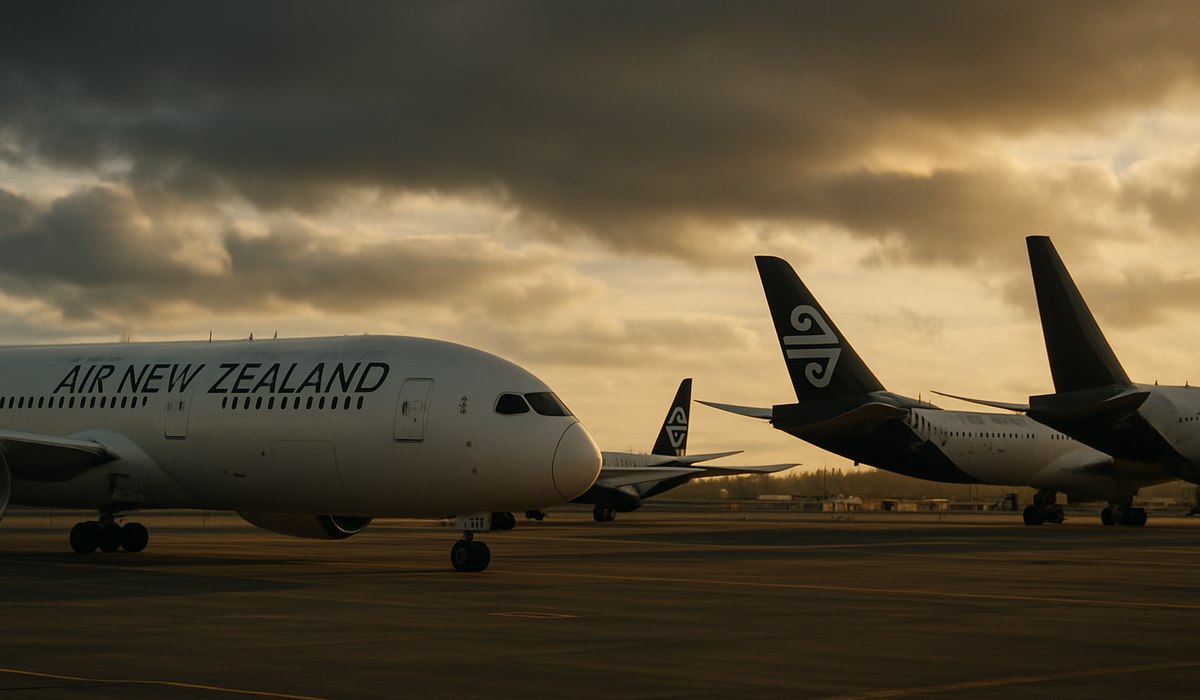
Image generated by AI
Trans-Tasman Aviation Takes a Devastating Hit: 425 Delays in a Single Day
The trans-Tasman aviation network—one of the world's most heavily trafficked short-haul international corridors—has been rocked by one of its worst single-day disruption events in recent memory, with a combined 425 flight delays and 19 cancellations recorded across seven major airports spanning New Zealand and Australia. The operational damage touches every major hub in both nations, from Auckland's international gateway in the north to Perth's Western Australian terminal facing its own independent disruption cluster.
Per FlightAware tracking data, the carriers bearing the heaviest burden are Air New Zealand, Qantas, Jetstar, Network Aviation, and Virgin Australia—together representing the functional backbone of Australasian domestic and short-haul international aviation.
The Seven-Airport Damage Map
Melbourne Tullamarine (MEL): The regional disruption epicenter with 134 delays and 3 cancellations—the highest delay count of any airport in the network today. Virgin Australia alone logged 45 delays; Qantas and QantasLink contributed 24 and 11 delays respectively; Jetstar recorded 24. Network Aviation-linked Malaysian AirAsia recorded 100% delay rates on its Melbourne rotations.
Sydney International (SYD): 121 delays, 1 cancellation. QantasLink posted the only cancellation but the delay burden spread broadly: Jetstar (35 delays), Virgin Australia (28 delays), and Qantas (30 delays) collectively drove the disruption profile. Sydney's position as Australia's primary international transfer point amplifies the cascading effect on onward international connections.
Perth International (PER): 63 delays, 5 cancellations — the highest cancellation count among all seven airports. Network Aviation contributed 4 of the 5 cancellations (4% cancellation rate), reflecting operational pressure on WA's resource-sector route network. Regional Express Airlines recorded a startling 55% delay rate, indicating severe scheduling compression on rural connectivity routes.
Auckland International (AKL): 52 delays, 3 cancellations, exclusively driven by Air New Zealand (3 cancellations, 26 delays)—all of them by the national carrier. Jetstar added 12 delays and Qantas 8, compressing Auckland's gateway function for international tourism arrivals.
Christchurch International (CHC): 27 delays, 1 cancellation. Air New Zealand again absorbed all cancellations; Qantas contributed a notable 57% delay rate—meaning more than half of its Christchurch rotations were delayed.
Wellington International (WLG): 24 delays, 4 cancellations—the second-highest cancellation airport in the network. Sounds Air (a regional propeller operator) recorded 10% cancellation and delay rates, highlighting short-runway wellington's vulnerability.
Tauranga (TRG): 4 delays, 2 cancellations. Air New Zealand's 5% cancellation rate at this regional airport reflects tight scheduling on low-frequency leisure routes.
What Guests Get
- Air New Zealand app rebooking — the ANZ app's automatic rebooking engine processes alternative flight options within minutes of disruption notification
- "Golden Triangle" route priority rebooking — Air New Zealand treats Auckland-Wellington-Christchurch as a protected network; passengers on cancelled Golden Triangle flights receive priority accommodation on next available services
- Qantas flexible rebooking via the Qantas app's "Manage Booking" function — available for all domestic disruptions without change fees
- Travel insurance delay claims — delays exceeding 4 hours on international routes are typically claimable under comprehensive Australian travel policies
- Airport lounge access — Qantas Club and Air New Zealand Koru lounge access retained during extended delays
Trans-Tasman Disruption: Seven-Airport Summary
| Airport | Country | Cancellations | Delays | Most Impacted Carrier |
|---|---|---|---|---|
| Melbourne Tullamarine (MEL) | Australia | 3 | 134 | Virgin Australia (45 delays) |
| Sydney (SYD) | Australia | 1 | 121 | Jetstar (35 delays) |
| Perth (PER) | Australia | 5 | 63 | Network Aviation (4 cancellations) |
| Auckland (AKL) | New Zealand | 3 | 52 | Air New Zealand (3 cancellations) |
| Christchurch (CHC) | New Zealand | 1 | 27 | Qantas (57% delay rate) |
| Wellington (WLG) | New Zealand | 4 | 24 | Air New Zealand (15 delays) |
| Tauranga (TRG) | New Zealand | 2 | 4 | Air New Zealand (sole carrier) |
| TOTAL | — | 19 | 425 | — |
What This Means for Travelers
The trans-Tasman's "Golden Triangle" — Auckland, Wellington, and Christchurch — is New Zealand's most commercially critical domestic route network, carrying business travelers, families, and tourists between the country's three largest population centers. Air New Zealand's 4-7 cancellations across Wellington and Auckland today directly compress this triangle's integrity.
For Australian travelers, the Melbourne concentration of 134 delays is particularly alarming because MEL serves as the gateway for a significant share of inbound international tourism from Asia. Delayed arrivals from China, Southeast Asia, and Japan face cascading impacts on planned hotel check-ins, tour connections, and rental vehicle pickups.
Practical advice: if you are transiting through Melbourne or Sydney today on an international connection, build a minimum 3-hour buffer into your onward connection. Domestic delays in Australia routinely cascade into international departure disruptions at MEL and SYD when aircraft rotations fall behind schedule.
FAQ: Australia and New Zealand Disruption
Why is Air New Zealand experiencing so many delays simultaneously? Air New Zealand operates a densely rotated domestic schedule with limited spare aircraft capacity. When one rotation is delayed—due to weather, technical issues, or crew availability—the same aircraft is delayed on every subsequent flight in its daily sequence. The compounding effect generates disproportionate nationwide delay counts from a relatively small number of root causes.
What passenger rights apply if Qantas cancels my domestic Australian flight? Australia's Australian Consumer Law applies to domestic flights, requiring airlines to provide a remedy for significant failures including cancellations. Remedies include alternative flight at no cost or a full refund. Check your specific ticket's fare conditions and Qantas's customer commitments policy at qantas.com for applicable remedies.
Is Perth separately impacted or linked to the Melbourne-Sydney disruption? Perth's disruption cluster appears independent, driven primarily by Network Aviation's resource-sector routes and Regional Express Airlines' rural connectivity networks. However, interstate connections linking Perth to Melbourne and Sydney are also affected by the eastern-state disruption tail.
Related Travel Guides
Air New Zealand vs Qantas: Which Airline Is Right for Your Trans-Tasman Journey?
New Zealand's Golden Triangle: Best Ways to Travel Auckland-Wellington-Christchurch
Perth to Melbourne Flight Guide 2026: Tips, Airlines, and What to Expect
Zealand, Qantas, or Jetstar official mobile applications.
Disclaimer
This article is for informational and educational purposes only. It does not constitute legal, financial, or professional advice. While we strive to provide accurate and up-to-date information, travel policies, regulations, and conditions change rapidly. Always verify information with official sources before making travel decisions. Nomad Lawyer makes no representations about the accuracy, reliability, completeness, or suitability of the information provided. Readers should consult qualified professionals for advice specific to their circumstances. The views expressed in this article are those of the author and do not necessarily reflect the views of Nomad Lawyer.
Raushan Kumar
Founder & Lead Developer
Full-stack developer with 11+ years of experience and a passionate traveller. Raushan built Nomad Lawyer from the ground up with a vision to create the best travel and law experience on the web.
Learn more about our team →