
Australia Updates Middle East Travel Advisory: Key Hubs Eased to Level 3
Australia has adjusted its Middle East travel advisory, downgrading warnings to Level 3 for Qatar, UAE, and others, while maintaining Do Not Travel alerts for conflict zones.

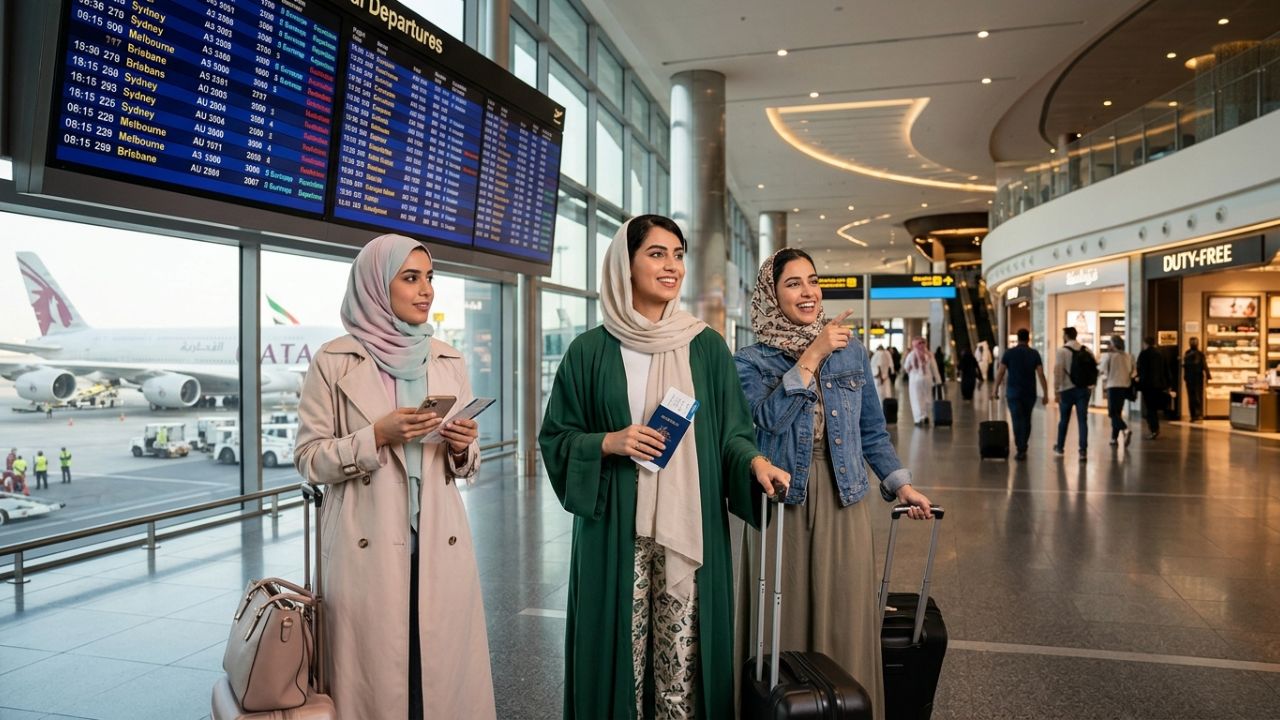
Image generated by AI
Australia Updates Middle East Travel Advisory: Warnings Eased to Level 3 for Qatar, UAE, Bahrain, Israel, and Kuwait While Red Alerts Remain for Conflict Zones: New Travel Alert
Published on June 17, 2026
Australian authorities have announced a major update to the official Australia Middle East travel advisory, downgrading warning levels for key transit destinations like Qatar and the United Arab Emirates. Following a comprehensive reassessment of aviation risk profiles and regional security conditions, officials have shifted five countries from stricter categories to Level 3 ("Reconsider your need to travel"). Despite this moderate easing for major travel corridors, the government continues to enforce its absolute Level 4 ("Do not travel") red alerts for five conflict-torn nations in the Levant and Gulf areas.
Quick Summary
- Security Downgrade: Australia has lowered its advisory status to Level 3 for Qatar, Bahrain, Israel, Kuwait, and the United Arab Emirates.
- Red Alerts Maintained: Strictly enforced Level 4 ("Do Not Travel") warnings remain in place for Iran, Iraq, Lebanon, Syria, and Yemen.
- Transit Hub Relief: The update provides critical operational flexibility for major hubs, including Dubai, Doha, and Abu Dhabi.
- Aviation Cautions: Airlines face ongoing flight routing challenges, airspace restrictions, and rising conflict-zone insurance premiums.
- Consular Limitations: Australian officials remind travelers that emergency assistance is highly restricted in Level 4 nations.
Context and Background of the Australia Middle East Travel Advisory
The targeted adjustment comes as national security analysts finish a comprehensive review of airspace safety and regional security parameters across the Middle East. For months, international flight routes and passenger transit networks have operated under high pressure due to widespread geopolitical tensions. By altering the Australia Middle East travel advisory, the government is acknowledging that key commercial aviation gateways have managed to maintain solid operational safety despite regional instability.
This policy shift moves several key Gulf and Levant nations away from their previous high-alert positioning, indicating a more segmented view of safety conditions in the region. However, Australian foreign affairs representatives emphasize that the security landscape remains highly dynamic. Sudden local conflicts or unexpected geopolitical events can still prompt rapid, short-notice escalation, making continuous monitoring vital for all departing citizens.
Core News and Regional Safety Classifications
The newly updated security guidelines establish a clear structural division across the Middle East travel map. By dividing the region into two distinct safety tiers, authorities distinguish between countries with highly functioning urban infrastructure and those suffering from systemic conflict.
The table below outlines the updated security classifications for Middle East destinations:
| Country | Updated Advisory Level | Government Security Classification | Primary Focus Area |
|---|---|---|---|
| Qatar | Level 3 | Reconsider your need to travel | Gulf Transit Corridors |
| United Arab Emirates (UAE) | Level 3 | Reconsider your need to travel | Gulf Transit Corridors |
| Bahrain | Level 3 | Reconsider your need to travel | Regional Operations |
| Kuwait | Level 3 | Reconsider your need to travel | Regional Operations |
| Israel | Level 3 | Reconsider your need to travel | Levant Region |
| Iran | Level 4 | Do not travel | High Conflict Zone |
| Iraq | Level 4 | Do not travel | High Conflict Zone |
| Lebanon | Level 4 | Do not travel | High Conflict Zone |
| Syria | Level 4 | Do not travel | High Conflict Zone |
| Yemen | Level 4 | Do not travel | High Conflict Zone |
This split demonstrates the fragmented nature of Middle East security. While the Gulf countries provide advanced airport facilities and robust transportation networks, adjacent nations continue to experience deep security crises.
Assessing Security Risks and Level 4 Warnings
While security ratings have eased for select transit hubs, the Australian government maintains its absolute warning against visiting conflict-affected countries. The Australian Department of Foreign Affairs and Trade (DFAT) has kept Iran, Iraq, Lebanon, Syria, and Yemen under strict Level 4 status due to several core threats:
- Active Military Combats: Unresolved armed conflicts and localized military actions pose direct threats to civilian safety.
- Armed Militia Presence: The fragmentation of security authority allows local armed groups to operate unpredictably.
- Infrastructure Failure: Severe damage to power grids, communication networks, and transport routes restricts normal movement.
- Extreme Threat Insecurity: The risk of sudden military escalations, border closures, and localized violence remains extremely high.
- Restricted Consular Support: Australian diplomatic missions have severely limited resources and access to assist citizens in crisis zones.
Australian authorities continue to tell citizens that they cannot expect standard government assistance if they choose to visit these high-risk areas.
What Authorities and Global Bodies Are Saying
Australian security officers have clarified that the safety downgrades do not mean these regions are completely safe. Instead, the updates reflect a conditional stabilization of aviation lanes. Travelers are urged to remain highly vigilant, register their travel itineraries, and maintain direct contact with local diplomatic posts.
According to statements from the International Air Transport Association (IATA), transit hubs in the Gulf must maintain strict security monitoring. Regulatory adjustments by organizations like the International Civil Aviation Organization (ICAO) emphasize that safety corridors depend on real-time intelligence sharing.
DFAT advises that travelers must not ignore the residual risks in Level 3 nations. Although commercial flights are operating normally, sudden changes in local security laws or regional tensions can lead to immediate airspace restrictions.
Practical Advice for Middle East Transit Travelers
Passengers planning to travel through or visit Middle East destinations should implement these safety protocols immediately:
- Monitor Advisory Channels: Check the official Smartraveller portal daily for real-time updates on security ratings.
- Verify Flight Routings: Ask your airline if your flight paths cross restricted airspace or Level 4 territories.
- Confirm Insurance Rules: Review your travel insurance policy to see if transit through Level 3 zones affects your emergency medical coverage.
- Keep Bookings Flexible: Choose tickets and accommodation options that offer penalty-free cancellations or changes.
- Maintain Communication: Keep electronic devices fully charged and save local embassy contact details in your offline files.
- Avoid High-Risk Areas: Stay clear of borders, military sites, and large public demonstrations in Levant destinations.
Broader Context: Global Aviation Infrastructure and Transit Corridors
The Middle East sits at the center of the world's commercial aviation network, making any policy updates from major governments highly influential. The easing of restrictions helps stabilize connections between:
- Europe and the Asia-Pacific region
- North America and South Asia
- Africa and Australia
Transit hubs such as Doha, Dubai, and Abu Dhabi are critical for long-haul routes. The updated guidelines allow airlines to plan their routes with greater confidence, but carriers still face significant operational challenges.
Airlines must continually manage shifting airspace rules, dynamic route changes, and insurance limitations linked to conflict-zone proximity. Industry analysts describe the current operational environment as a state of "managed instability with selective connectivity recovery."
What to Expect Next: Insurance and Route Optimization
In the coming weeks, travelers may see shifts in travel insurance terms. Although some providers may restore basic cancellation coverage for Level 3 destinations, specific exclusions related to civil unrest and military acts will likely remain in place. Premium rates are expected to stay elevated due to persistent regional risks.
Passenger behavior is also reflecting a cautious approach. Many long-haul travelers are still opting for alternative transit points outside the Middle East, while others are prioritizing flexible tickets over cheaper, non-refundable options.
Aviation companies will continue to optimize their routes based on real-time security data. If security conditions in Level 3 hubs degrade, the Australian government will not hesitate to restore stricter warnings.
FAQ: Australia Middle East Travel Advisory 2026
What are the main changes in the latest Australia Middle East travel advisory? The Australian government has downgraded its warning status to Level 3 ("Reconsider your need to travel") for Qatar, the UAE, Bahrain, Kuwait, and Israel, while keeping Level 4 ("Do not travel") red alerts for Iran, Iraq, Lebanon, Syria, and Yemen.
Can I transit through Dubai or Doha under the new advisory? Yes. Easing Qatar and the UAE to Level 3 indicates relatively stable operations at major transit hubs. However, the government advises travelers to reconsider non-essential stays and plan for possible travel disruptions.
Does travel insurance cover trips to Level 3 destinations in the Middle East? Some insurance companies may offer partial coverage for Level 3 countries, but most plans exclude losses caused by conflict, military actions, or airspace closures. Always verify details with your provider before departing.
Why are Iran, Iraq, Lebanon, Syria, and Yemen kept under Level 4 warnings? These countries remain under Level 4 warnings due to active armed conflicts, presence of armed groups, destroyed infrastructure, and highly limited consular access for Australian citizens.
How does the advisory change impact global flight routes? While the update restores some confidence in Gulf transit corridors, airlines must still navigate dynamic airspace restrictions, flight planning volatility, and elevated insurance costs near conflict zones.
Related Travel Guides
Srinagar Airport Shutdown: Kashmir Tourism Faces Major Flight Chaos
FAA World Cup 2026 Airspace Restrictions: No-Fly Zones, Drone Bans & Travel Alert
10 Safety Tips for Transiting Middle East Airports: A Guide for Long-Haul Travelers
Disclaimer
This article is for informational and educational purposes only. It does not constitute legal, financial, or professional advice. While we strive to provide accurate and up-to-date information, travel policies, regulations, and conditions change rapidly. Always verify information with official sources before making travel decisions. Nomad Lawyer makes no representations about the accuracy, reliability, completeness, or suitability of the information provided. Readers should consult qualified professionals for advice specific to their circumstances. The views expressed in this article are those of the author and do not necessarily reflect the views of Nomad Lawyer.
Kunal K Choudhary
Co-Founder & Contributor
A passionate traveller and tech enthusiast. Kunal contributes to the vision and growth of Nomad Lawyer, bringing fresh perspectives and driving the community forward.
Learn more about our team →