
Australia Cruise Tourism Boom Defeats Aviation Travel Chaos as Townsville and Brisbane Shield Passengers From Airport Disruptions
Breaking airline news: Australian tourists are aggressively bypassing severe aviation travel chaos and flight cancellations by pivoting to a multi-billion-dollar domestic cruise tourism boom.

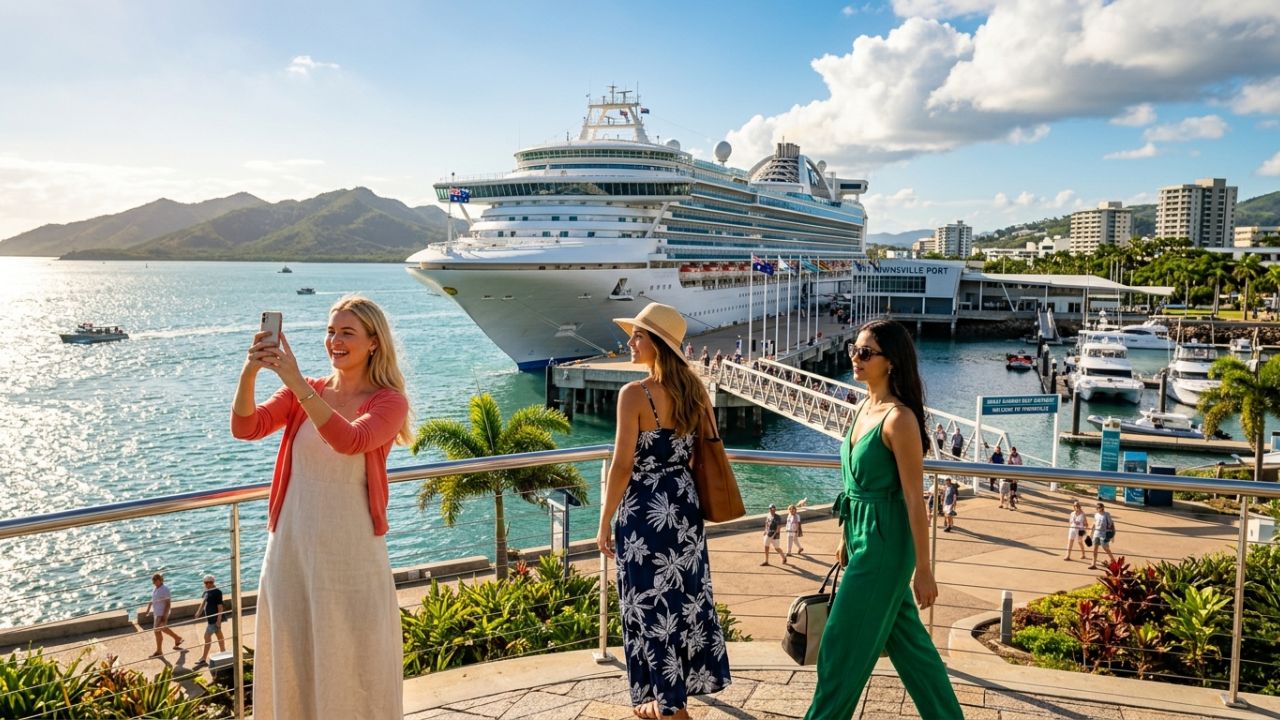
Image representing the massive pivot toward domestic coastal cruising, allowing Australian travelers to completely bypass the severe travel chaos of the aviation grid.
Australia Cruise Tourism Boom Defeats Aviation Travel Chaos as Townsville and Brisbane Shield Passengers From Airport Disruptions
A Multi-Billion-Dollar Maritime Escape From the Aviation Grid
As the domestic Australian aviation network continues to struggle with chronic instability, unpredictable travel chaos, and localized airport disruptions, a massive behavioral shift is actively reshaping the national travel economy. According to the latest breaking airline news, Australian vacationers are increasingly abandoning the stressful reality of congested airports and turning to the oceans. Driven by a desire to permanently avoid the devastating flight cancellations that routinely paralyze major aviation hubs, Australia cruise tourism growth has exploded into a multi-billion-dollar economic force. Official metrics from Tourism Research Australia (TRA) and Austrade confirm that cruise tourism has generated an unprecedented AUD 8.4 billion in economic output during the 2023–24 peak, definitively transforming coastal "seacations" from a niche leisure segment into a primary defense mechanism against aviation gridlock.
Rather than risking their holidays on vulnerable domestic flight schedules, passengers are flocking to highly developed maritime hubs. Key coastal cities such as Townsville, Brisbane, Cairns, Darwin, Sydney, and Melbourne are no longer passive port stops; they are functioning as strategic tourism engines. By directly linking state-of-the-art cruise terminals to regional infrastructure, Australia is driving a massive maritime expansion that perfectly insulates its citizens from the relentless unreliability of the modern aviation grid.
The Scale of the Maritime Economic Engine
This structural transformation proves that the current maritime surge is a long-term economic pillar, not just a cyclical post-pandemic recovery. Recent industry data confirms that cruise tourism reliably generates between AUD 7.32 billion and AUD 8.43 billion annually. Furthermore, this booming sector supports between 22,000 and 26,000 jobs nationwide across cruise-linked industries, including port logistics, hospitality, and retail.
Because coastal itineraries distribute immense tourism capital directly into regional economies, families no longer need to fly into congested mega-cities to experience premium holidays. This massive economic redistribution acts as the ultimate pressure relief valve for the domestic aviation sector, drawing millions of passengers away from airports that are currently buckling under severe travel chaos.
Section-Wise Breakdown: Expanding the Coastal Fortresses
To handle this massive influx of maritime tourists, state governments have executed rapid, highly calculated infrastructure upgrades across the eastern and northern coastlines.
The Brisbane Cruise Terminal: The East Coast Powerhouse Located strategically at Luggage Point, the Brisbane cruise terminal serves as Queensland’s primary international and domestic maritime gateway. Crucially, the facility is perfectly connected to Brisbane Airport and surrounding transport networks. If localized airport disruptions threaten incoming flight connections, the massive capacity of the terminal—which routinely accommodates mega cruise ships over 270 metres in length—ensures that passengers can easily pivot to maritime routes. This facility acts as an anchor for the region, strengthening Queensland's position as the second-largest cruise market in Australia without adding stress to the aviation grid.
Townsville: Northern Australia’s Rising Star Further north, Townsville has emerged as one of the most dynamic regional success stories in the nation. Driven by major channel widening and port expansion projects, Townsville's waterfront redevelopment now allows massive vessels of up to 300 metres to dock safely. Recent verified data proves the incredible success of this expansion: the port processed over 27,000 cruise passengers and 13,000 crew arrivals in a single season, injecting more than AUD 7 million directly into the local economy. Fascinatingly, this tourism influx is reshaping demographics; studies show that 75% of new Townsville residents first visited the city as maritime tourists.
Cairns and Darwin: The Expedition Frontiers As passengers increasingly demand access to the Great Barrier Reef and tropical coastal exploration, Cairns and Darwin are evolving into premium hubs for expedition cruising. Deep-water port upgrades in these regions support long-term cruise expansion, allowing tourists to engage in highly managed eco-tourism experiences completely detached from the threat of mainland flight cancellations.
Operational Data: The Economic and Port Infrastructure Matrix
To fully comprehend the structural dominance of Australia's maritime shift, analysts rely on factual economic outputs and precise infrastructure metrics. The following operational matrix details exactly how regional ports are outmaneuvering traditional aviation hubs:
Australia Cruise Tourism Economic & Infrastructure Matrix
| Economic / Infrastructure Metric | Factual Operational Data |
|---|---|
| Peak Annual Economic Output | AUD 8.4 billion (2023–24) |
| General Annual Economic Range | AUD 7.32 – AUD 8.43 billion |
| National Employment Supported | 22,000 – 26,000+ jobs nationwide |
| Brisbane Terminal Capacity | Accommodates mega cruise ships >270 metres |
| Townsville Passenger Influx | >27,000 passengers & 13,000 crew (single season) |
| Townsville Economic Injection | >AUD 7 million into local economy |
| Townsville Terminal Capacity | Accommodates vessels up to 300 metres |
| Townsville Demographic Impact | 75% of new residents first visited as tourists |
| Queensland Market Position | Second-largest cruise market in Australia |
Passenger Impact: Reclaiming the Holiday from the Tarmac
For the modern Australian family, pivoting to cruise tourism is profoundly liberating. The psychological toll of attempting to navigate a domestic aviation network crippled by airport disruptions is immense. Travelers frequently spend hundreds of dollars on flights, only to find themselves stranded in crowded terminals facing abrupt flight cancellations with zero immediate recovery options.
By booking a "seacation" departing from Brisbane, Sydney, or Melbourne, passengers immediately reclaim control over their schedules. The moment they step aboard the vessel, the holiday begins. They are completely insulated from the logistical nightmares of air traffic control shortages, severe weather groundings, and the chaotic customer service queues that currently define the aviation experience.
Industry Analysis: A Resilient Alternative to Aviation Constraints
According to the latest aviation updates, the domestic flight network is structurally limited by finite airspace, strict curfews, and fleet shortages. The maritime sector faces none of these immediate constraints. By leveraging the vast, open coastline and aggressively investing in deep-water port upgrades, the Australian cruise industry is absorbing the excess leisure demand that airlines simply cannot handle. The integration of indigenous and eco-tourism experiences ensures that this expansion remains sustainable, proving that decentralised tourism infrastructure is far more resilient than relying on a handful of congested airport mega-hubs.
Conclusion: The Future is Maritime
Australia cruise tourism growth has officially transitioned from a supplementary leisure segment into a primary driver of regional economic transformation. By successfully generating AUD 8.4 billion in output and supporting over 26,000 jobs, the sector proves that passengers are willing to pay massive premiums to avoid the severe travel chaos of the modern aviation grid. As major infrastructure developments in Townsville and Brisbane continue to scale, and as Queensland solidifies its dominance in the South Pacific, domestic travelers will increasingly look to the oceans as the ultimate, disruption-proof escape from relentless flight cancellations.
Key Takeaways
- Massive Economic Driver: Australia’s cruise tourism sector generated an astounding AUD 8.4 billion in peak economic output during 2023–24.
- Bypassing Aviation Chaos: Passengers are aggressively choosing regional coastal "seacations" to avoid the severe travel chaos and airport disruptions crippling the domestic aviation grid.
- The Townsville Boom: Townsville welcomed over 27,000 passengers in a single season, injecting AUD 7 million locally and driving massive demographic shifts (75% of new residents were former tourists).
- Brisbane Infrastructure Expansion: The Luggage Point terminal now seamlessly handles mega-ships over 270 metres, operating as a highly efficient alternative to vulnerable aviation connections.
- Job Creation Powerhouse: The pivot toward maritime tourism directly and indirectly supports up to 26,000 jobs nationwide across port logistics, hospitality, and retail.
🌍 Related Travel Guides & Flight Resources
- Navigate Airport Disruptions Like a Pro Master the art of surviving unexpected travel chaos with our expert strategies.
- Breaking Airline News & Evasion Routes Stay ahead of the delays with our real-time aviation updates and route intelligence.
- Global Flight Cancellation Defense Grid Essential legal rights and compensation tactics when your flight goes down.
⚖️ Disclaimer
The tourism metrics, regional economic projections, and port infrastructure data provided in this report are for informational purposes only. Cruise line itineraries, port access protocols, and domestic aviation schedules are highly volatile and subject to immediate change based on severe maritime weather conditions or governmental regulatory updates. NomadLawyer does not guarantee the absolute accuracy or current validity of the information provided and assumes no liability for travel disruptions, cruise cancellations, missed port calls, or any financial consequences resulting from the use of this content. Passengers are strongly advised to independently verify all cruise itineraries, port schedules, and travel advisories directly with their respective cruise operators and official port authorities prior to booking.
Disclaimer
This article is for informational and educational purposes only. It does not constitute legal, financial, or professional advice. While we strive to provide accurate and up-to-date information, travel policies, regulations, and conditions change rapidly. Always verify information with official sources before making travel decisions. Nomad Lawyer makes no representations about the accuracy, reliability, completeness, or suitability of the information provided. Readers should consult qualified professionals for advice specific to their circumstances. The views expressed in this article are those of the author and do not necessarily reflect the views of Nomad Lawyer.
Kunal K Choudhary
Co-Founder & Contributor
A passionate traveller and tech enthusiast. Kunal contributes to the vision and growth of Nomad Lawyer, bringing fresh perspectives and driving the community forward.
Learn more about our team →