
Atlanta Hartsfield-Jackson Airport Manages Four Million Passenger Holiday Surge
Hartsfield-Jackson Atlanta International Airport prepares for four million holiday travelers, advising longer arrival windows amidst new security regulations.

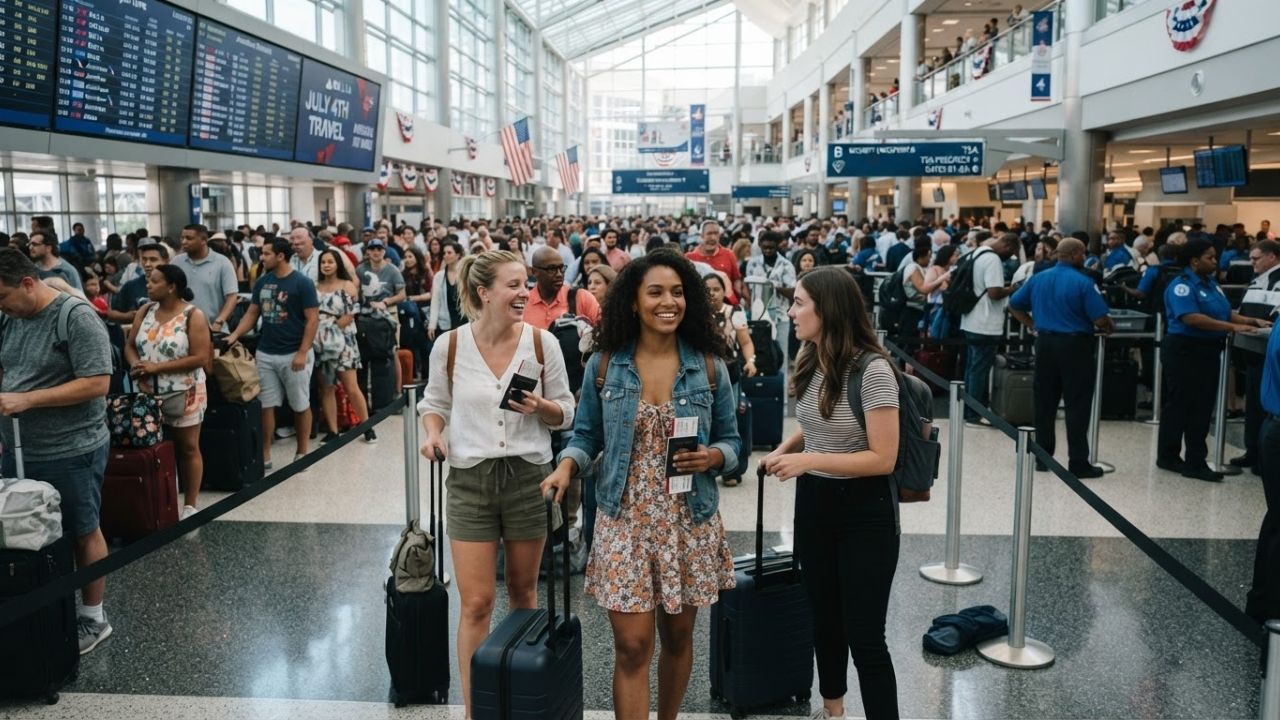
Image generated by AI
Atlanta Hartsfield-Jackson Airport security lines are experiencing high volumes as the facility manages a projected four million travelers during the summer holiday period. Airport operational directors are advising passengers to arrive early to accommodate the record-breaking traffic.
Ten-Day Holiday Travel Window Strains Terminal Operations
The official passenger volumes span a ten-day period beginning Friday, June 26, and ending Tuesday, July 7. Driven by high consumer demand for summer travel, airlines are operating close to capacity on both domestic and international corridors.
To manage the volume, airport authorities have deployed extra staff across the atrium and check-in halls. Standard identification checks are stricter, with all travelers aged 18 and older required to present compliant documentation.
Passengers are advised to verify they carry a valid passport or a compliant REAL ID card before entering the security queue.
Projected Peak Dates and Passenger Flow Projections
Aviation databases indicate that passenger volume is distributed unevenly across the holiday window. Friday, June 26, recorded the highest single-day peak with 370,000 travelers passing through the terminals.
A secondary departure wave is projected for Sunday, July 5, with an estimated 358,000 travelers. Heavy traffic is also expected on Monday, July 6, as approximately 356,000 returning travelers crowd baggage carousels and local transit links.
These high passenger counts are resulting in longer wait times at ticket counters and security checkpoints.
Hartsfield-Jackson Atlanta Airport (ATL) Holiday Travel Guidelines
The tables below display the peak travel windows and recommended arrival times.
Projected Peak Passenger Travel Dates at Hartsfield-Jackson (ATL)
| Travel Date | Projected Daily Passenger Count | Terminal Processing Level |
|---|---|---|
| Friday, June 26 | 370,000 Travelers | Maximum Capacity (Opening Peak) |
| Sunday, July 5 | 358,000 Travelers | High Capacity (Return Wave) |
| Monday, July 6 | 356,000 Travelers | High Capacity (Returning Commuters) |
Recommended Arrival Buffer Times by Traveler Category
| Passenger Travel Category | Minimum Arrival Time | Special Processing Notes |
|---|---|---|
| Domestic Flights | 2 Hours, 30 Minutes before departure | Standard TSA screening lanes |
| International Flights | 3 Hours before departure | Customs and international bag drop queues |
| ADA / Wheelchair Support | Add 30 Minutes to above times | Escort coordination buffer time |
Stifling Heat Index Impacts Airfield Operations
In addition to terminal crowding, outdoor environmental conditions are complicating aircraft dispatch schedules. The National Weather Service reports daily temperatures climbing between 90 and 99 degrees Fahrenheit.
These high temperatures have pushed metropolitan heat indices between 98 and 105 degrees. Ground crews and baggage handlers are taking mandatory hydration breaks to prevent heat-related illness, which can slow baggage loading.
Aircraft takeoffs are also monitored closely, as hot air reduces engine thrust and wing lift capacity.
Why This Matters
Our analysis of the flight data indicates that high ambient temperatures present serious challenges for aircraft performance (density altitude). When temperatures exceed 95 degrees, the air becomes less dense, reducing the lift generated by aircraft wings. To take off safely, fully loaded wide-body jets must either utilize longer runways or reduce their take-off weight by limiting cargo or fuel capacity.
Additionally, extreme heat indices between 98 and 105 degrees directly impact ground operations. Ramp agents working on the tarmac face severe physical strain, necessitating frequent rotation cycles. These safety measures slow baggage handling and aircraft refueling, contributing to scheduling delays that compound terminal wait times.
Industry Outlook
Market trends suggest that major airport hubs will continue to face capacity constraints during summer heatwaves. Airlines may need to adjust scheduling templates to shift heavy long-haul departures to cooler morning or evening hours.
Expect terminal authorities to expand indoor climate control capabilities to support travelers during extended ground delays. The current passenger volumes are projected to normalize following the conclusion of the July 7 travel window.
Key Takeaways
- Massive Volume: Hartsfield-Jackson Atlanta Airport is processing four million passengers over a ten-day holiday window.
- Peak Dates: Friday, June 26, saw the highest volume with 370,000 travelers, followed by July 5 and July 6 return waves.
- Arrival Advice: Domestic flyers are urged to arrive 2.5 hours early, while international travelers need a 3-hour window.
- Security Rules: Compliant identification, such as a passport or REAL ID, is mandatory for passenger checkpoint entry.
- Weather Stress: Temperatures up to 99 degrees and heat indices to 105 degrees are impacting ground handling speed.
FAQ
What are the busiest days at Atlanta Airport during the holiday window?
The busiest days include Friday, June 26 (370,000 passengers), Sunday, July 5 (358,000 passengers), and Monday, July 6 (356,000 passengers).
How early should I arrive at Hartsfield-Jackson Airport?
Domestic travelers should arrive 2.5 hours before flight time, and international travelers should allow 3 hours.
Do I need a REAL ID to fly out of Atlanta?
Yes, standard non-compliant IDs are no longer accepted. Travelers must present a compliant REAL ID or a valid passport.
How does the hot weather affect flights?
Extreme heat reduces air density, which can limit aircraft lift and require weight restrictions or longer takeoff runs.
Related Travel Guides
- Sudden Mid-Air Abort Triggers Travel Chaos as Cape Air Flight KAP60 Abandons Boston Route, Executing Tense Return to Rutland Amid Rising Regional Airport Disruptions: Latest Airline News
- Aviation Fleets: Contour Airlines Launches Nonstop Trinidad to Dominica Route
- Routes British Airways Launches 10 Ultra-Long Flights in 2026
Disclaimer
This article is for informational and educational purposes only. It does not constitute legal, financial, or professional advice. While we strive to provide accurate and up-to-date information, travel policies, regulations, and conditions change rapidly. Always verify information with official sources before making travel decisions. Nomad Lawyer makes no representations about the accuracy, reliability, completeness, or suitability of the information provided. Readers should consult qualified professionals for advice specific to their circumstances. The views expressed in this article are those of the author and do not necessarily reflect the views of Nomad Lawyer.
Kunal K Choudhary
Co-Founder & Contributor
A passionate traveller and tech enthusiast. Kunal contributes to the vision and growth of Nomad Lawyer, bringing fresh perspectives and driving the community forward.
Learn more about our team →