
Atlanta Airport Disruptions: 177 Delays, 34 Cancellations Hit Major Routes
Atlanta airport disruptions spike with 177 delayed and 34 cancelled flights in 2026, affecting Delta, American, and international carriers on major US and global routes.

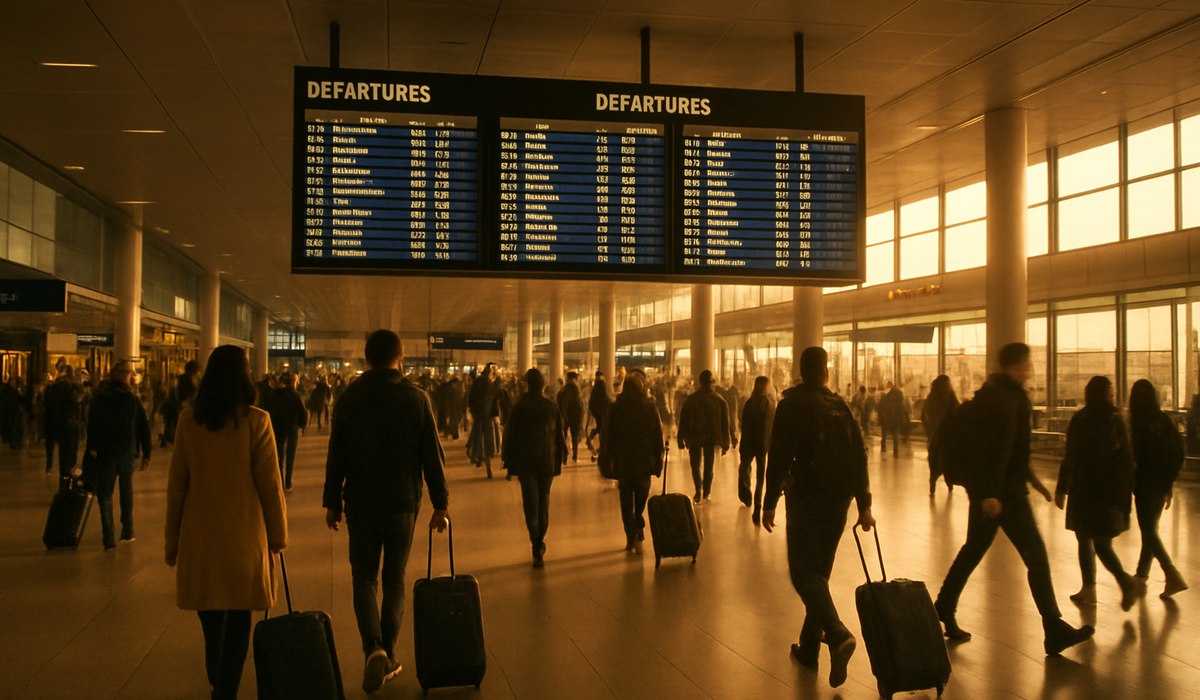
Image generated by AI
Breaking News: Atlanta Hub Faces Major Operational Crisis
Hartsfield-Jackson Atlanta International Airport confronted severe operational strain on April 10, 2026, with 177 flight delays and 34 cancellations disrupting connections for major US and international carriers. Delta Air Lines, American Airlines, Spirit Airlines, and Lufthansa reported cascading schedule disruptions across domestic and transatlantic routes. This disruption reflects mounting pressure across the broader US aviation system during the spring travel season.
Disruptions Hit America's Busiest Hub
Atlanta airport ranks among the world's most congested aviation hubs, processing over 2.9 million monthly passengers before these operational challenges emerged. The scale of today's disruptions—spanning 177 delays and 34 cancellations—demonstrates the vulnerability of tightly scheduled networks when infrastructure and weather converge. Early April 2026 has witnessed repeated operational strain across major US airports, with Atlanta consistently appearing among the most affected hubs alongside Chicago, Denver, Houston, and New York.
Flight-tracking data accessible via FlightAware revealed that cascading delays throughout the day created compounding bottlenecks. Each inbound aircraft arriving late creates minimal buffer for the next scheduled departure, triggering a ripple effect that extends through afternoon and evening operations. Airport congestion, combined with weather constraints in critical regions, created the conditions for simultaneous delays across multiple carriers.
Impact on Major Carriers and Routes
Delta Air Lines, which operates its primary hub at Hartsfield-Jackson, experienced the most visible operational impact. Clusters of late-running Delta departures extended to both domestic and international destinations, with some services departing significantly behind schedule and others ultimately cancelled. Passengers faced rebooking challenges across Delta's extensive Atlanta network, forcing some travelers toward alternative routing through other Delta hubs in Memphis or Cincinnati.
Spirit Airlines, maintaining substantial presence at Atlanta, recorded higher-than-normal delay counts throughout April 10. American Airlines, despite basing its largest hub in Dallas-Fort Worth and Charlotte, operates critical connecting services through Atlanta and experienced hundreds of network-wide delays. Lufthansa's transatlantic operation suffered particularly acute disruption, including cancellation of its scheduled Atlanta-Frankfurt service, which cascaded into connection disruptions affecting both inbound and outbound passenger flows across European networks.
The Atlanta airport disruptions extended across major commercial corridors. Domestically, trunk routes connecting Atlanta with New York area airports—including John F. Kennedy, LaGuardia, and Newark—experienced significant delay propagation. Flights between Atlanta and Los Angeles, operating near capacity during spring travel peaks, faced schedule pressure that translated into missed connections for passengers continuing westbound toward Asia-Pacific destinations.
Transatlantic services suffered compounded challenges. Lufthansa's Atlanta-Frankfurt cancellation removed a critical capacity corridor, while delays on other long-haul departures reduced alternative routing options for European-bound passengers. London services, Frankfurt flights, and other major European gateways operated within constrained airspace and weather conditions, leaving minimal buffering capacity for additional disruptions. For travelers targeting European connections, the practical result involved extended waits, missed onward flights, and forced rebooking across multiple airlines.
Systemic Causes Behind the Network Strain
The Atlanta airport disruptions emerged from converging operational stressors affecting the broader US aviation system. Weather constraints impacting key regional corridors created airspace congestion throughout the Southeast. Knock-on delays originating earlier in the week continued propagating through tightly scheduled networks, where single-hour delays compound into multi-hour disruptions by evening operations.
The Federal Aviation Administration monitors these systemic pressures through its network operations centers. According to the FAA, the agency coordinates traffic management initiatives designed to mitigate cascading delays across major hubs. However, when multiple large carriers simultaneously experience schedule pressure at a hub like Atlanta, individual airline operations teams struggle to absorb delays without triggering mass cancellations.
Spring travel peaks traditionally challenge airport infrastructure. April 2026 experienced elevated passenger volumes, business travel recovery, and leisure travelers returning to normal seasonal patterns. This demand surge collided with typical spring weather volatility, creating conditions where modest operational slips escalated into significant disruptions.
What Travelers Need to Know
Passengers experiencing Atlanta airport disruptions should immediately access real-time flight status through FlightAware and their airline's official mobile application. Airline contact centers faced extended wait times due to call volume spikes, making digital tools more reliable for immediate updates. The US Department of Transportation's Air Consumer Protection page outlines passenger rights regarding delays, cancellations, and rebooking obligations.
Delays exceeding two hours may entitle passengers to compensation depending on circumstances and airline policies. Cancellations require airlines to provide comparable rebooking on the next available flight or alternative routing, plus meals and hotel accommodations for overnight disruptions. Keep documentation of all expenses incurred due to airline-caused disruptions, as compensation claims require specific evidence.
Travelers booked on Atlanta-originating flights should contact airlines directly to verify current schedule status rather than assuming published departure times remain accurate. Rebooking options often include flights through alternative hubs—Delta via Memphis, American via Charlotte, and international carriers via other East Coast gateways. Ground transportation challenges may emerge as travelers seek alternative routing, so early confirmation prevents cascading complications.
Traveler Action Checklist
- Check your airline's official website or app for real-time flight status updates immediately upon learning of airport disruptions
- Contact your airline's customer service to confirm rebooking options and preferred alternative routing before airport arrival
- Request meal vouchers and hotel accommodations if disruptions exceed overnight requirements, regardless of whether airlines volunteer information
- Document all disruption-related expenses including meals, ground transportation, and additional lodging with receipts for potential compensation claims
- Verify passport validity and travel documentation before rebooking on international flights through unfamiliar routings
- Check weather and airspace conditions at your destination before accepting rebooking, as delays may extend beyond Atlanta
- Register for real-time flight alerts on FlightAware to receive immediate notifications about schedule changes
- Request written confirmation of rebooking details including confirmation numbers, departure times, and baggage handling instructions
- Save airline customer service phone numbers and reservation confirmation details in case digital access becomes unavailable
Data Summary: April 10 Disruptions at Atlanta
| Metric | Count | Notes |
|---|---|---|
| Total Flight Delays | 177 | Includes departures and arrivals |
| Total Cancellations | 34 | Across all carriers |
| Primary Hub Operator | Delta Air Lines | Hartsfield-Jackson is Delta's largest hub |
| Affected Major Carriers | 5+ | Delta, American, Spirit, Lufthansa, others |
| Domestic Routes Impacted | Atlanta-New York, Atlanta-Los Angeles, Atlanta-Chicago | Major trunk routes experiencing elevated delays |
| International Routes Impacted | Atlanta-Frankfurt, Atlanta-London, Atlanta-Paris | Transatlantic disruptions cascade to European connections |
| Projected Recovery Timeline | 36-48 hours | Based on typical airline schedule normalization patterns |
| Peak Delay Period | 2:00 PM - 8:00 PM | Maximum congestion during afternoon/evening operations |
FAQ: Atlanta Airport Disruptions April 2026
What caused today's Atlanta airport disruptions?
Multiple factors converged to create operational strain: weather constraints affecting regional airspace, congestion from accumulated delays earlier in the week, and spring travel season passenger volume peaks. No single incident triggered the disruptions; rather, tightly scheduled networks lacking buffer capacity amplified minor delays into significant cascading effects across major carriers.
Will my connection in Atlanta be affected if I'm traveling through April 10-11?
Check your specific flight status using [FlightAware](https://FlightAware
Disclaimer
This article is for informational and educational purposes only. It does not constitute legal, financial, or professional advice. While we strive to provide accurate and up-to-date information, travel policies, regulations, and conditions change rapidly. Always verify information with official sources before making travel decisions. Nomad Lawyer makes no representations about the accuracy, reliability, completeness, or suitability of the information provided. Readers should consult qualified professionals for advice specific to their circumstances. The views expressed in this article are those of the author and do not necessarily reflect the views of Nomad Lawyer.
Kunal K Choudhary
Co-Founder & Contributor
A passionate traveller and tech enthusiast. Kunal contributes to the vision and growth of Nomad Lawyer, bringing fresh perspectives and driving the community forward.
Learn more about our team →