
Athens and Thessaloniki Hotel Occupancy Rates Decline in First Half of 2026 Amid Supply Surge
Major urban centers in Greece, specifically Athens and Thessaloniki, are reporting a measurable drop in hotel occupancy during H1 2026 despite overall growth in international visitor arrivals.

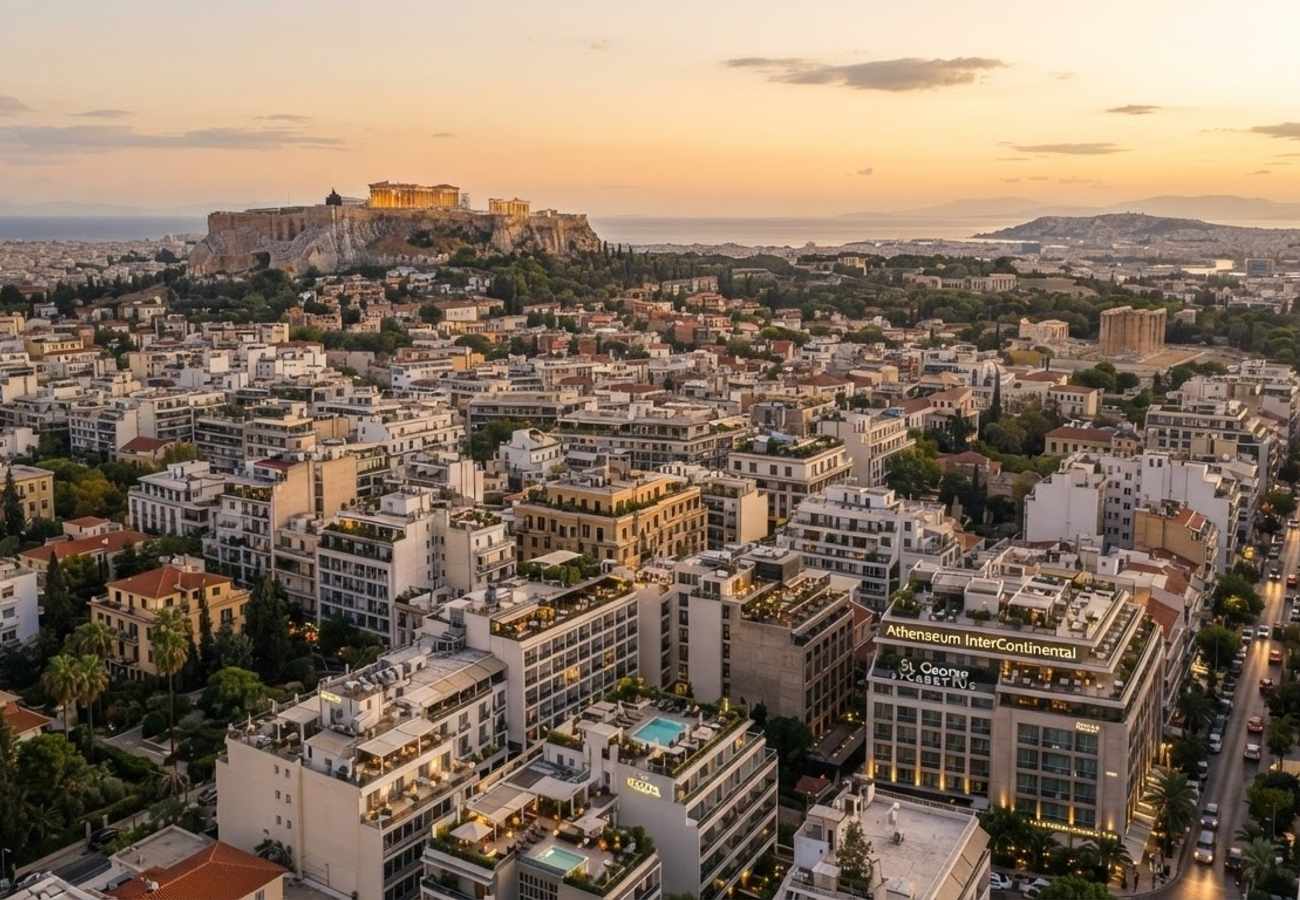
Image generated by AI
Athens and Thessaloniki are facing a surprising downturn in hotel room saturation during the first six months of 2026, signaling a shift in how international travelers engage with Greece's primary urban hubs. While overall visitor arrivals remain strong, the actual overnight volume within licensed hotels has contracted, creating a challenging environment for traditional hospitality operators.
The Greek hospitality sector is currently navigating a complex transitional phase. After several years of explosive post-pandemic recovery, the first half of 2026 has revealed a growing divergence between the number of people entering the country and the number of rooms booked in traditional hotels. While airport data shows that passenger traffic continues to grow, the metropolitan centers of Athens and Thessaloniki are seeing a softening in occupancy levels.
This trend is not a result of fewer tourists, but rather a change in where those tourists stay and how they spend. Industry analysts point to a combination of skyrocketing operational costs, a massive increase in available room supply, and evolving consumer habits across Europe as the primary drivers of this decline.
Urban Hospitality Metrics in Athens and Thessaloniki
The current state of the market is best understood through specific performance indicators. While occupancy is under pressure, revenue per room has remained relatively stable due to aggressive pricing strategies. In Athens, occupancy remained nearly flat with a marginal contraction of 0.1%, yet the Average Daily Rate (ADR) climbed by 6.9%. This suggests that while fewer rooms are being filled, the hotels that are occupied are commanding higher prices.
Thessaloniki has experienced a more pronounced dip, particularly in the first quarter of the year, where occupancy saw a negative trajectory of 1.1%. However, the city has managed to maintain a positive RevPAR (Revenue Per Available Room) growth, ranging between 2.1% and 5%, bolstered by its role as a hub for MICE (Meetings, Incentives, Conferences, and Exhibitions) and improved regional airport connectivity.
| Metric Category | Athens Metropolitan Area | Thessaloniki Metropolitan Area |
|---|---|---|
| H1 Occupancy Trajectory | Flat / Mild Contraction (-0.1%) | Softening / Negative (-1.1% in Q1) |
| Average Daily Rate (ADR) | +6.9% Growth | +3.7% Growth |
| RevPAR Growth | +6.8% Growth | Moderately Positive (+2.1% to +5%) |
| Key Operational Pressure | Short-Term Rental Supply Explosion | Extended Winter Shoulder Slump |
| Primary Growth Catalyst | Premium Quality Urban Positioning | MICE & Regional Airport Connectivity |
The Shift from Post-Pandemic Growth to Market Rebalancing
Between 2022 and 2025, the Greek tourism industry operated in a "golden era" of pent-up demand. High household savings in the UK, France, and Germany, combined with a desperate desire for travel, allowed urban hotels to operate at near-maximum capacity. During this window, hoteliers held significant pricing power, as demand far stripped the available supply of luxury and mid-scale rooms.
By the arrival of 2026, the macroeconomic environment shifted. High interest rates and persistent global inflation have eroded the disposable income of the primary Western European source markets. While travelers are still visiting Greece, they are modifying their behavior. This includes shorter average stays, later booking windows, and a preference for more cost-effective lodging options.
Simultaneously, the supply side of the equation has expanded rapidly. The proliferation of new hotel developments and the "explosion" of short-term residential rentals (such as Airbnb) have added thousands of beds to the urban inventory. In many municipal districts, the growth of available beds has simply outpaced the growth of overnight stays, leading to the occupancy declines observed in the first half of the year.
The Economic Weight of Urban Tourism in Greece
For the Hellenic Republic, urban tourism is more than just a secondary attraction to the islands; it is a cornerstone of national economic strategy. The Greek National Tourism Organisation (GNTO) and the Ministry of Tourism have spent a decade repositioning Athens and Thessaloniki as standalone city-break destinations. This shift was designed to reduce the extreme seasonality of Greek tourism, turning these cities into year-round revenue generators.
The decline in hotel occupancy is a concern because the urban hospitality ecosystem is deeply interconnected. When hotel rooms sit empty, the impact is felt immediately by local restaurants, retail shops, municipal transport providers, and the broader supply chain. The stability of the urban hotel market is therefore a primary indicator of the overall health of the city's commercial economy.
Analysis of Bank of Greece and ELSTAT Data
Data provided by the Bank of Greece and the Hellenic Statistical Authority (ELSTAT) confirms a paradoxical trend: inbound tourism volume is up, but hotel room night sales are lagging. The Bank of Greece reports that total international arrivals increased during the early months of 2026, aided by expanded flight schedules during the winter and spring "shoulder" seasons.
However, when these arrival numbers are cross-referenced with ELSTAT's capacity data, it becomes clear that a smaller percentage of these visitors are choosing registered hotels. This confirms that the "leakage" of guests toward alternative lodging—specifically unregulated or short-term rental apartments—is a primary factor in the decline of traditional hotel occupancy.
Why This Matters: The Impact on Travelers and Investors
For the traveler, this market correction is actually a benefit. The imbalance between high supply and softening demand means that consumers now have more leverage. While Average Daily Rates (ADR) are currently rising, the lack of full occupancy suggests that "last-minute" deals and competitive pricing will become more common as hotels fight to fill rooms.
From a legal and investment standpoint, this creates a volatile environment. Foreign investors who poured capital into luxury urban hotels between 2022 and 2025 may find their projected Return on Investment (ROI) delayed. The "short-term rental explosion" mentioned in the data suggests a need for stricter municipal regulation to protect the licensed hotel industry from unfair competition.
Logistically, the decline in occupancy during the first half of the year indicates that Greece is struggling to maintain its "year-round" destination status in the face of economic headwinds. If Thessaloniki continues to see "winter shoulder slumps," the industry may need to pivot toward more aggressive MICE marketing to fill gaps left by leisure travelers.
The Greek urban hotel market is no longer in a phase of effortless growth, but rather a phase of strategic survival.
Related Travel Guides
Disclaimer
This article is for informational and educational purposes only. It does not constitute legal, financial, or professional advice. While we strive to provide accurate and up-to-date information, travel policies, regulations, and conditions change rapidly. Always verify information with official sources before making travel decisions. Nomad Lawyer makes no representations about the accuracy, reliability, completeness, or suitability of the information provided. Readers should consult qualified professionals for advice specific to their circumstances. The views expressed in this article are those of the author and do not necessarily reflect the views of Nomad Lawyer.
Preeti Gunjan
Contributor & Community Manager
A passionate traveller and community builder. Preeti helps grow the Nomad Lawyer community, fostering engagement and bringing the reader experience to life.
Learn more about our team →