
Typhoon Noul Sparks Flight Cancellations and Delays Across Asia
Typhoon Noul causes severe flight disruptions across China, Japan, and the Gulf, with 801 cancellations and 7,103 delays recorded.

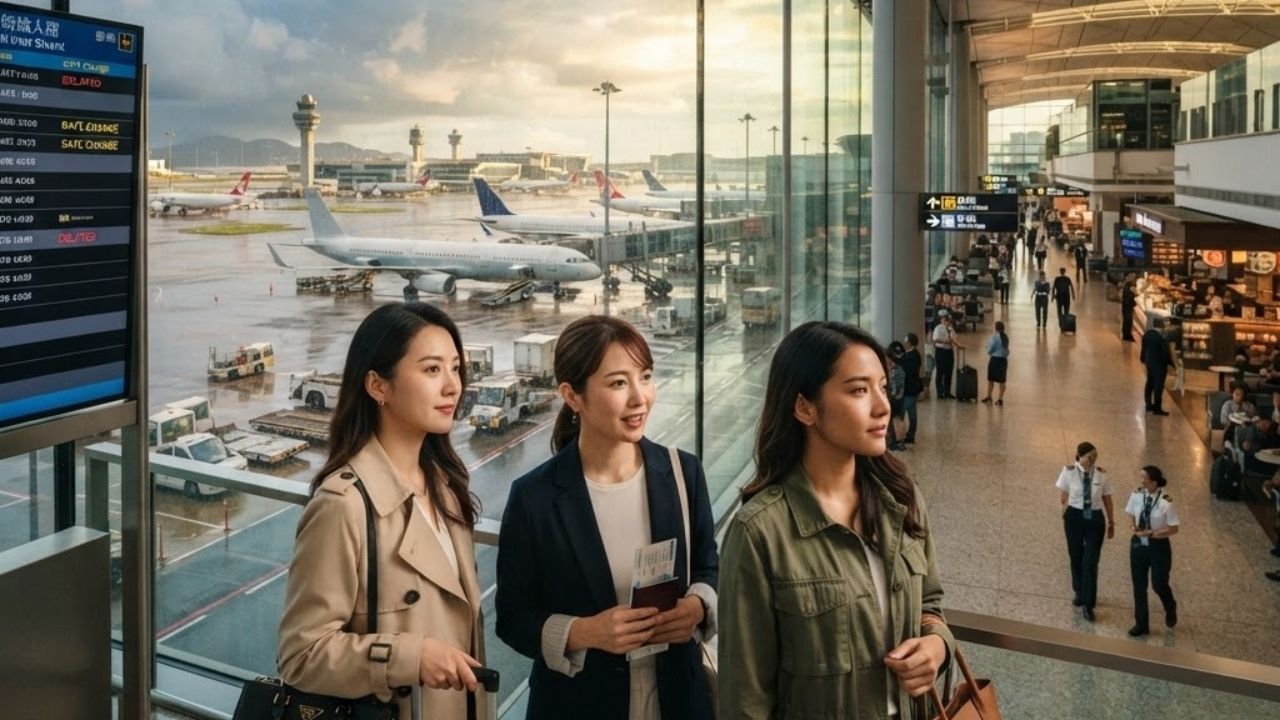
Image generated by AI
Typhoon Noul Sparks Flight Cancellations and Delays Across Asia
SEO Title: Typhoon Noul Asia Flight Delays 2026: Airport Info & Rights
Meta Description: Typhoon Noul causes 801 cancellations and 7,103 delays across Asia. Review airport metrics for Tokyo, Guangzhou, Dubai, and CAAC flight rebooking rules.
Slug: asia-typhoon-noul-flight-cancellations-delays-2026
Standfirst: Guangzhou, July 27, 2026 — Flight tracking systems confirm that flight cancellations and delays affect Asian hubs following Typhoon Noul's landfall, causing 801 canceled flights and 7,103 delays across the continent.
Three Headlines
Factual / News Headline
- Widespread Flight Cancellations and Schedule Delays Disrupt Aviation Networks Across China, Japan, and Middle East Hubs Post-Typhoon Landfall
Curiosity-Gap (Discover) Headline
- How a Weakening Storm in Guangdong Has Triggered a Massive Flight Delay Chain Reaction Reaching Tokyo, Dubai, and Riyadh
Problem-Solving (Search) Headline
- What to Do if Typhoon Noul Delays Your Connecting Flight and Your Care Rights Under CAAC and US DOT Rules
Article
Guangzhou, July 27, 2026 — Flight tracking systems confirm that flight cancellations and delays affect Asian hubs following Typhoon Noul's landfall, causing 801 canceled flights and 7,103 delays across the continent.
Meteorological and airport registries indicate that the storm made landfall in Huidong County, Guangdong Province, before weakening as it moved inland. However, severe crosswinds and poor visibility have left aircraft and flight crews out of position, causing backlogs across East Asia and Gulf transit terminals.
Regional Airport Disruption and Delays
The operational recovery continues across major international hubs:
- Mainland China: Leads regional disruptions with 4,106 delays and 492 cancellations, concentrated at Guangzhou Baiyun (398 delays, 134 cancellations) and Shenzhen Bao’an (391 delays, 123 cancellations).
- Japan: Registers 1,296 delays and 45 cancellations, with Tokyo Haneda recording 635 delays and 20 cancellations due to late arrivals from elsewhere in Asia.
- Hong Kong: Hong Kong International handles 433 delays and 46 cancellations as weather conditions gradually stabilize.
- Southeast Asia: Singapore Changi records 208 delays and three cancellations, while Bangkok Suvarnabhumi registers 197 delays and seven cancellations.
- Middle East: Dubai International handles 283 delays and 12 cancellations, while Saudi gateways face delays due to regional security conditions and scheduling limits.
Airline Fleet Operations and Capacity Strain
Carriers are adjusting aircraft rotations to restore schedule reliability:
- China Eastern: Records the highest delay count with 831 delayed flights across its mainland network.
- China Southern: Accumulates 619 delays and 232 cancellations, reflecting proximity to the landfall area in Guangdong.
- Air China: Manages 366 delays and 94 cancellations across Beijing and western hubs.
- Japan Airlines & ANA: Record 380 and 254 delays respectively, absorbing late-arriving international flights.
- Saudia: Registers 122 cancellations, particularly affecting its domestic networks.
Data Tables
Regional Flight Disruption Statistics (July 27, 2026)
| Region / Country | Total Flight Delays | Total Flight Cancellations | Primary Affected Aviation Hubs |
|---|---|---|---|
| Mainland China | 4,106 | 492 | Guangzhou (CAN), Shenzhen (SZX), Shanghai (PVG/SHA), Beijing (PEK/PKX) |
| Japan | 1,296 | 45 | Tokyo Haneda (HND), Fukuoka (FUK), Narita (NRT), Osaka (ITM/KIX) |
| Hong Kong | 433 | 46 | Hong Kong International (HKG) |
| United Arab Emirates | 369 | 22 | Dubai International (DXB) |
| Saudi Arabia | Variable | High | Riyadh (RUH), Jeddah (JED), Abha (AHB), Gizan (GIZ) |
Major Airport Hub Disruption Metrics
| Airport Name | IATA Code | Flight Delays | Flight Cancellations | Primary Affected Carrier |
|---|---|---|---|---|
| Guangzhou Baiyun | CAN | 398 | 134 | China Southern Airlines |
| Shenzhen Bao'an | SZX | 391 | 123 | Shenzhen Airlines / China Southern |
| Hong Kong International | HKG | 433 | 46 | Cathay Pacific |
| Tokyo Haneda | HND | 635 | 20 | Japan Airlines / All Nippon Airways |
| Shanghai Pudong | PVG | 395 | 15 | China Eastern Airlines |
| Singapore Changi | SIN | 208 | 3 | Singapore Airlines |
| Bangkok Suvarnabhumi | BKK | 197 | 7 | Thai Airways |
| Dubai International | DXB | 283 | 12 | Emirates |
| King Khalid International | RUH | 123 | 46 | Saudia |
| King Abdulaziz International | JED | 100 | 50 | Saudia |
Flight Disruption Care and Passenger Rights
For passengers caught in the regional weather delay backlog:
- Exceptional Circumstances (EU261): Because a typhoon is classified as an extraordinary circumstance, carriers are exempt from paying cash compensation under EU261 for weather-related cancellations.
- Airline Duty of Care: However, airlines must provide passengers with care (meals, refreshments, and hotel accommodation if delayed overnight), regardless of the weather cause.
- CAAC Domestic Guidelines: For flights within China, if weather delays occur, airlines must assist in arranging food and lodging, though passengers usually pay the accommodation cost.
- US DOT Outbound Refund Rights: If your flight from a US gateway to Asia is canceled, and you reject the re-routed options, you have the right to a full cash refund.
- Carrier-Controllable Backlogs: If delays occur outside the storm zone (such as late aircraft rotations in Dubai or Tokyo) due to crew scheduling, standard delay compensation rules apply.
Why This Matters
For travelers on this route, the real impact is that because East Asian airspace operates near capacity, a delayed inbound flight from Guangzhou will cause you to miss your onward connection in Tokyo or Singapore, forcing you to wait up to 24 hours for the next available seat. From a logistical perspective, this means that travelers should select connection buffers of at least four hours during typhoon season. Travelers must carry essential medication in hand luggage.
Industry Outlook
Airlines are introducing automated aircraft rerouting software that repositions planes during severe weather alerts. As major airports deploy digital flight status updates directly to passenger mobile wallets, terminal check-in queues will decrease. Over the next year, expect carriers to launch coordinated crew scheduling platforms that dynamically reallocate standby staff to delayed flights. This operational alignment will support network recovery.
Related Travel Guides
Disclaimer
This article is for informational and educational purposes only. It does not constitute legal, financial, or professional advice. While we strive to provide accurate and up-to-date information, travel policies, regulations, and conditions change rapidly. Always verify information with official sources before making travel decisions. Nomad Lawyer makes no representations about the accuracy, reliability, completeness, or suitability of the information provided. Readers should consult qualified professionals for advice specific to their circumstances. The views expressed in this article are those of the author and do not necessarily reflect the views of Nomad Lawyer.
Preeti Gunjan
Contributor & Community Manager
A passionate traveller and community builder. Preeti helps grow the Nomad Lawyer community, fostering engagement and bringing the reader experience to life.
Learn more about our team →