
Asia Making Play for Euro Summer as Australian Search Data Shifts East
Australian travellers are abandoning European summer plans for Asia Pacific alternatives in 2026. New data reveals Vietnam's Hanoi, Danang, and Hoi An lead search growth, driven by Middle East instability and superior value.

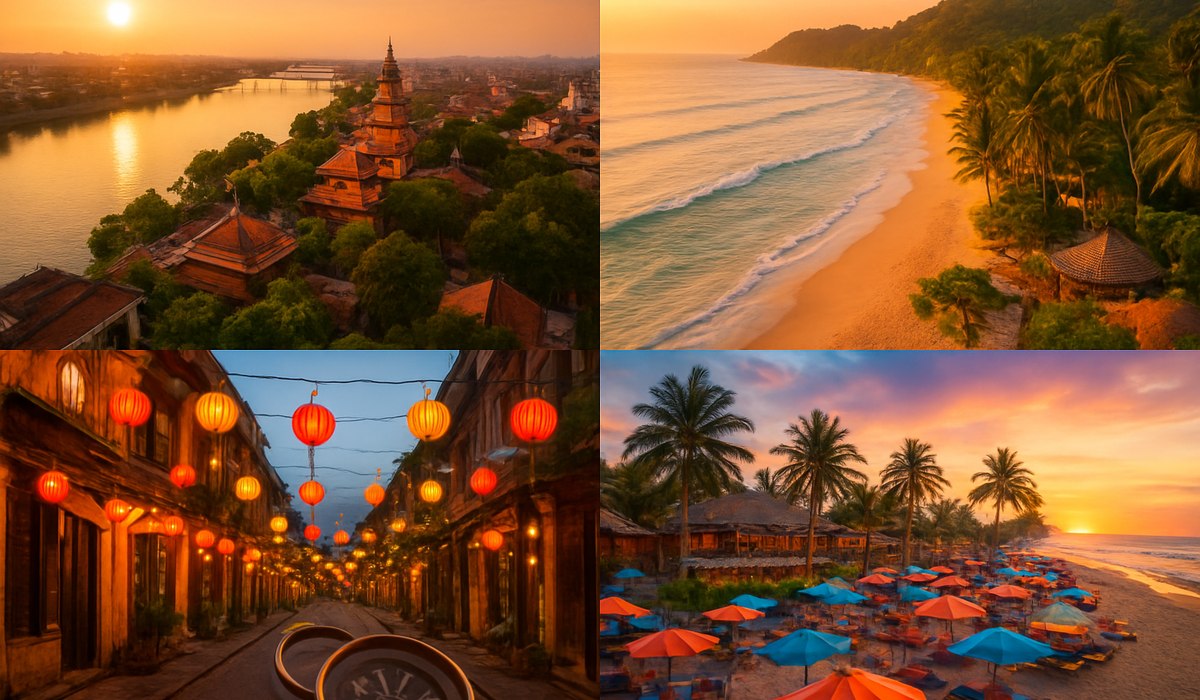
Image generated by AI
Australian Travellers Pivot East: The New Summer Holiday Shift
Australian travellers are abandoning their European summer fantasies in favour of closer Asia Pacific destinations, according to emerging search behaviour data from travel booking platforms. The dramatic shift reveals that Asia making play for traditional Euro Summer markets, with 22 of the top 30 international destinations searched by Australians for July 2026 located in Asia Pacific. Vietnam's Hanoi, Danang, and Hoi An are recording the strongest year-on-year growth in search interest, signalling a fundamental change in Australian holiday preferences. The movement away from Europe is driven by two compelling factors: geopolitical instability in the Middle East complicating long-haul routes, and the superior value proposition of closer Asian alternatives.
Vietnam's Explosive Rise in Australian Holiday Planning
Vietnam is experiencing an unprecedented surge in popularity among Australian holiday planners. Hanoi has climbed 13 places year-on-year on Australian search rankings, making it the fastest-growing destination in the region. Danang follows closely, rising nine positions, while Hoi An has jumped eight places. These Vietnamese cities are successfully positioning themselves as compelling alternatives to European classics.
Travel planners are drawing direct comparisons between these destinations and Europe's most iconic locations. Hanoi mirrors the historical and culinary appeal of Rome or Athens, offering ancient temples, bustling street food scenes, and centuries of cultural layering. Danang replicates the coastal allure of the French or Croatian Riviera, with pristine beaches and upscale resort options. Hoi An delivers old-world charm reminiscent of Venice, complete with lantern-lit ancient streets and waterways perfect for romantic exploration. For Australian travellers seeking European experiences without the 20-hour flight time and premium pricing, Vietnam's Asia making play strategy proves remarkably effective. According to the official Vietnam tourism board, visitor numbers from Australia continue accelerating through 2026, with July representing peak travel season.
Bali Remains King Despite the Shift Eastward
Indonesia continues to dominate Australian travel searches, with Bali maintaining its position as the undisputed champion of Asian destinations. Seminyak ranks first on the overall list of Australian international destination searches, followed by Sanur, Legian, Nusa Dua, Ubud, Kuta, Canggu, and Uluwatu. This represents nine Indonesian destinations within the top 30 international searches.
Seminyak and Canggu are successfully positioning themselves as Asia Pacific answers to Mykonos, offering sophisticated beach clubs, fine dining, vibrant nightlife, and most crucially, a single-flight journey from Australia without the astronomical European airfare. The appeal extends beyond hedonism—these Bali hubs offer genuine cultural immersion, spa experiences, and accessibility that European destinations cannot match on a comparable budget. Travellers willing to venture beyond Indonesia's famous beach towns discover extraordinary value in lesser-known islands like Nusa Lembongan and Nusa Dua, which have climbed the search rankings as word-of-mouth recommendations amplify. Browse accommodation options and traveller reviews on TripAdvisor to compare Bali's offerings with other regional destinations.
Why Asia Pacific Beats Europe This Summer
The decision by Australian travellers to prioritise Asia making play over traditional European summers stems from multiple intersecting factors beyond simple geography. First, flight duration significantly impacts holiday planning—reaching Vietnam or Indonesia requires 10-14 hours compared to 20+ hours to Europe, preserving precious holiday time for actual exploration rather than recovery from jet lag.
Second, cost represents a transformative advantage. A week in Hanoi or Danang delivers luxury accommodation, fine dining, and premium experiences for a fraction of European pricing. Five-star hotels in Vietnam average 40-60% less than comparable European properties. Third, weather predictability matters enormously—July in Europe brings unpredictable conditions, while Asia Pacific guarantees tropical warmth perfect for beach and water activities. Fourth, geopolitical considerations cannot be ignored. Middle East instability has complicated traditional Europe-bound routing, making Asian alternatives logistically simpler and psychologically more reassuring. Finally, the 36% of global travellers actively seeking alternatives to traditional hotspots means experiencing Vietnam and Indonesia before they become mainstream—a cultural advantage that appeals to adventurous Australians. Tourism boards across Asia Pacific have responded by investing heavily in summer promotions targeting Australian markets.
European Alternatives Finding New Markets
Despite the dramatic shift toward Asia Pacific, European destinations remain firmly embedded in Australian travel consciousness. London, Paris, Rome, Barcelona, Amsterdam, Athens, and Sorrento all feature prominently in the top 30 international destination searches. New York similarly maintains strong appeal among Australian travellers. However, these destinations face growing competition from Asian counterparts that deliver comparable experiences with superior value and convenience.
Tokyo ranks third overall in Australian searches, positioning itself as a culturally sophisticated alternative to Paris or Milan. Seoul has risen six places on the rankings, leveraging its unique blend of ultra-modern urban energy with profound cultural depth. These East Asian cities offer travellers the intellectual stimulation and artistic richness of European capitals without the premium pricing or extended flight time. Travel advisors increasingly recommend this "Asian-European swap" strategy to clients, suggesting that someone drawn to Venice might discover equal enchantment in Hoi An's candlelit waterways. A client dreaming of Parisian nightlife could find equivalent energy in Seoul's vibrant entertainment districts. The portfolio approach—combining an Asian primary destination with strategic European elements—increasingly appeals to Australian travellers balancing wanderlust against budget constraints.
Best Time to Visit: Summer Peak Season Strategy
July represents the optimal window for Australian travellers planning Asia Pacific holidays in 2026. This aligns with Australian school holidays and winter break, creating ideal circumstances for family and leisure travel. Vietnam's summer monsoon season (May-September) brings afternoon rainfall but rarely disrupts day-to-day activities, while daytime temperatures hover around 30-35°C. Bali experiences its dry season through July, guaranteeing beach-friendly conditions and optimal water visibility for diving and snorkelling.
However, July carries a crucial caveat: peak tourist season means higher accommodation prices, crowded attractions, and longer queues at popular sites. Savvy travellers booking accommodations now can secure premium properties at reasonable rates before July surge pricing activates. Alternative strategy involves planning mid-August travel when Australian school holidays conclude but international crowds diminish slightly. For maximum value without extreme summer heat, consider June or early September alternatives if schedule flexibility permits. Bangkok, Singapore, and Kuala Lumpur experience year-round accessibility, though July humidity peaks in these equatorial cities.
How to Get There: Flight Routes and Transit Options
Australian travellers heading to Vietnam have multiple direct flight options, with Qantas, Vietnam Airlines, and regional carriers operating routes from Sydney, Melbourne, and Brisbane to Ho Chi Minh City and Hanoi. Flight duration averages 10-12 hours direct, compared to 20+ hours to European capitals. From Australia's major cities, budget alternatives involve transiting through Bangkok, Kuala Lumpur, or Singapore, adding 4-8 hours but potentially reducing airfare by 30-40%.
For Bali-bound travellers, direct flights operate from most Australian capitals with flight times between 5-7 hours. Garuda Indonesia, Qantas, and Virgin Australia offer regular service. Jakarta's Soekarno-Hatta International Airport serves as a secondary gateway, particularly for onward travel to less-visited Indonesian islands. Bangkok operates as Southeast Asia's primary transit hub, with excellent onward connections to Vietnam, Cambodia, and Laos.
Book flights now for July travel to secure competitive pricing before peak season premiums apply. Consider purchasing refundable or flexible tickets given current geopolitical uncertainty. Airlines increasingly offer stopover options in regional hubs, allowing travellers to maximize
Disclaimer
This article is for informational and educational purposes only. It does not constitute legal, financial, or professional advice. While we strive to provide accurate and up-to-date information, travel policies, regulations, and conditions change rapidly. Always verify information with official sources before making travel decisions. Nomad Lawyer makes no representations about the accuracy, reliability, completeness, or suitability of the information provided. Readers should consult qualified professionals for advice specific to their circumstances. The views expressed in this article are those of the author and do not necessarily reflect the views of Nomad Lawyer.
Preeti Gunjan
Contributor & Community Manager
A passionate traveller and community builder. Preeti helps grow the Nomad Lawyer community, fostering engagement and bringing the reader experience to life.
Learn more about our team →