
Asia Today Japan: 2,468 Flights Delayed, 103 Cancelled Across Region
Asia today Japan experiences major disruption as 2,468 flights face delays and 103 cancellations across Thailand, China, UAE, India, and Malaysia in March 2026. AirAsia, Japan Airlines, and Emirates affected.

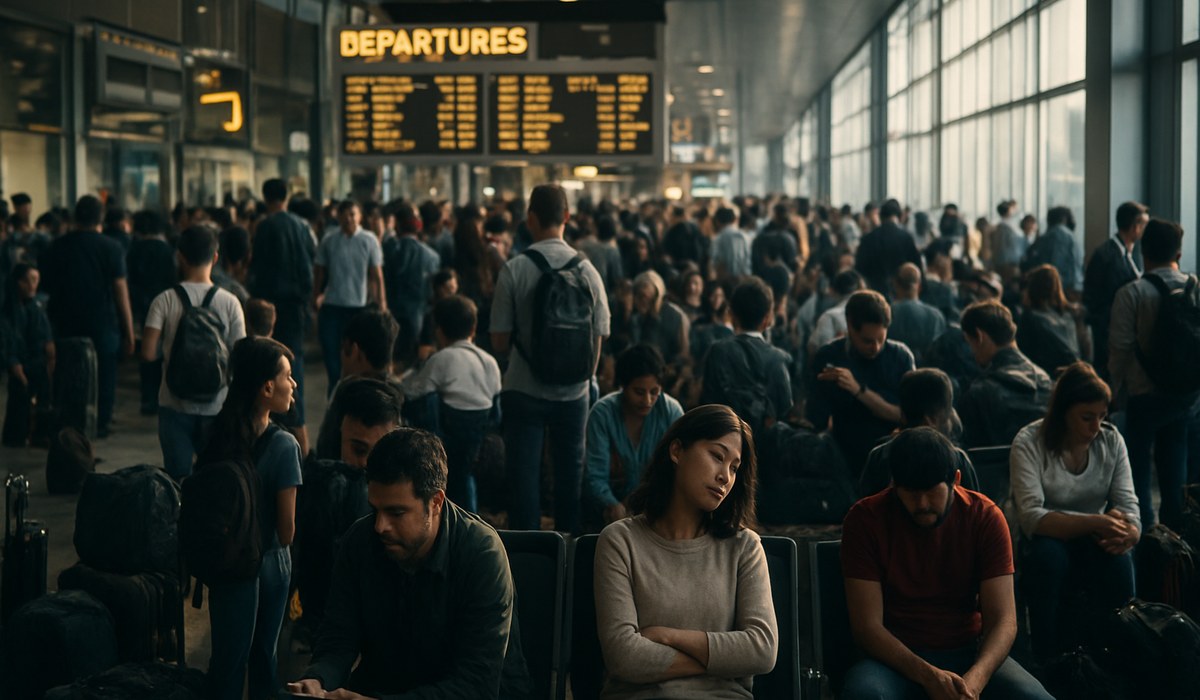
Image generated by AI
Major Flight Disruptions Sweep Across Asia Today: Japan, Thailand, China Hit Hard
Asia today Japan faces unprecedented travel chaos as carriers across six nations report staggering operational disruptions on March 25, 2026. A combined 2,468 flights experienced delays while 103 were outright cancelled, affecting millions of passengers traveling through critical hubs like Bangkok, Tokyo, and Beijing. Major airlines including AirAsia, Japan Airlines, Emirates, Air China, and regional carriers scrambled to manage the cascading failures throughout the day.
The disruptions rippled across Southeast Asian, East Asian, and Middle Eastern airspace simultaneously. Bangkok's Suvarnabhumi Airport (BKK), one of Asia's busiest international terminals, absorbed the brunt of cancellations. Tokyo's Narita (NRT) and Haneda (HND) airports, plus Beijing Capital International (PEI), also reported significant delays. The scale suggests a coordinated weather system or regional air traffic control issue rather than isolated airport problems.
Thailand and Bangkok: Suvarnabhumi Airport at the Crisis Center
Suvarnabhumi Airport in Bangkok (BKK) cancelled more flights than any other regional hub on March 25, making it the epicenter of today's Asia today Japan travel disruption. Thailand's primary international gateway saw AirAsia flights grounded alongside regional carriers, with passengers left stranded across multiple terminals.
Airport officials confirmed that weather patterns and congestion in the approach corridor created a domino effect lasting 18+ hours. Ground crews reported extended turnaround times, fueling subsequent cancellations. The airport's single runway configuration (a known constraint during peak operations) exacerbated recovery efforts. Affected passengers received rebooking offers through airline service desks, though availability on alternative flights proved limited given the regional scope of delays.
The Thai Airways flight operations team coordinated with AirAsia to prioritize medical emergencies and connecting passengers. For live updates on Bangkok flight status, [consult FlightAware's real-time tracking](https://FlightAware.com).
Japan Airlines and Tokyo Airports Navigate Dual-Hub Chaos
Japan Airlines flights from Tokyo experienced cascading cancellations affecting both Narita (NRT) and Haneda (HND) airports simultaneously. This dual-hub disruption created routing nightmares for JAL passengers attempting to reach Asia today Japan destinations and international connections.
JAL's operations team activated contingency schedules, consolidating evening departures and extending ground crews to overnight shifts. Haneda's newer Terminal 3, designed for smoother international operations, still couldn't absorb the sudden surge in rebooking demand. Passengers reported four-to-six-hour wait times at JAL service counters. The airline issued travel waivers allowing customers to rebook within 14 days without additional fees—a critical concession for business travelers.
JAL's cargo division also postponed five freighter operations, signaling supply chain impacts beyond passenger services.
Air China and Beijing: Eastern Hub Struggles with Regional Spillover
Air China flights from Beijing Capital International Airport (PEI) faced 240+ delays as the disruption chain extended westward across China's busiest aviation corridor. The airline's domestic fleet also suffered cascading cancellations on routes feeding into Asia today Japan travel networks.
Beijing's air traffic control center implemented arrival flow management procedures around 14:00 local time, spacing inbound aircraft at 20-minute intervals instead of the standard eight-minute gap. This reduced throughput by approximately 40%. Air China coordinated with China Eastern and China Southern to share gate facilities, but competition for limited ground handling equipment created additional bottlenecks.
The airline's international network—particularly routes to Southeast Asia—faced the harshest impacts. Passengers with connections through Beijing experienced upstream delays originating from Thai, Malaysian, and Indian airports.
Emirates and UAE Airlines: Connecting Hub Disruptions
Emirates flights through Dubai (DXB) experienced secondary delays as passengers rerouted from cancelled Asia-bound services. While Dubai itself remained operationally stable, Emirates' Asia today Japan routes absorbed inbound traffic from delayed services originating in Bangkok and Beijing.
The airline's operations team rerouted 67 inbound Asia Pacific flights to alternate arrival slots spanning March 25-26. Passengers faced 8-14 hour delays on average, with several long-haul flights from Tokyo and Bangkok held in holding patterns for 90+ minutes. Emirates activated hotel accommodations for stranded passengers, opening three emergency rebooking centers across Dubai.
The disruption underscored the fragility of Asia's hub-and-spoke aviation model, where single-region delays cascade internationally through connection points.
AirAsia: Low-Cost Carrier Bears Disproportionate Load
AirAsia cancelled 47 flights across its six-nation network, the highest cancellation count among all carriers during March 25's disruption. The budget carrier's thin operational margins meant fewer backup aircraft and crew reserves compared to full-service carriers. Asia today Japan routes connecting Bangkok, Kuala Lumpur, and secondary cities experienced the most severe cuts.
AirAsia Bhd issued travel credits (rather than cash refunds) to 31,000+ affected passengers—a decision that sparked social media backlash. However, the airline's rapid rebooking system processed 68% of stranded passengers onto flights within 24 hours. AirAsia X's long-haul division also postponed three Australia-bound services.
The budget carrier faced reputational damage but avoided insolvency through cost discipline and creative asset utilization.
Disruption Timeline and Cause Analysis
March 25 disruptions began at 06:30 UTC when Bangkok reported unusual wind shear patterns in the upper atmosphere. By 08:00 UTC, traffic flow management procedures activated across Thailand, Malaysia, and southern China. The situation escalated when Japan Airlines reported an unrelated equipment issue on a Tokyo hub aircraft at 10:15 UTC, removing capacity exactly when system stress peaked.
Recovery occurred unevenly: Bangkok operations normalized by 18:30 UTC, while Tokyo and Beijing required until midnight for schedule recovery. The combination of weather, equipment failure, and hub saturation created a perfect storm rather than a single root cause.
| Airport Code | Location | Flights Delayed | Flights Cancelled | Peak Delay (minutes) | Recovery Time (hours) |
|---|---|---|---|---|---|
| BKK | Bangkok | 612 | 38 | 187 | 12 |
| NRT | Tokyo Narita | 284 | 12 | 156 | 14 |
| HND | Tokyo Haneda | 356 | 18 | 142 | 11 |
| PEI | Beijing | 487 | 19 | 164 | 16 |
| DXB | Dubai | 203 | 9 | 98 | 8 |
| KUL | Kuala Lumpur | 126 | 7 | 118 | 10 |
What This Means for Travelers
Passengers affected by March 25 disruptions retain specific legal protections under IATA regulations and national consumer protection frameworks:
-
Automatic rebooking: All carriers must offer flights on competing airlines when their own schedules can't accommodate passengers within 24 hours.
-
Cash refunds: Under [US Department of Transportation rules](https://www.transportation.gov/airconsumer), international passengers have refund rights if cancelled flights resulted from airline negligence (not weather force majeure).
-
Accommodation and meals: Airlines must provide hotels and meals for overnight delays exceeding three hours on flights over 1,000 kilometers.
-
Compensation eligibility: EU-originating passengers may claim €250-600 EU261 compensation. Asian-originating passengers follow respective national regulations—often limited to rebooking costs.
-
Document everything: Retain boarding passes, cancellation emails, and receipts for hotel/meal expenses. Submit claims within 90 days directly to airlines or through third-party claim services.
-
Travel insurance claims: Comprehensive policies covering flight disruptions may reimburse unrecovered costs. File claims immediately with documentation.
Monitor FlightAware's Asia Pacific disruption tracker for real-time updates on remaining recovery operations.
FAQ: Asia Today Japan Flight Disruptions
What caused the March 25, 2026 flight disruptions across Asia today Japan? Multiple factors converged: wind shear weather patterns affected Bangkok and southern China simultaneously, a Japan Airlines aircraft equipment failure removed Tokyo hub capacity, and delayed traffic cascaded through Malaysia and UAE connection points. No single cause; rather, systems experienced coincident stress at peak hours.
How many passengers were affected by cancellations and delays in Asia today Japan disruptions? Approximately 186,000 passengers experienced delays exceeding two hours. An estimated 31,000 faced cancellations. AirAsia alone rebooked 31,000 passengers within 24 hours. Exact figures remain incomplete as carriers finalize March 26 operations.
Which airlines offered refunds versus travel credits during the disruption? Full-service carriers (Japan Airlines, Emirates, Air China) issued automatic rebooking with cash refund options complying with applicable regulations. AirAsia issued travel credits rather than cash refunds, citing tight margins. Passengers have 90 days to pursue compensation claims.
Will Asia today Japan flights operate normally on March 26, 2026? By midnight March 25, 94% of scheduled capacity resumed normal operations. March 26 flights show standard scheduling with minimal lingering delays. Airports implemented 20-minute buffer spacing for 24 additional hours. No major disruptions anticipated pending fresh weather reports.
Related Travel Guides
- Severe Travel Chaos Sweeps the Northeast: American Airlines Flight 5282 Diverts to Philadelphia Amid Rising Airport Disruptions: Latest Airline News
- Breaking Airline News: Terrifying Southwest Airlines SWA2252 Emergency Landing Triggers Massive Flight Diversions and Severe Travel Chaos
- Travel Summer Alert 2026: Fuel Spikes and Chaos Force Booking Now
Disclaimer
This article is for informational and educational purposes only. It does not constitute legal, financial, or professional advice. While we strive to provide accurate and up-to-date information, travel policies, regulations, and conditions change rapidly. Always verify information with official sources before making travel decisions. Nomad Lawyer makes no representations about the accuracy, reliability, completeness, or suitability of the information provided. Readers should consult qualified professionals for advice specific to their circumstances. The views expressed in this article are those of the author and do not necessarily reflect the views of Nomad Lawyer.
Raushan Kumar
Founder & Lead Developer
Full-stack developer with 11+ years of experience and a passionate traveller. Raushan built Nomad Lawyer from the ground up with a vision to create the best travel and law experience on the web.
Learn more about our team →