
Massive Asia Travel Chaos: 5,414 Flight Delays and 332 Cancellations Paralyze China, India, and Southeast Asia Hubs for AirAsia, IndiGo, and Thai Airways
Asia faces unprecedented travel chaos as 5,414 flight delays and 332 cancellations hit major hubs in China, India, Singapore, and Thailand, impacting millions.

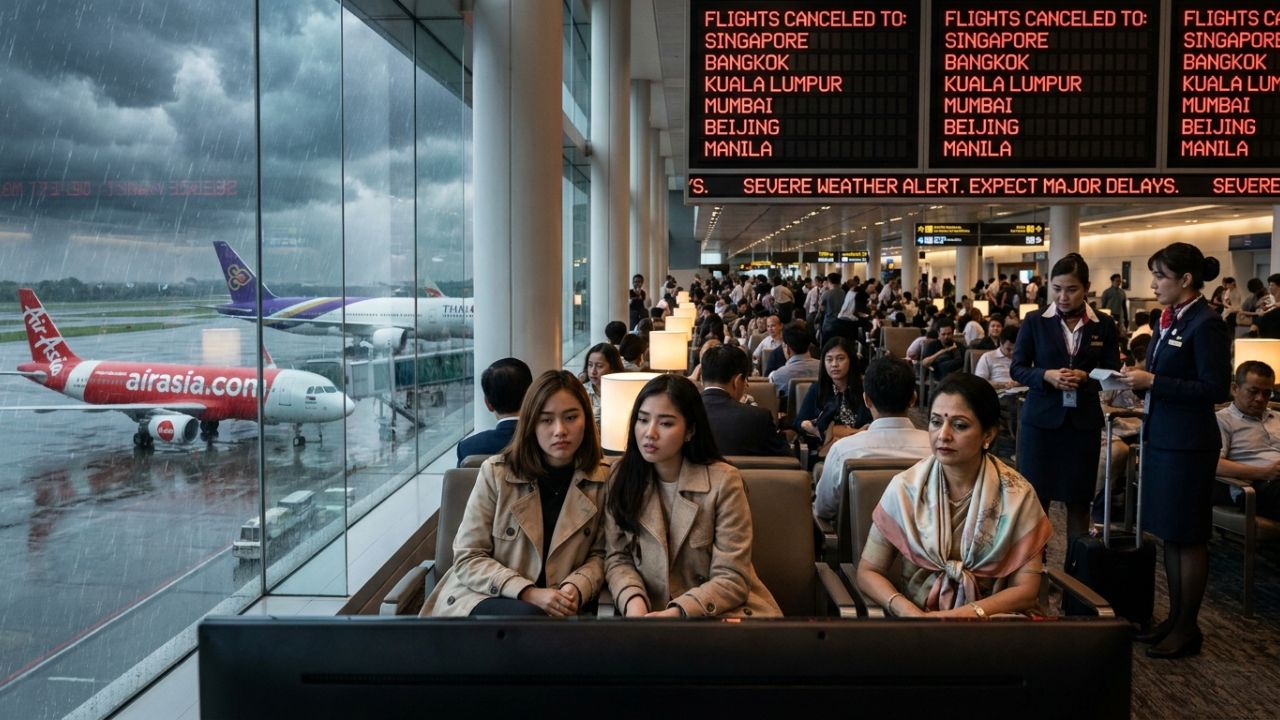
Image generated by AI
In an unprecedented wave of operational instability, the Asian aviation corridor has been plunged into a state of severe travel chaos. On May 16, 2026, the primary aviation hubs of China, India, Singapore, Thailand, Malaysia, Indonesia, and the Philippines witnessed a staggering 5,414 flight delays and 332 cancellations. This systemic failure has left millions of passengers navigating a landscape of missed connections and logistical uncertainty. This major airline news update highlights the mounting pressure on primary carriers like China Southern, AirAsia, IndiGo, and Thai Airways, as they struggle to maintain schedules in the face of widespread airport disruptions. From the bustling tech hubs of Shenzhen to the political centers of New Delhi and Beijing, the scale of the irregularities is being described by industry analysts as a critical stress test for the continent’s aviation resilience.
Breaking: System-Wide Disruption Paralyzes Asia’s Primary Transit Hubs
The disruption has been most acutely felt across the vital air bridge connecting the world’s most populous regions. A total of 5,746 flight irregularities within a single window have placed an unprecedented strain on terminal infrastructure. Travelers moving through major gateways such as Shenzhen, Guangzhou, Shanghai, and Beijing, or those transiting through New Delhi, Mumbai, Kuala Lumpur, Singapore, Manila, and Bangkok, have faced a day defined by long queues, shifting departure boards, and the logistical nightmare of abandoned travel plans.
Aviation experts suggest that while the 332 groundings are significant, the sheer volume of 5,414 delays indicates a "creeping" operational failure that has compromised aircraft rotations across the entire region. For many passengers, the day was marked by the frustration of seeing departure times pushed back repeatedly, threatening the viability of multi-city itineraries and international connections.
Expanded Overview: The Epicenter of Disruption in Greater China
As the primary gateways in the region, Shenzhen Bao’an International and Guangzhou Baiyun International recorded the highest volume of disruptions in Asia today. Shenzhen alone documented 718 delays and 44 cancellations, effectively paralyzing the Pearl River Delta’s air traffic. Guangzhou followed closely with 586 delays, reflecting a significant failure in the high-frequency domestic corridor.
In India, the situation was particularly critical in New Delhi, which recorded 345 delays, making it the subcontinent’s most affected airport. Mumbai followed with 178 delays, highlighting the stress on the country's primary commercial axis. As carriers work around the clock to stabilize their rotations, the impact on passenger confidence and the broader tourism ecosystem is becoming a primary concern for industry stakeholders.
Section-Wise Breakdown: Regional Disruption Narratives
China’s Aviation Engine Stalls
The "Shenzhen-Guangzhou-Shanghai" triangle served as the epicenter of today's travel chaos. China Southern Airlines faced the brunt of the instability with 525 delays and 18 cancellations. China Eastern followed with 486 delays and 28 cancellations, marking one of the worst operational days for the carrier in recent months. Shenzhen Airlines also saw 323 delays, specifically impacting the tech sector’s regional connectivity.
India’s Congestion Crisis: Delhi and Mumbai
Indira Gandhi International (DEL) saw 345 delays and 5 cancellations, with IndiGo (292 delays) and Air India (181 delays) struggling to manage turnaround times. The congestion in Mumbai (178 delays) has created a backlog that is expected to ripple through the domestic network for at least 48 hours.
Southeast Asian Hubs: KLIA, Changi, and Suvarnabhumi
Kuala Lumpur International (KUL) reported 280 delays and 24 cancellations, heavily impacting AirAsia and Malaysia Airlines. Singapore Changi recorded 165 delays, a significant number for a hub known for its efficiency. In Thailand, Suvarnabhumi (BKK) saw 161 delays, specifically hitting Thai Airways, which recorded 31 delayed flights in its home base.
The Philippines and Indonesia
Manila International (MNL) recorded 165 delays and 12 cancellations, placing extreme pressure on Cebu Pacific. In Indonesia, Jakarta and Surabaya hubs faced significant delays, with Lion Air reporting 64 late departures across its network.
Flight Details and Comprehensive Operational Matrices
The following tables provide the exact metrics for the airports and airlines most affected across Asia on May 16, 2026.
Top 10 Most Disrupted Airports in Asia
| Airport | City / Country | Delays | Cancellations |
|---|---|---|---|
| Shenzhen Bao’an (SZX) | Shenzhen, China | 718 | 44 |
| Guangzhou Baiyun (CAN) | Guangzhou, China | 586 | 25 |
| Shanghai Pudong (PVG) | Shanghai, China | 350 | 14 |
| Indira Gandhi Int’l (DEL) | New Delhi, India | 345 | 5 |
| Kuala Lumpur Int’l (KUL) | Kuala Lumpur, Malaysia | 280 | 24 |
| Beijing Capital (PEK) | Beijing, China | 266 | 10 |
| Shanghai Hongqiao (SHA) | Shanghai, China | 239 | 14 |
| Hangzhou Xiaoshan (HGH) | Hangzhou, China | 226 | 6 |
| Chatrapati Shivaji (BOM) | Mumbai, India | 178 | 3 |
| Changi Airport (SIN) | Singapore | 165 | 1 |
| Manila Int’l (MNL) | Manila, Philippines | 165 | 12 |
Top 10 Most Disrupted Airlines in Asia
| Airline | Delays | Cancellations |
|---|---|---|
| China Southern Airlines | 525 | 18 |
| China Eastern | 486 | 28 |
| Shenzhen Airlines | 323 | 21 |
| IndiGo | 292 | 6 |
| Air India | 181 | 0 |
| AirAsia | 127 | 19 |
| Cebu Pacific Air | 105 | 0 |
| Air India Express | 92 | 0 |
| Malaysia Airlines | 88 | 0 |
| Lion Air | 64 | 0 |
| Thai Airways | 31 | 0 |
Passenger Impact: Missed Connections and Logistics Fallout
For the millions of passengers affected, the travel chaos has translated into more than just longer wait times.
- Systemic Backlogs: Frequent delays and cancellations on routes to Shenzhen, Shanghai, and Delhi could affect long-term passenger confidence in regional reliability.
- Economic Friction: The interconnected nature of Asian travel means that a delay in Singapore often results in a missed connection or a lost day of business in Bangkok or Manila.
- Operational Fatigue: With several carriers like Cathay Pacific recording extreme delay percentages at multiple hubs, the pressure on airport customer service desks has reached peak levels.
Industry Analysis: Turnaround Delays and Regional Congestion
Aviation analysts note that while weather and air traffic conditions played a role, the widespread nature of the 5,414 delays indicates a systemic vulnerability within the Asian aviation grid. When major hubs face such concentrated disruptions, the "knock-on" effect for aircraft rotations can last for several days.
- Turnaround Failures: The significant failures at IndiGo and China Southern suggest that turnaround protocols are being tested by ground handling constraints or regional airspace congestion.
- Hub Saturation: The ability of hubs like Changi and Suvarnabhumi to manage triple-digit delays in a single day is a major test of their terminal management and passenger flow systems.
- Low-Cost vs. Legacy: Interestingly, the disruption hit both low-cost giants (AirAsia, IndiGo) and legacy carriers (Thai Airways, Malaysia Airlines) with equal ferocity, suggesting a system-wide infrastructure strain.
Conclusion: A Long Road to Recovery for the Asian Grid
As carriers like China Southern and AirAsia work to clear the passenger backlog and reposition their fleets, the recovery across Asia is expected to take at least 48 to 72 hours. While the lack of thousands of flight cancellations is a positive sign for aircraft availability, the volume of travelers needing updated ground transit and rebooking is massive. For now, the Asian aviation bridge remains sensitive, and travelers are advised to maintain a flexible itinerary until operational stability is fully restored.
Key Takeaways
- Total Chaos: 5,414 delays and 332 cancellations hit Asia on May 16, 2026.
- Epicenter: Shenzhen and Guangzhou recorded over 1,300 of the recorded delays.
- Indian Hubs: Delhi (345 delays) and Mumbai (178 delays) faced severe congestion.
- Carrier Pressure: China Southern and China Eastern led the disruption metrics.
- Southeast Asia: Kuala Lumpur (280 delays) and Manila (165 delays) heavily impacted.
- Passenger Advice: Monitor official mobile apps (IndiGo, AirAsia, etc.) and allow significant buffer time for connections.
Related Travel Guides
Disclaimer
This article is for informational and educational purposes only. It does not constitute legal, financial, or professional advice. While we strive to provide accurate and up-to-date information, travel policies, regulations, and conditions change rapidly. Always verify information with official sources before making travel decisions. Nomad Lawyer makes no representations about the accuracy, reliability, completeness, or suitability of the information provided. Readers should consult qualified professionals for advice specific to their circumstances. The views expressed in this article are those of the author and do not necessarily reflect the views of Nomad Lawyer.
Kunal K Choudhary
Co-Founder & Contributor
A passionate traveller and tech enthusiast. Kunal contributes to the vision and growth of Nomad Lawyer, bringing fresh perspectives and driving the community forward.
Learn more about our team →